Introduction
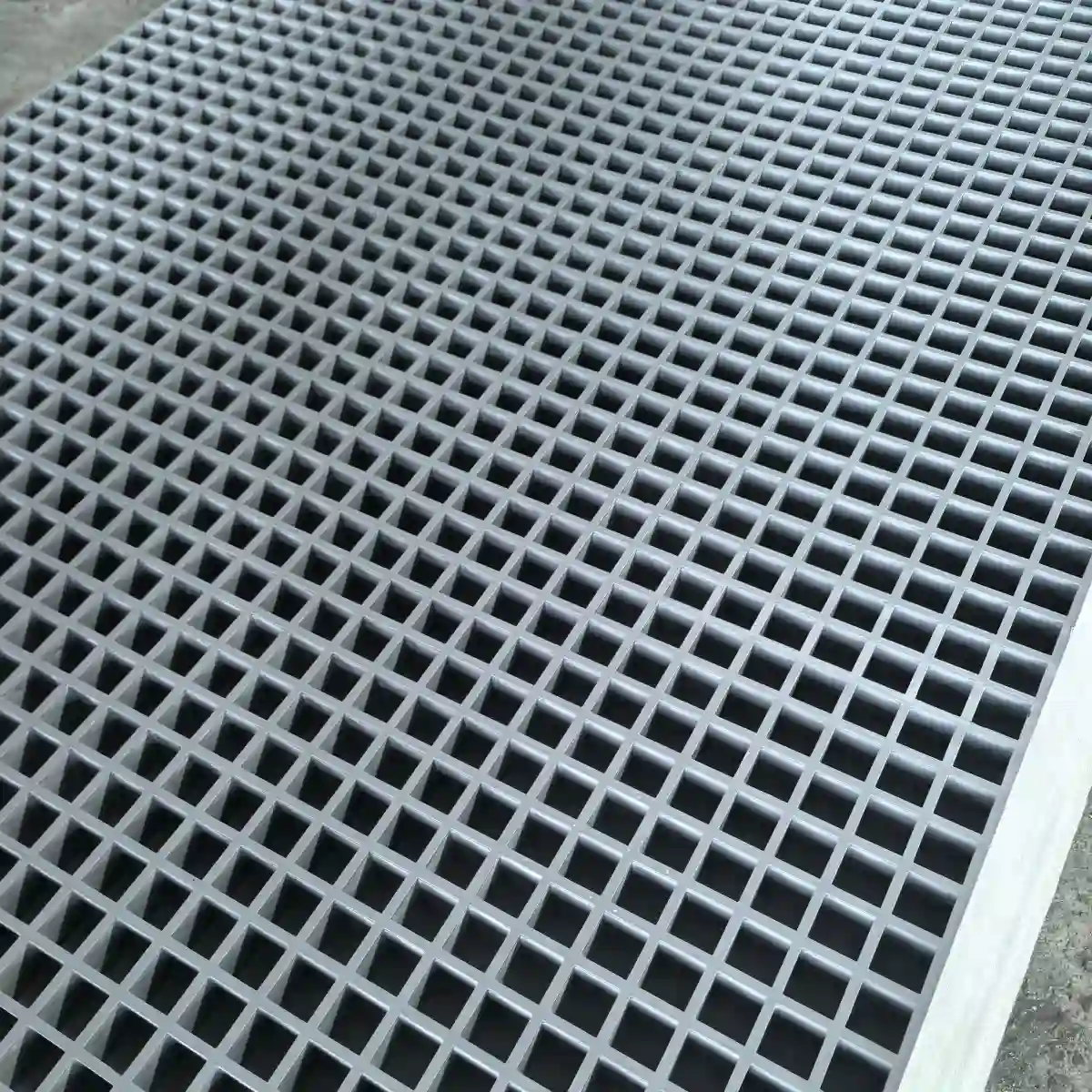
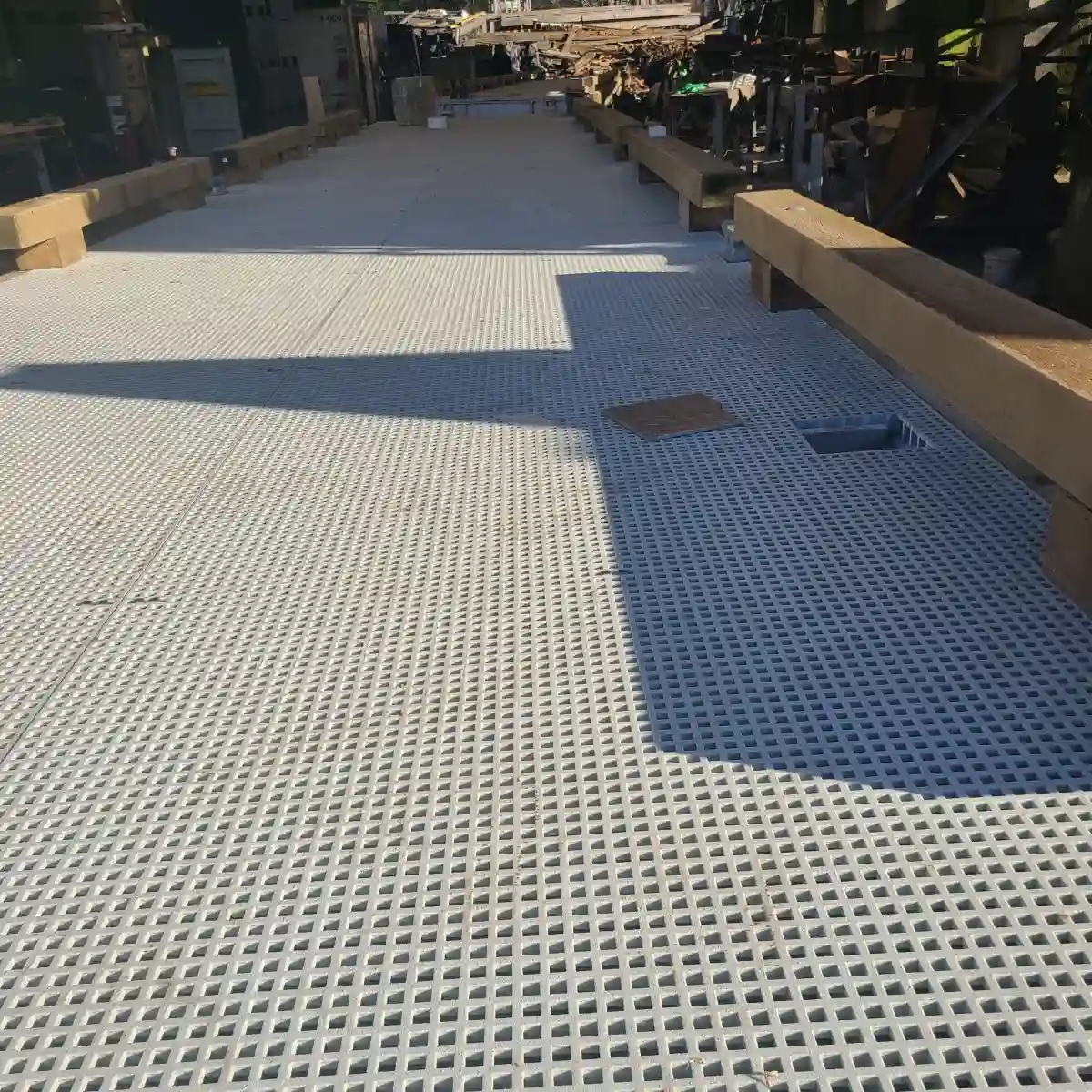
When designing walkways for industrial facilities, chemical plants, or public infrastructure, selecting the right material is critical for safety, durability, and long-term cost efficiency. Pultruded grating for walkways has emerged as a leading choice among engineers and facility managers seeking a high-performance alternative to traditional steel or aluminum grating.
This comprehensive guide covers everything you need to know about pultruded walkway solutions — from manufacturing processes and material specifications to load ratings, installation procedures, and cost factors. Whether you are planning a new pedestrian walkway or upgrading an existing platform, this article will help you make an informed decision.
Throughout this guide, we will address the most common questions: What is this grating used for? How do you install it? How much does it cost? Is it slip resistant? What type is best for pedestrians? How much weight can it support? And what standard sizes are available?
What Is Pultruded Grating for Walkways?
This composite material is manufactured through the pultrusion process, where continuous fiberglass fibers are pulled through a resin bath and then through a heated die to form rigid, high-strength profiles. The result is a durable, lightweight grating panel that offers exceptional corrosion resistance and structural performance.
Unlike molded grating, which uses randomly oriented fibers and chopped strand mat, pultruded panels feature continuous longitudinal fibers that provide superior strength in the load-bearing direction. This makes it particularly well-suited for walkway applications where consistent load performance and long-span capability are required.
Pultruded fiberglass grating is often used interchangeably with pultruded grating, though it specifically emphasizes the fiberglass reinforcement that gives the material its mechanical properties. Manufacturers combine E-glass or ECR-glass fibers with thermosetting resins such as polyester, vinyl ester, or phenolic to create panels that resist chemicals, UV radiation, and moisture.
How Pultruded Grating Is Manufactured
The pultrusion process is what gives these walkway products their exceptional strength-to-weight ratio. Unlike molded grating manufacturing, where fibers are randomly distributed, pultrusion aligns continuous fiberglass rovings longitudinally through the profiles.
The manufacturing process follows these key steps:
- Reinforcement creel: Continuous fiberglass rovings are unwound from creels and directed through guide plates to achieve the desired fiber architecture.
- Resin bath immersion: The fibers pass through a resin bath containing catalyzed thermosetting resin (typically polyester, vinyl ester, or phenolic for fire-retardant applications).
- Pre-forming: Wet fibers pass through pre-forming guides that arrange them into the grating profile shape.
- Heated die curing: The saturated fibers enter a precision-heated steel die where the resin cures (cross-links) under controlled temperature and pressure.
- Pulling and cutting: Continuous cured profiles are pulled by a reciprocating or caterpillar puller, then cut to standard panel lengths of 20 or 24 feet.
The resulting panels feature integral bearing bars and cross-rods that distribute loads efficiently. Because the process is continuous and highly automated, pultruded grating delivers consistent quality and dimensional accuracy across every panel.
Key Benefits of Pultruded Grating for Pedestrian Walkways
Pultruded fiberglass grating offers numerous advantages that make it an excellent choice for pedestrian walkways in demanding environments:
- Corrosion resistance: Unlike steel, pultruded grating does not rust or corrode when exposed to chemicals, saltwater, or humid conditions. This makes it ideal for walkways in chemical plants, wastewater treatment facilities, and marine environments.
- Lightweight construction: At approximately one-quarter the weight of steel and half the weight of aluminum, pultruded grating panels are easier to handle, transport, and install — reducing labor costs and structural support requirements.
- High strength-to-weight ratio: Continuous glass fibers provide excellent load-bearing capacity relative to panel weight, allowing longer spans between supports.
- Low maintenance: Pultruded grating never needs painting, coating, or galvanizing. It resists UV degradation when manufactured with UV-inhibited resins.
- Non-conductive and non-magnetic: The material provides electrical insulation and is transparent to radio frequencies, making it suitable for electrical substations and sensitive electronic environments.
- Slip resistance: Panels can be manufactured with gritted surfaces, serrated bearing bars, or embedded silica particles to meet OSHA and ADA slip-resistance requirements.
These benefits combine to make pultruded grating a cost-effective, long-lasting solution for pedestrian walkways across virtually every industry.
Common Applications for Pultruded Grating Walkways
Pultruded grating walkways are used across a wide range of industries where durability, safety, and corrosion resistance are paramount. Here are the most common applications:
- Chemical processing plants: Walkways and platforms in areas exposed to corrosive chemicals, acids, and solvents. Pultruded grating withstands chemical attack that would rapidly degrade steel grating.
- Water and wastewater treatment: Catwalks, trench covers, and access platforms in treatment basins, clarifiers, and chemical feed areas where moisture and chemical exposure are constant.
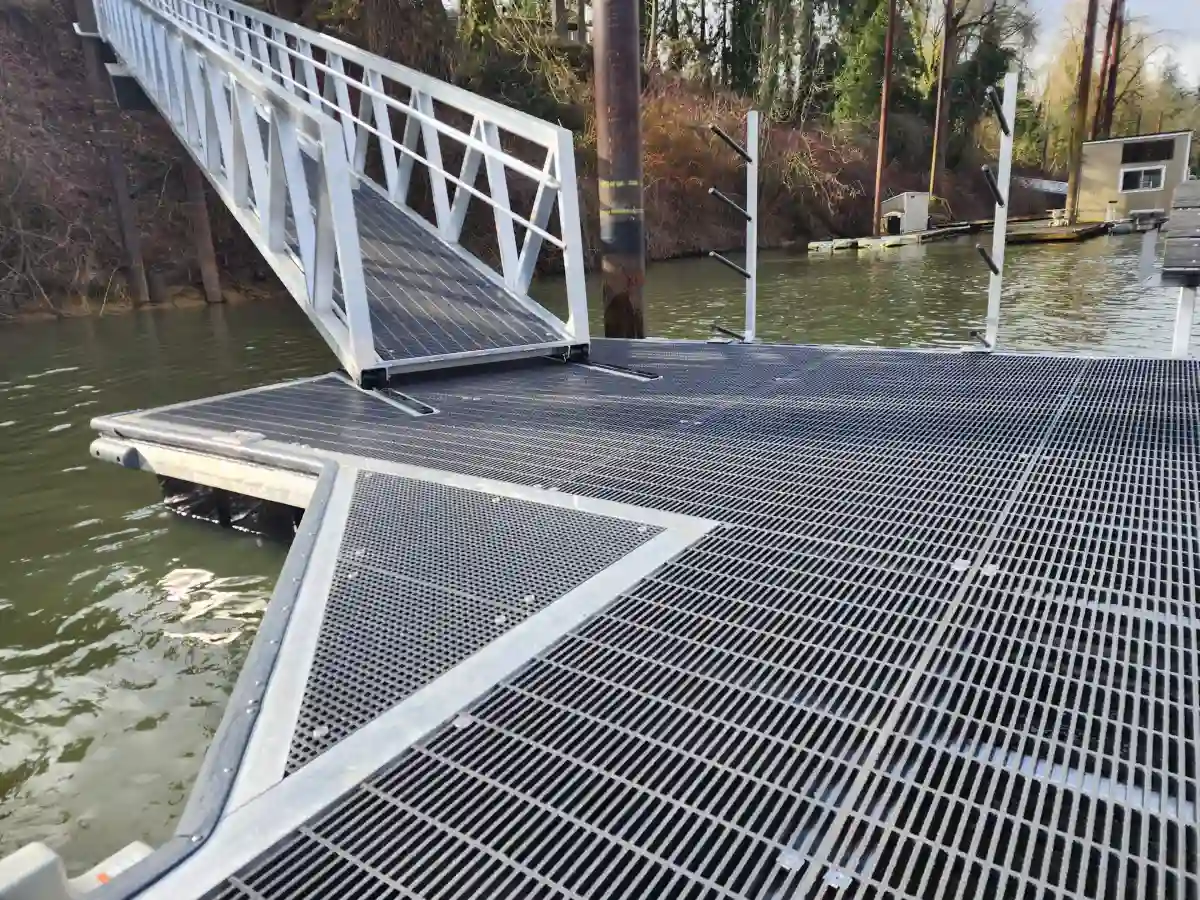
- Offshore and marine: Helideck walkways, shipboard grating, pier platforms, and dock access structures where saltwater corrosion is a major concern.
- Food processing facilities: Walkways in wet processing areas, wash-down zones, and cold storage facilities where hygiene and corrosion resistance are critical.
- Electrical utility substations: Non-conductive walkways for electrical safety around high-voltage equipment, switchgear, and transformer areas.
- Public infrastructure: Pedestrian bridges, boardwalks, park walkways, and observation decks where long service life and low maintenance are required.
- Pharmaceutical and biotechnology: Cleanroom walkways and mezzanine platforms that require non-porous, easy-to-clean surfaces.
In all these environments, pultruded fiberglass grating provides a safe, durable walking surface that outlasts traditional materials by decades.
Best Pultruded Grating Type for Pedestrian Walkways
When selecting the best grating type for pedestrian walkways, the choice often comes down to the profile design and surface finish. The three most common pultruded grating profiles are:
| Profile Type | Description | Best For |
|---|---|---|
| I-Bar Grating | Bearing bars have an I-shaped cross-section, providing high strength with minimal material weight. Offers the best strength-to-weight ratio. | Industrial walkways, long-span applications, heavy pedestrian traffic |
| T-Bar Grating | T-shaped bearing bars offer excellent torsional stability and a wider top surface for comfortable walking. Slightly heavier than I-bar. | Pedestrian bridges, public walkways, platforms requiring high stability |
| Rectangular Bar Grating | Simple rectangular bars provide a cost-effective option. Less efficient structurally but suitable for light-duty walkways. | Light pedestrian access, mezzanine walkways, budget-conscious projects |
For most pedestrian walkway applications, I-bar pultruded grating with a gritted surface is the recommended choice. The I-bar profile delivers the best strength-to-weight ratio, allowing longer spans between supports while keeping panel weight manageable. Combined with an applied grit top surface, it provides excellent slip resistance in wet or oily conditions.
For public-facing walkways like pedestrian bridges or boardwalks, T-bar grating is often preferred because the wider bar top creates a more comfortable walking surface. T-bar grating also handles lateral loads better, which is beneficial in high-traffic areas.
The open area of the grating (typically 40-60%) allows light, air, and water to pass through, preventing ponding and reducing wind uplift on elevated walkways. This is a key advantage over solid decking materials.
Standard Sizes of Pultruded Grating for Walkways
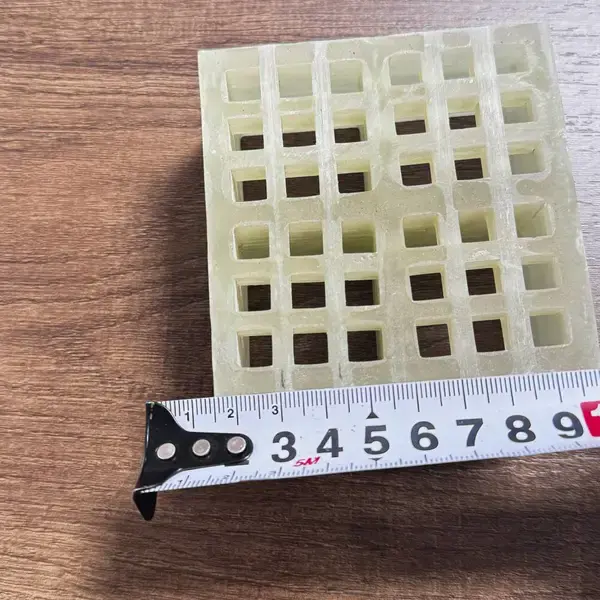
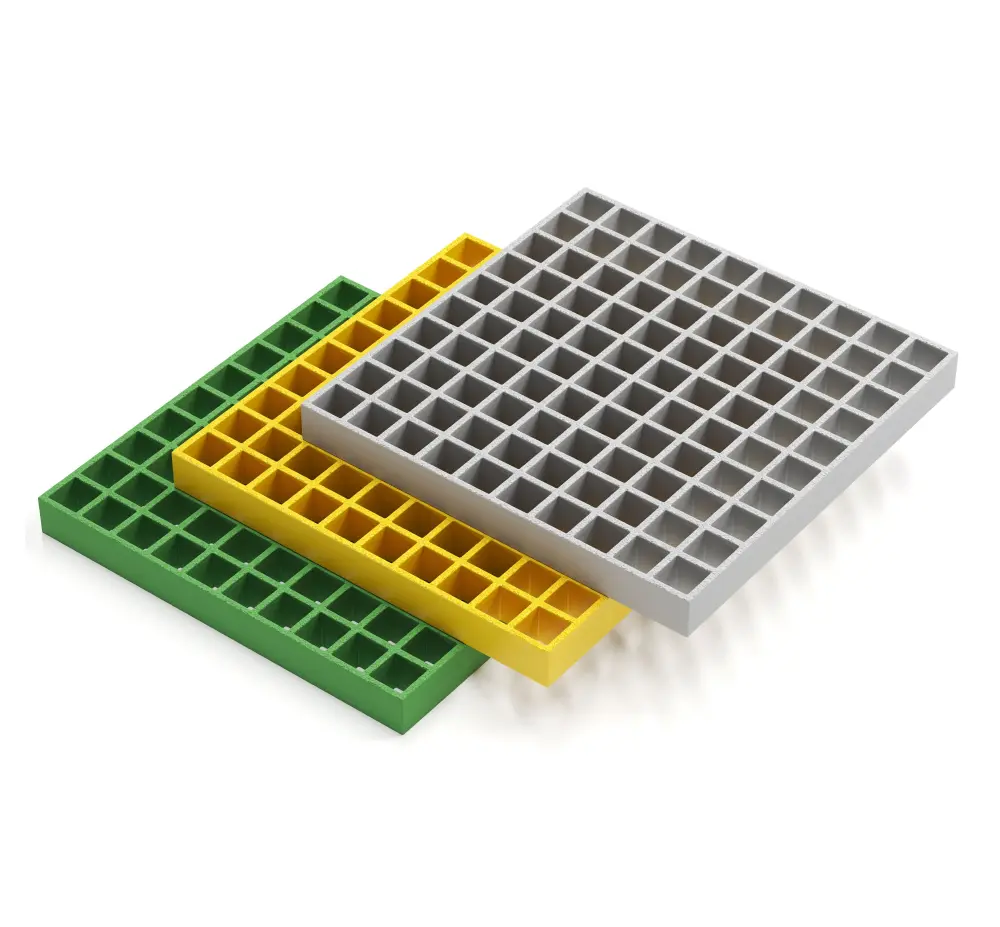
Pultruded grating panels are manufactured in a range of standard sizes to accommodate different span requirements, load conditions, and application needs. The three key dimensional variables are panel size, bearing bar depth, and bar spacing.
| Parameter | Standard Options | Notes |
|---|---|---|
| Panel Width | 24, 36, 48 inches (610, 914, 1219 mm) | Custom widths available up to 60 inches |
| Panel Length | 8, 10, 12, 20, 24 feet (2.4-7.3 m) | Custom lengths available; standard max is 24 ft |
| Bearing Bar Depth | 1, 1.5, 2, 2.5, 3 inches (25-76 mm) | Deeper bars = higher load capacity and longer span |
| Bearing Bar Thickness | 3/16, 1/4, 3/8 inch (4.8, 6.4, 9.5 mm) | Thicker bars increase panel strength and cost |
| Bar Spacing (center-to-center) | 1-3/16, 1-3/8, 2-3/16 inches (30, 35, 56 mm) | Closer spacing = better load distribution |
| Cross-Rod Spacing | 3, 6, 9 inches (76, 152, 229 mm) | Closer spacing improves lateral stability |
For typical pedestrian walkways, 2-inch deep bearing bars with 1-3/16-inch spacing on 6-inch cross-rod centers are the most common specification. This configuration provides a good balance of load capacity, weight, and cost for most applications.
Heavier-duty walkways — such as those supporting equipment access or maintenance vehicles — may require 2.5 or 3-inch bar depths with 3/8-inch bar thickness. Always consult the manufacturer load tables to verify that the selected size meets your project specific span and loading requirements.
Weight Capacity and Load Ratings for Pultruded Grating Walkways
Understanding the weight capacity of these grating systems is crucial for safe design. Load ratings depend on several factors: bearing bar depth, bar thickness, bar spacing, span length, and the type of resin system used.
Most manufacturers publish load tables based on ASTM D790 testing standards. These tables show the maximum uniformly distributed load (UDL) and concentrated load that a grating panel can support at a given span while maintaining an acceptable deflection limit (typically L/100 or L/200, where L is the span length).
As a general reference:
| Bar Depth (in) | Span (ft) | UDL Capacity (psf) | Concentrated Load (lbs) |
|---|---|---|---|
| 1.0 | 1.5 | 250 | 500 |
| 1.5 | 2.0 | 300 | 600 |
| 2.0 | 2.5 | 350 | 800 |
| 2.5 | 3.0 | 400 | 1000 |
| 3.0 | 3.5 | 450 | 1200 |
Note: Values are approximate and based on standard 1/4-inch bar thickness at 1-3/16-inch centers. Always verify with the specific manufacturer load table.
For standard pedestrian walkways, a load rating of 100 psf uniformly distributed load is typically sufficient for normal foot traffic. Heavy-duty pedestrian walkways in industrial settings may be designed for 200-300 psf to accommodate maintenance equipment or multiple people. Pultruded walkway systems commonly support loads of 500-1200 lbs concentrated, easily meeting OSHA walkway requirements.
Is Pultruded Grating Slip Resistant for Walkway Applications?
Yes — pultruded walkway grating can be manufactured with excellent slip-resistant properties, making it suitable for pedestrian walkways even in wet, oily, or icy conditions. Several surface treatment options are available:
- Gritted surface: A layer of silica, aluminum oxide, or silicon carbide particles is embedded into the top surface of the grating during manufacturing. This creates a rough, sandpaper-like texture that significantly improves traction. Gritted surfaces typically achieve a Coefficient of Friction (COF) above 0.6 in wet conditions, meeting OSHA and ADA slip-resistance guidelines.
- Serrated bearing bars: The top edges of the bearing bars are notched or serrated to create additional grip. This is particularly effective for angled or sloping walkways.
- Embedded silica: Some manufacturers mix silica sand into the resin top coat, creating a uniformly rough surface that maintains slip resistance even as the surface wears.
- Molded surface texture: Certain grating designs incorporate a textured surface pattern directly from the pultrusion die.
For most pedestrian walkway applications, a gritted surface with aluminum oxide particles provides the best balance of slip resistance and durability. The grit is bonded into the resin and will not wear off easily, maintaining its anti-slip properties for the life of the panel. This makes pultruded grating for walkways a safe choice for both industrial and public access applications.
Installation Guide for Pultruded Grating Walkways
Proper installation is critical to ensuring the safety and longevity of pultruded walkway systems. Because these composite panels are lighter and easier to cut than steel or aluminum, installation is generally faster and requires less heavy equipment. However, there are specific techniques and considerations unique to composite materials.
Installation methods vary depending on the supporting structure and application. The most common approaches include:
- Clip-fastened installation: Grating panels are secured to support members using corrosion-resistant clips (stainless steel or composite). This is the most common method for industrial walkways and allows for easy panel removal.
- Through-bolted installation: Panels are bolted directly through the bearing bars into the support structure. This provides maximum security but requires drilling and makes panel removal more difficult.
- Countersunk installation: Bolts are recessed into the top surface of the grating to maintain a flush walking surface — ideal for pedestrian walkways where trip hazards must be avoided.
Tools and Materials Needed
Before beginning installation, gather the following tools and materials:
- Composite grating panels — cut to required dimensions based on your project layout
- Support steel or structural framing — typically carbon steel beams or channels, or stainless steel for corrosive environments
- Fastening hardware — stainless steel clips, bolts, washers, and nuts (composite fasteners also available for maximum corrosion resistance)
- Cutting equipment — carbide-tipped circular saw blades or abrasive cut-off wheels; standard steel-cutting blades dull quickly on fiberglass composites
- Drilling tools — carbide-tipped drill bits for bolt holes; avoid high-speed steel bits
- Personal protective equipment (PPE) — gloves, safety glasses, and dust masks (cutting fiberglass generates fine dust that can irritate skin and lungs)
- Measuring and layout tools — tape measure, chalk line, square, and level
- Deburring tool — file or sandpaper to smooth cut edges
Using the correct cutting and drilling tools is essential. Fiberglass composites are abrasive and will quickly dull conventional steel-cutting tools. Always use carbide-tipped or diamond-grit cutting tools for clean, efficient cuts.
Step-by-Step Installation Process
Follow these steps to install composite walkway grating safely and correctly:
Step 1: Prepare the Support Structure
Ensure all support beams are level, properly aligned, and spaced according to the grating load table. The maximum support spacing depends on the bar depth and required load capacity — typically 24-30 inches for pedestrian walkways with 2-inch bar depth.
Step 2: Cut Panels to Size
Measure and mark each panel before cutting. Use a carbide-tipped circular saw for straight cuts. Cut panels slightly undersize (1/8-inch gap per side) to allow for thermal expansion and contraction. Composite materials expand more than steel — approximately 0.00001 inches per inch per degree Fahrenheit.
Step 3: Drill Fastener Holes
Where through-bolting is specified, drill holes through the bearing bars at the support beam locations. Drill holes 1/16-inch larger than the bolt diameter to provide clearance. Deburr all cut edges with a file to remove sharp fiberglass splinters.
Step 4: Position Panels
Place panels onto the support structure with the gritted side up. Ensure bearing bars run perpendicular to the support beams for maximum load capacity. Maintain consistent gaps between panels for drainage and thermal movement.
Step 5: Secure Fasteners
Install clips or bolts at every support beam intersection. For clip-fastened installations, attach clips to the support beam flanges and tighten to the manufacturer specified torque. For through-bolted installations, use washers on both sides to distribute the clamping force. Do not overtighten — composite materials can crush if excessive torque is applied.
Step 6: Install Edge Trim (If Required)
For exposed edges at walkway perimeters, install edge trim or banding to create a finished appearance and protect cut edges from moisture ingress. Many manufacturers offer compatible trim profiles.
Step 7: Inspect and Test
Walk the entire installed surface to check for loose panels, sharp edges, or uneven surfaces. Verify that all fasteners are secure and that the grating is stable under foot traffic.
Cost Considerations for Pultruded Grating Walkways
The cost of pultruded walkway grating varies depending on several factors. While the upfront material cost is typically higher than steel grating, the total cost of ownership is often lower due to reduced maintenance and longer service life.
Factors Affecting Cost
| Factor | Impact on Cost |
|---|---|
| Resin type | Fire-retardant (phenolic) and chemical-resistant (vinyl ester) resins cost more than standard polyester |
| Bar depth and thickness | Deeper and thicker bars increase material usage and cost proportionally |
| Surface finish | Gritted surfaces add 10-20% to panel cost vs. smooth surfaces |
| Panel size | Larger panels reduce per-square-foot cost due to less waste |
| Quantity | Volume discounts typically apply for orders above 1,000 sq ft |
| Custom fabrication | Cut-to-size panels, cutouts, and custom shapes increase cost |
Typical Price Range
As a general guideline, standard pultruded fiberglass grating for walkways ranges from $25 to $45 per square foot for standard polyester resin panels with gritted surface. Fire-retardant or chemical-resistant grades range from $35 to $60 per square foot. For comparison, steel grating typically costs $15-25 per square foot but requires ongoing maintenance.
Despite the higher initial cost, these composite grating systems often provide a lower total cost of ownership over a 20-30 year service life. When factoring in zero painting, no galvanizing, no corrosion repairs, and minimal replacement costs, the lifecycle savings can be substantial — often 30-50% less than steel over the full service period.
For accurate pricing, request quotes from multiple manufacturers with your specific project requirements, including span, load rating, and environmental conditions.
Conclusion
Pultruded grating for walkways offers a compelling combination of strength, durability, corrosion resistance, and safety that makes it an excellent choice for pedestrian access in demanding environments. From chemical plants and water treatment facilities to public boardwalks and offshore platforms, these composite walkway systems deliver reliable performance with minimal maintenance.
When selecting pultruded grating for your walkway project, consider the following key factors:
- Choose I-bar or T-bar profiles based on your span, load, and comfort requirements
- Specify gritted surfaces for adequate slip resistance in wet or oily conditions
- Select the correct bar depth and thickness based on manufacturer load tables
- Use proper installation techniques with stainless steel or composite fasteners
- Factor in lifecycle cost savings, not just upfront material cost
By understanding the specifications, installation procedures, and cost factors covered in this guide, you can confidently select and install a pultruded walkway system that will provide safe, durable service for decades to come. For your specific project requirements, always consult with manufacturers to verify load ratings, material compatibility, and warranty coverage.