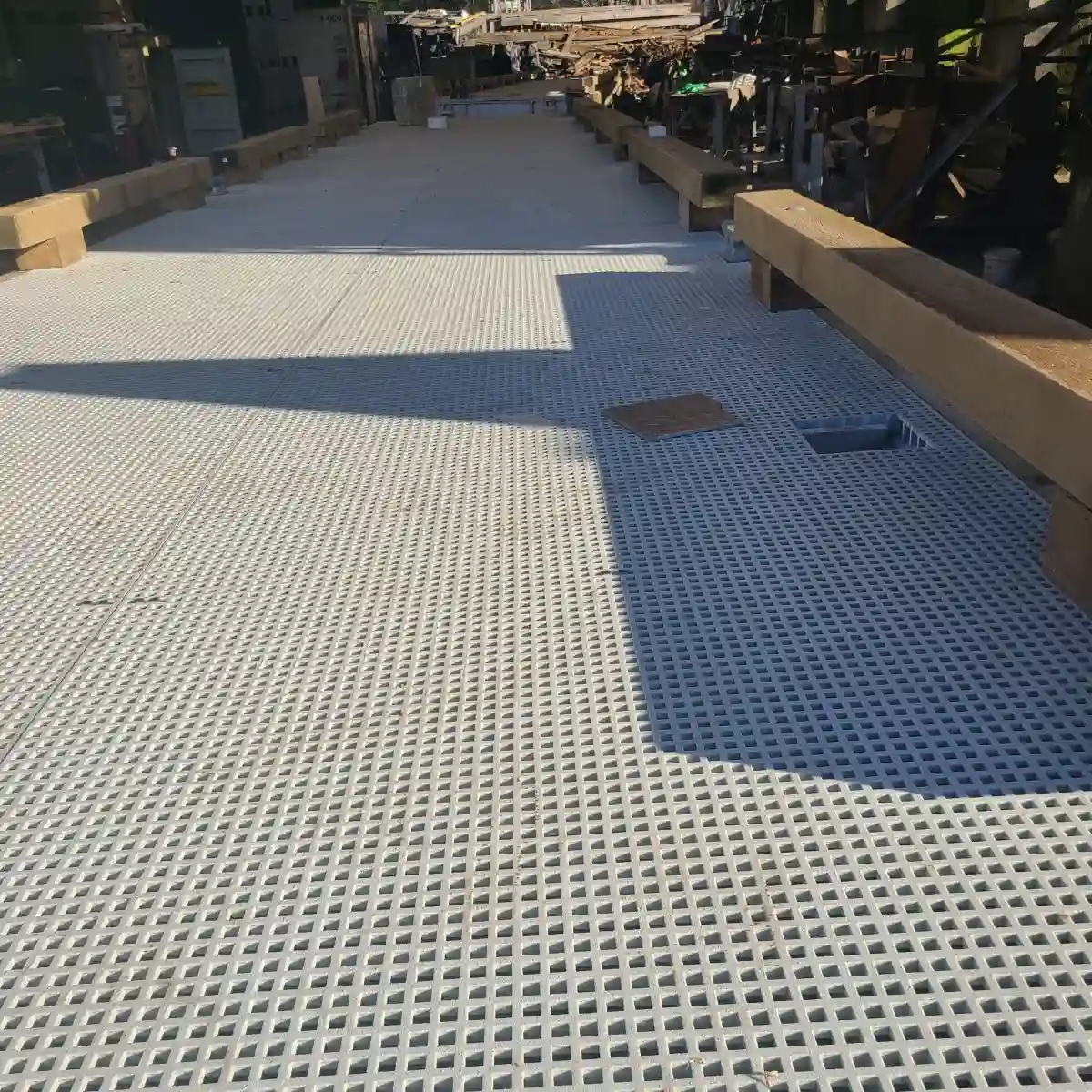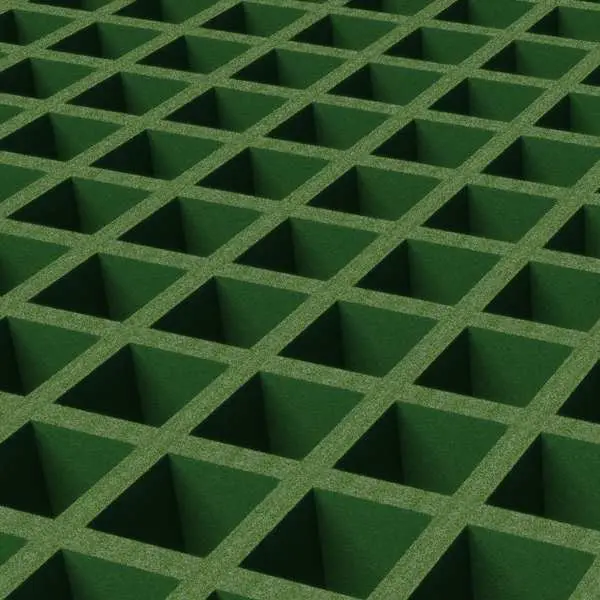
Introduction
FRP grating (Fiber Reinforced Polymer grating) is one of the most versatile and widely used industrial flooring solutions in the world. Known for its exceptional strength-to-weight ratio, corrosion resistance, and long service life, FRP grating has become the go-to choice for industries ranging from chemical processing to marine infrastructure. This complete guide covers everything you need to know about FRP grating — from its composition and manufacturing to installation, load ratings, and how it compares to traditional materials like steel.
Whether you are an engineer specifying materials for a new plant, a maintenance manager looking to replace corroded steel flooring, or a procurement professional comparing FRP grating types and prices, this article will give you the technical knowledge and practical insight to make informed decisions.
What Is FRP Grating?
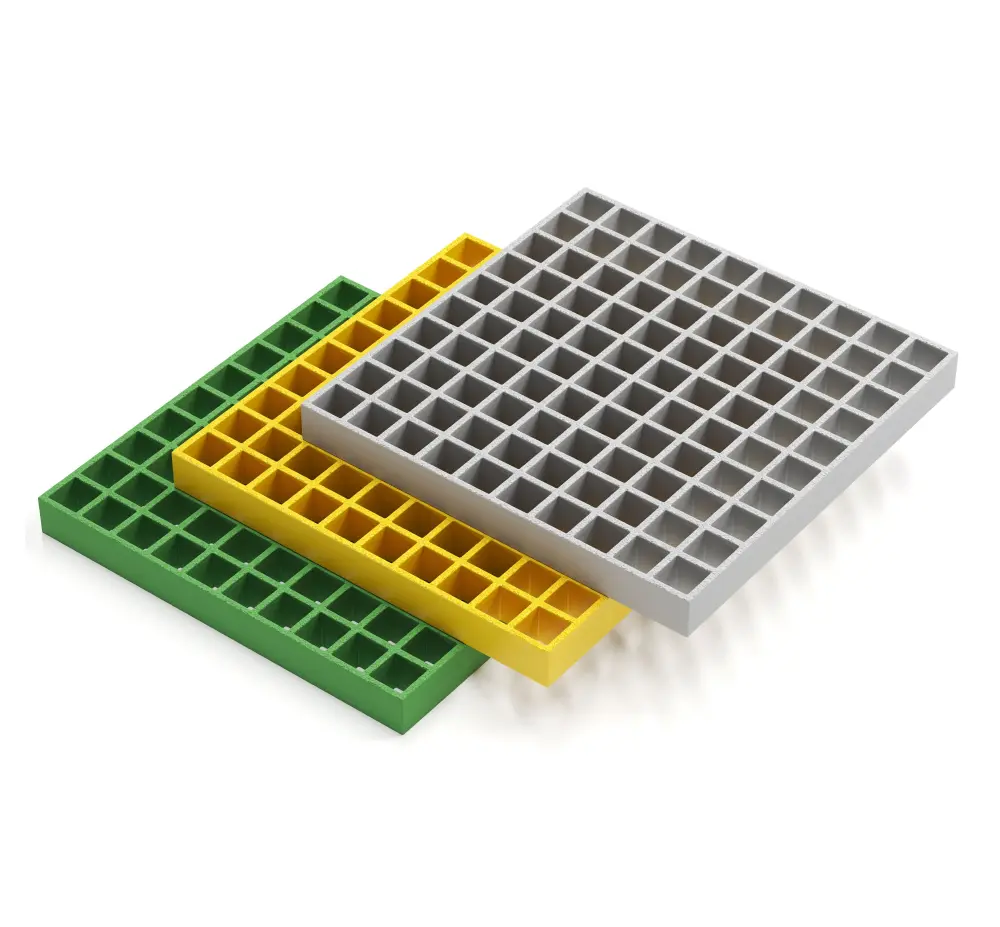
FRP grating, also referred to as fiberglass grating or glass-reinforced plastic (GRP) grating, is a composite material made from thermosetting resin reinforced with continuous or chopped glass fibers. The result is a strong, lightweight, and corrosion-resistant grid structure used primarily for walkways, platforms, trench covers, and industrial flooring.
Composition and Manufacturing
How is FRP grating manufactured? There are two primary manufacturing processes: molded and pultruded. In the molded process, liquid resin is combined with chopped fiberglass strands and poured into a large mold under heat and pressure to form a one-piece panel. In the pultrusion process, continuous glass fiber rovings are pulled through a resin bath and then through a heated die that shapes and cures the material into a rigid profile, which is then assembled into grating panels using cross bars.
The resin systems used in FRP grating vary based on application requirements. Polyester resin offers a good balance of cost and performance, vinyl ester resin provides enhanced corrosion resistance for chemical environments, and phenolic resin delivers fire-retardant and low-smoke properties for offshore and mining applications.
FRP Grating vs Fiberglass Grating
FRP grating vs fiberglass grating — what is the difference? The short answer is that there is no practical difference. FRP stands for Fiber Reinforced Polymer, and fiberglass is the common name for glass-fiber-reinforced polymer. In the industrial grating market, "FRP grating" and "fiberglass grating" are used interchangeably to describe the same product. When suppliers list "FRP grating" and "fiberglass grating" separately, the distinction typically refers to the manufacturing method (molded vs pultruded) rather than the material itself.
Types of FRP Grating
FRP grating is available in several distinct styles, each suited to different load requirements, span configurations, and environmental conditions. Understanding the FRP grating types helps you select the right product for your project.
Molded FRP Grating
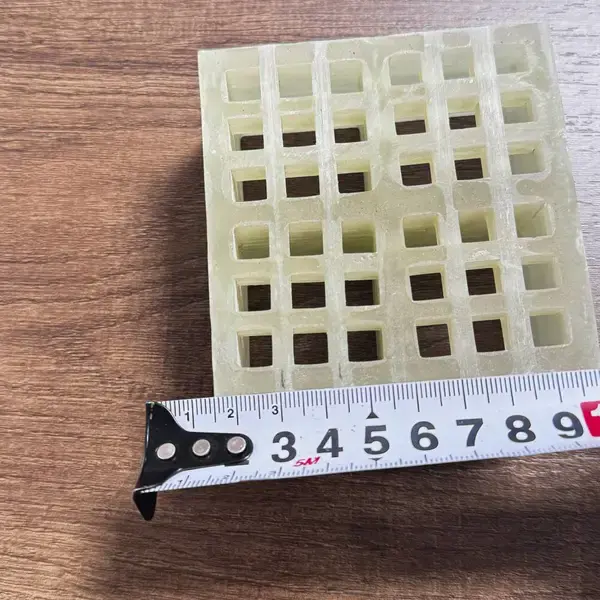
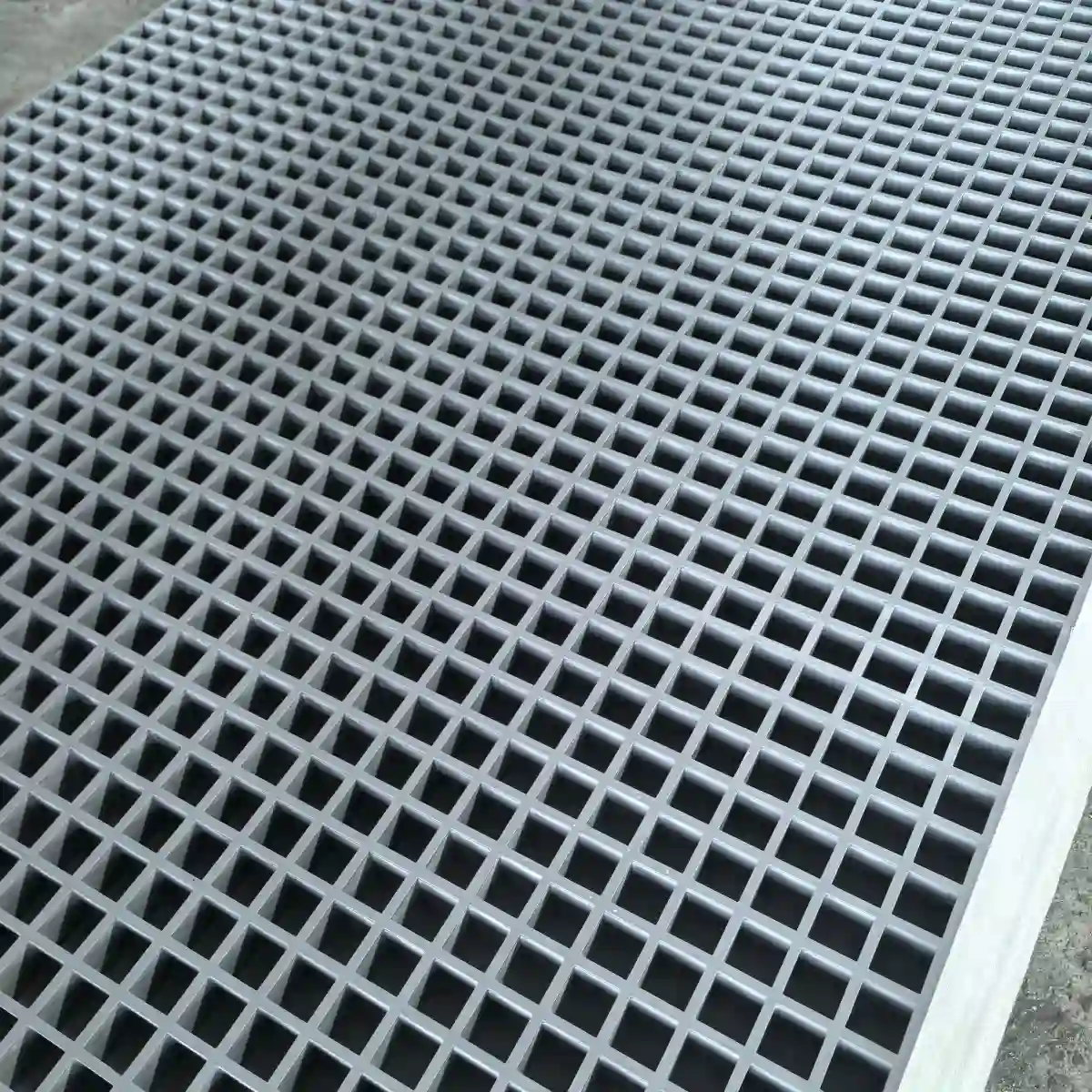
Molded FRP grating is manufactured in a one-piece compression molding process, creating a strong, monolithic panel with an integral grit top surface for slip resistance. It is the most common type of FRP grating for general industrial flooring. Molded panels offer excellent corrosion resistance, are non-conductive, and provide high strength in both directions because of the bidirectional glass reinforcement. Standard molded grating is typically square mesh with bearing bars running in both directions, making it ideal for walkways, platforms, and mezzanine flooring.
Pultruded FRP Grating
Pultruded FRP grating consists of separate load-bearing bars manufactured via the pultrusion process, mechanically assembled with cross bars to form a panel. This construction allows for higher load capacity in one direction, making pultruded grating ideal for longer spans and heavy duty FRP grating applications. Pultruded panels typically offer a higher glass-to-resin ratio, resulting in greater strength and stiffness compared to molded grating of the same thickness. They are commonly used in heavy industrial settings such as refineries, power plants, and mining facilities.
Heavy Duty FRP Grating
For applications requiring maximum load-bearing capacity, heavy duty FRP grating is engineered with thicker bearing bars (up to 50 mm or more) and closer bar spacing. This type of grating can support heavy machinery, truck traffic, and concentrated point loads that would damage standard grating. Heavy duty FRP grating uses pultruded construction with a high glass content, typically 65-75% glass by weight, to achieve the necessary mechanical properties. It is widely used in offshore platforms, heavy manufacturing plants, and vehicle access ways where corrosion resistance is critical.
FRP Grating Sizes and Specifications
FRP grating is manufactured in a wide range of FRP grating sizes to accommodate different span requirements, load conditions, and installation layouts. Choosing the correct size is essential for both safety and cost efficiency.
Standard Panel Dimensions
The most common FRP grating sizes for molded panels are 1220 mm × 3660 mm (4 ft × 12 ft) and 1220 mm × 2440 mm (4 ft × 8 ft). Pultruded grating panels are typically available in widths of 1220 mm with lengths up to 6000 mm, although custom lengths can be cut to order. Standard thicknesses range from 25 mm to 50 mm, with 38 mm being the most popular choice for general industrial walkway applications. The mesh opening or bearing bar spacing is another critical dimension: common patterns include 25 mm × 100 mm, 38 mm × 38 mm, and 50 mm × 50 mm, with tighter spacing providing greater load distribution.
Load Capacity and Weight Ratings
How much weight can FRP grating support? The load capacity of FRP grating depends on its thickness, bar configuration, glass content, and span length. A standard 38 mm thick molded FRP grating with a 600 mm span can typically support a concentrated load of approximately 1500 kg (3300 lb) and a uniform load of over 5000 kg/m². Heavy duty FRP grating, with 50 mm thick bars and high glass content, can support concentrated loads exceeding 5000 kg (11,000 lb) at spans of 750 mm.
Below is a reference table showing typical load capacities for common FRP grating sizes:
| Thickness | Type | Span | Concentrated Load | Uniform Load |
|---|---|---|---|---|
| 25 mm | Molded | 400 mm | ~800 kg | ~3000 kg/m² |
| 38 mm | Molded | 600 mm | ~1500 kg | ~5000 kg/m² |
| 50 mm | Pultruded | 750 mm | ~5000 kg | ~12000 kg/m² |
These values are typical guidelines. Always consult the manufacturer load tables for your specific product, as resin type, glass content, and bar configuration all affect the final load rating. The grating should be supported on all four sides or on structural members spaced per the manufacturer span table to achieve the rated capacity.
FRP Grating vs Steel Grating
One of the most common purchasing decisions engineers face is FRP grating vs steel grating. Both materials have served as industrial flooring solutions for decades, but they differ dramatically in performance, maintenance, and total cost of ownership.
Weight and Installation
FRP grating weighs approximately 75% less than an equivalent steel grating panel. A standard 1220 mm × 3660 mm × 38 mm molded FRP panel weighs roughly 45-55 kg, while the same size in steel would weigh 180-220 kg. This weight difference translates directly into lower transportation costs, easier handling, and reduced structural support requirements. Installation labor is significantly faster with FRP since no heavy lifting equipment is needed and the panels can be cut on-site with standard power tools.
Corrosion Resistance
What are the advantages of FRP grating over steel grating? The single greatest advantage is corrosion resistance. Steel grating, even when galvanized or coated, will eventually rust in moist, chemical, or saltwater environments. FRP grating is inherently corrosion-resistant throughout its entire thickness — there is no coating to chip or wear off. This makes FRP the superior choice for chemical plants, water treatment facilities, marine environments, and food processing plants where frequent washdowns with aggressive cleaning agents are standard.
Lifecycle Cost Comparison
While the upfront purchase price of FRP grating is typically 1.5 to 2.5 times higher than steel, the total lifecycle cost often favors FRP. Steel grating in corrosive environments may require replacement every 3-5 years, including the cost of structural repairs caused by corrosion runoff. FRP grating, with proper installation, can last 20+ years with virtually no maintenance. When you factor in the elimination of painting, galvanizing repairs, and replacement labor, FRP grating vs steel grating lifecycle analysis consistently shows FRP as the more economical choice over a 10-20 year period.
Safety and Performance
FRP grating offers additional safety advantages: it is slip-resistant (with embedded silica grit), non-conductive (eliminating electrical shock hazards), and non-sparking (critical in flammable environments). Steel grating conducts electricity and can produce sparks if struck, making it unsuitable for certain hazardous locations. However, steel grating does offer higher strength per unit thickness in some configurations and may be preferred for extreme point loads or where impact resistance is critical.
Applications of FRP Grating
What is FRP grating used for? The unique combination of corrosion resistance, light weight, high strength, and non-conductivity makes FRP grating suitable for a remarkably broad range of industrial and commercial applications.
FRP Grating for Chemical Plants
FRP grating for chemical plants is one of the most important applications of this material. Is FRP grating suitable for chemical environments? Absolutely — this is where FRP truly excels. When fabricated with vinyl ester or phenolic resin systems, FRP grating can withstand exposure to a wide range of acids, alkalis, solvents, and oxidizing agents that would rapidly destroy steel or aluminum grating. In chemical processing plants, FRP grating is used for platform walkways, mezzanine flooring, stair treads, trench covers, and cable tray support systems in areas where chemical spills are frequent. The grating does not corrode, does not contaminate the chemicals, and requires no painting or protective coating.
Other Industrial Applications
Beyond chemical processing, FRP grating serves many other industries:
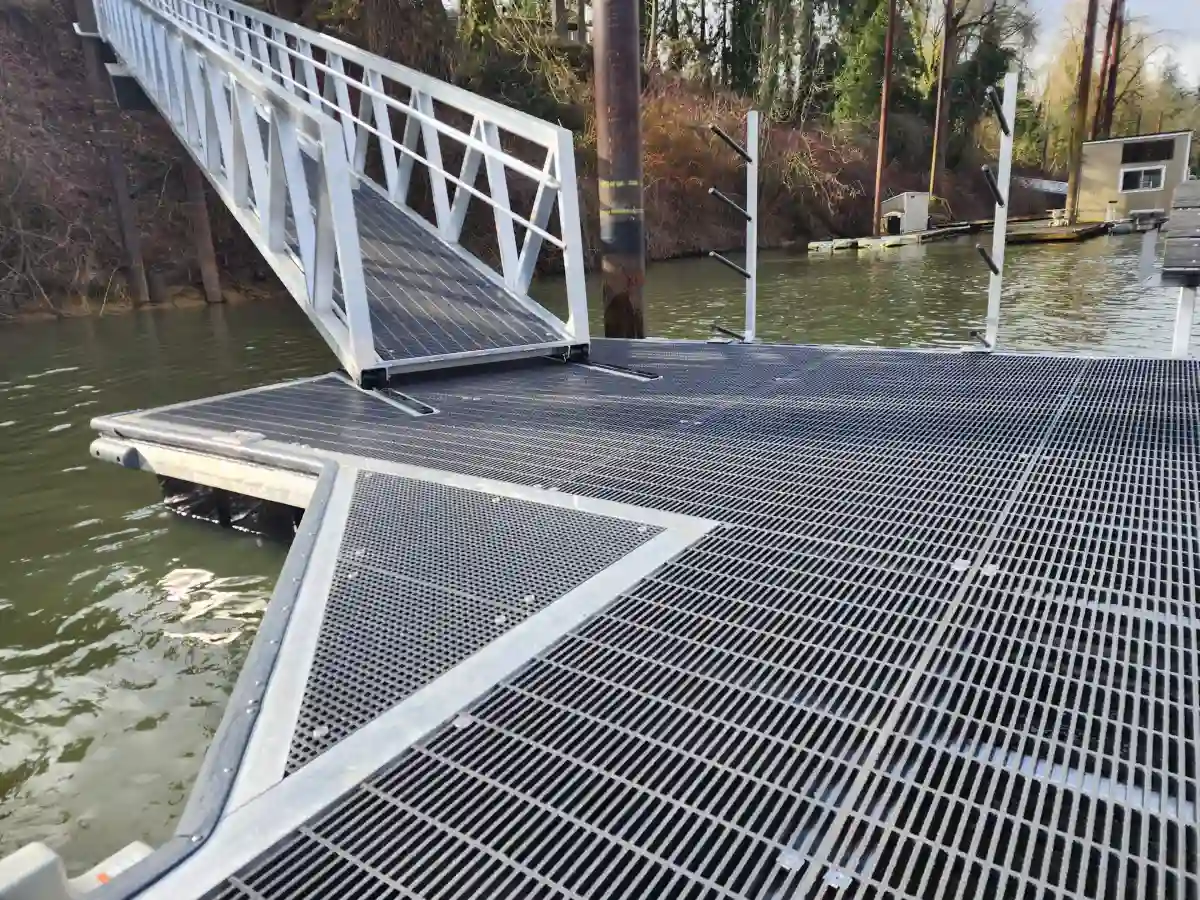
- Marine and offshore: Ship decks, dockside walkways, offshore platform flooring, and subsea cable trays benefit from FRP grating's saltwater corrosion resistance and non-magnetic properties.
- Water and wastewater treatment: Grating for filter beds, sludge drying beds, chlorine rooms, and catwalks where moisture and chemicals are constantly present.
- Food and beverage: Processing floors, walkways, and platforms subject to frequent washdown with hot water, steam, and sanitizing chemicals.
- Power generation: Cooling towers, battery rooms, and chemical handling areas in both conventional and nuclear power plants.
- Mining and minerals: Heavy duty FRP grating for processing plants, slurry handling areas, and flotation cell platforms where both corrosion and weight are concerns.
- Pharmaceutical: Cleanroom flooring and platforms where non-particle-shedding, easy-to-clean surfaces are required.
In every application, the key benefit of FRP grating for chemical plants and other demanding environments is the dramatic reduction in maintenance and replacement costs compared to traditional materials.
FRP Grating Installation Guide
Proper FRP grating installation is critical to achieving the full service life and load capacity of your grating system. FRP grating is easier to install than steel grating due to its light weight, but it requires attention to a few unique considerations.
Cutting and Fabrication
Unlike steel, FRP grating can be cut on-site using standard woodworking or metalworking tools. Carbide-tipped blades are recommended for clean cuts in both molded and pultruded panels. A circular saw with a fine-tooth carbide blade produces smooth edges, while jigsaws or angle grinders with diamond blades can handle curved cuts and notches. All cut edges should be sealed with a compatible resin or the manufacturer's edge sealant to prevent moisture wicking along exposed glass fibers, which can reduce the grating's corrosion resistance over time.
Installation Best Practices
Here are the key guidelines for successful FRP grating installation:
- Support structure: FRP grating must be supported on all bearing edges by structural steel, concrete, or FRP beams. The support spacing should not exceed the manufacturer's maximum span rating for the grating type and thickness.
- Fastening: Use FRP-compatible fasteners such as stainless steel clips, hold-down clamps, or FRP bolts. Never overtighten fasteners, as FRP can compress under excessive clamping force, leading to loose connections over time.
- Expansion gaps: FRP has a higher thermal expansion coefficient than steel. Leave 3-6 mm expansion gaps between panels and at perimeter edges to prevent buckling in high-temperature environments.
- Cutout reinforcements: Large cutouts for pipes, columns, or equipment should be reinforced with additional framing to restore the strength lost by removing grating bars.
- Perimeter trim: Exposed edges should be banded or framed to protect against impact damage and to provide a finished appearance.
Following these FRP grating installation practices will ensure a safe, durable, and long-lasting flooring system that delivers the full performance benefits of the material.
Conclusion
This guide has covered the essential information about FRP grating — from what it is and how it is manufactured, to the different FRP grating types available, standard FRP grating sizes, load capacities, and installation best practices. We have examined FRP grating vs steel grating in terms of weight, corrosion resistance, lifecycle cost, and safety, and explored critical applications such as FRP grating for chemical plants and other industrial environments.
To summarize the key takeaways:
- FRP grating offers a 75% weight reduction compared to steel, enabling easier handling and lower structural support costs.
- Its inherent corrosion resistance eliminates the need for painting, galvanizing, or protective coatings, providing 20+ years of service life in most environments.
- FRP is available in molded and pultruded configurations, with heavy duty FRP grating options for the most demanding load requirements.
- FRP grating installation is straightforward with standard tools, though proper edge sealing, support spacing, and fastening techniques are essential for long-term performance.
- For chemical plants, water treatment, marine, and food processing applications, FRP grating is often the most cost-effective and safest flooring solution available.
When selecting FRP grating for your project, work with an experienced manufacturer who can provide load tables, chemical resistance data, and engineering support. The initial investment in quality FRP grating pays dividends through decades of maintenance-free service.