Introduction
Pultruded grating panels are a high-performance fiberglass reinforced plastic (FRP) flooring solution widely used in industrial, commercial, and infrastructure projects. Unlike molded grating, which is formed in a single press operation, pultruded grating panels are manufactured through a continuous pultrusion process that produces panels with unidirectional glass fiber reinforcement and consistent cross-sectional properties. This gives them exceptional strength-to-weight ratios, superior corrosion resistance, and excellent load-bearing capabilities.
Whether you are designing a chemical plant walkway, a water treatment platform, or a marine pier deck, understanding the specifications, pricing, and installation requirements of pultruded grating panels is essential for making the right purchasing decision. This comprehensive guide covers everything you need to know — from standard sizes and load ratings to cost comparisons and step-by-step installation instructions. We also answer frequently asked questions about where to buy pultruded grating panels and how they compare to molded alternatives.
What Are Pultruded Grating Panels?
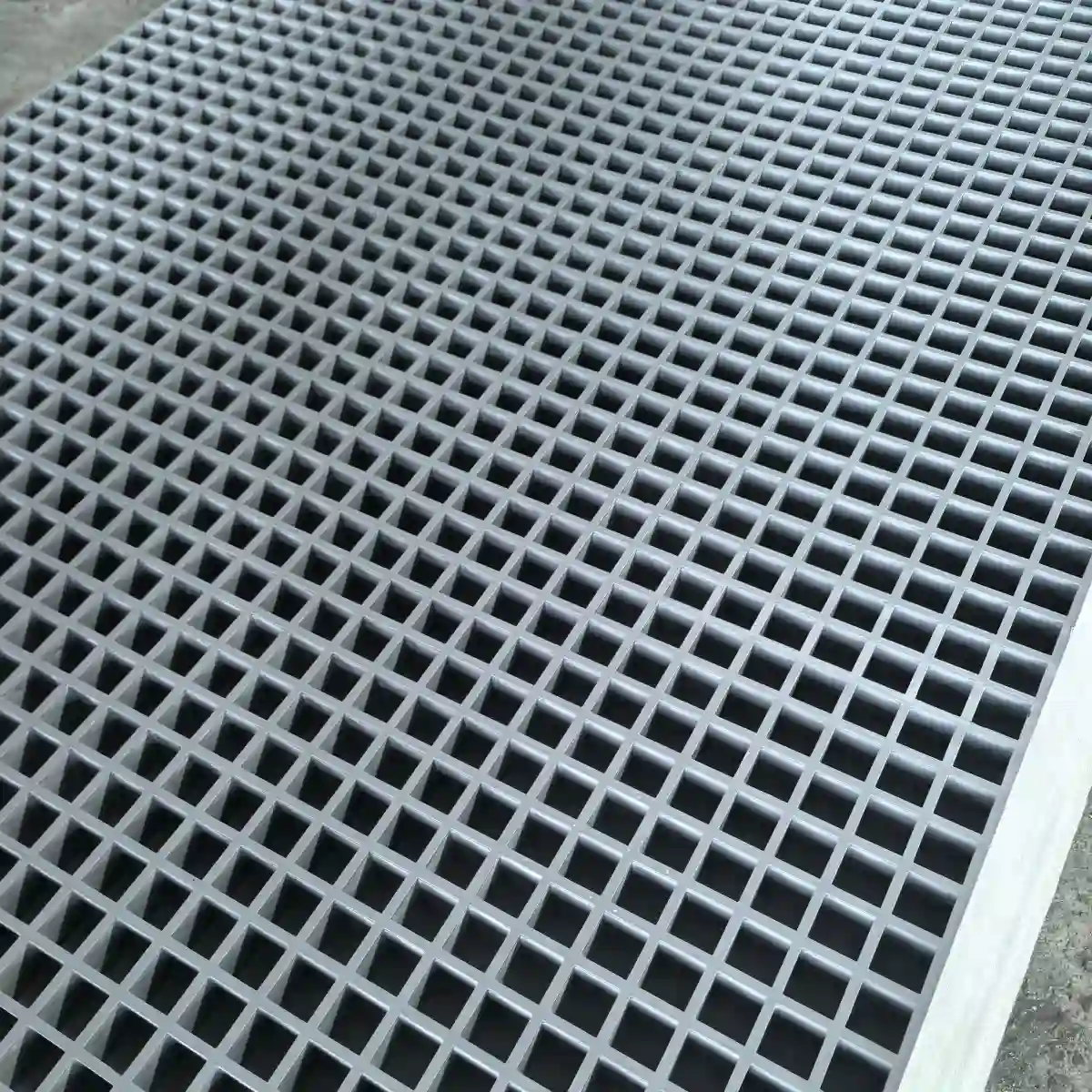
Pultruded grating panels are a type of FRP (Fiber Reinforced Polymer) grating manufactured using the pultrusion process. In this method, continuous glass fiber rovings are pulled through a resin bath and then through a heated die that shapes and cures the material into a solid, uniform cross-section. This results in a grating panel with high unidirectional strength, excellent dimensional stability, and a smooth surface finish.
Manufacturing Process and Key Characteristics
The pultrusion process gives pultruded fiberglass grating several distinct advantages. The continuous fiber reinforcement runs the full length of each bar, providing maximum strength in the longitudinal direction. Common resins used include polyester, vinyl ester, and phenolic, each offering different levels of corrosion resistance and fire retardancy. The bars are then assembled into panels using cross rods that lock the bearing bars together, creating a rigid, monolithic structure.
Key characteristics include:
- High strength-to-weight ratio — Pultruded grating panels are significantly lighter than steel while offering comparable load capacity.
- Corrosion resistance — They will not rust, rot, or corrode, making them ideal for harsh chemical environments.
- Low maintenance — Unlike steel grating, pultruded panels never need painting or protective coatings.
- Non-conductive — FRP materials are electrically non-conductive and non-magnetic, important for electrical utility and telecommunications applications.
- Slip resistance — Available with gritted surfaces for enhanced slip resistance in wet or oily conditions.
Common Applications
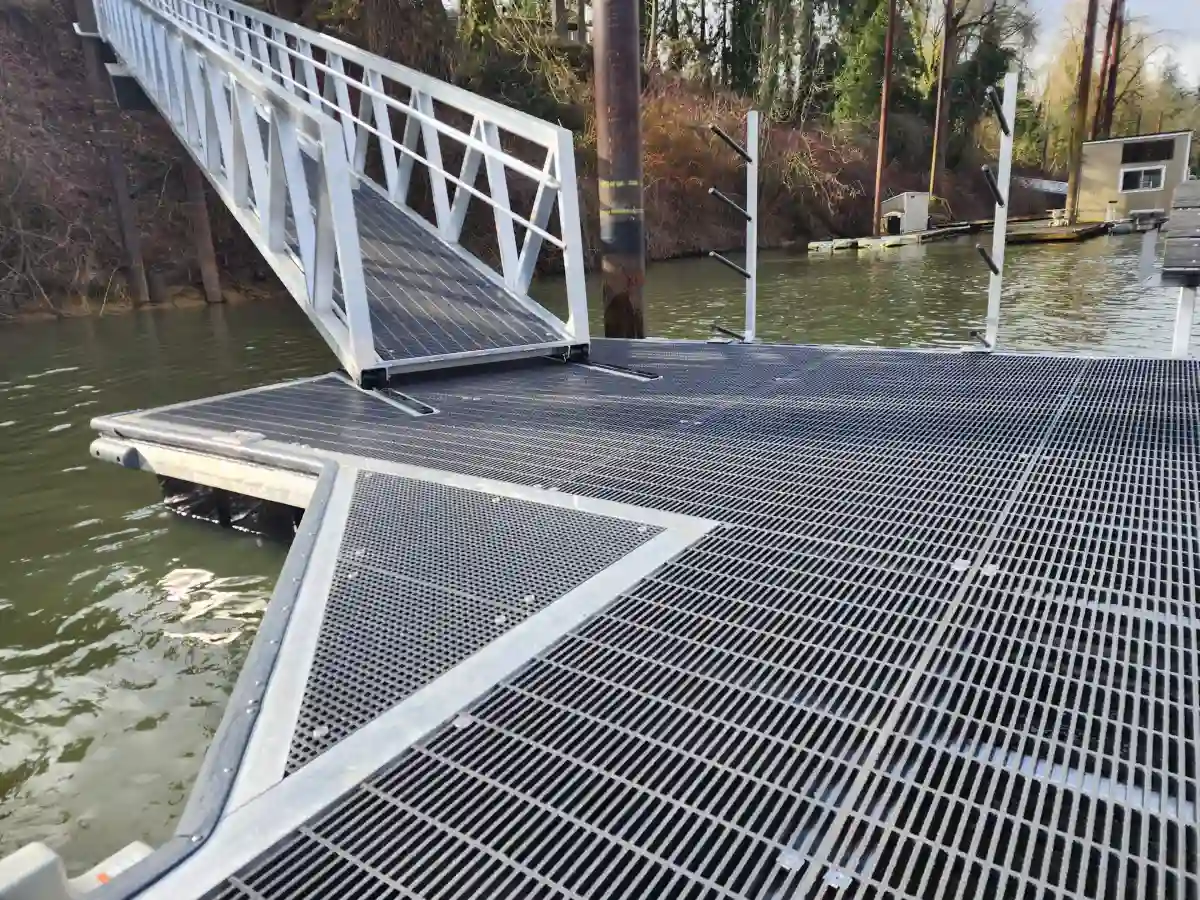
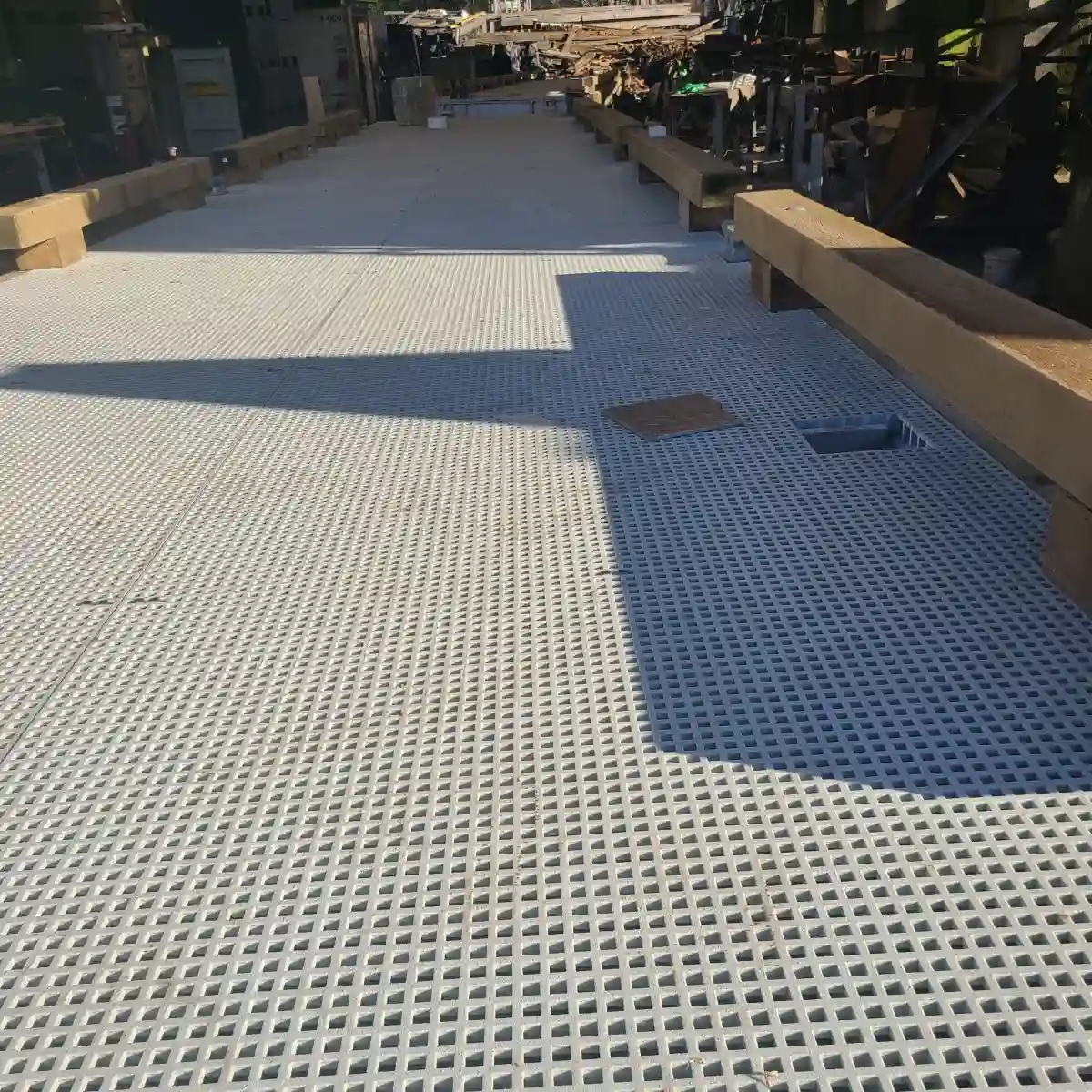
Pultruded grating panels are used across a wide range of industries. Pultruded grating for walkways is one of the most common applications, providing safe, durable access in chemical plants, refineries, and water treatment facilities. Other common uses include platform flooring, trench covers, stair treads, bridge decks, mezzanine flooring, marine docks, offshore platform decking, and cooling tower fill supports. The dimensional stability and high load capacity of pultruded panels make them suitable for both light-duty pedestrian walkways and heavy industrial platforms carrying equipment and vehicular traffic.
Pultruded Grating Panels Sizes and Dimensions
Understanding the available sizes and dimensions of pultruded grating panels is critical for project planning. Pultruded grating is manufactured in a wide range of standard sizes, and custom dimensions are also available from most manufacturers.
Standard Panel Sizes
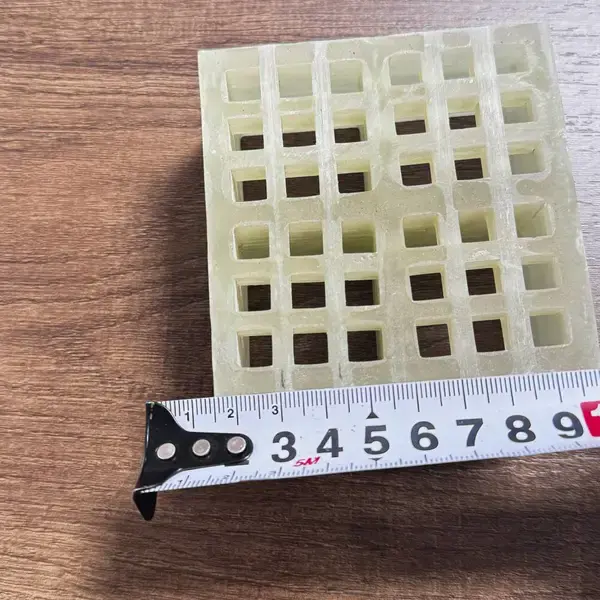
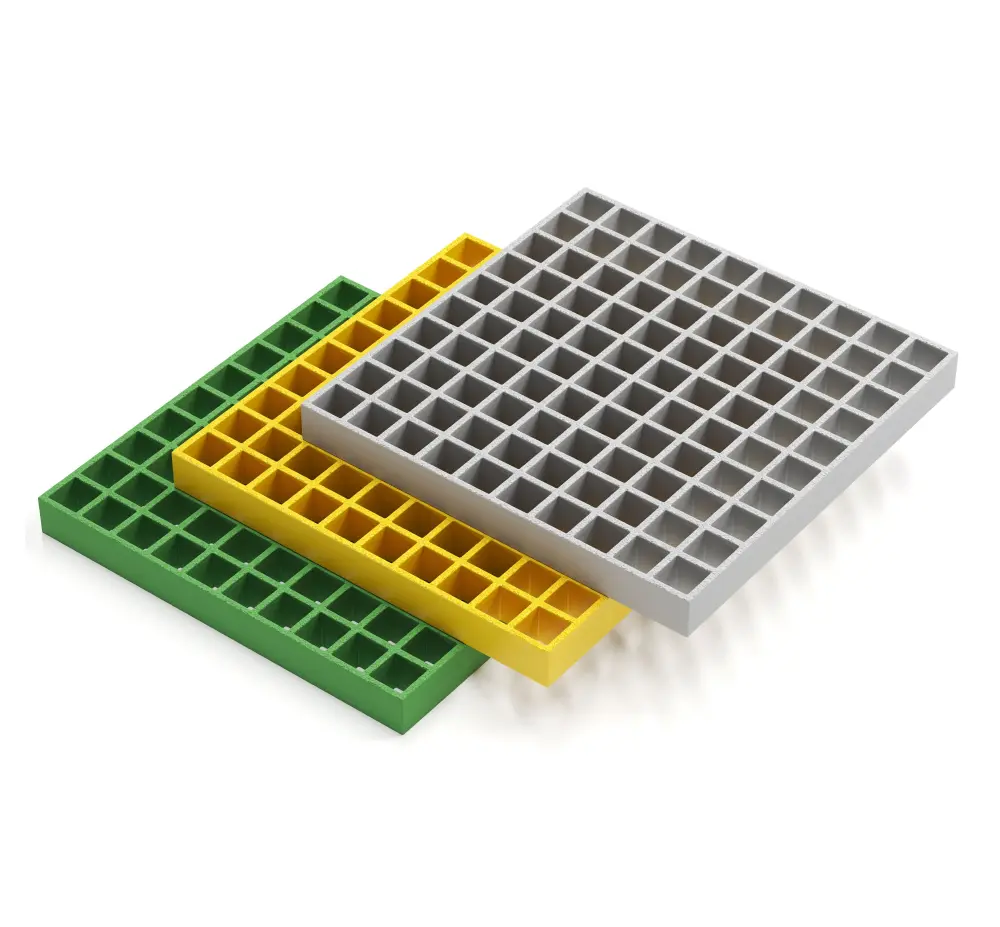
The most common standard panel size for pultruded grating panels is 4 ft × 8 ft (1219 mm × 2438 mm), though panels are also available in 3 ft × 10 ft (914 mm × 3048 mm) and 4 ft × 12 ft (1219 mm × 3658 mm) configurations. The standard width typically ranges from 3 ft to 4 ft (914–1219 mm), with lengths from 8 ft to 20 ft (2438–6096 mm). Some manufacturers offer panel lengths up to 24 ft or more for special applications.
Thickness and Bar Dimensions
Pultruded grating panels are available in several thickness options. The most common bar depths include:
- 1 inch (25 mm) — Light-duty applications, pedestrian walkways, light industrial use
- 1.5 inch (38 mm) — Medium-duty platforms, mezzanine flooring, maintenance walkways
- 2 inch (50 mm) — Heavy-duty industrial platforms, equipment access, vehicular traffic areas
Bearing bar thickness typically ranges from 3/16 inch (4.8 mm) to 3/8 inch (9.5 mm). Bar spacing options include 1.5-inch (38 mm) and 2-inch (50 mm) center-to-center configurations. The cross rods (which lock the bearing bars together) are typically spaced at 4-inch (102 mm) or 6-inch (152 mm) intervals along the length of the panel.
Custom Dimensions
When standard sizes do not fit your project requirements, most manufacturers offer custom fabrication. Panels can be cut to specific lengths and widths, and holes can be pre-drilled for fastening. Custom bar spacing, special resin formulations, and unique panel shapes are also available. Lead times for custom pultruded grating panels typically range from 2 to 6 weeks depending on complexity and order volume.
Weight Capacity and Load Ratings
One of the most frequently asked questions about pultruded grating panels is their load-bearing capacity. The weight capacity of a pultruded grating panel depends on several factors including bar depth, bar thickness, span distance, and the resin system used.
Load Tables and Span Ratings
Manufacturers provide detailed load tables that specify the maximum safe load for each grating configuration at various span distances. These tables typically show both concentrated load (point load) and uniform load (distributed load) ratings. As a general reference:
- 1-inch deep bars at 12-inch span: Withstand approximately 500–800 lbs/ft² uniform load
- 1.5-inch deep bars at 18-inch span: Withstand approximately 800–1,200 lbs/ft² uniform load
- 2-inch deep bars at 24-inch span: Withstand approximately 1,200–1,800+ lbs/ft² uniform load
The deflection limit is typically set at L/200 (span divided by 200) or L/100 depending on the application and code requirements. For pedestrian walkways, stricter deflection limits are often specified to ensure a comfortable walking surface.
Factors That Affect Load Capacity
Several factors influence how much weight pultruded grating panels can hold:
- Span distance — This is the single most important factor. Doubling the span reduces load capacity by roughly 75%.
- Bar depth and thickness — Deeper and thicker bars provide proportionally higher load capacities.
- Resin type — Vinyl ester and phenolic resins offer slightly different mechanical properties than standard polyester.
- Fiber content — Higher glass-to-resin ratios (typically 65–75% glass by weight) improve strength.
- Temperature — Elevated operating temperatures can reduce the mechanical properties of FRP materials. Most load tables include derating factors for temperatures above 100°F (38°C).
Always consult the manufacturer load tables and factor in a safety margin (typically 2:1 to 3:1) when designing pultruded grating installations. Engineering calculations should be reviewed by a qualified structural engineer for critical load-bearing applications.
Pultruded Grating Panels vs Molded Grating Panels
A common question when selecting grating materials is: pultruded grating panels vs molded grating panels — which is better? The answer depends on your specific application requirements. Both are made from fiberglass and resin, but their manufacturing processes produce different performance characteristics.
Manufacturing Differences
Pultruded fiberglass grating is made by pulling continuous glass fibers through a resin bath and heated die, creating bars with aligned, unidirectional reinforcement. These bars are then assembled into panels using cross rods. The result is a grating with high strength in the longitudinal direction and a clean, consistent appearance.
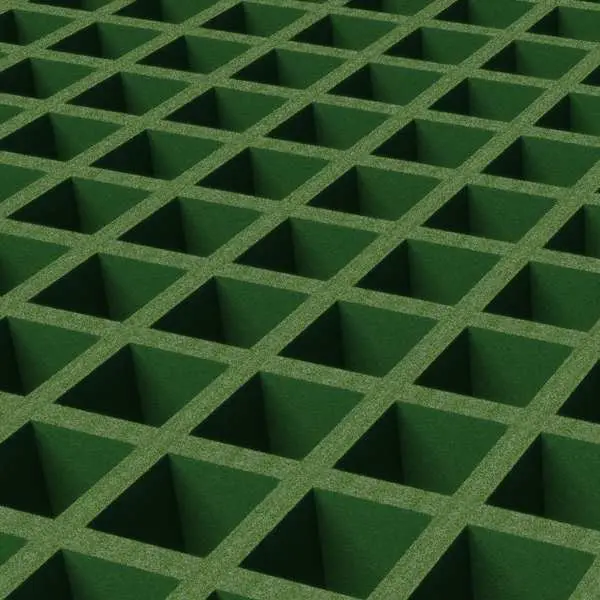
Molded grating, by contrast, is produced by placing chopped glass strand mat and resin into a mold and compressing it under heat and pressure. This creates a panel with isotropic (equal in all directions) strength properties and a distinctive diamond-shaped mesh pattern.
Performance Comparison
- Strength: Pultruded grating offers higher strength in the bar direction, making it better for long-span applications. Molded grating provides more balanced strength in both directions.
- Load capacity: For the same bar depth, pultruded panels typically support higher loads over longer spans than molded panels.
- Corrosion resistance: Both perform well, but pultruded grating offers better resistance to chemical attack due to the higher resin-to-glass ratio at the surface.
- Appearance: Pultruded panels have a smoother, more uniform appearance. Molded panels have a textured surface that provides natural slip resistance.
- Customization: Pultruded grating can be easily cut, drilled, and fabricated to custom shapes. Molded grating is more limited in post-fabrication modifications.
- Cost: Molded grating is generally less expensive for standard sizes and lower load requirements.
For projects requiring long spans, high load capacities, or superior corrosion resistance, pultruded grating panels are typically the better choice. For general-purpose applications where cost is a primary concern, molded grating may be more suitable.
Pultruded Grating for Walkways and Industrial Platforms
One of the most popular applications for pultruded grating panels is industrial walkways. Pultruded grating for walkways offers an excellent combination of safety, durability, and low maintenance that makes it a preferred choice over steel, aluminum, and molded FRP alternatives in demanding environments.
In chemical processing plants, refineries, and wastewater treatment facilities, walkways must withstand constant exposure to corrosive chemicals, moisture, and harsh cleaning agents. Pultruded grating panels excel in these conditions because the fiberglass and resin construction will not rust, corrode, or degrade — even after years of chemical exposure. The smooth surface of pultruded bars also makes them easier to clean than textured molded grating, which can trap debris and contaminants.
For offshore platforms and marine applications, the non-corrosive and non-conductive properties of pultruded grating are particularly valuable. Saltwater environments rapidly degrade steel grating, but pultruded FRP grating remains unaffected. The light weight of pultruded panels (roughly one-fourth the weight of steel) also reduces the structural load on the supporting framework, which can lead to significant savings in support steel costs.
Other industrial applications include:
- Platform flooring — Equipment access platforms, observation decks, and maintenance platforms
- Trench covers — Drainage channel covers in chemical and food processing facilities
- Stair treads — With gritted surface for slip resistance in wet or oily conditions
- Bridge decks — Pedestrian and light vehicular bridges in parks, trails, and industrial sites
- Cooling tower fill supports — Structural supports for cooling tower media
- Mezzanine flooring — Warehouse and factory mezzanine decking
Pultruded Grating Panels Price Guide
Understanding pultruded grating panels pricing is essential for budgeting your project. The cost varies significantly based on size, thickness, resin type, quantity ordered, and any custom fabrication requirements.
Price Per Panel and Per Square Foot
The pultruded grating panels price per panel depends on the panel dimensions and specifications. For a standard 4 ft × 8 ft panel with 1.5-inch deep bars in polyester resin, prices typically range from:
- $80–$120 per panel for 1-inch deep bars with standard polyester resin
- $120–$200 per panel for 1.5-inch deep bars with standard polyester resin
- $200–$350 per panel for 2-inch deep bars with standard polyester resin
On a per-square-foot basis, pultruded grating panels cost per square foot generally falls in the range of:
- $2.50–$4.00/sq ft for light-duty 1-inch panels
- $3.50–$6.00/sq ft for medium-duty 1.5-inch panels
- $6.00–$11.00/sq ft for heavy-duty 2-inch panels
Factors Influencing Cost
Several factors can increase or decrease the price of pultruded grating panels:
- Resin type: Vinyl ester resin adds 15–30% to the cost compared to polyester. Phenolic resin (for fire-rated applications) can add 25–50%.
- Gritted surface: Adding a silica grit top surface for slip resistance adds approximately 10–20% to the panel cost.
- Quantity discounts: Bulk orders of 50+ panels typically receive 10–20% discounts. Full truckload orders (200+ panels) can achieve 25–30% savings.
- Custom fabrication: Cutting panels to custom sizes, drilling holes, or adding notches adds fabrication charges, typically $15–$50 per panel depending on complexity.
- Fire retardancy: Panels with fire-retardant additives or phenolic resin cost more but may be required by building codes.
Shipping costs also add to the total project cost. Pultruded grating is lightweight but bulky, so freight costs should be factored into your budget. Regional suppliers and manufacturers typically offer the most competitive delivered pricing.
How to Install Pultruded Grating Panels
Installing pultruded grating panels is a straightforward process that can be completed with standard tools. Proper installation ensures safety, longevity, and optimal performance of the grating system.
Tools and Preparation
Before beginning installation, gather the following tools and materials:
- Cutting tools: Carbide-tipped abrasive saw blades or diamond blades for cutting pultruded bars to size. Standard woodworking blades dull quickly on FRP material.
- Drilling equipment: Standard twist drills or carbide-tipped bits for drilling fastener holes. Use backup support to prevent splintering on the exit side.
- Fasteners: Stainless steel clips, bolts, and washers (type 304 or 316 stainless steel) designed specifically for FRP grating.
- Safety gear: Safety glasses, dust mask or respirator, and gloves. Cutting FRP generates fine glass dust that can irritate skin and lungs.
- Support structure: The steel or aluminum support frame should be level, clean, and properly aligned before placing grating panels.
Step-by-Step Installation Guide
- Measure and plan: Measure the support opening and plan the panel layout. Allow 1/8 to 1/4 inch gap between panels for thermal expansion.
- Cut panels to size: Use a carbide-tipped saw to cut panels to the required dimensions. Cut from the top surface to minimize edge splintering.
- Deburr edges: Lightly sand or file cut edges to remove sharp fiberglass splinters. Seal cut edges with compatible resin if the grating will be exposed to chemicals.
- Position the panels: Place panels on the support structure with the bearing bars running perpendicular to the supports. Ensure proper bearing — minimum 1 inch (25 mm) of support contact at each end.
- Secure with fasteners: Attach panels using stainless steel clips or bolts at all support crossovers. Space fasteners at a maximum of 12 inches (305 mm) along the perimeter and 24 inches (610 mm) in the field.
- Install cutouts: For pipe penetrations and equipment openings, cut the required shape using a jigsaw with a fine-tooth blade. Seal cut edges as needed.
- Final inspection: Check all fasteners are tight, all edges are properly supported, and the walking surface is level and secure.
Fastening Methods
Pultruded grating panels can be fastened to the support structure using several methods. The most common are:
- G-clips (surface mount): Two-piece clips that clamp over the top of the bearing bar and bolt to the support steel. Ideal for general-purpose applications.
- Counter-sunk fasteners: Bolts that pass through a countersunk hole in the grating and thread into the support structure. Provides a flush walking surface.
- Side-mount clips: Clips that attach to the side of the bearing bar, leaving the walking surface completely unobstructed.
- Through-bolting: For the most secure attachment in high-vibration areas, bolts pass completely through the grating and support structure.
Where to Buy Pultruded Grating Panels
Finding a reliable supplier for pultruded grating panels is important for ensuring product quality, competitive pricing, and timely delivery. Whether you need a few panels for a small project or truckload quantities for a major industrial facility, there are several sourcing options to consider.
Direct from Manufacturers
Buying directly from manufacturers typically offers the best pricing, especially for large orders. Major FRP grating manufacturers with pultrusion capabilities include:
- Strongwell — One of the largest pultruded FRP grating manufacturers in North America, offering a wide range of panel sizes and resin systems.
- Bedford Reinforced Plastics — Full line of pultruded grating panels with standard and custom fabrication options.
- Fibergrate Composites — Comprehensive selection of pultruded and molded FRP grating products for industrial applications.
- National Grating — Specializes in pultruded FRP grating for walkways, platforms, and marine applications.
- RWC (Rigidized Metals Corporation) — Offers pultruded FRP grating for the North American market.
Regional Distributors and Stocking Suppliers
For smaller quantities or faster delivery, regional distributors and industrial supply houses often stock standard pultruded grating panels. Companies like McMaster-Carr, Grainger, and regional industrial supply centers carry common sizes and can ship quickly. Local fabrication shops may also offer cut-to-size service with shorter lead times than factory-direct orders.
Tips for Buying
When sourcing pultruded grating panels for industrial projects, keep these tips in mind:
- Request load tables and specification sheets before purchasing to verify the panel meets your project requirements.
- Ask about quantity discounts — pricing often improves significantly at 25, 50, and 100+ panel quantities.
- Compare delivered pricing, not just product cost. Freight charges can vary widely between suppliers.
- Request samples to verify quality, color, and surface finish before committing to a large order.
- Check lead times — standard sizes are often in stock, while custom configurations may require 2–6 weeks production time.
Conclusion
Pultruded grating panels are a versatile, durable, and cost-effective flooring solution for a wide range of industrial and commercial applications. Their high strength-to-weight ratio, excellent corrosion resistance, and low maintenance requirements make them an ideal choice for walkways, platforms, trench covers, and marine structures in demanding environments.
When selecting pultruded grating panels for your project, consider the key factors covered in this guide: standard sizes and dimensions, load capacity requirements, pricing considerations, and installation methods. Always consult manufacturer load tables and specification sheets to ensure the panel configuration you choose meets your project's load, span, and environmental requirements.
Whether you need pultruded fiberglass grating for a chemical plant walkway, pultruded grating for walkways at a water treatment facility, or heavy-duty panels for an industrial platform, taking the time to properly specify your grating will ensure a safe, long-lasting installation. Compare suppliers, request quotes from multiple sources, and don't hesitate to ask manufacturers for engineering support and load data to make an informed purchasing decision.