Introduction
In industrial environments where safety, durability, and corrosion resistance are non-negotiable, fiberglass grating has emerged as a top-tier flooring and walkway solution. Also known as FRP (fiberglass reinforced plastic) grating, this composite material combines the strength of glass fibers with the corrosion resistance of polymer resins to create a lightweight yet incredibly strong grid structure.
Unlike traditional steel or aluminum grating, FRP grating does not rust, rot, or degrade when exposed to harsh chemicals, moisture, or UV radiation. This makes it the preferred choice for platforms, catwalks, trench covers, and marine decking across industries ranging from chemical processing to offshore oil and gas.
This comprehensive guide covers everything you need to know about this versatile material — including the different types available, how it compares to steel, standard sizes and load capacities, installation best practices, and tips for finding reliable suppliers.
What Is Fiberglass Grating?
FRP grating is a composite material manufactured by combining glass fiber reinforcements with a thermosetting resin matrix. The result is a strong, corrosion-resistant grid panel that offers excellent structural performance in demanding environments.
Composition and Manufacturing Process
The two primary raw materials are:
- Glass fibers — These provide the tensile strength and structural reinforcement. Continuous glass fiber strands (rovings) or chopped strand mats are used depending on the manufacturing method.
- Thermosetting resins — The resin binds the glass fibers together and provides chemical resistance. Common resin types include polyester, vinyl ester, phenolic, and epoxy, each offering different levels of corrosion resistance and fire performance.
The manufacturing process varies by type. Molded grating is produced by sandwiching layers of liquid resin and glass fiber mat between heated molds under pressure, creating a uniform one-piece panel. Pultruded grating is made by pulling continuous glass fiber rovings through a resin bath and then through a heated die, forming straight, high-strength profiles that are later assembled into a grating panel.
Key Properties at a Glance
FRP grating offers a unique combination of properties that make it stand out from traditional materials:
| Property | FRP Grating | Steel Grating |
|---|---|---|
| Weight | Lightweight (~1/3 the weight of steel) | Heavy |
| Corrosion Resistance | Excellent — impervious to most chemicals | Poor — rusts without coating |
| Electrical Conductivity | Non-conductive (electrically safe) | Conductive |
| Magnetic Permeability | Non-magnetic | Magnetic |
| Maintenance | Low — no painting or coating needed | High — requires regular painting |
| Strength-to-Weight Ratio | Excellent | Good |
The weight advantage is particularly important for platforms and walkways where structural loading is a concern. A typical 1-inch thick molded panel weighs approximately 3-4 lbs per square foot, compared to 8-10 lbs per square foot for steel.
What Are the Different Types of Fiberglass Grating?
Understanding the different types of FRP grating is essential for selecting the right product for your application. The two main categories are molded and pultruded, each with distinct characteristics and best-use scenarios.
Molded Grating
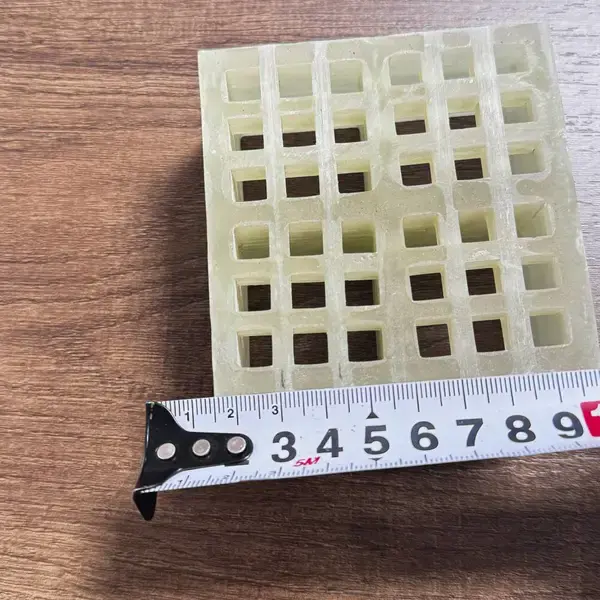
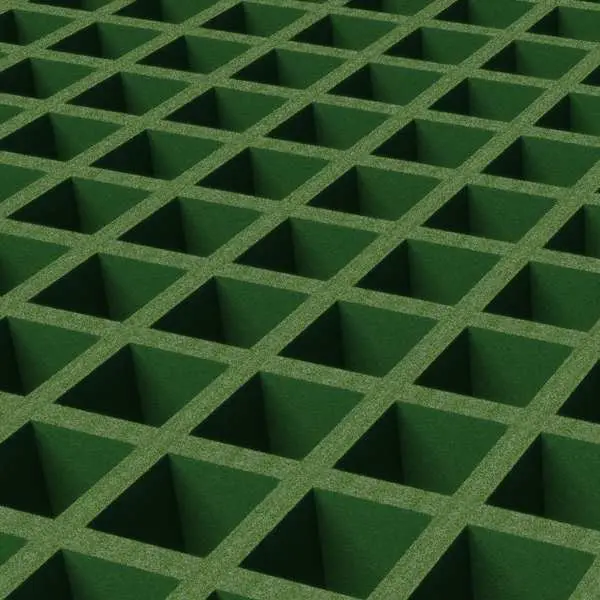
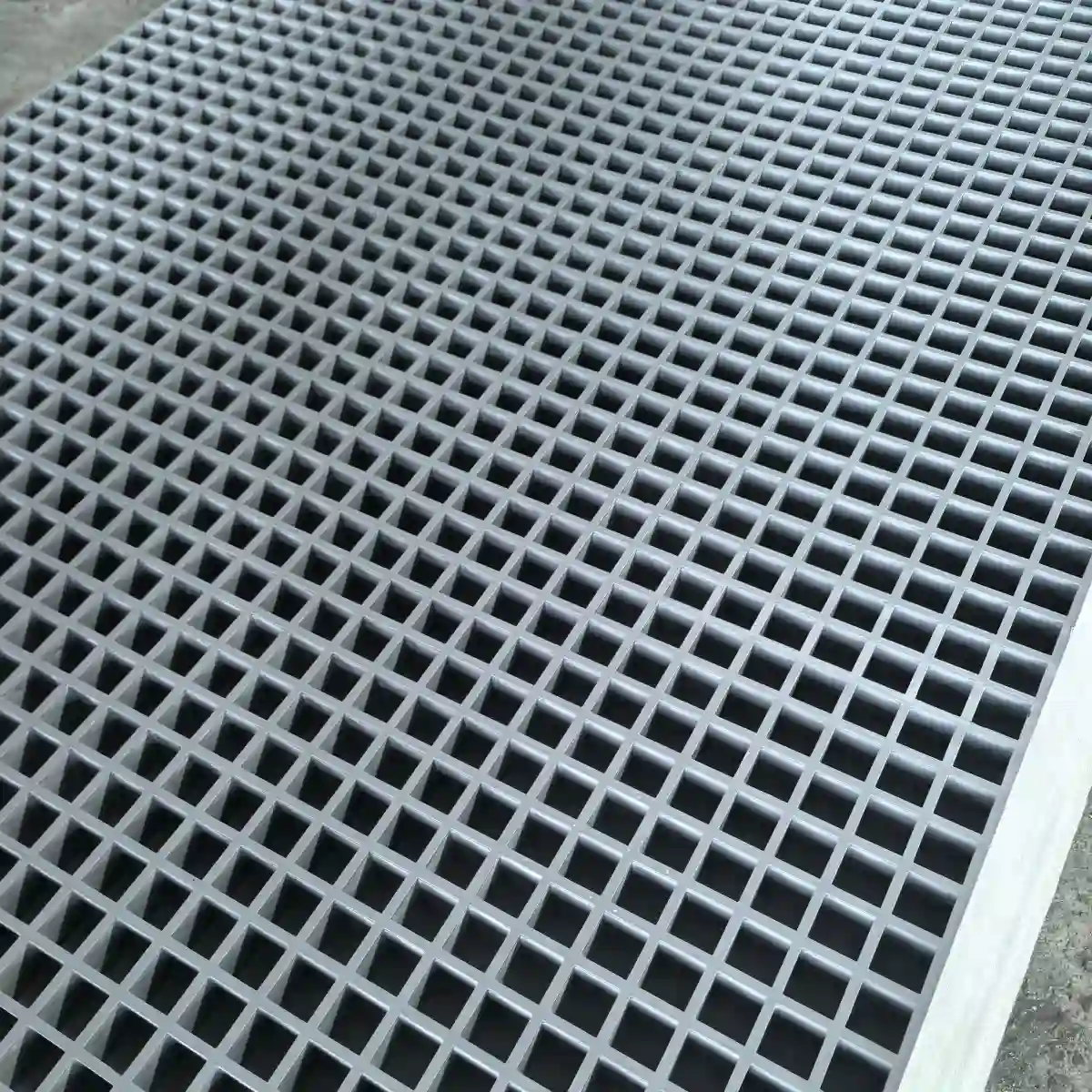
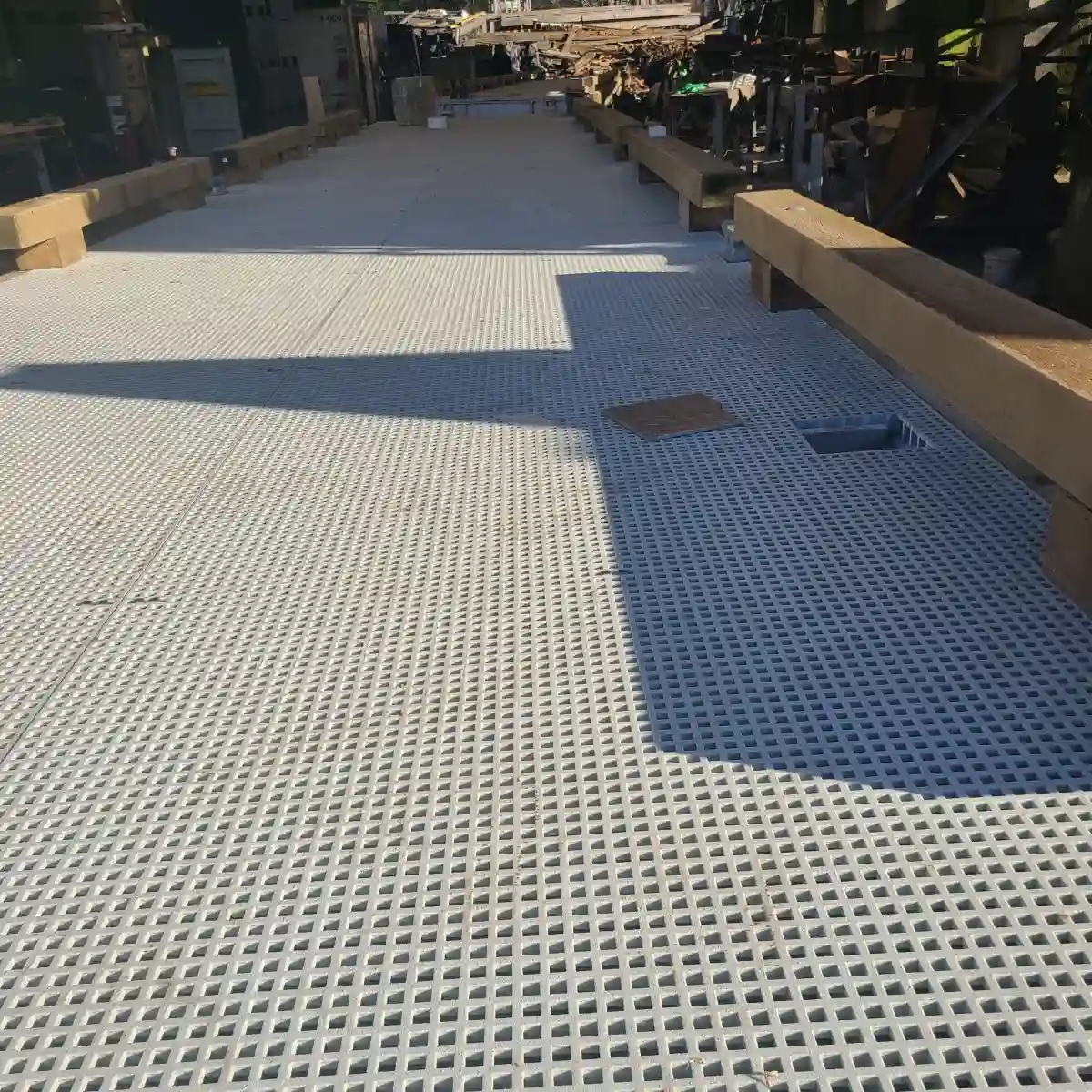
Molded (compression-molded) grating is the most common type. It is manufactured by placing a mixture of resin and chopped glass fibers into a heated mold and compressing it under high pressure, creating a one-piece panel with a uniform square or rectangular mesh pattern.
Key features of molded grating:
- Integrally formed — no joints or bonds to fail
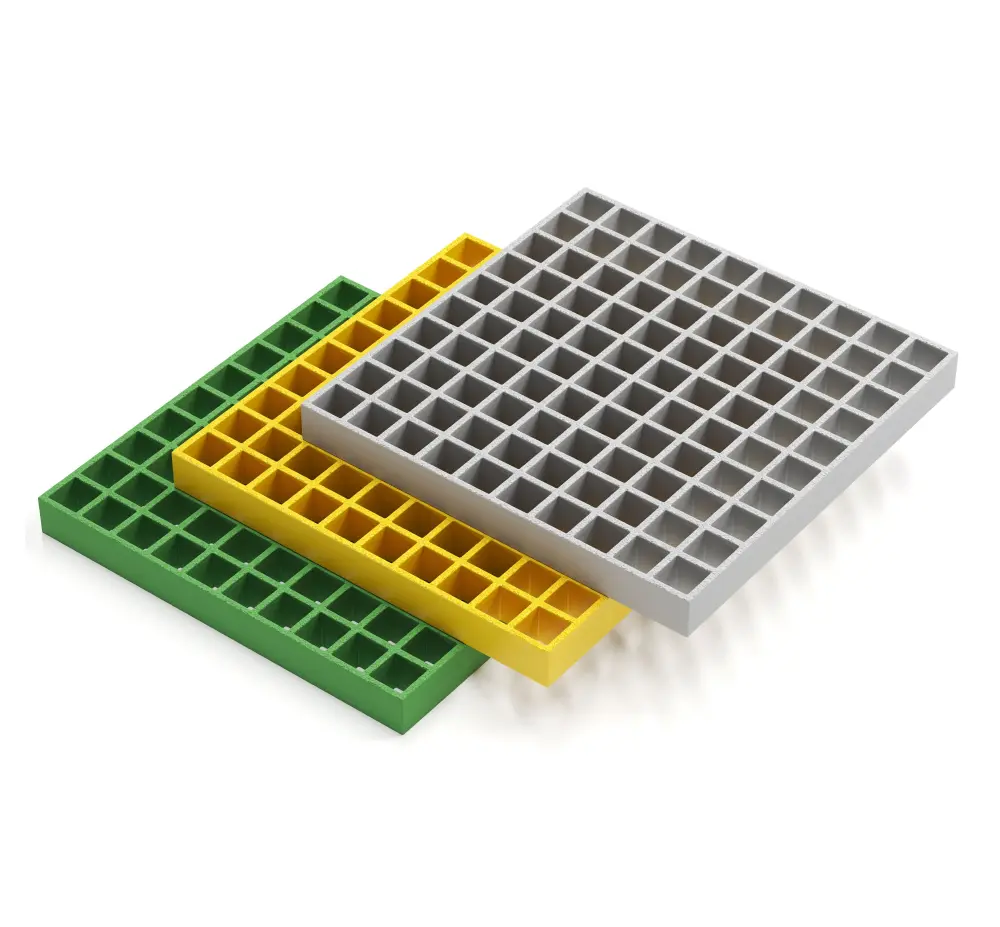
- Available in a wide range of colors (typically yellow, gray, green, or orange)
- Slip-resistant surface options (concave, grit-top, or micro-mesh)
- Ideal for general industrial flooring, platforms, and walkways
- Cost-effective for standard applications
Pultruded Grating
Pultruded grating offers higher strength and longer span capabilities than the molded type. Continuous glass fiber rovings are pulled through a resin bath and then through a heated die. The cured sections (I-beams, T-bars, or rectangular bars) are mechanically assembled into a panel using cross rods.
Key features of pultruded grating:
- Higher strength-to-weight ratio compared to molded
- Longer unsupported spans — can span up to 8 feet or more
- Directional strength — stronger along the pultrusion axis
- Available in higher load ratings for heavy-duty applications
- Often used for trench covers, heavy-load platforms, and bridge decking
Both types of fiberglass grating panels can be manufactured with different resin systems to meet specific requirements for corrosion resistance, fire retardancy, and UV stability.
Why Is Fiberglass Grating Resistant to Corrosion?
This is one of the most common questions about FRP materials, and the answer lies in their chemical composition. Unlike steel, which relies on a surface coating for protection, fiberglass reinforced plastic grating is inherently resistant to corrosion throughout its entire structure.
The corrosion resistance comes from the thermosetting resin matrix that encapsulates the glass fibers. The resin forms a chemically inert barrier that prevents moisture, acids, alkalis, and salts from reaching the reinforcement. Depending on the resin system used, FRP grating can withstand exposure to:
- Polyester resin — Good resistance to mild acids, alkalis, and organic solvents; suitable for most industrial environments
- Vinyl ester resin — Superior resistance to strong acids, bleaches, and oxidizing agents; ideal for chemical processing plants
- Phenolic resin — Excellent fire resistance with low smoke emission; good for offshore and marine applications
- Epoxy resin — High mechanical strength with good chemical resistance; used in specialized applications
Because the entire cross-section is corrosion resistant, there is no risk of coating failure, delamination, or hidden rust. This eliminates the need for periodic painting, hot-dip galvanizing, or other protective coatings. In many cases, FRP outlasts steel by 2-3 times in corrosive environments.
Fiberglass Grating vs Steel Grating: Which Is Better?
When choosing between FRP and steel grating for an industrial project, the decision comes down to the specific requirements of the environment. Here is a side-by-side comparison:
| Factor | FRP Grating | Steel Grating |
|---|---|---|
| Corrosion Resistance | Excellent — inherently corrosion-proof | Poor — requires protective coating |
| Weight | Lightweight — 1/3 the weight of steel | Heavy |
| Strength | High strength-to-weight ratio | Very high absolute strength |
| Fire Resistance | Available with fire-retardant resins | Non-combustible |
| Electrical Conductivity | Non-conductive | Conductive |
| Initial Cost | Moderate | Lower upfront |
| Lifecycle Cost | Lower — no maintenance | Higher — ongoing rust protection |
| Installation | Easy — lightweight and easy to cut | Heavier, requires lifting equipment |
So which is better? Fiberglass grating wins decisively in corrosive, wet, or electrically sensitive environments such as chemical plants, wastewater facilities, offshore platforms, and food processing plants. Steel remains a good option for dry indoor environments, extremely high-load applications, or projects where initial cost is the only consideration.
For most industrial and marine applications, the long-term value of using FRP for platforms and walkways far outweighs the higher initial purchase price.
Standard Sizes, Weight, and Load Capacity
When selecting grating for a project, understanding standard dimensions, weight, and load ratings is critical. Here is a detailed breakdown covering fiberglass grating weight and load capacity specifications.
Standard Sizes
FRP panels are typically manufactured in standard sheet sizes, though custom dimensions are available. Common sizes include:
- 4 ft x 8 ft (1220 mm x 2440 mm) — Most common for general industrial use
- 4 ft x 12 ft (1220 mm x 3660 mm) — Reduces installation time for large areas
- 5 ft x 10 ft (1524 mm x 3048 mm) — Available from some manufacturers
- 3 ft x 10 ft (914 mm x 3048 mm) — Common for walkways and trench covers
Panel thickness ranges from 1 inch (25 mm) to 2 inches (50 mm). Standard mesh openings are 1.5 inches x 1.5 inches for molded, while pultruded offers various bearing bar spacing options.
Weight Specifications
The fiberglass grating weight varies by type, thickness, and resin content:
| Type | Thickness | Weight (approx. lbs/sq ft) |
|---|---|---|
| Molded Standard Duty | 1.0 in | 3.2 lbs |
| Molded Heavy Duty | 1.5 in | 5.0 lbs |
| Molded Extra Heavy Duty | 2.0 in | 7.5 lbs |
| Pultruded Light Duty | 1.0 in | 2.8 lbs |
| Pultruded Heavy Duty | 1.5 in | 4.5 lbs |
| Pultruded Extra Heavy Duty | 2.0 in | 6.8 lbs |
Steel grating of equivalent strength weighs 2-3 times more, making FRP significantly easier to transport and install. The low fiberglass grating weight also reduces structural support requirements.
Load Capacity Ratings
The fiberglass grating load capacity depends on panel type, thickness, resin formulation, and support spacing. Understanding the fiberglass grating load capacity is essential for safe design. Ratings are classified as:
- Standard Duty (SD) — Pedestrian walkways, light platforms (up to 100 psf)
- Heavy Duty (HD) — Industrial platforms, equipment access (100-300 psf)
- Extra Heavy Duty (EHD) — Heavy machinery, bridge decking (300+ psf)
Consult manufacturer load deflection tables for your specific configuration. Maximum deflection is typically L/100, though L/200 may be specified for sensitive applications.
Is Fiberglass Grating Fire Resistant?
Fire resistance depends on the resin system used. Standard polyester FRP is combustible, but fire-retardant formulations are widely available.
Fire-retardant grades of fiberglass grating are manufactured with special resin formulations and tested per ASTM E84:
- Class A (Flame Spread 0-25) — Phenolic resin; self-extinguishing with low smoke; ideal for offshore and enclosed spaces
- Class B (Flame Spread 26-75) — Fire-retardant vinyl ester and some polyesters; suitable for most industrial buildings
- Class C (Flame Spread 76-200) — Standard polyester; suitable for well-ventilated outdoor areas
For critical fire-safety applications, phenolic resin fiberglass grating panels are the preferred choice. They do not ignite easily, do not drip burning particles, and produce significantly less smoke than other resin types.
While FRP can be made fire-resistant, it is not non-combustible like steel. However, it does not conduct heat, so it does not contribute to thermal bridging.
Fiberglass Grating for Platforms and Industrial Uses
Fiberglass grating for platforms and other industrial uses has become the material of choice across many industries due to its corrosion resistance, light weight, and low maintenance. Whether you need fiberglass grating for platforms, walkways, or trench covers, the benefits are clear.
Common applications include:
- Industrial Platforms and Walkways — Safe, slip-resistant surfaces for elevated platforms and catwalks
- Chemical Processing — Ideal for areas exposed to acids, caustics, and solvents
- Wastewater Treatment — Tank covers and trench covers where humidity would destroy steel
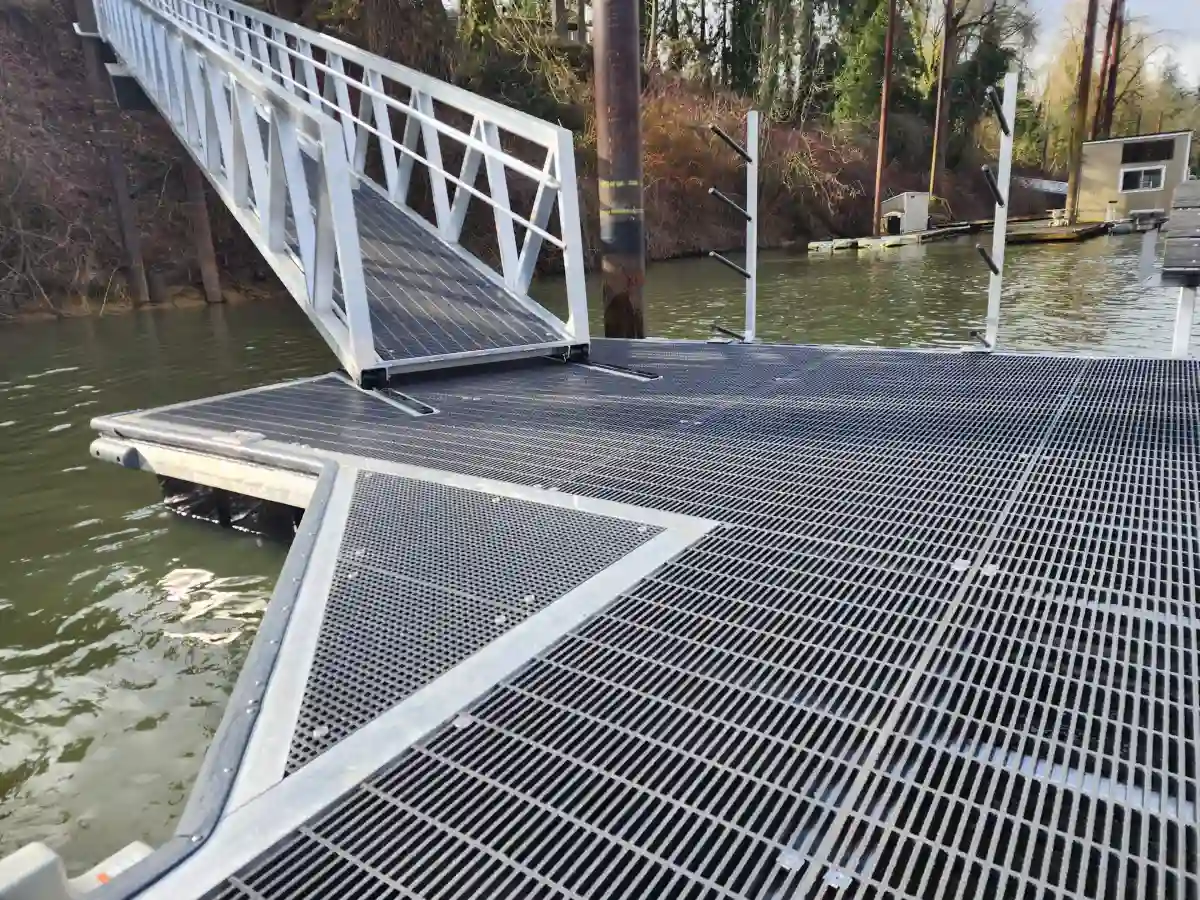
- Marine and Offshore — Non-corrosive, non-magnetic properties suit ship decks and drilling platforms
- Food Processing — Impervious to sanitation chemicals and high-pressure washdowns
- Electrical Substations — Non-conductive FRP eliminates electrical shock risk
- Cooling Towers — The wet environment rapidly corrodes steel, making FRP the better choice
This versatile material is also used for trench covers, stair treads, bridge decking, and mine shaft flooring.
How to Install Fiberglass Grating Panels
Proper installation maximizes the performance and safety of your grating panels. Unlike steel, FRP requires specific techniques to avoid damage.
How to Cut Fiberglass Grating
Cutting FRP to size on site requires the right tools and safety precautions:
- Tools: Use a circular saw with a carbide-tipped or diamond blade. A jigsaw with a fine-tooth blade works for curved cuts.
- Safety: Always wear a respirator or dust mask. Glass fiber dust can irritate the skin, eyes, and respiratory system.
- Technique: Cut from the top side to minimize chipping. Support near the cut line to prevent vibration cracking. For molded grating, cut along the centerline of a grid opening.
- Edge finishing: Seal exposed edges with compatible resin or edge sealant to maintain corrosion resistance.
The lightweight nature of fiberglass grating panels makes on-site cutting and fitting much easier than with steel.
Step-by-Step Installation Guide
Follow these steps for a successful fiberglass grating installation:
- Prepare supports — Ensure support beams are level, properly spaced, and rated for the load. Bearing surfaces should be at least 1 inch wide.
- Cut panels — Measure and cut panels as needed. Lay out to minimize waste.
- Position panels — Place onto supports with bearing bars perpendicular to support members.
- Secure — Use stainless steel clips or hold-down fasteners every 12-18 inches. Do not over-tighten.
- Install cutouts — Cut openings for pipes and columns before securing. Allow 1/8 inch clearance.
- Inspect — Walk the area to check for loose panels, uneven surfaces, or sharp edges.
Always follow the manufacturer installation guidelines for your specific product.
Finding Reliable Fiberglass Grating Suppliers
Choosing the right fiberglass grating suppliers is as important as choosing the right product. A reliable supplier ensures quality-certified material, correct specifications, and timely delivery.
What to look for in a supplier:
- Certifications — Look for ASTM D3841, NEMA standards, or ISO 9001 certification
- Product range — Both molded and pultruded options in multiple resin systems
- Custom fabrication — Ability to provide custom-cut panels and cutouts
- Technical support — Help with load calculations, span spacing, and resin selection
- Samples and data — Load test reports, fire test certifications, chemical resistance guides
Working with established fiberglass grating suppliers who understand FRP materials will save you time and money.
Conclusion
Fiberglass grating offers a compelling combination of corrosion resistance, light weight, high strength, and low maintenance. Unlike steel, it will not rust; unlike aluminum, it resists chemical attack; and unlike wood, it will not rot or splinter.
We have covered the essential information you need to make an informed decision:
- The types of FRP grating — molded vs. pultruded — and when to use each
- Why fiberglass reinforced plastic grating offers superior corrosion resistance
- How this material compares to steel in cost, weight, strength, and maintenance
- Standard sizes, weight specifications, and load capacity ratings
- Fire resistance properties and the resin systems that provide them
- Best practices for fiberglass grating installation
- How to find reliable suppliers
When planning your next project, consider the total lifecycle cost. The reduced maintenance, longer service life, and easier installation of FRP often make it the more economical choice. Consult with a qualified supplier or engineer to select the right panel for your specific requirements.