Introduction
Pultruded grating is a high-performance composite flooring solution manufactured through the pultrusion process, combining fiberglass reinforcement with thermosetting resin systems to create a lightweight yet exceptionally strong structural component. Unlike traditional metal gratings, pultruded grating offers superior corrosion resistance, electrical insulation, and a remarkable strength-to-weight ratio that makes it ideal for demanding industrial environments. Engineers and facility managers increasingly specify pultruded fiberglass grating for walkways, platforms, and work areas where steel would fail prematurely due to chemical exposure or moisture.
This comprehensive guide explores everything you need to know about pultruded grating — from its manufacturing process and material properties to standard sizes, strength characteristics, and real-world applications. Whether you are evaluating pultruded grating panels for a new project or comparing pultruded grating vs molded grating options, this article provides the technical data and practical insights required to make an informed decision.
Pultruded grating has become a cornerstone material in modern industrial flooring, offering distinct advantages over both steel grating and compression-molded fiberglass alternatives. By understanding its unique characteristics, you can determine whether this material is the right fit for your specific application requirements.
What Is Pultruded Grating?
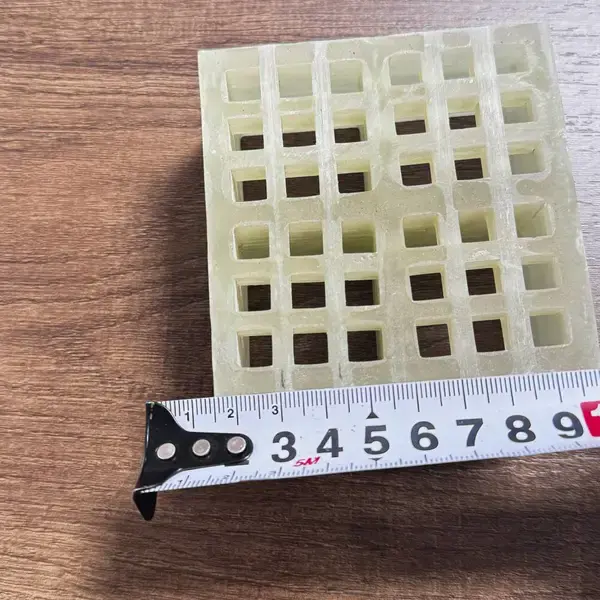
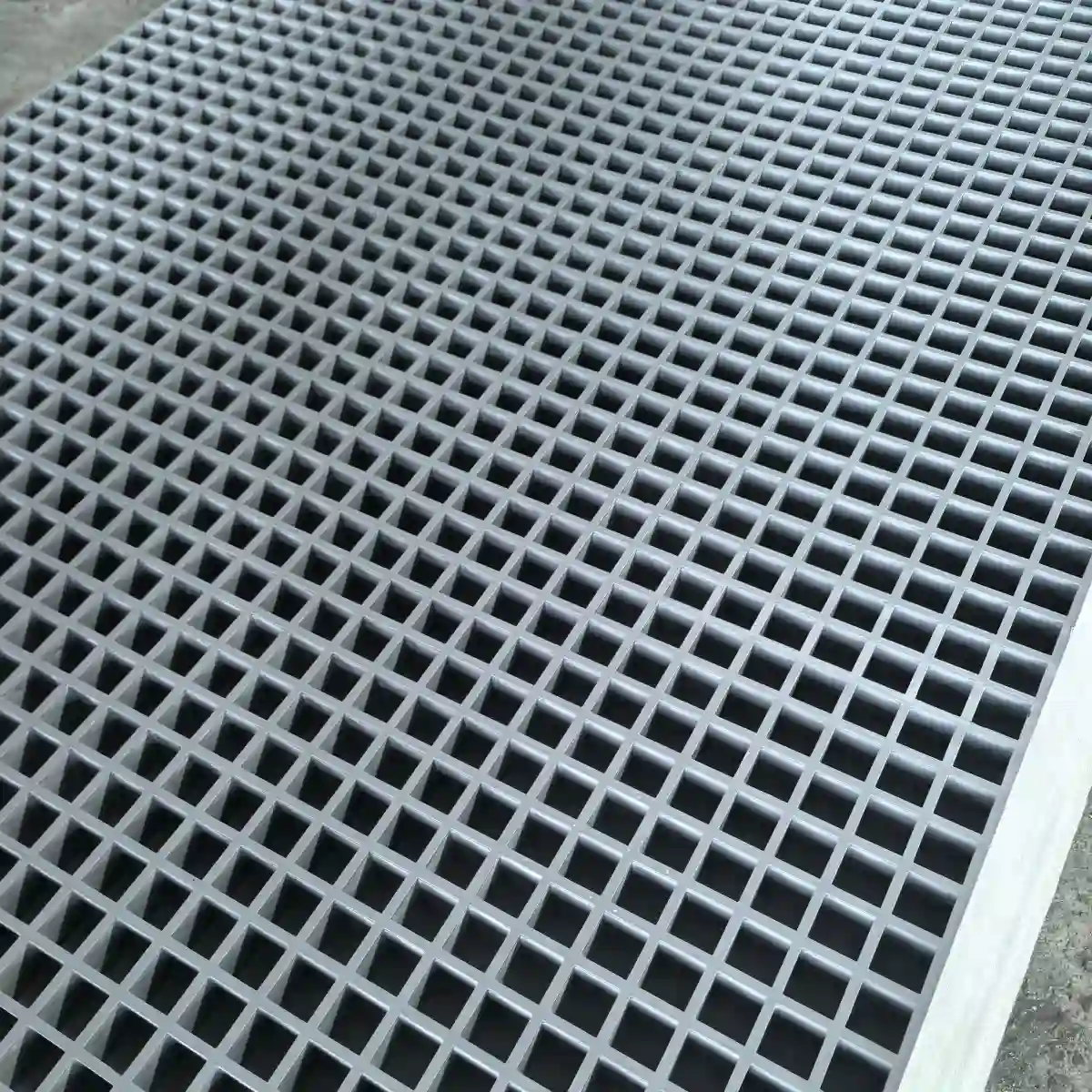
Pultruded grating is a continuous-fiber-reinforced composite material consisting of fiberglass rovings and a thermosetting resin matrix, typically polyester, vinyl ester, or epoxy. The material is produced through the pultrusion process, which creates high-strength, lightweight profiles with unidirectional fiber orientation. These profiles are then assembled into grating panels using cross rods and adhesive bonding.
What Is Pultruded Grating Made Of?
The primary components of pultruded grating include:
- Fiberglass Reinforcement: Continuous glass fiber rovings provide the primary load-bearing capacity. These fibers run the full length of the grating panel, delivering exceptional longitudinal strength.
- Resin System: Thermosetting resins bind the fibers together and protect them from environmental attack. Polyester resins offer cost-effective general-purpose performance, vinyl ester resins provide enhanced corrosion resistance, and epoxy resins deliver maximum mechanical properties.
- Surface Veil: A protective layer of non-woven fiberglass or polyester veil provides UV resistance, wear protection, and a smooth finish.
- Cross Rods: Pultruded fiberglass cross rods are inserted through the bearing bars and bonded in place to create a rigid, one-piece panel structure.
Manufacturing Process of Pultruded Grating
The pultrusion process used to manufacture pultruded grating involves several precision-controlled stages:
- Fiber Creel Station: Continuous fiberglass rovings are drawn from creels in a carefully arranged pattern that ensures uniform fiber distribution.
- Resin Impregnation Bath: The fibers pass through a resin bath where they are thoroughly saturated with the selected thermosetting resin formulation.
- Preforming Guides: The resin-wetted fibers pass through a series of preforming dies that remove excess resin and shape the material into the desired profile geometry.
- Heated Die Curing: The shaped material enters a precisely heated steel die where the resin undergoes chemical cross-linking at 120-180°C.
- Pulling System: A continuous pulling mechanism draws the cured profile through the line at 0.3-2.0 meters per minute.
- Cut-Off Saw: The continuous profile is cut to precise lengths using an automated traveling cut-off saw.
Key Material Properties
Pultruded grating exhibits several distinctive material properties:
| Property | Typical Value | Benefit |
|---|---|---|
| Tensile Strength | 30,000 - 45,000 psi (207 - 310 MPa) | Comparable to structural steel at one-quarter the weight |
| Density | 1.7 - 2.0 g/cm³ | 75% lighter than steel, 50% lighter than aluminum |
| Thermal Conductivity | 0.3 - 0.5 W/m·K | Naturally insulating |
| Electrical Conductivity | Non-conductive (10¹² - 10¹⁵ Ω·cm) | Inherent electrical insulation |
| Chemical Resistance | Varies by resin (pH 1-13 range) | Withstands acids, alkalis, and solvents |
| Service Temperature | -40℃ to 180℃ | Suitable for extreme environments |
These properties make pultruded grating panels an excellent choice for demanding applications. The combination of high strength, low weight, and chemical inertness allows pultruded fiberglass grating to outperform metals in corrosive environments while reducing structural support requirements.
Pultruded Grating vs Molded Grating
One of the most common questions engineers ask is: what is the difference between pultruded and molded grating? While both products are made from fiberglass and resin, they differ fundamentally in manufacturing process, structural performance, and application suitability.
Manufacturing Differences
Pultruded grating is manufactured through the continuous pultrusion process described above, producing bearing bars with continuous unidirectional fiberglass fibers running the full length of the bar. This creates a material with high strength in the longitudinal direction. The bearing bars are then assembled into panels using cross rods.
Molded grating (also called compression-molded grating) is manufactured in a heated hydraulic press. Chopped fiberglass strands and resin are placed in a mold and compressed under high pressure and temperature. The result is a panel with random fiber orientation and isotropic mechanical properties.
Structural Performance Comparison
| Property | Pultruded Grating | Molded Grating |
|---|---|---|
| Fiber Orientation | Continuous, unidirectional | Random, chopped strands |
| Longitudinal Strength | Very High (30,000-45,000 psi) | Moderate (10,000-18,000 psi) |
| Transverse Strength | Moderate (depends on cross rods) | Moderate (isotropic) |
| Impact Resistance | Excellent | Good |
| Panel Sizes | Customizable (any length) | Limited to mold size (typically 4 x 8 ft or 4 x 12 ft) |
| Weight | Lightweight | Slightly heavier |
| Surface Grit | Added during assembly or applied | Integrated during molding |
When to Choose Pultruded vs Molded
Choose pultruded grating when you need:
- Long spans with high load requirements (the continuous fibers provide superior bending strength)
- Custom lengths beyond standard mold sizes
- Maximum strength-to-weight ratio for structural applications
- Consistent, predictable mechanical performance
Choose molded grating when:
- You need isotropic strength (equal strength in all directions)
- Panel sizes fit within standard mold dimensions
- Anti-slip surface is required (molded grating has integrated grit)
- Cost is a primary concern (molded is typically more economical for standard sizes)
For most industrial walkway and platform applications requiring long spans and heavy loads, pultruded grating panels offer superior load-bearing performance compared to molded alternatives. The pultruded grating vs molded grating decision ultimately comes down to span requirements, load specifications, and panel size constraints.
Standard Sizes and Specifications
Understanding pultruded grating sizes is essential for proper project planning and installation. Pultruded grating is available in a wide range of standard dimensions, with the flexibility to accommodate custom requirements for specialized applications.
Standard Bearing Bar Dimensions
The bearing bars of pultruded grating are available in several standard configurations:
| Bar Height | Bar Thickness | Typical Applications |
|---|---|---|
| 1 inch (25 mm) | 1/4 inch (6.3 mm) | Light-duty walkways, mezzanine flooring |
| 1-1/2 inches (38 mm) | 3/8 inch (9.5 mm) | Medium-duty platforms, trench covers |
| 2 inches (51 mm) | 3/8 inch (9.5 mm) | Heavy-duty industrial flooring, vehicle access |
| 2-1/2 inches (64 mm) | 1/2 inch (12.7 mm) | Extra-heavy loads, crane runways |
| 3 inches (76 mm) | 1/2 inch (12.7 mm) | Maximum load applications, bridge decking |
Standard Panel Sizes
Standard pultruded grating panels typically come in these dimensions:
- Width: 3 ft (914 mm), 4 ft (1,219 mm) — standard widths
- Length: Custom lengths from 2 ft to 24 ft, with 8 ft (2,438 mm) and 10 ft (3,048 mm) being most common
- Thickness: Standard panel thickness matches bearing bar height (1 to 3 inches)
Load Capacity and Span Tables
Load capacity depends on bar size, spacing, and span distance. Here are representative data for uniformly distributed loads (UDL) at a 24-inch support span:
| Bar Size | Bar Spacing | Safe UDL (psf) | Deflection at UDL |
|---|---|---|---|
| 1 x 1/4 in | 1-3/16 in center | 80 psf | L/150 |
| 1-1/2 x 3/8 in | 1-3/16 in center | 200 psf | L/150 |
| 2 x 3/8 in | 1-3/16 in center | 350 psf | L/150 |
| 2-1/2 x 1/2 in | 1-3/16 in center | 550 psf | L/150 |
These values are representative examples. Actual load capacities should be verified with manufacturer engineering data for specific resin systems and configurations. The wide range of pultruded grating sizes available ensures that virtually any industrial flooring requirement can be met with an appropriately specified product.
Strength Comparison: Pultruded Grating vs Steel
Strength comparison between pultruded grating and steel is a critical factor in material selection. While steel has been the traditional choice for industrial flooring, pultruded fiberglass grating offers compelling performance advantages that often outweigh steel's higher absolute strength.
Tensile and Flexural Strength
In terms of raw tensile strength, structural steel (A36) has a tensile strength of approximately 58,000 psi (400 MPa). Premium pultruded grating can achieve tensile strengths of 30,000 to 45,000 psi (207 to 310 MPa) in the longitudinal direction. While steel has higher absolute strength, the comparison shifts dramatically when weight is factored in.
Strength-to-Weight Ratio
The true advantage of pultruded grating becomes apparent when comparing strength-to-weight ratio:
| Material | Density | Tensile Strength | Specific Strength |
|---|---|---|---|
| Steel (A36) | 7.85 g/cm³ | 58,000 psi | ~7,400 psi/(g/cm³) |
| Pultruded FRP Grating | 1.9 g/cm³ | 38,000 psi | ~20,000 psi/(g/cm³) |
| Aluminum (6061-T6) | 2.7 g/cm³ | 45,000 psi | ~16,700 psi/(g/cm³) |
Pultruded grating offers nearly three times the specific strength of steel, meaning it provides more strength per unit weight than any metal alternative.
Corrosion Resistance: The Decisive Factor
While steel grating requires expensive protective coatings like galvanizing, epoxy paints, or stainless steel alloys to resist corrosion, pultruded grating is inherently corrosion-resistant throughout its entire cross-section. A pultruded fiberglass grating panel does not rust, rot, or corrode, even when exposed to:
- Chlorides and saltwater in marine environments
- Acids and caustic chemicals in processing plants
- Hydrogen sulfide in wastewater treatment facilities
- Constant moisture and humidity
This inherent corrosion resistance eliminates the ongoing maintenance costs associated with steel grating — no need for periodic repainting, hot-dip galvanizing replacement, or rust damage repair. Over a 20-year service life, the total cost of ownership for pultruded grating is typically 30-50% lower than steel, despite a higher initial purchase price.
Other Performance Factors
- Electrical Safety: Pultruded grating is non-conductive, eliminating electrocution risks in electrical substations and power generation facilities. Steel grating requires grounding and still presents a shock hazard.
- Thermal Comfort: FRP grating stays at near-ambient temperature in direct sunlight, while steel grating can become dangerously hot (exceeding 60℃ / 140℉) and can cause burns to workers.
- Weight Savings: At 75% lighter than steel, pultruded grating reduces structural steel requirements for support beams and columns, lowering overall project costs.
- Magnetic Transparency: Non-magnetic properties make FRP grating ideal for MRI rooms, electronics manufacturing, and other environments where magnetic interference must be avoided.
While steel remains a viable option for some applications, the combination of competitive strength, superior corrosion resistance, and lower lifetime cost makes pultruded grating the preferred choice for demanding industrial environments.
Applications of Pultruded Grating
Pultruded grating is used across a vast range of industries where its unique combination of strength, corrosion resistance, and light weight provides tangible operational benefits. Understanding where pultruded grating is commonly used helps specifiers identify the most cost-effective applications for this versatile material.
Chemical Processing Plants
Chemical processing facilities are among the largest consumers of pultruded grating. The constant exposure to aggressive chemicals including sulfuric acid, hydrochloric acid, caustic soda, and organic solvents quickly destroys steel grating. Pultruded fiberglass grating walkways and platforms in chemical plants provide maintenance-free service for decades, even in spill-prone areas. Vinyl ester resin systems offer maximum chemical resistance for the most aggressive environments.
Pultruded Grating for Walkways and Platforms
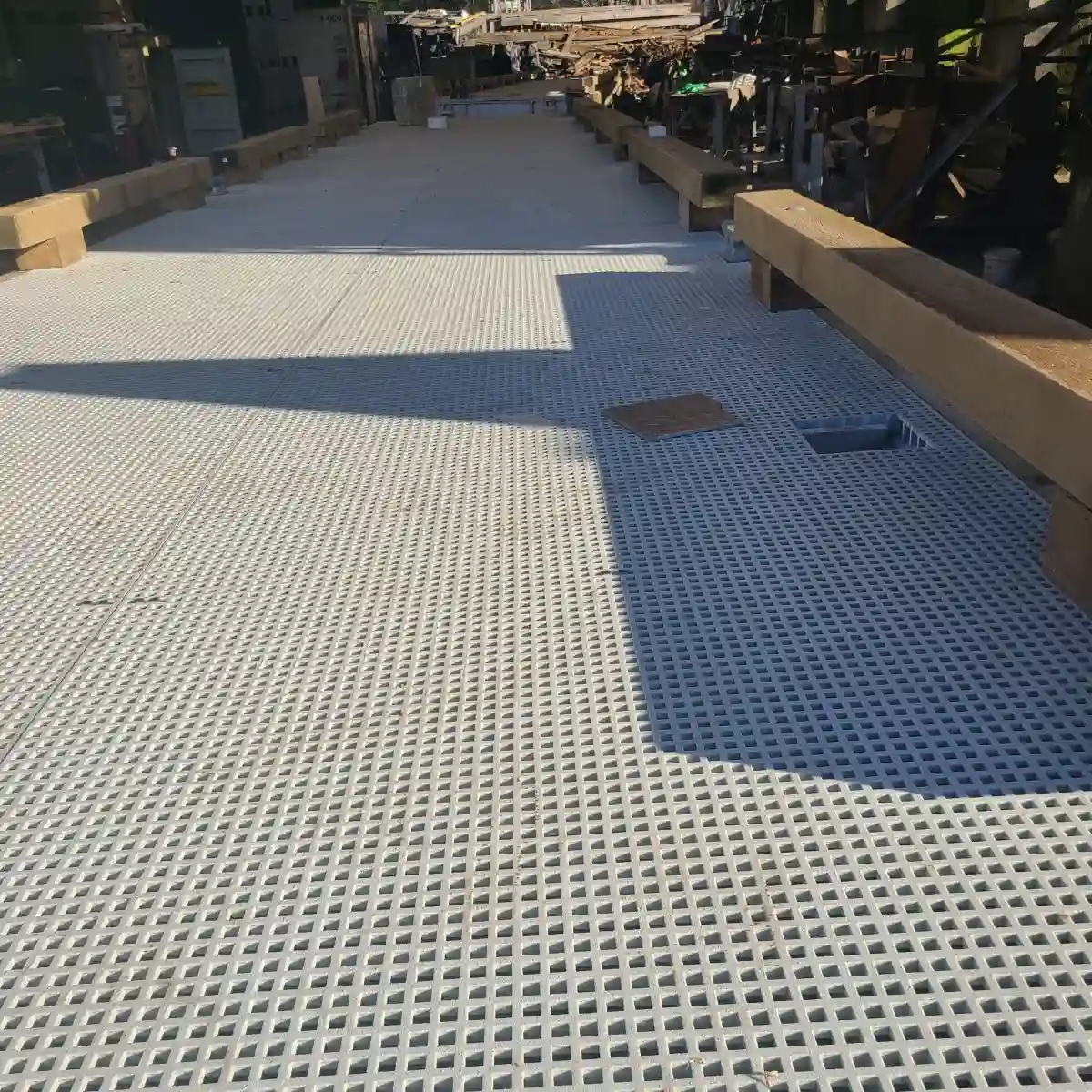
Pultruded grating for walkways is one of the most common applications. The material's high strength-to-weight ratio allows for longer unsupported spans than molded grating, reducing the number of support beams required. Anti-slip surfaces can be incorporated through grit-embedded top veils or applied silica particle coatings. Typical pultruded grating walkway installations include:
- Elevated catwalks in manufacturing facilities
- Access walkways around storage tanks
- Pedestrian bridges over pipes and equipment
- Mezzanine flooring in warehouses
Marine and Offshore Applications
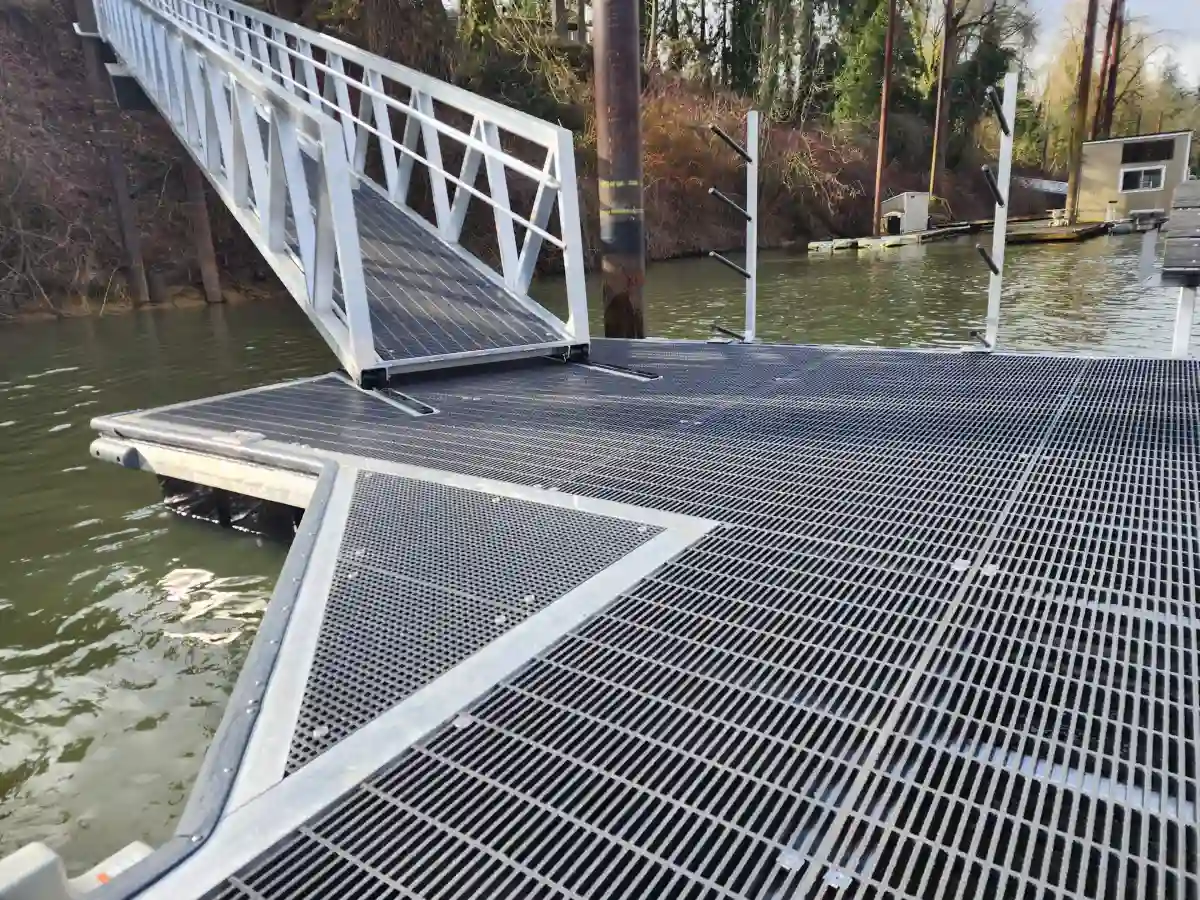
The marine environment is exceptionally harsh on metals due to saltwater exposure and constant humidity. Pultruded grating panels are extensively used on offshore oil platforms, ship decks, docks, and pier structures where steel grating would require constant maintenance. The material does not corrode in saltwater, does not conduct electricity (a critical safety factor on tankers), and its light weight simplifies installation in remote locations.
Water and Wastewater Treatment
Wastewater treatment plants present one of the most corrosive environments in industrial infrastructure. Hydrogen sulfide gas, chlorine, and moisture create attack conditions that rapidly degrade steel and concrete. Pultruded grating tank covers, catwalks, and filter platform flooring provide 20+ year service life without corrosion-related failures. The non-porous surface resists bacterial growth and is easy to sanitize.
Food Processing and Pharmaceutical
Food and pharmaceutical facilities require flooring materials that are non-porous, easy to clean, and resistant to sanitizing chemicals. Pultruded fiberglass grating meets FDA and USDA requirements for incidental food contact. Its smooth, non-absorbent surface prevents bacterial harborage, while the open grating design allows for effective drainage and air circulation during washdown procedures.
Electrical Utilities and Power Generation
In electrical substations, power plants, and renewable energy facilities, the non-conductive nature of pultruded grating provides inherent safety advantages. Workers can walk on FRP grating above energized equipment without risk of electrical conduction. The material is also non-magnetic and non-sparking, making it suitable for transformer yards, switchgear rooms, and battery storage areas.
How to Choose the Right Pultruded Grating
Choosing the right pultruded grating for your project requires careful evaluation of several key factors. The following decision framework will help you specify the optimal product for your specific application.
Step 1: Determine Load Requirements
Calculate the expected loads including dead loads (the weight of the grating itself), live loads (personnel and equipment), and impact loads (dropped tools, falling objects). For pedestrian walkways, typical design loads range from 75 to 100 psf. For vehicular access or heavy equipment platforms, design loads may exceed 500 psf. The required safe load and allowable deflection (typically L/100 to L/200 depending on application) will determine the necessary bearing bar size and spacing.
Step 2: Evaluate the Chemical Environment
Identify all chemicals the grating will be exposed to, including their concentrations and temperatures. Common resin selections include:
- Isophthalic Polyester: Good general-purpose chemical resistance, cost-effective for mild environments
- Vinyl Ester: Excellent resistance to acids, alkalis, and bleaches — recommended for chemical plants and wastewater treatment
- Epoxy: Superior mechanical properties and adhesion, ideal for high-temperature and structural applications
- Phenolic: Fire-resistant and low-smoke generating, specified for offshore and mining applications
Step 3: Select Bar Size and Panel Configuration
Based on load requirements and span distance, select the appropriate bearing bar size from the standard options. Consider the following pultruded grating sizes for common applications:
- 1 x 1/4 inch bars for light pedestrian walkways up to 24-inch spans
- 1-1/2 x 3/8 inch bars for general industrial platforms with 24-36 inch spans
- 2 x 3/8 inch bars for heavy-duty flooring and equipment access with spans up to 48 inches
- 2-1/2 x 1/2 inch or larger bars for extra-heavy loads and spans exceeding 48 inches
Step 4: Consider Safety Features
- Anti-Slip Surface: Specify grit-embedded top surface for wet or oily environments. Silica grit or aluminum oxide grit provides durable slip resistance meeting OSHA and ANSI A1264.1 requirements.
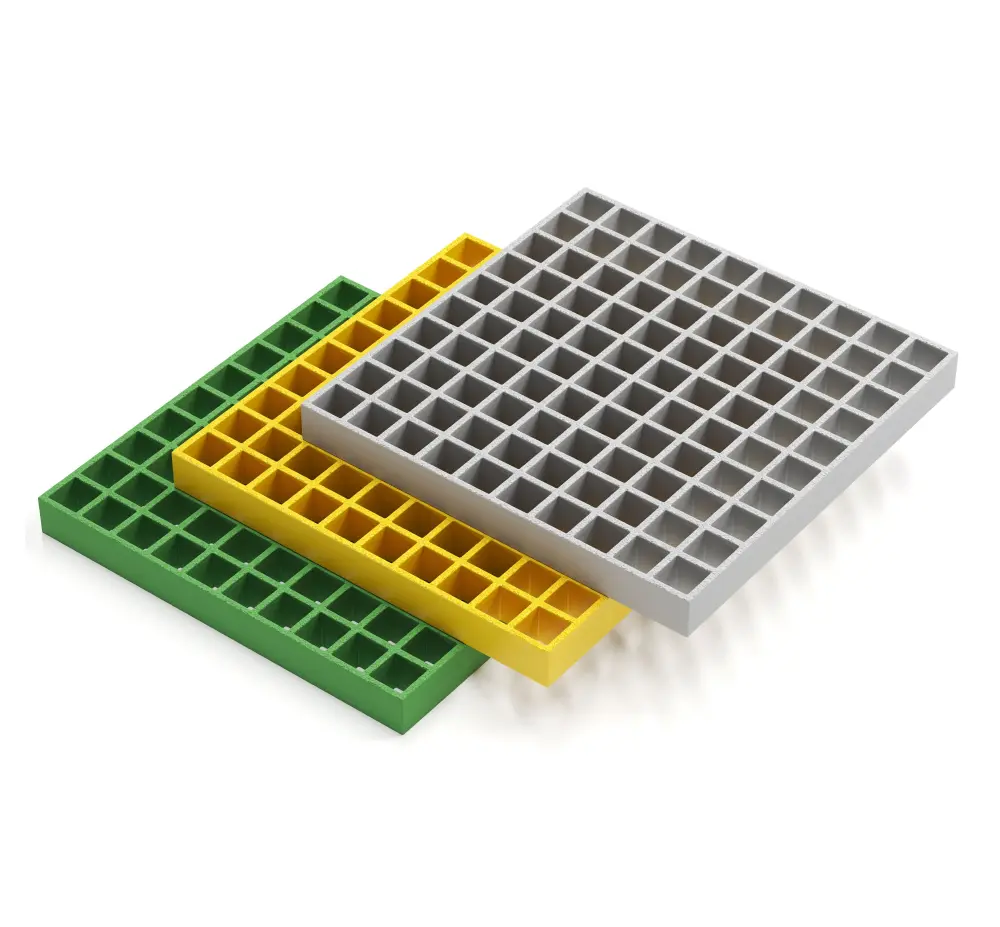
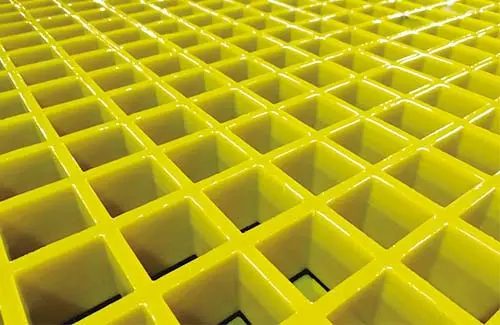
- Color Coding: Choose from standard colors including yellow, gray, green, and orange to designate walkways, work areas, and safety zones. Color is integral to the resin, not a coating, so it will not peel or chip.
- Fire Resistance: For applications requiring fire-rated materials, specify phenolic resin or brominated fire-retardant polyester systems that meet ASTM E84 Class I or Class A flame spread ratings.
Step 5: Plan for Installation
Pultruded grating installation differs from steel grating due to its different bearing characteristics, thermal expansion properties, and cutting requirements. Use stainless steel or FRP clips and fasteners to avoid galvanic corrosion at connection points. Allow for thermal expansion gaps of approximately 1/4 inch per 10 feet of panel length. Cut FRP grating using carbide-tipped blades with proper dust collection for safe handling.
By following this systematic approach to material selection, you can confidently specify the right pultruded grating panels for your project while optimizing both performance and budget.
Conclusion
Pultruded grating has established itself as a superior alternative to traditional metal grating in a wide range of industrial applications. Its unique combination of high strength, exceptional corrosion resistance, light weight, and electrical non-conductivity makes it the material of choice for environments where steel grating fails prematurely.
The key takeaways from this guide are:
- Pultruded grating is manufactured through a continuous pultrusion process that produces bearing bars with unidirectional fiber alignment, delivering superior longitudinal strength compared to molded alternatives.
- Standard pultruded grating sizes accommodate requirements from light pedestrian walkways to heavy industrial platforms, with bar heights ranging from 1 inch to 3 inches and custom lengths available.
- While steel has higher absolute tensile strength, pultruded grating offers nearly three times the strength-to-weight ratio of steel, resulting in lighter structures and lower installation costs.
- The total cost of ownership for pultruded fiberglass grating is typically 30-50% lower than steel over a 20-year service life, driven by zero corrosion maintenance.
- Applications span chemical processing, marine, wastewater treatment, food processing, pharmaceuticals, power generation, and countless other industries where corrosion and safety are primary concerns.
When selecting pultruded grating panels for your next project, consider the load requirements, chemical exposure, span distance, and safety features needed. With proper specification, pultruded grating delivers decades of reliable, maintenance-free service in the most demanding environments on earth.
Note: The technical specifications and load data provided in this article are general reference values. Always consult manufacturer engineering data and load tables for final design specifications. For project-specific recommendations, contact a qualified FRP grating supplier or structural engineer.