Introduction
When planning an industrial flooring project, one of the first decisions you will face is selecting the right FRP grating sizes. Fiberglass reinforced plastic (FRP) grating is available in a wide range of standard dimensions, thickness options, and panel configurations, making it suitable for everything from light-duty walkways to heavy industrial platforms. Understanding FRP grating sizes and how they relate to load capacity, span length, and application requirements is essential for a safe and cost-effective installation.
In this complete reference guide, we cover everything you need to know about FRP grating dimensions — from standard panel sizes and thicknesses to maximum span lengths and load span tables. Whether you are designing a new industrial walkway, replacing old steel grating, or comparing standard FRP grating dimensions versus custom sizes, this article provides the detailed size charts and practical guidance you need. We also answer common questions such as what the maximum span length for FRP grating is, how to measure FRP grating correctly, and which thickness options work best for different load requirements.
By the end of this guide, you will have a clear understanding of what FRP grating sizes are available, how to choose the right dimensions for your project, and how to use FRP grating load tables and span tables to make informed decisions.
Standard FRP Grating Sizes and Panel Dimensions
Standard Panel Sizes
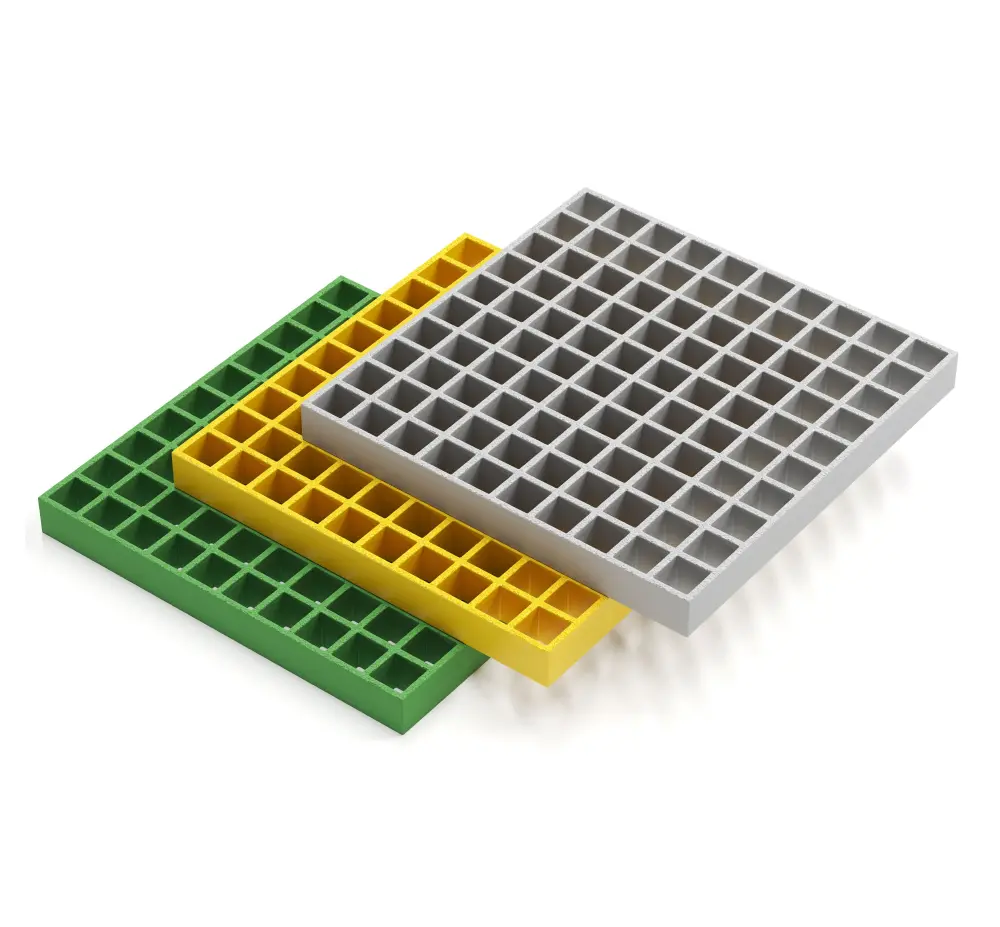
The most common FRP grating panel dimensions in the industry are 4 feet by 8 feet (1220 mm × 2440 mm) and 4 feet by 12 feet (1220 mm × 3660 mm). These standard FRP grating sizes are designed to fit most industrial flooring layouts with minimal waste. Many manufacturers also offer 3 feet by 10 feet (915 mm × 3050 mm) and 5 feet by 10 feet (1525 mm × 3050 mm) as common standard panel sizes for FRP grating. The standard panel size for FRP grating depends largely on the manufacturing process — pultruded grating typically comes in 4 ft × 8 ft or 4 ft × 12 ft sheets, while molded grating is often produced in 4 ft × 8 ft panels.
For projects requiring standard FRP grating dimensions, it is important to note that panel widths typically range from 3 feet to 5 feet, while lengths range from 8 feet to 12 feet for stock panels. These dimensions allow efficient material utilization and easy handling during installation. When planning your project, always verify the available panel sizes with your supplier, as regional variations exist — North American standard FRP grating sizes may differ slightly from European or Asian equivalents.
Common Thickness Options
FRP grating is manufactured in several standard thicknesses to accommodate different load requirements. The standard thickness of FRP grating panels typically ranges from 1 inch (25 mm) to 2 inches (50 mm), with the most common options being:
- 1 inch (25 mm) — Light-duty applications such as mezzanine flooring, catwalks, and pedestrian walkways with light traffic
- 1.5 inches (38 mm) — Medium-duty applications including industrial walkways, platform flooring, and drainage covers
- 2 inches (50 mm) — Heavy-duty applications such as truck access covers, heavy equipment platforms, and industrial flooring with high load requirements
What thickness options are available for standard FRP grating extends beyond these three. Some manufacturers also offer 0.75-inch (19 mm) grating for very light-duty applications and 2.5-inch (63 mm) or 3-inch (75 mm) grating for extreme heavy-load scenarios. The thickness you choose directly affects the load capacity, span capability, and overall FRP grating sizes available for your project.
Bearing Bar Spacing and Configurations
Bearing bar spacing is another critical dimension in FRP grating. Standard spacing options include:
- 1.5-inch (38 mm) center-to-center — Most common for general industrial use, providing good strength and open area
- 1-inch (25 mm) center-to-center — For higher load capacity and smaller foot traffic applications
- 2-inch (50 mm) center-to-center — For lighter loads where more open area is desired
The combination of panel dimensions, thickness, and bearing bar spacing defines the complete set of FRP grating sizes available for your project. Understanding these three parameters is the first step in selecting the right product. For instance, a 1.5-inch thick panel with 1.5-inch bar spacing in a 4 ft × 8 ft sheet is one of the most widely used configurations in industrial settings.
FRP Grating Size Chart and Weight Capacity Guide
Complete FRP Grating Size Reference Table
The following FRP grating size chart and weight capacity guide provides a quick reference for standard panel dimensions, thicknesses, and approximate load capacities. Use this table to compare options and narrow down the best configuration for your needs:
| Panel Size | Thickness | Bar Spacing | Weight (psf) | Max Span at 100 psf | Typical Application |
|---|---|---|---|---|---|
| 4′ × 8′ | 1.0″ (25 mm) | 1.5″ c/c | 3.2 psf | 18″ | Light pedestrian walkways |
| 4′ × 8′ | 1.5″ (38 mm) | 1.5″ c/c | 4.8 psf | 30″ | Industrial walkways & platforms |
| 4′ × 12′ | 1.5″ (38 mm) | 1.5″ c/c | 4.8 psf | 30″ | Extended platform flooring |
| 4′ × 8′ | 2.0″ (50 mm) | 1.5″ c/c | 6.4 psf | 42″ | Heavy-duty industrial flooring |
| 4′ × 8′ | 2.0″ (50 mm) | 1.0″ c/c | 8.1 psf | 48″ | Vehicle access & heavy equipment |
| 3′ × 10′ | 1.0″ (25 mm) | 1.5″ c/c | 3.2 psf | 18″ | Narrow catwalks & mezzanines |
This FRP grating size chart demonstrates how panel dimensions, thickness, and bar spacing work together to determine the overall performance. Note that the weight per square foot (psf) increases with thickness and tighter bar spacing, which correspondingly increases the maximum allowable span at a given load.
How FRP Grating Sizes Relate to Load Capacity
Understanding how FRP grating sizes and load capacity are related is crucial for proper specification. The load-bearing capacity of FRP grating is determined by three interrelated dimensional factors:
- Thickness — Thicker grating panels have a higher moment of inertia, which means they can support heavier loads and span longer distances. A 2-inch thick panel can typically support 2–3 times the load of a 1-inch thick panel at the same span.
- Bearing bar spacing — Closer bar spacing distributes loads across more bars, increasing overall capacity. Tighter spacing (1″ c/c) can increase load capacity by up to 40% compared to standard spacing (1.5″ c/c).
- Panel width and length — While panel width and length do not directly affect load capacity, they determine how the grating communicates with the FRP grating load span table. Wider panels with more bearing bars can distribute point loads more effectively.
To determine the appropriate FRP grating size for a given load, always consult the standard FRP grating load tables provided by the manufacturer. These tables specify the maximum allowable uniform load and concentrated load for each combination of thickness, bar spacing, and span length.
Maximum Span Lengths for FRP Grating
Maximum Span for Standard FRP Grating Sizes
The maximum span length for FRP grating is the greatest distance a grating panel can safely bridge between two supports without exceeding its deflection limit (typically L/100 or L/150 depending on the application). The maximum span for standard FRP grating sizes depends primarily on the grating thickness, bearing bar spacing, and the applied load. Understanding these span limits is essential for designing safe walkways, platforms, and industrial flooring systems.
For standard FRP grating dimensions, the following are typical maximum span guidelines at a uniform load of 100 psf (4.8 kPa):
- 1″ (25 mm) thick, 1.5″ bar spacing: Maximum span of 18″ (457 mm) — suitable for light pedestrian traffic only
- 1.5″ (38 mm) thick, 1.5″ bar spacing: Maximum span of 30″ (762 mm) — standard for industrial walkways
- 2″ (50 mm) thick, 1.5″ bar spacing: Maximum span of 42″ (1067 mm) — heavy-duty industrial platforms
- 2″ (50 mm) thick, 1″ bar spacing: Maximum span of 48″ (1219 mm) — vehicle-rated applications
For light-duty applications at lower loads (50 psf), these span lengths can increase by approximately 30–40%. Conversely, for higher loads (150 psf or concentrated point loads), spans must be reduced. The common FRP grating span widths and lengths used in industrial settings typically range between 18 inches and 48 inches, depending on the support structure layout.
FRP Grating Load Span Table Reference
A FRP grating load span table is the definitive tool for determining safe span lengths for each size configuration. Below is a representative load span reference for the most common FRP grating types:
| Thickness | Bar Spacing | Span @ 50 psf | Span @ 100 psf | Span @ 150 psf | Span @ 250 psf |
|---|---|---|---|---|---|
| 1.0″ | 1.5″ c/c | 26″ | 18″ | 14″ | 10″ |
| 1.5″ | 1.5″ c/c | 42″ | 30″ | 24″ | 18″ |
| 2.0″ | 1.5″ c/c | 60″ | 42″ | 34″ | 26″ |
| 2.0″ | 1.0″ c/c | 68″ | 48″ | 38″ | 30″ |
Always consult the specific standard FRP grating load tables from your manufacturer, as exact values vary based on resin formulation, fiberglass content, and manufacturing process. The FRP grating load span table above provides conservative estimates suitable for preliminary design. For final engineering specifications, request the manufacturer’s certified load tables.
Remember that the frp grating sizes you select directly determine the maximum safe span. If your project requires longer unsupported spans, you must either increase the grating thickness, reduce the bar spacing, or both.
How to Choose the Right FRP Grating Dimensions
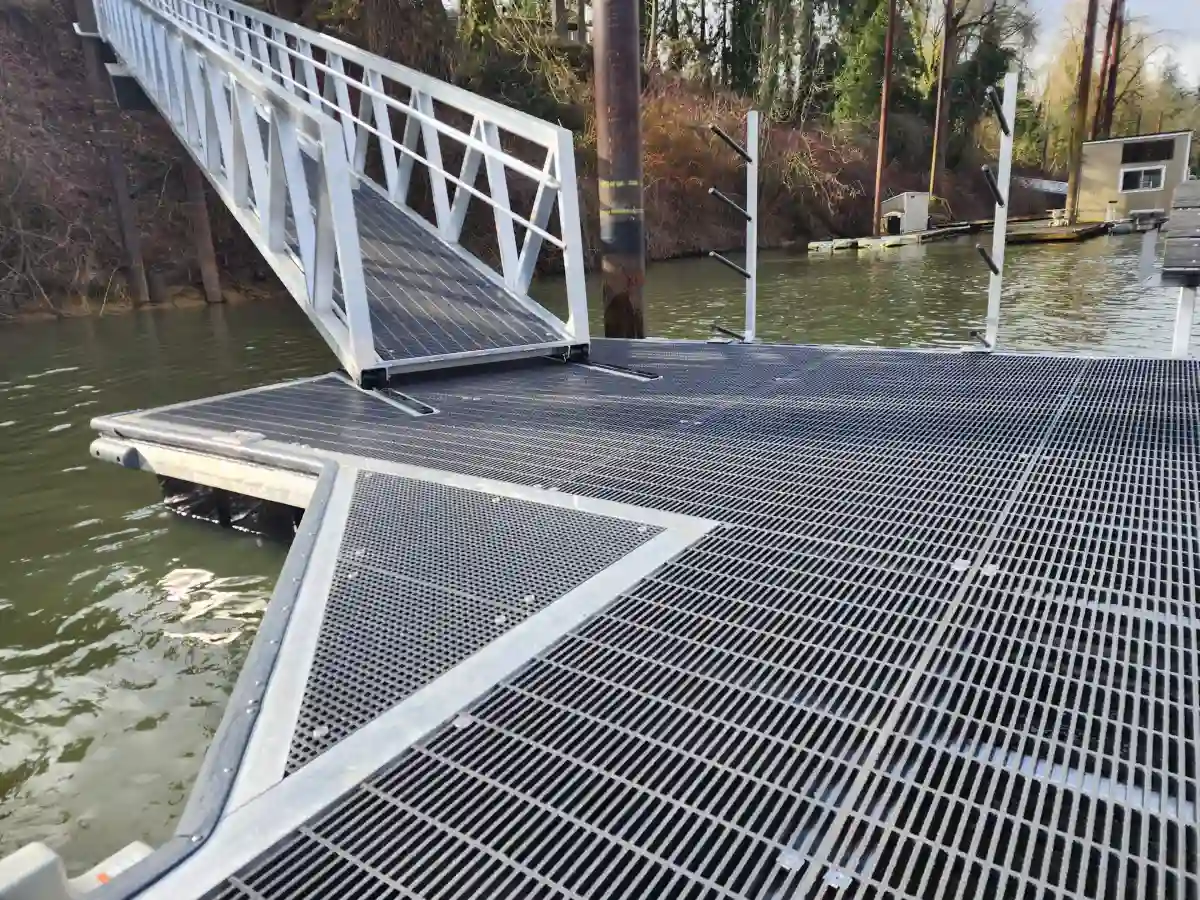
For Industrial Walkways and Platforms
When determining what size FRP grating do I need for industrial walkways, the answer depends on the specific load requirements, span between supports, and traffic conditions. For standard industrial walkways with pedestrian traffic and light maintenance loads, a 1.5-inch thick FRP grating with 1.5-inch bearing bar spacing in a 4 ft × 8 ft panel is the most common and cost-effective choice. This configuration handles uniform loads up to 100 psf at spans up to 30 inches.
For more demanding industrial walkway applications where equipment carts, maintenance vehicles, or concentrated point loads are expected, consider upgrading to 2-inch thick grating or reducing bar spacing to 1 inch center-to-center. The FRP grating size chart and weight capacity guide earlier in this article can help you match the right size to your specific load requirements. The key is to ensure the selected standard FRP grating dimensions provide adequate safety factors for both uniform loads and concentrated point loads.
Load Capacity Considerations
When evaluating load capacity, always consult the manufacturer’s standard FRP grating load tables. These tables provide precise data for every combination of thickness, bar spacing, and panel size. Key considerations include:
- Uniform load (UDL): The evenly distributed weight across the entire grating surface. Typical design loads range from 50 psf for light pedestrian areas to 250+ psf for heavy industrial zones.
- Concentrated load: A point load applied to a small area, such as a machine base or forklift wheel. The grating must withstand these without excessive deflection.
- Impact load: Dynamic forces from moving equipment or dropped objects. Thicker FRP grating with tighter bar spacing performs better under impact conditions.
- Deflection limit: The maximum acceptable deflection under load, typically L/100 (1% of span) for industrial grating or L/150 for pedestrian comfort.
Understanding these load types helps you determine the appropriate FRP grating sizes for your project. A well-designed FRP grating installation considers not just the static load but also dynamic factors and environmental conditions such as chemical exposure and temperature. The FRP grating load span table is your primary reference tool for matching size to load requirements.
Matching Size to Application Requirements
How to choose the right FRP grating dimensions for your project involves evaluating several factors beyond just load capacity:
- Support spacing: Measure the distance between support beams or joists. The grating span must be less than or equal to the maximum span for the selected thickness and bar spacing.
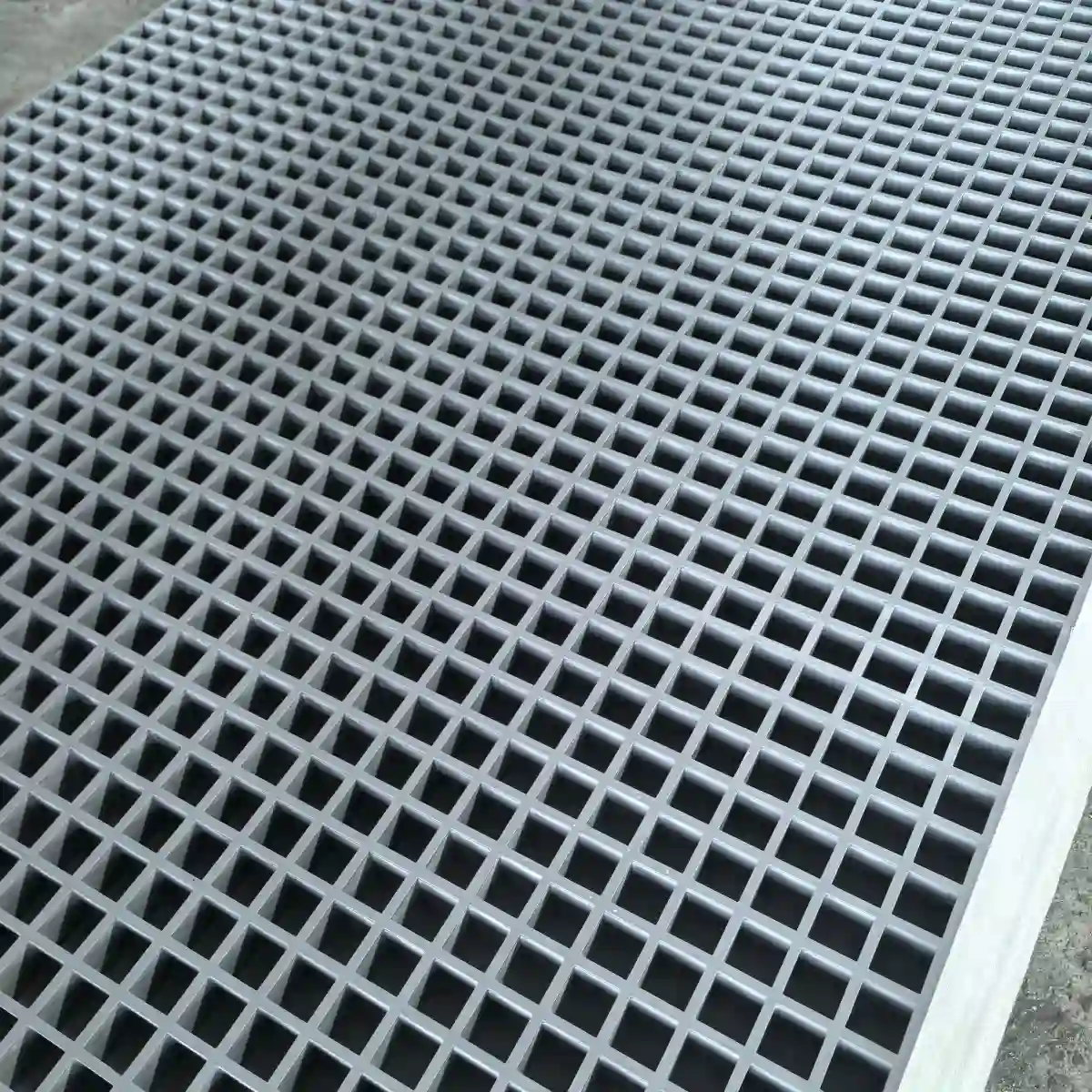
- Open area requirements: If light transmission or drainage is important, choose wider bar spacing (1.5″ or 2″ c/c) to maximize open area. Standard bar spacing provides approximately 60–70% open area.
- Traffic type: Pedestrian-only walkways can use lighter 1-inch grating, while areas with forklift traffic require 2-inch thick grating with 1-inch bar spacing.
- Corrosion environment: While not a size consideration, the resin system affects the grating’s structural performance and longevity in chemical environments.
- Installation constraints: Panel dimensions must fit within your support grid with minimal cutting. Standard panel sizes like 4 ft × 8 ft are easiest to source and install.
By carefully matching FRP grating dimensions to your specific application requirements, you ensure both safety and cost-effectiveness. Always remember that thicker and heavier grating costs more — selecting the minimum size that meets your load and span requirements provides the best value.
Standard FRP Grating Dimensions vs Custom Sizes
Can FRP Grating Be Cut to Custom Sizes?
Yes, FRP grating can be cut to custom sizes — and this is one of its greatest advantages. Unlike steel grating, which requires welding and specialized cutting equipment, FRP grating can be cut on-site using standard tools such as carbide-tipped circular saws, diamond blades, or abrasive cut-off wheels. This makes it easy to adapt standard FRP grating sizes to fit irregular support structures, curved platforms, or areas with obstructions like pipes and columns.
When comparing standard FRP grating dimensions vs custom sizes: which is better, the answer depends on your project scale and budget. Standard panel sizes (4 ft × 8 ft or 4 ft × 12 ft) are more economical because they are mass-produced and readily available. Custom sizes, which are cut to your exact specifications at the factory, cost more but reduce on-site labor and material waste. For large projects, factory-cut custom sizes often provide better overall value because the dimensional accuracy is higher and the edges are properly sealed with resin.
For field cutting, always follow these best practices:
- Use a carbide-tipped blade with at least 12 teeth per inch for clean cuts
- Cut at a slow feed rate to prevent fiber fraying
- Seal all cut edges with a compatible resin to prevent moisture wicking
- Wear appropriate PPE — cutting FRP creates fine fiberglass dust
- Measure twice, cut once — FRP grating cannot be easily re-joined
Whether you choose standard panel sizes or opt for factory-cut custom dimensions, FRP grating offers excellent flexibility for projects of all sizes.
How to Measure FRP Grating Correctly
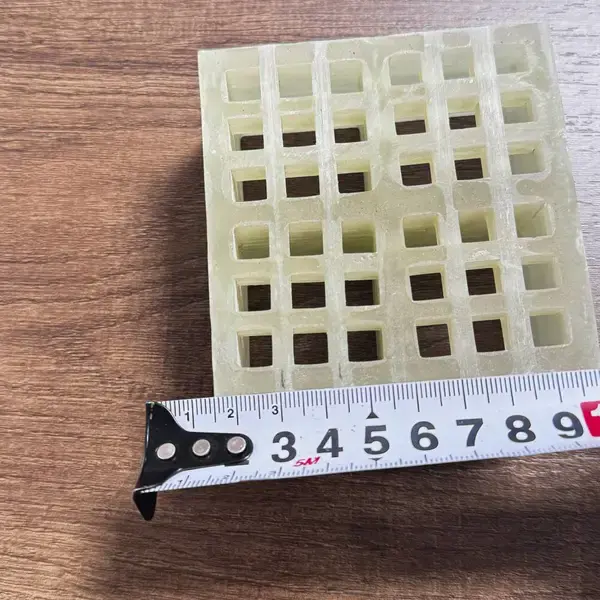
Knowing how to measure FRP grating correctly is essential for accurate ordering and installation. To measure FRP grating for your project, follow these steps:
- Measure the support span: Measure the clear distance between support beams or joists. This determines the required grating span length. Remember that the grating bearing surface on each support should be at least 1 inch (25 mm).
- Determine panel width: Measure the total width of the area to be covered. Subtract any expansion gaps (typically 1/4 inch per 10 feet of grating). Standard FRP panel widths range from 3 feet to 5 feet, so plan your layout accordingly.
- Calculate panel length: Add the required bearing overlap to the clear span measurement. For example, if your clear span is 36 inches and you need 1 inch of bearing on each end, order panels at least 38 inches long.
- Verify thickness requirements: Consult the FRP grating load span table to confirm that your selected thickness can safely span the measured distance with the required load capacity.
- Account for openings: Measure and mark any cutouts for pipes, columns, or equipment supports. These can be cut on-site or specified in custom factory orders.
To measure FRP grating dimensions correctly, always use a steel tape measure and record measurements in both inches and millimeters. Keep a written record of all dimensions for verification before cutting or ordering. If you are unsure about any measurement, consult with your FRP grating supplier who can review your layout and recommend the most appropriate standard or custom sizing.
The choice between standard FRP grating dimensions and custom sizes depends on your project’s specific layout. Standard sizes work well for rectangular areas with regular support spacing, while custom sizes are ideal for complex layouts with irregular shapes or non-standard spans.
Conclusion
Selecting the right FRP grating sizes is fundamental to the success of any industrial flooring project. Throughout this guide, we have covered the standard FRP grating dimensions available — from 1-inch to 2-inch thicknesses, panel sizes from 4 ft × 8 ft to 4 ft × 12 ft, and bearing bar spacing options from 1 inch to 2 inches center-to-center. We have explored how FRP grating sizes and load capacity are directly related, with thicker panels and closer bar spacing providing greater strength and longer allowable spans.
We have also answered the practical questions that arise during project planning — how to measure FRP grating correctly, whether FRP grating can be cut to custom sizes, and how to choose the right FRP grating dimensions for industrial walkways. The standard FRP grating load tables and FRP grating load span table provide the technical foundation for safe and efficient grating specification.
Key takeaways to remember:
- Standard panel sizes are 4 ft × 8 ft and 4 ft × 12 ft, with thicknesses from 1″ to 2″
- The maximum span for standard FRP grating sizes ranges from 18″ (1″ thick) to 48″ (2″ thick with 1″ bar spacing)
- Always consult manufacturer standard FRP grating load tables for final engineering specifications
- FRP grating can be easily cut to custom sizes on-site using standard tools
- Choose the minimum thickness and panel size that meets your load and span requirements for the best value
Whether you are designing a simple catwalk or a heavy industrial platform, understanding FRP grating sizes and their relationship to load capacity, span length, and application requirements ensures a safe, durable, and cost-effective installation. For specific projects, always work with a qualified structural engineer and consult the manufacturer’s certified load data to verify your size selections.