Introduction
When specifying industrial flooring for demanding environments, one of the most critical considerations is the heavy duty FRP grating load capacity. Fiberglass reinforced plastic (FRP) grating has become the go-to solution for facilities that require exceptional strength combined with corrosion resistance, lightweight handling, and long-term durability. But how much weight can heavy duty FRP grating actually support? What factors determine its load rating? And how do you select the right grating for your specific application?
This comprehensive guide answers all those questions and more. Whether you are designing a chemical plant platform, a wastewater treatment walkway, or an offshore rig floor, understanding the load capacity of heavy duty FRP grating is essential for safety, compliance, and cost-effectiveness. We will cover load rating fundamentals, calculation methods, span tables, comparison with standard grating, and practical selection criteria so you can confidently specify the right product for your project.
What Is Heavy Duty FRP Grating Load Capacity?
Load capacity refers to the maximum weight or force that a fiberglass reinforced plastic grating panel can safely support under specified conditions without failing or exceeding acceptable deflection limits. Unlike standard FRP grating, heavy duty variants are engineered with thicker bearing bars, deeper section heights, and higher glass-to-resin ratios to withstand substantially greater loads.
Load capacity is typically expressed in two ways:
- Uniformly Distributed Load (UDL): The total load evenly spread across the entire grating surface, usually measured in pounds per square foot (psf) or kilopascals (kPa).
- Concentrated Load: A point load applied at a specific location on the grating, often simulating wheel loads from forklifts or equipment legs, measured in pounds (lbs) or kilograms (kg).
Standard Heavy Duty FRP Grating Load Capacity Specs
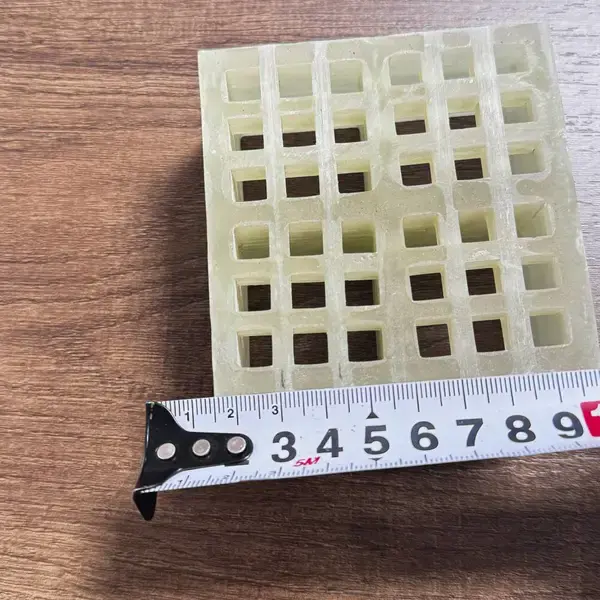
While custom configurations are available, most manufacturers offer standard specs based on common industry requirements. Typical heavy duty profiles include 1-1/2", 2", and 3" bar heights with bearing bar thicknesses ranging from 3/16" to 3/8". A standard 2" heavy duty FRP grating with 3/8" bearing bars and 1-1/2" center-to-center spacing can typically support a uniformly distributed load of 200-400 psf (9.6-19.2 kPa) at a 24-inch span — far exceeding the 75-150 psf range of standard FRP grating.
Fiberglass grating load capacity varies significantly depending on the resin system used. Vinyl ester and phenolic resin gratings offer higher structural strength and better fire resistance than standard polyester gratings, making them the preferred choice for heavy duty industrial environments where load demands are highest.
Key Factors Affecting Heavy Duty FRP Grating Load Capacity
Several interrelated factors determine the load-bearing performance of any given FRP grating panel. Understanding these variables is essential when comparing products or designing a system to meet specific performance requirements.
Resin Type and Glass Content
The resin system is the backbone of the grating. Polyester, vinyl ester, and phenolic resins each offer different mechanical properties. Vinyl ester resins provide superior strength and corrosion resistance, making them the top choice for demanding heavy duty applications. The glass-to-resin ratio also matters — a higher glass content (typically 60-70% by weight in the bearing direction) translates directly into greater load-bearing capability.
Bearing Bar Configuration
Heavy duty FRP grating is defined by its bearing bar dimensions. Larger bearing bars — both in height (depth) and thickness — dramatically increase moment of inertia and section modulus, which are the fundamental geometric properties that determine bending resistance. A grating with 1/4" x 3" bearing bars will support substantially more load than one with 3/16" x 1-1/2" bars at the same span.
Span Distance — Load Capacity vs Span
The relationship between heavy duty FRP grating load capacity vs span is inverse: as the unsupported span increases, the safe load capacity decreases exponentially. This is because bending stress in a simply supported beam is proportional to the square of the span length. Doubling the span can reduce load capacity by approximately 75%. This makes span configuration one of the most critical design decisions in grating specification.
For example, a heavy duty grating rated for 400 psf at a 24-inch span may only support 100 psf at a 48-inch span. Always consult the manufacturer load tables for the exact span you plan to use.
Cross Bar Spacing and Panel Construction
The spacing of cross bars (also called tie bars) affects how loads are distributed across adjacent bearing bars. Tighter cross bar spacing (2" or 3" on center) improves load sharing and reduces individual bar deflection, contributing to higher overall fiberglass grating load capacity. Molded gratings inherently have better load distribution than pultruded gratings due to their integrated cross bar construction.
Heavy Duty FRP Grating Load Capacity vs Standard Grating
One of the most common questions engineers ask is how heavy duty FRP grating vs standard grating load capacity compares. The differences are significant and directly impact material selection for various industrial applications.
| Parameter | Standard FRP Grating | Heavy Duty FRP Grating |
|---|---|---|
| Bearing Bar Height | 1" – 1-1/2" | 1-1/2" – 3" |
| Bearing Bar Thickness | 1/8" – 3/16" | 1/4" – 3/8" |
| Typical UDL at 24" Span | 75 – 150 psf | 200 – 600+ psf |
| Maximum Span (light traffic) | 24" – 36" | 36" – 60" |
| Glass Content | 50 – 60% | 60 – 70% |
| Primary Applications | Walkways, mezzanines, light platforms | Industrial flooring, vehicle access, heavy platforms |
| Relative Cost Factor | 1.0x (baseline) | 1.5x – 2.5x |
When comparing heavy duty FRP grating vs standard grating load capacity, the key takeaway is that heavy duty grating provides 2-4 times the load-bearing capability of standard grating at equivalent spans. This makes heavy duty grating the only safe choice for applications involving vehicle traffic, heavy equipment, or high-density personnel loading.
However, standard grating remains a cost-effective option for light-duty applications where loads are below 150 psf and spans are limited. The heavy duty frp grating price premium is justified by the increased material volume, higher glass content, and more robust manufacturing requirements.
Heavy Duty FRP Grating Load Capacity for Industrial Flooring
Determining what load capacity do I need for heavy duty industrial flooring is one of the most critical steps in the specification process. The required load rating depends on the type of traffic, equipment, and activity the flooring will support.
Light Industrial Flooring (100-200 psf)
Suitable for pedestrian walkways, maintenance platforms, and light service areas where only foot traffic and occasional hand-truck loads are expected. Standard grating may suffice at shorter spans, but heavy duty FRP gating in this range provides an extra safety margin.
Medium Industrial Flooring (200-400 psf)
Required for areas with regular material handling, pallet jacks, light forklift traffic, and equipment access platforms. A 2" heavy duty FRP grating with 1/4" bearing bars is commonly specified for these conditions. This load range covers most chemical plant flooring, water treatment facilities, and food processing mezzanines.
Heavy Industrial Flooring (400-800+ psf)
For heavy forklift traffic, truck access, crane runways, offshore platform decks, and heavy equipment support. These applications demand maximum capacity grating with 2-1/2" to 3" bar heights and 3/8" bearing bars. Heavy duty FRP grating for industrial flooring at this level often uses premium vinyl ester resin systems to combine strength with chemical resistance.
Real-World Application Examples
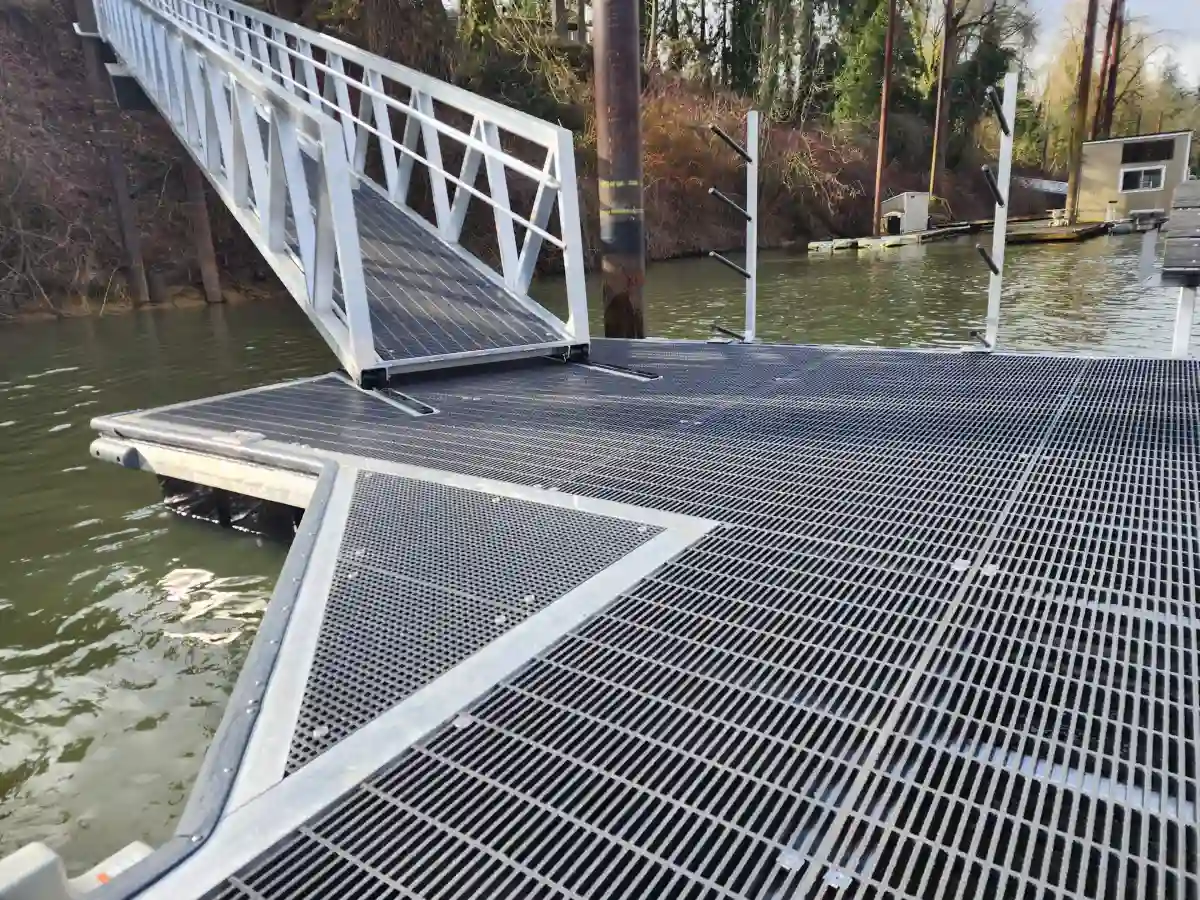
- Chemical Processing Plants: Typically require 300-500 psf load capacity for platform and walkway flooring with strong corrosion resistance
- Wastewater Treatment Facilities: 200-350 psf for access platforms and filter walkways
- Offshore Oil Platforms: 400-800+ psf for helideck support and equipment mezzanines
- Food and Beverage Plants: 250-400 psf for washdown platforms and mezzanine flooring
- Power Generation Stations: 300-600 psf for turbine deck platforms and cooling tower access
The question of required load capacity for industrial flooring ultimately comes down to analyzing the worst-case live load scenario and applying the appropriate safety factor per building code requirements (typically 1.5 to 2.5 depending on occupancy category).
How to Calculate Heavy Duty FRP Grating Load Capacity
Learning how to calculate heavy duty FRP grating load capacity is essential for engineers and specifiers who need to verify that a selected grating will perform safely under expected conditions. The calculation process involves understanding load tables, bending stress formulas, and deflection limits.
Understanding Load Tables
Manufacturer load tables are the primary reference documents for selecting FRP grating. These tables list the maximum safe uniformly distributed load (UDL) and concentrated load for each grating profile at various span distances. The relationship between span and allowable load is clearly shown — as span increases, the allowable load decreases significantly.
For example, a typical heavy duty grating load table entry might look like this:
| Span (inches) | UDL (psf) | Concentrated Load (lbs) | Deflection (inches) |
|---|---|---|---|
| 24 | 400 | 1,500 | 0.08 |
| 30 | 280 | 1,050 | 0.12 |
| 36 | 200 | 750 | 0.18 |
| 48 | 100 | 375 | 0.30 |
Basic Calculation Formula
The load capacity of an FRP grating panel is calculated using the bending stress formula for simply supported beams:
- Bending Stress (σ): σ = M / S, where M is the maximum bending moment and S is the section modulus
- Allowable Load: Determined by dividing the material's allowable stress by the actual stress under the design load, applying a safety factor
- Deflection Check: Typically limited to L/200 or L/150 of the span (e.g., 0.18" max for a 36" span)
Using the Load Tables — A Practical Example
Suppose you need a heavy duty grating for a platform with supports at 36-inch centers, expected to carry a uniform load of 200 psf. Looking at the frp grating load tables, you find a suitable profile rated for 200 psf UDL at that span. You then verify that any expected concentrated load (e.g., a 750 lb equipment leg) stays within the table limit. Always apply a safety factor of 1.5-2.0 as required by your local building code or project specifications.
Maximum Load Capacity and Highest Capacity Gratings
Engineers frequently ask what is the maximum load capacity for heavy duty FRP grating and which heavy duty frp grating has the highest load capacity. The answers depend on the grating profile, manufacturing method, and material system.
Maximum Load Capacity Ranges
For standard off-the-shelf heavy duty FRP grating products, the maximum safe load capacities typically fall within these ranges:
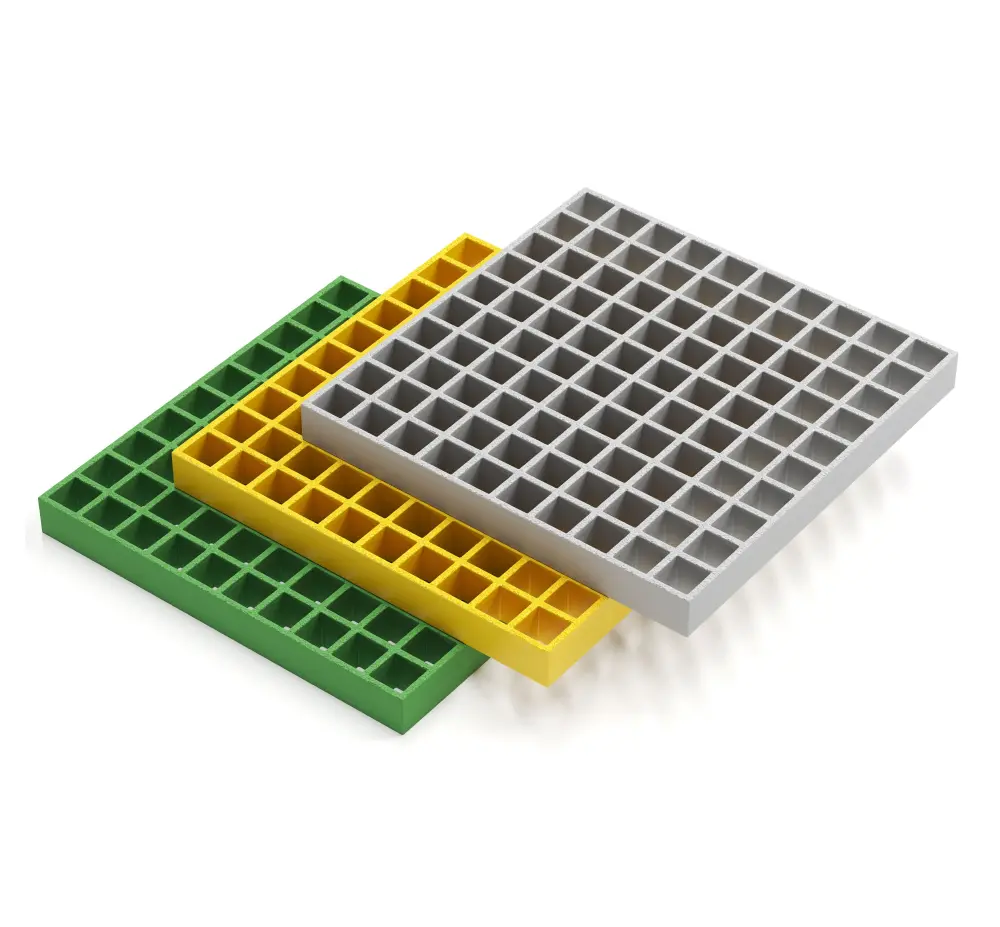
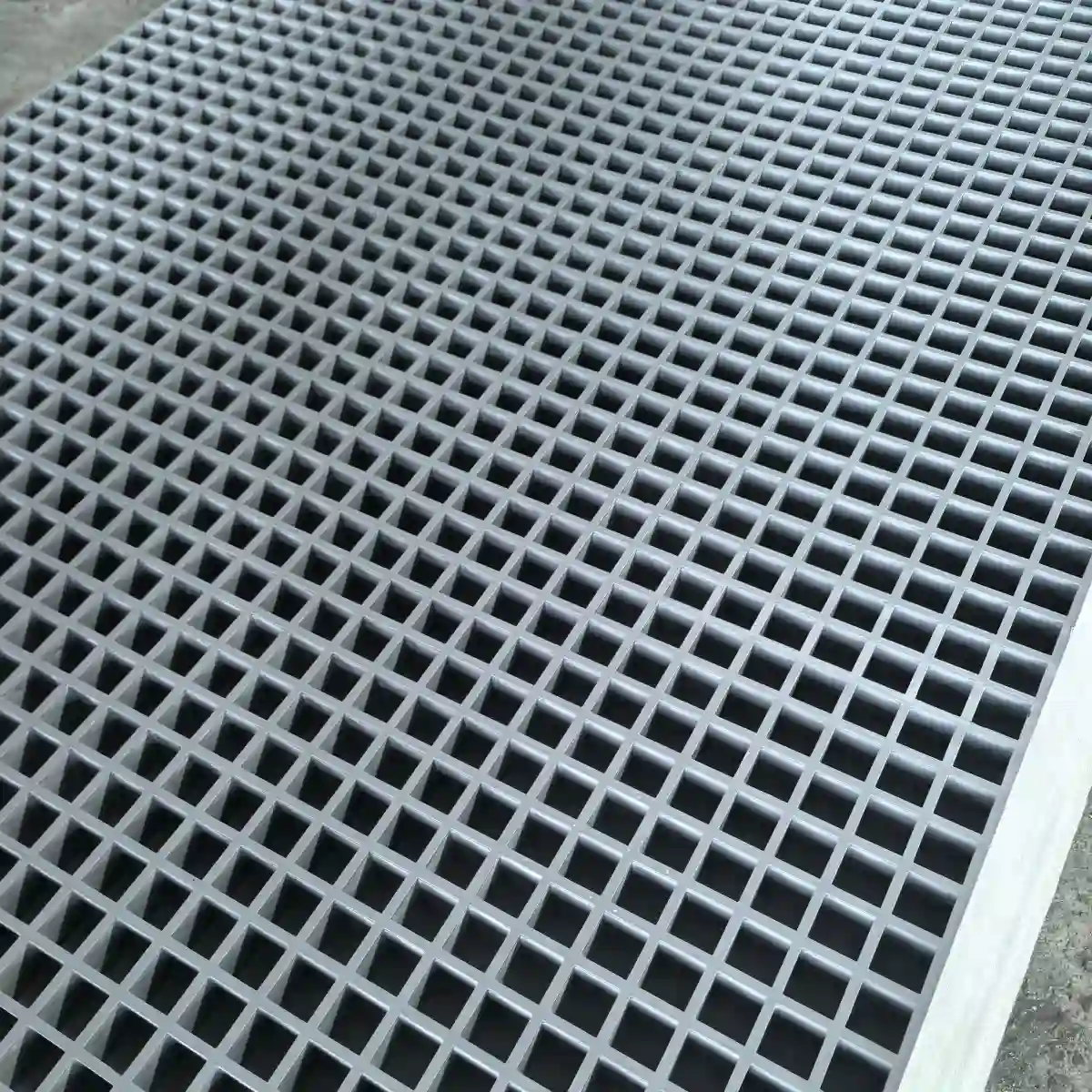
- Molded Heavy Duty Grating: Up to 500 psf UDL at 24-inch span with 2" deep panels. Molded gratings offer excellent load distribution due to their integral cross-bar construction.
- Pultruded Heavy Duty Grating: Up to 600+ psf UDL at 24-inch span with 3" bearing bars. Pultruded gratings can achieve higher load capacities because the bearing bars can be made thicker and deeper than molded alternatives.
- Custom Heavy Duty Profiles: Engineered solutions with 4"+ bar heights and specialized reinforcements can achieve load capacities exceeding 1,000 psf for extreme applications like crane runways and helicopter landing pads.
Which Heavy Duty FRP Grating Has the Highest Load Capacity?
The heavy duty FRP grating with the highest load capacity is typically a pultruded profile with 3/8" x 3" bearing bars spaced at 1-3/16" centers, manufactured with a high-performance vinyl ester resin system. These gratings can support concentrated loads of 2,500+ lbs and uniformly distributed loads of 800+ psf at short spans.
For extreme load requirements, some manufacturers offer custom designs with multiple-layer construction or additional carbon fiber reinforcement. These specialty gratings are used in defense, aerospace, and heavy infrastructure applications where weight savings and corrosion resistance must be combined with extremely high structural capacity.
When selecting the highest capacity grating, also consider the deflection criteria. Even if a grating can support the load without failure, excessive deflection may make it unsuitable for applications where dimensional stability is critical, such as equipment mounting surfaces or precision walkways.
Load Capacity Specifications and Verification
Ensuring that your heavy duty FRP grating meets project requirements requires proper specification, verification, and understanding of failure modes. This section covers key aspects of specification and verification.
Standard Heavy Duty FRP Grating Load Capacity Specs
When reviewing manufacturer specs, you should expect to see the following information from any reputable manufacturer:
- Material Properties: Resin type (polyester, vinyl ester, phenolic), glass content percentage, and fire rating classification
- Geometric Specifications: Bearing bar height, thickness, center-to-center spacing; panel dimensions and cross bar spacing
- Load Tables: UDL and concentrated load ratings at multiple span distances, with corresponding deflection values
- Safety Factor: Typically 1.5 to 2.5 based on applicable building codes (OSHA, IBC, ASCE 7)
- Testing Standards: ASTM D4381 (deflection test), NEMA RE-1 (grating performance standard)
How to Verify Specifications
Knowing how to verify specifications is crucial before approving a product for installation. Follow these verification steps:
- Request certified load test reports from the manufacturer — these should include third-party testing data for the specific product profile you are specifying
- Verify the load table corresponds to your actual span — do not extrapolate load values for longer spans than those shown in the table
- Confirm the safety factor used in the published ratings — some manufacturers rate at ultimate strength while others rate at working load with safety factor included
- Check for applicable standards compliance — the grating should meet or exceed ASTM, NEMA, and local building code requirements
- Request samples or conduct field verification for critical installations to confirm the product matches the specification
What Happens If Load Exceeds Heavy Duty FRP Grating Capacity?
Understanding what happens when load exceeds the rated capacity is important for risk assessment and designing appropriate safety margins:
- Excessive Deflection: The first sign of overloading is visible sagging or deflection beyond acceptable limits. This can create tripping hazards, cause equipment misalignment, or damage attached components.
- Resin Cracking: Continued overloading causes micro-cracking in the resin matrix, exposing glass fibers to environmental attack and reducing long-term durability.
- Bearing Bar Fracture: At extreme overload levels, individual bearing bars can snap or delaminate, leading to localized failure of the grating panel.
- Complete Panel Failure: In worst-case scenarios, the entire panel can collapse, creating serious safety hazards for personnel and equipment below.
The key takeaway is that FRP grating exhibits gradual, visible warning signs before catastrophic failure — unlike steel grating which may give little warning before plastic collapse. Always design with a minimum safety factor of 1.5 and consider dynamic loads, impact loads, and load concentration factors in your design.
Heavy Duty FRP Grating Sizes, Thickness and Price Considerations
Beyond load capacity, engineers and procurement specialists must also consider heavy duty frp grating sizes, heavy duty frp grating thickness, and heavy duty frp grating price when planning a project. These factors directly influence both the structural performance and the total installed cost.
Heavy Duty FRP Grating Sizes
Heavy duty frp grating sizes vary by manufacturing method and product line. Standard panel sizes include:
- Molded Grating: Typically available in 4' x 8', 4' x 12', and 3' x 10' panels. Custom sizes can be cut from these standard panels during fabrication.
- Pultruded Grating: Available in longer lengths up to 20' or more, with standard widths of 3', 4', and 5'. Pultruded panels are ideal for long-span applications where minimizing joints is important.
- Heavy duty FRP grating for industrial flooring applications often requires custom fabrication: Most manufacturers can custom-cut panels to exact dimensions, including cutouts for pipes, columns, and equipment penetrations.
When specifying sizes, plan your support structure layout to maximize material utilization from standard panel dimensions, as this reduces waste and lowers overall project cost.
Heavy Duty FRP Grating Thickness
Heavy duty frp grating thickness is typically described by the bearing bar height rather than an overall panel thickness. Common heavy duty thickness options include:
| Bar Height | Typical Bar Thickness | Common Applications |
|---|---|---|
| 1-1/2" | 1/4" – 3/8" | Light industrial, pedestrian walkways |
| 2" | 1/4" – 3/8" | Standard heavy duty, material handling areas |
| 2-1/2" | 5/16" – 3/8" | Heavy industrial, forklift traffic |
| 3" | 3/8" – 1/2" | Extreme duty, vehicle traffic, offshore |
Heavy Duty FRP Grating Price Considerations
The heavy duty frp grating price is influenced by several factors beyond just load capacity. Understanding these cost drivers helps in budget planning and product selection:
- Resin Type: Vinyl ester resin gratings typically cost 20-40% more than polyester, but offer superior strength and corrosion resistance
- Glass Content: Higher glass content increases raw material cost but provides higher load capacity per pound of grating
- Bar Dimensions: Thicker and deeper bearing bars require more material and longer pultrusion or molding cycles, increasing unit price
- Panel Size and Quantity: Larger orders benefit from economies of scale, with per-square-foot pricing decreasing for full truckload quantities
- Surface Finish: Gritted surfaces for slip resistance add 10-15% to the base price compared to smooth surfaces
- Heavy duty FRP grating for industrial flooring applications often requires custom fabrication: Cut-to-size panels with penetrations, beveled edges, or custom colors incur additional fabrication charges
As a general guideline, heavy duty frp grating price ranges from $15-40 per square foot for standard configurations, with custom-engineered solutions on the higher end. Despite the upfront cost, heavy duty FRP grating often delivers lower total cost of ownership compared to steel or aluminum alternatives due to its corrosion resistance, light weight (reducing support structure costs), and minimal maintenance requirements over a 20+ year service life.
Conclusion
Selecting the right heavy duty FRP grating load capacity for your industrial flooring project is a decision that balances safety, performance, and cost. By understanding the fundamental factors that determine load capacity — bearing bar geometry, resin system, span distance, and panel construction — you can confidently specify a grating that meets the demands of your specific application.
To summarize the key takeaways:
- Heavy duty FRP grating offers 2-4 times the load capacity of standard grating, making it suitable for industrial flooring, vehicle traffic, and heavy equipment support
- Load capacity is span-dependent — always reference the manufacturer load table for your actual support spacing rather than relying on generic ratings
- Verification is critical — request certified load test reports and ensure the product meets applicable ASTM and building code standards
- Total cost of ownership often favors heavy duty FRP grating over metal alternatives, even with a higher initial price, due to corrosion resistance, light weight, and minimal maintenance
Whether you are designing a new chemical processing platform, upgrading an existing wastewater treatment walkway, or specifying flooring for an offshore installation, the guide above provides the technical foundation you need. For project-specific recommendations, consult the manufacturer load tables and work with an experienced FRP grating supplier who can help you optimize the balance between performance and budget.
If you have questions about selecting the right heavy duty FRP grating for your specific load requirements, contact our engineering team for personalized assistance and load calculations.