Introduction
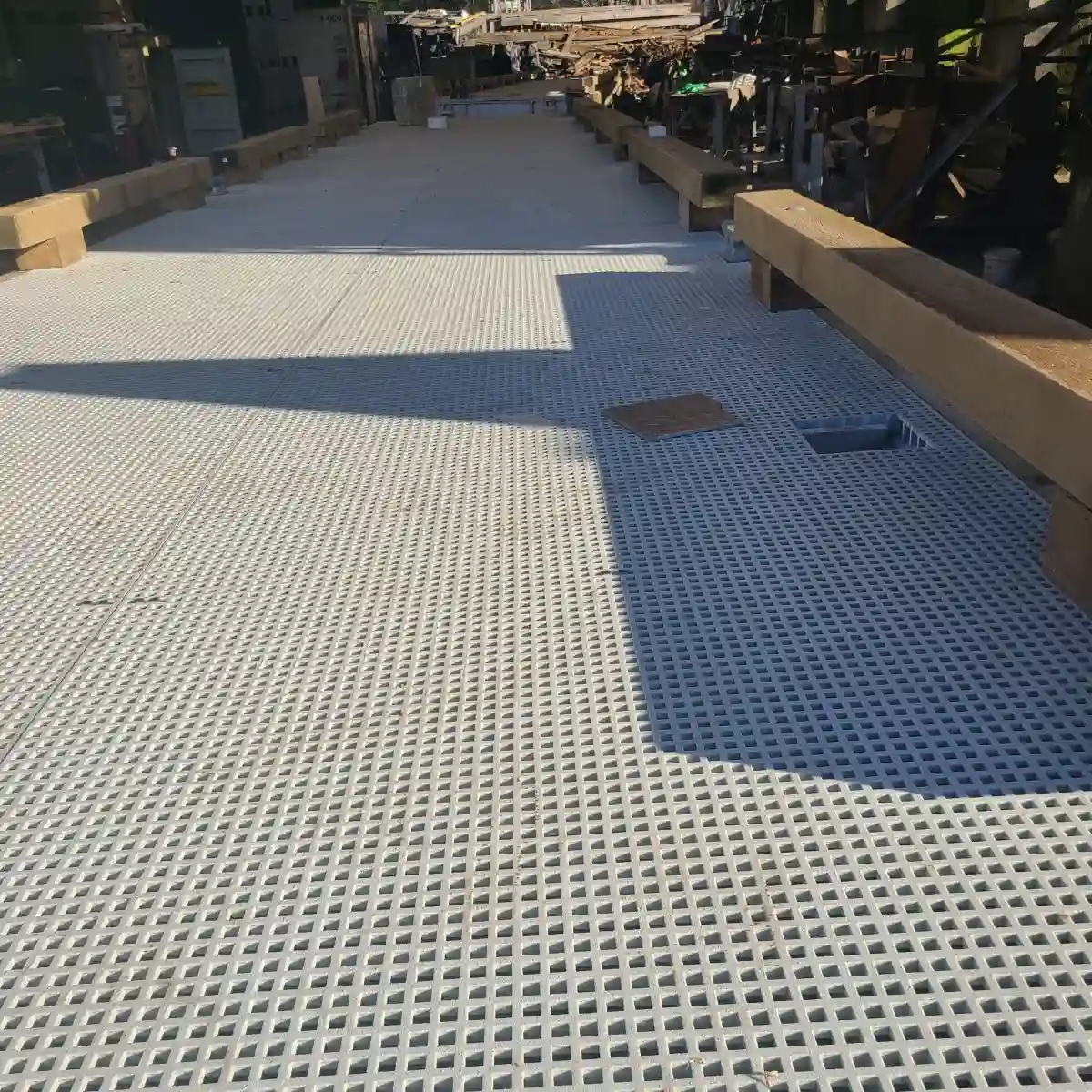
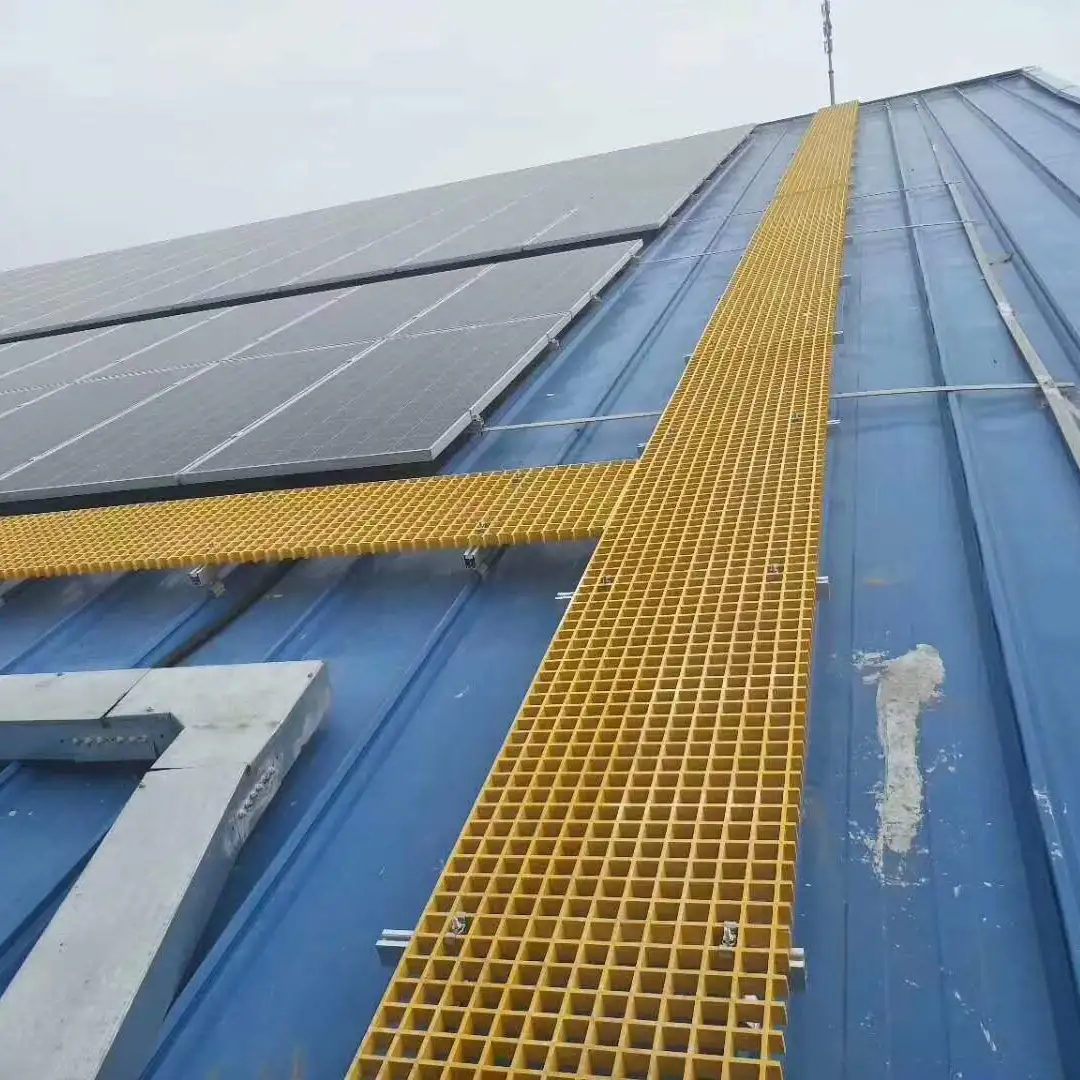
When selecting flooring for heavy industrial environments, understanding heavy duty FRP grating load capacity is the single most important factor in ensuring safety, compliance, and long-term performance. Whether you are designing a chemical plant walkway, a wastewater treatment platform, or an offshore oil rig deck, knowing the exact load ratings and how to calculate them can mean the difference between a safe installation and a catastrophic failure.
This comprehensive guide covers everything you need to know — from standard load ratings and calculation methods to real-world comparisons with standard grating and practical selection tips for industrial flooring applications. We will walk through the key factors that affect load performance, including grating thickness, span length, resin type, and available panel sizes, so you can confidently specify the right product for your project.
By the end of this guide, you will understand how to verify manufacturer specifications, what happens when loads exceed rated capacity, and how heavy duty FRP compares to standard alternatives in both performance and cost.
What Is Heavy Duty FRP Grating Load Capacity?
Heavy duty FRP grating load capacity refers to the maximum weight or force that a fiberglass reinforced plastic grating panel can safely support under specified conditions without permanent deformation, cracking, or failure. Unlike standard lightweight grating, heavy duty variants are engineered with thicker cross-sections, higher glass-to-resin ratios, and specialized structural profiles to withstand extreme loads in demanding environments.
The load capacity is typically expressed in pounds per square foot (psf) or kilonewtons per square meter (kN/m²), and it varies based on several key parameters including span length, grating depth, bearing bar configuration, and the specific resin system used. Most heavy duty FRP grating products on the market today offer load ratings ranging from 250 psf (12 kN/m²) for moderate industrial applications up to 1,000 psf (48 kN/m²) or more for specialized heavy-load scenarios such as bridge decking and crane walkways.
It is important to understand that load capacity is not a single fixed number — it is a performance curve that changes with span distance. A grating panel rated for 500 psf at a 24-inch span may only support 300 psf when the span extends to 36 inches. This inverse relationship between load and span is one of the most critical concepts to grasp when designing any FRP grating installation.
Maximum Load Capacity Ranges
To give you a practical reference, here are typical maximum load capacity ranges for different classes of heavy duty FRP grating:
- Standard duty grating (1-inch depth): 150–300 psf — suitable for pedestrian walkways and light platform access
- Medium duty grating (1.5-inch depth): 300–500 psf — ideal for light vehicle traffic and maintenance platforms
- Heavy duty grating (2-inch depth): 500–750 psf — designed for industrial flooring, forklift aisles, and equipment mezzanines
- Extra heavy duty grating (2.5-inch to 3-inch depth): 750–1,200+ psf — built for heavy vehicle traffic, crane rails, and structural bridge decking
Standard Heavy Duty FRP Grating Load Capacity Ratings
Understanding standard load ratings is essential when comparing products and specifying the right grating for your project. Manufacturers test their FRP panels according to industry standards such as ASTM D3841 and NEMA FG-1 to provide reliable load data.
Standard Specifications by Grating Depth
The following table summarizes typical standard heavy duty frp grating load capacity specs for common configurations. These values assume a 1.5-inch bearing bar spacing with continuous fiberglass reinforcement and isophthalic polyester resin.
| Grating Depth | Span (in) | Safe Load (psf) | Deflection at Load | Typical Application |
|---|---|---|---|---|
| 1.0" | 12" | 550 psf | 0.08" | Light pedestrian platforms |
| 1.0" | 24" | 250 psf | 0.15" | Catwalks & mezzanines |
| 1.5" | 12" | 850 psf | 0.06" | Industrial walkways |
| 1.5" | 24" | 500 psf | 0.12" | Light vehicle traffic |
| 1.5" | 36" | 320 psf | 0.20" | Equipment platforms |
| 2.0" | 12" | 1,200 psf | 0.05" | Forklift aisles |
| 2.0" | 24" | 750 psf | 0.10" | Heavy industrial flooring |
| 2.0" | 36" | 500 psf | 0.15" | Bridge decking |
| 2.5" | 24" | 1,000 psf | 0.08" | Crane walkways & heavy equipment |
| 2.5" | 36" | 750 psf | 0.12" | Extra heavy duty industrial flooring |
As the table demonstrates, the highest load capacities are achieved with deeper gratings and shorter spans. Two-inch and 2.5-inch deep gratings with spans of 12–24 inches deliver the best performance, often exceeding 1,000 psf. However, the deepest grating is not always the best choice — cost, weight, and installation requirements must also be factored into the decision.
For most heavy industrial applications, a 1.5-inch deep grating at 24-inch span provides an excellent balance of load capacity (500 psf), material cost, and ease of handling. When requirements exceed 750 psf, stepping up to 2-inch or 2.5-inch grating becomes necessary.
Key Factors Affecting Heavy Duty FRP Grating Load Capacity
Several interrelated factors determine the actual load rating of a given FRP grating panel. Understanding these variables allows engineers and facility managers to optimize their grating specification for both performance and cost.
Grating Depth and Thickness
The single most influential factor is heavy duty frp grating thickness (also referred to as grating depth). A deeper grating section provides a higher moment of inertia, which dramatically increases load-bearing capability. Moving from 1-inch to 1.5-inch depth typically yields a 60–80% increase in load capacity at the same span, while moving to 2-inch depth can double or triple the capacity. This is why heavy duty applications almost exclusively specify gratings of 1.5 inches or deeper.
Span Length
The relationship between heavy duty frp grating load capacity vs span is inversely proportional and non-linear. Doubling the span length reduces load capacity by roughly 75% (following the beam deflection formula where deflection is proportional to span⁴). This means that support beam spacing is one of the most cost-effective design levers — reducing span from 36 inches to 24 inches can increase load capacity by more than 100% without changing the grating specification at all.
Resin Type and Fire Resistance
The resin system used in manufacturing affects not only chemical resistance but also structural performance. Vinyl ester and epoxy-based resins typically deliver 10–15% higher load capacities than standard polyester resins due to better fiber-to-resin bonding. Fire-retardant formulations may have slightly reduced mechanical properties, so it is important to verify load ratings for the specific resin grade being specified.
Bearing Bar Configuration and Panel Sizes
The spacing and geometry of bearing bars significantly influence heavy duty frp grating sizes and their corresponding load ratings. Common configurations include:
- 1.5" × 3/16" bearing bars at 1.5" centers — standard heavy duty, good balance of strength and weight
- 1.5" × 1/4" bearing bars at 1.5" centers — increased bearing area for higher point loads
- 2" × 3/16" bearing bars at 1.5" centers — maximum load capacity for industrial flooring
- 2" × 1/4" bearing bars at 1.5" centers — extra heavy duty for forklift and vehicle traffic
- 1.5" × 3/16" bearing bars at 1.1875" centers — tighter mesh for smaller tool and foot traffic safety
Glass Content and Reinforcement
The percentage of glass fiber reinforcement by weight (typically 30–50% for structural grades) directly correlates with load capacity. Higher glass content means stiffer, stronger panels. Heavy duty FRP grating should have a minimum of 35% glass content by weight for reliable structural performance.
Environmental Factors
Temperature extremes, UV exposure, and chemical immersion can degrade FRP materials over time, reducing effective load capacity. When operating in environments above 150°F (65°C) or in corrosive chemical atmospheres, a derating factor of 20–30% should be applied to the published load rating.
How to Calculate Heavy Duty FRP Grating Load Capacity
Knowing how to calculate heavy duty FRP grating load capacity is essential for engineers and specifiers who need to verify that a selected grating panel meets project requirements. While manufacturers provide load tables, understanding the underlying calculation methodology enables you to evaluate non-standard configurations and validate published data.
The Basic Load Calculation Formula
The load capacity of FRP grating is determined using standard beam bending equations, adjusted for the orthotropic (directionally dependent) properties of fiberglass composites. The fundamental formula for uniform distributed load (UDL) capacity is:
W = (σ × S) / (L² × SF)
Where:
- W = allowable uniform load (psf or kN/m²)
- σ = allowable bending stress of the FRP material (psi or MPa)
- S = section modulus of the grating (in³/ft or mm³/m)
- L = span length between supports (in or mm)
- SF = safety factor (typically 1.5 to 3.0 depending on application)
Step-by-Step Calculation Example
Let us work through a practical example for a typical industrial flooring installation:
Step 1 — Gather grating specifications:
Assume a 1.5-inch deep grating with 1.5" × 3/16" bearing bars at 1.5" centers, spanning 24 inches between supports. The section modulus for this configuration is approximately 0.825 in³/ft.
Step 2 — Determine material allowable stress:
For a standard isophthalic polyester FRP grating, the allowable bending stress is typically 12,000 psi (ultimate strength of ~30,000 psi with a safety factor of 2.5).
Step 3 — Apply the formula:
W = (12,000 psi × 0.825 in³/ft) / (24 in)² × 2.5
W = 9,900 / 1,440
W = 6.875 lb/in × 12 = ~495 psf
The calculated value of approximately 500 psf aligns closely with the manufacturer load table entry for a 1.5-inch grating at 24-inch span, confirming the rating.
Deflection Check
Beyond load capacity, deflection must be verified for serviceability. The standard deflection formula for uniformly distributed load on a simple span is:
δ = (5 × W × L⁴) / (384 × E × I)
Where E is the modulus of elasticity (typically 1.8–2.5 × 10⁶ psi for FRP) and I is the moment of inertia. Most specifications limit deflection to L/100 or 0.25 inches maximum for industrial flooring. For the example above, the deflection at 500 psf would be approximately 0.12 inches — well within acceptable limits.
When to Request Manufacturer Verification
While these calculations provide useful estimates, always request certified load test data from the manufacturer for final specification. Variations in glass content, resin formulation, and manufacturing processes can cause actual load capacities to differ from calculated values by 10–15%. Reputable manufacturers provide third-party tested load tables for all standard grating sizes and configurations.
Heavy Duty FRP Grating vs Standard Grating: Load Comparison
A common question among engineers and procurement professionals is how heavy duty FRP grating vs standard grating load capacities compare. The difference is significant — heavy duty variants are specifically engineered to handle 2–5 times the load of standard grating at equivalent spans, making them the preferred choice for demanding industrial environments.
Key Differences at a Glance
| Parameter | Standard FRP Grating | Heavy Duty FRP Grating |
|---|---|---|
| Typical Depth | 0.75" – 1.0" | 1.5" – 3.0" |
| Bearing Bar Thickness | 1/8" – 3/16" | 3/16" – 1/4" |
| Load Capacity (24" span) | 150 – 250 psf | 500 – 1,000 psf |
| Glass Content | 25 – 35% | 35 – 50% |
| Deflection at Rated Load | 0.15" – 0.25" | 0.08" – 0.15" |
| Safety Factor | 1.5 – 2.0 | 2.0 – 3.0 |
| Typical Applications | Pedestrian walkways, light platforms | Forklift aisles, industrial flooring, heavy equipment mezzanines |
| Heavy duty frp grating price | $15–$25 per sq ft | $25–$45 per sq ft |
When to Choose Heavy Duty Over Standard
The decision between standard and heavy duty FRP grating comes down to three primary factors: load requirements, span configuration, and safety considerations. For pedestrian-only walkways with spans under 24 inches, standard grating at 1-inch depth is often sufficient. However, for any application involving vehicle traffic, heavy equipment access, or where deflection must be minimized for safety, heavy duty FRP grating is the required specification.
It is also worth noting that heavy duty frp grating for industrial flooring offers superior long-term value despite the higher upfront heavy duty frp grating price. The extended service life, reduced maintenance requirements, and higher safety margins typically result in a lower total cost of ownership over 10–15 years compared to standard grating that might need replacement or reinforcement.
Molded vs Pultruded Heavy Duty Grating
Within the heavy duty category, there are two primary manufacturing methods: molded grating (produced in open molds with continuous glass mat) and pultruded grating (manufactured by pulling resin-impregnated glass fibers through a heated die). Pultruded heavy duty grating typically offers 20–30% higher load capacity than molded grating of the same depth due to the aligned fiber orientation, making it the preferred choice for the most demanding load applications.
Load Capacity Requirements for Industrial Flooring Applications
Determining the correct load rating for industrial flooring requires a thorough analysis of the specific loads your installation will encounter. Different industrial sectors have varying requirements based on traffic type, equipment weight, and regulatory standards.
Recommended Load Ratings by Industry
When asking what load capacity do I need for heavy duty industrial flooring, consider the following industry-specific guidelines:
- Chemical Processing Plants: 400–600 psf — must accommodate pipe racks, maintenance personnel, and occasional light equipment. Corrosive environments require vinyl ester resin systems.
- Wastewater Treatment Facilities: 300–500 psf — primarily pedestrian traffic with maintenance equipment. Slip-resistant surface finishes are critical.
- Oil & Gas Platforms: 500–750 psf — must support drilling equipment, crew loads, and impact from dropped tools. Fire-retardant resin required.
- Food Processing Plants: 400–600 psf — frequent washdown environments with heavy cleaning equipment. Smooth, non-porous surface needed.
- Power Generation Facilities: 500–800 psf — turbine hall platforms, cooling tower access, and heavy maintenance equipment traffic.
- Mining & Mineral Processing: 600–1,000 psf — must withstand heavy impact loads, vibration, and abrasive conditions.
- Automotive Manufacturing: 500–750 psf — forklift traffic, assembly line platforms, and parts storage mezzanines.
Selecting the Right Grating for Your Flooring
Choosing heavy duty frp grating for industrial flooring involves matching the load rating to your specific operational conditions. Start by calculating the total expected load — including dead load (the weight of the grating itself and any equipment permanently mounted on it) plus live load (personnel, vehicles, materials, and dynamic forces). A safety factor of at least 2.0 is standard for industrial flooring, with 2.5–3.0 recommended for areas with frequent vehicle traffic or where human life safety is a concern.
For example, a distribution center mezzanine expecting 3,000 lb forklift traffic on 24-inch spans should specify a 2-inch deep heavy duty FRP grating rated at 750 psf minimum. This provides adequate capacity for the concentrated wheel loads while maintaining the recommended safety margin.
Deflection is equally important — excessive deflection under load causes operator discomfort, product spillage, and long-term fatigue in the grating material. Most industrial flooring specifications limit deflection to L/100 or 0.25 inches maximum. For flooring supporting sensitive equipment, L/150 or tighter is recommended.
What Happens When Load Exceeds Heavy Duty FRP Grating Capacity?
Understanding what happens if load exceeds heavy duty FRP grating capacity is critical for maintaining safe industrial operations. Unlike steel grating, which typically exhibits visible plastic deformation (bending) before failure, FRP grating is a composite material that can fail more suddenly if overloaded beyond its design limits.
Progressive Failure Stages
When a heavy duty FRP grating panel is subjected to loads exceeding its rated capacity, the material progresses through several failure stages:
Stage 1 — Elastic Deformation (within rated load): The grating deflects under load but returns to its original shape when the load is removed. This is normal, safe operation within the design envelope.
Stage 2 — Micro-cracking (above rated load by 25–50%): At loads modestly exceeding capacity, microscopic cracks begin forming in the resin matrix. The grating may show increased deflection but still carry the load without collapse. However, permanent damage has begun, reducing the panels residual strength by 10–20%.
Stage 3 — Fiber-matrix debonding (above rated load by 50–100%): The interface between glass fibers and resin begins to fail, producing audible cracking sounds and visible surface whitening (stress whitening). Load-bearing capacity drops rapidly at this stage.
Stage 4 — Fiber fracture and catastrophic failure (above rated load by 100%+): Individual glass fibers begin to fracture, leading to sudden, complete failure of the grating panel. This typically occurs without significant prior visible warning — one reason why conservative safety factors are critical with FRP materials.
Safety Factors and Design Margins
To prevent overload failures, the FRP industry applies substantial safety margins. Published ratings typically include a safety factor of 2.0 to 3.0 against ultimate failure. This means a grating rated at 500 psf safe working load can actually withstand 1,000–1,500 psf before catastrophic failure, providing a substantial safety margin for unexpected overloads.
Signs of Overload to Watch For
Facility managers should regularly inspect heavy duty FRP grating installations for these warning signs of overload:
- Excessive deflection (> L/100 or 0.25 inch) under normal operating loads
- Visible cracking or crazing (surface spider-webbing) in the resin
- Stress whitening around bearing bar intersections
- Unusual vibration or bouncing when walked on
- Bearing bar separation from cross bars
- Evidence of impact damage or point loading from dropped objects
If any of these signs are observed, the affected panels should be replaced immediately and the load distribution reassessed to prevent future overloading.
How to Verify Heavy Duty FRP Grating Load Capacity Specifications
Knowing how to verify heavy duty FRP grating load capacity specifications ensures you receive products that meet your project requirements. With many suppliers in the market, independent verification of load claims is essential for safety and compliance.
Review Manufacturer Load Test Documentation
Reputable manufacturers provide load test data conducted in accordance with ASTM D3841 and NEMA FG-1 standards. Request the following documentation from your supplier:
- Certified load tables showing safe working load (psf) at multiple span configurations for each grating depth and bearing bar size
- Deflection data at rated load — maximum deflection should not exceed L/100 for industrial applications
- Ultimate load test results — the breaking strength of the panel, used to verify the safety factor (typically 2:1 to 3:1 against working load)
- Third-party test reports from independent laboratories such as UL, Intertek, or SGS
Key Verification Checks
When reviewing specifications, perform these verification steps:
1. Match the rated span to your installation: Manufacturers publish load data at specific span lengths (typically 12, 18, 24, and 36 inches). Never use a load rating from a shorter span to justify performance at a longer span — doing so can overstate actual capacity by 200–300%.
2. Verify the resin system: Load ratings apply to specific resin formulations. If the grating is produced with a different resin than what was tested (e.g., switching from polyester to vinyl ester), verify that load ratings remain valid. Fire-retardant and UV-stabilized grades may have 5–15% lower capacities.
3. Check the safety factor: The published safe working load should not be confused with the ultimate breaking load. Confirm the safety factor used (minimum 2.0 for industrial applications) and ensure it meets your local building code requirements.
4. Inspect dimensional tolerances: Verify that the actual heavy duty frp grating thickness and bearing bar dimensions match the specification sheet. Industry-standard tolerances are ±0.02 inches for bearing bar thickness and ±0.06 inches for overall depth. Panels at the low end of the tolerance range will have proportionally lower load capacity.
Field Verification Methods
For critical installations, consider on-site load testing. Place a known load (such as concrete blocks or water-filled containers) across the grating panel and measure deflection with a dial indicator. The measured deflection should be within 10% of the manufacturer published value. If deflection exceeds expectations by more than 15%, the grating may not meet its rated capacity and should be investigated further.
Certification and Compliance
Always specify that the heavy duty FRP grating must be manufactured in accordance with recognized quality standards. ISO 9001 certification of the manufacturing facility provides confidence in consistent product quality. For projects requiring code compliance, ensure the grating carries appropriate approvals from authorities such as OSHA, ANSI, or local building departments.
Heavy Duty FRP Grating Price and Value Considerations
The heavy duty frp grating price is naturally higher than standard grating due to the increased material content, deeper profiles, and more stringent manufacturing requirements. However, understanding how price relates to load capacity helps you make cost-effective specification decisions.
Price Ranges by Load Capacity Class
| Load Capacity Class | Depth | Price Range (per sq ft) | Typical Cost Multiplier vs Standard |
|---|---|---|---|
| Standard duty (150–300 psf) | 0.75" – 1.0" | $15 – $25 | 1.0x (baseline) |
| Medium duty (300–500 psf) | 1.5" | $25 – $35 | 1.5x – 1.7x |
| Heavy duty (500–750 psf) | 1.5" – 2.0" | $30 – $45 | 1.8x – 2.2x |
| Extra heavy duty (750–1,200+ psf) | 2.0" – 2.5" | $40 – $60 | 2.2x – 3.0x |
Cost Optimization Strategies
While heavy duty frp grating price is higher, several strategies can reduce overall project cost without compromising load capacity:
Optimize support spacing: Reducing span from 36 inches to 24 inches can allow you to use a 1.5-inch deep grating instead of a 2-inch deep grating, saving 20–30% in material cost while maintaining equivalent load capacity. The cost of additional support beams is often offset by the grating savings.
Choose standard heavy duty frp grating sizes: Custom panel sizes require additional fabrication labor and generate more waste. Sticking to standard panel dimensions (typically 4×8 ft, 4×10 ft, or 4×12 ft) reduces cost by 10–15%.
Consider molded vs pultruded: For applications where the maximum load capacity is not required, molded heavy duty grating offers a lower-cost alternative to pultruded grating while still delivering 60–70% of the load capacity at about 65–75% of the price.
Buy in volume: Most manufacturers offer tiered pricing for quantity orders. Ordering full truckload quantities (typically 5,000+ sq ft) can reduce per-square-foot heavy duty frp grating price by 15–25% compared to small project orders.
Total Cost of Ownership
When evaluating heavy duty frp grating price, consider the total cost of ownership over the product lifecycle. Heavy duty FRP grating lasts 15–25 years in corrosive environments where steel grating would need replacement every 5–10 years. The elimination of painting, galvanizing, and corrosion maintenance can save $5–$15 per square foot annually. Over a 10-year period, the total cost of heavy duty FRP grating is typically 30–50% lower than steel, even though the initial purchase price may be comparable or slightly higher.
Conclusion
Selecting the right load rating for your industrial application requires a thorough understanding of standard ratings, influential factors, and verification methods. This guide has walked you through the essential knowledge needed to make informed decisions — from understanding basic definitions to performing calculations, comparing heavy duty vs standard options, and verifying manufacturer specifications.
Key Takeaways
- Heavy duty FRP grating load capacity typically ranges from 250 psf to over 1,200 psf depending on depth, span, and bearing bar configuration
- Grating depth and span length are the two most impactful factors — decreasing span is often more cost-effective than increasing depth
- Always verify manufacturer load ratings through independent test data and ensure the published safety factor (minimum 2.0) meets your project requirements
- While heavy duty FRP grating costs more upfront than standard grating, the total cost of ownership over 15–20 years is significantly lower due to corrosion resistance and minimal maintenance
- Regular inspection for signs of overload — cracking, excessive deflection, or stress whitening — is essential for maintaining long-term safety
- For the most demanding applications, specify 2-inch or 2.5-inch deep pultruded grating with 1/4-inch bearing bars for maximum load capacity
Whether you are designing a new facility or upgrading existing industrial flooring, taking the time to properly evaluate load performance against your specific operational requirements will ensure a safe, durable, and cost-effective installation. Work closely with reputable manufacturers who provide comprehensive load data and third-party test certification, and do not hesitate to request custom load calculations for non-standard span configurations.
For professional assistance selecting the right heavy duty FRP grating for your project, contact our engineering team. We provide free load capacity analysis and specification support for industrial flooring applications worldwide.