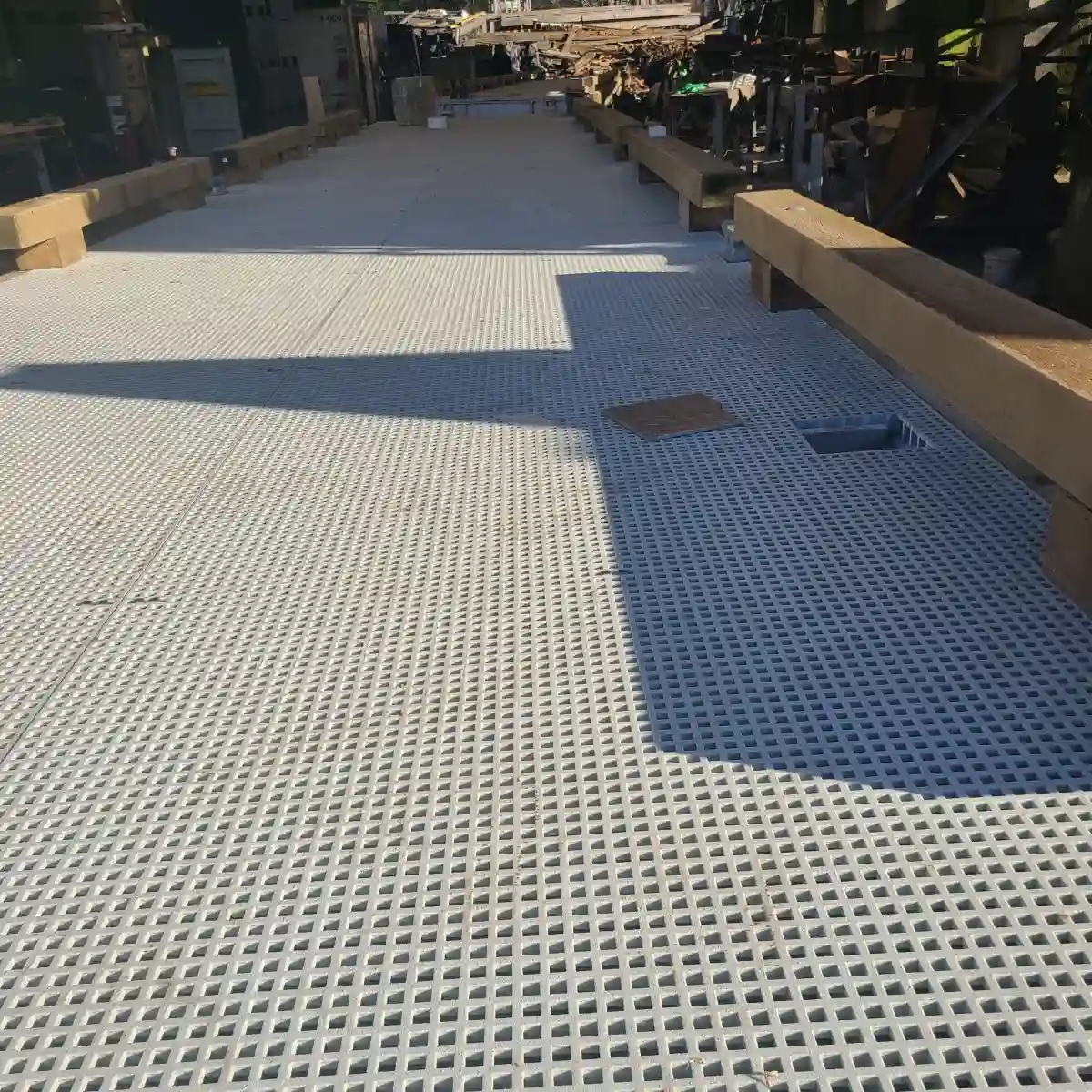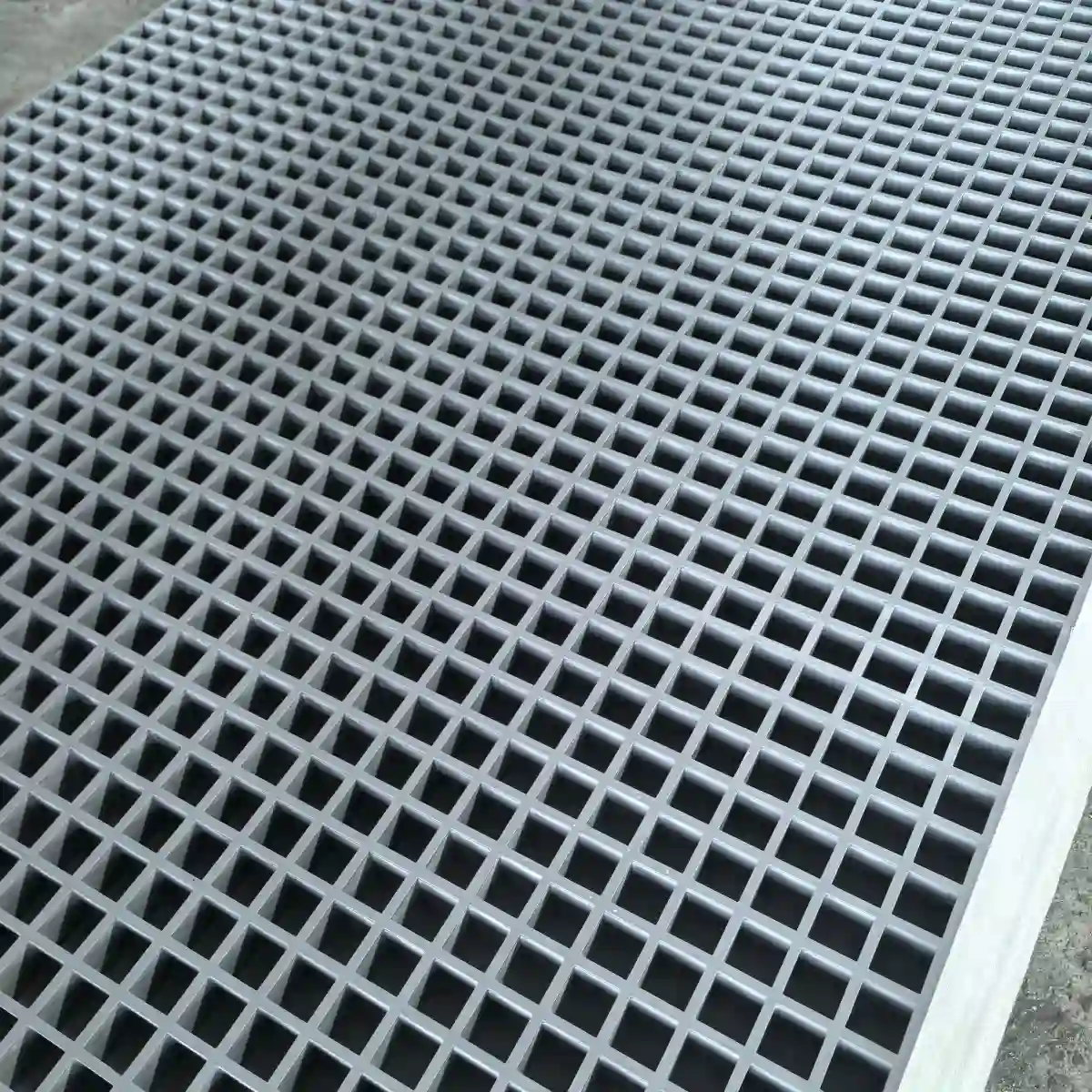
Introduction to Pultruded Grating Sizes
Selecting the right pultruded grating sizes is one of the most critical decisions in any industrial flooring, walkway, or platform project. Unlike molded grating, pultruded grating is manufactured through a continuous pultrusion process that produces consistent, high-strength profiles with precise dimensions. Understanding the available dimensions, thickness options, and load ratings ensures you get optimal performance without overspending.
This complete guide covers everything you need to know about standard panel dimensions and thickness options to span ratings, load tables, and cost considerations. Whether you are designing a heavy-duty chemical plant platform or a light-duty mezzanine walkway, this guide will help you choose the right configuration for your application.
What Are Standard Pultruded Grating Sizes?
Pultruded grating is manufactured in a range of standard sizes that accommodate most industrial and commercial applications. The most common pultruded grating sizes follow industry-standard panel dimensions established by manufacturers worldwide. These standard sizes allow for straightforward specification, consistent quality, and compatibility with support structures.
Standard pultruded grating panels are typically produced in lengths ranging from 8 feet (2.44 m) to 20 feet (6.1 m) and widths from 3 feet (0.91 m) to 4 feet (1.22 m). The bearing bar depth — the dimension that determines load capacity — generally ranges from 1 inch (25 mm) up to 2.5 inches (64 mm), with 1-inch, 1.5-inch, and 2-inch being the most common options. The spacing between bearing bars is another critical dimension, typically available in 1.5-inch or 2-inch on-center spacing, though custom spacing can be specified for specialized applications.
Standard Panel Dimensions
Standard Panel Dimensions
Pultruded grating panels are manufactured in the following standard dimensions:
| Dimension | Standard Range | Common Options |
|---|---|---|
| Panel Length | 8 ft — 20 ft (2.44 m — 6.1 m) | 8 ft, 10 ft, 12 ft, 20 ft |
| Panel Width | 3 ft — 4 ft (0.91 m — 1.22 m) | 3 ft, 3.25 ft, 4 ft |
| Bearing Bar Depth | 1 in — 2.5 in (25 mm — 64 mm) | 1 in, 1.5 in, 2 in, 2.5 in |
| Bar Spacing (Center-to-Center) | 1.5 in — 2 in (38 mm — 51 mm) | 1.5 in, 2 in |
| Bar Thickness | 0.125 in — 0.25 in (3.2 mm — 6.4 mm) | 0.125 in, 0.1875 in, 0.25 in |
| Mesh Opening Size | 1 in × 2 in — 2 in × 2 in | 1.5 in × 1.5 in, 2 in × 2 in |
These standard panel dimensions are designed to work with common support beam spacing and meet OSHA and ASTM E84 safety standards. The dimensional consistency achieved through pultrusion ensures every panel meets tight tolerances for bearing bar depth, width, and straightness. When specifying industrial grating, always confirm the available panel dimensions with your supplier, as standard offerings vary between manufacturers.
Pultruded Grating Size Chart and Dimensions
Pultruded Grating Size Chart and Dimensions
Below is a comprehensive pultruded grating size chart showing the most commonly available panel dimensions and their typical applications:
| Panel Size (L × W) | Bar Depth | Bar Spacing | Typical Application | Load Rating |
|---|---|---|---|---|
| 8 ft × 3 ft | 1 in (25 mm) | 1.5 in | Light walkways, mezzanine floors | Light Duty |
| 10 ft × 3 ft | 1.5 in (38 mm) | 1.5 in | Industrial platforms, trench covers | Medium Duty |
| 12 ft × 3 ft | 2 in (50 mm) | 1.5 in | Heavy industrial flooring, loading docks | Heavy Duty |
| 20 ft × 4 ft | 2.5 in (64 mm) | 2 in | Extra-long spans, chemical plant walkways | Extra Heavy Duty |
| Custom up to 24 ft | 1 in — 3 in | Variable | Specialized industrial applications | Per Design |
When reviewing a pultruded grating size chart, pay close attention to the bearing bar depth and spacing — these are the primary factors determining load capacity. A 2-inch deep bar at 1.5-inch spacing will support significantly more weight than a 1-inch deep bar at 2-inch spacing, even if the panel dimensions are identical. Always consult the manufacturer's published pultruded grating dimensions table before finalizing your design.
Available Pultruded Grating Thickness Options
One of the most frequent questions engineers ask is about pultruded grating thickness options. The term "thickness" in pultruded grating typically refers to the bearing bar depth — the vertical dimension of the load-bearing bar that runs the length of the panel. This is the primary factor determining structural performance.
Standard pultruded grating thickness options include:
- 1 inch (25 mm) — Suitable for light-duty applications such as mezzanine walkways, decorative grating, and areas with minimal foot traffic. Maximum span typically 18-24 inches.
- 1.25 inch (32 mm) — An intermediate option for light industrial use with moderate pedestrian traffic and occasional light cart loads.
- 1.5 inch (38 mm) — The most popular choice for general industrial flooring. Supports moderate loads and spans up to 30 inches depending on bar spacing.
- 2 inch (50 mm) — Heavy-duty specification for industrial platforms, loading areas, and forklift traffic. Can span up to 48 inches with proper configuration.
- 2.5 inch (64 mm) — Extra-heavy-duty for extreme spans, chemical plant catwalks, and high-load industrial environments.
In addition to bar depth, the thickness of the individual bearing bar wall (typically 0.125 to 0.25 inches) also affects overall strength. Thicker bar walls provide greater resistance to impact and concentrated loads. When evaluating pultruded grating thickness options, remember that deeper bars allow longer spans but also increase panel weight and cost. Select the minimum depth that meets your span and load requirements for the most economical solution.
Pultruded Grating Span and Load Ratings
Understanding pultruded grating span and load ratings is essential for safe and efficient structural design. The maximum allowable span for pultruded grating depends on the bearing bar depth, bar spacing, bar thickness, and the type of load being applied (uniformly distributed load vs. concentrated load). Manufacturers publish detailed pultruded grating span and load tables that specify safe working loads for each grating configuration.
The standard design approach follows ASTM D4385 test methods, with typical safety factors of 1.5 to 2.0 applied to the ultimate load capacity. Load ratings are expressed in pounds per square foot (psf) for uniform loads and pounds (lbs) for concentrated loads. When reviewing pultruded grating sizes for heavy duty vs light duty applications, the span-to-depth ratio is a key parameter — deeper bars can safely span greater distances between supports.
Understanding Maximum Span for Pultruded Grating
Understanding Maximum Span for Pultruded Grating
The maximum span for pultruded grating refers to the greatest distance a grating panel can safely span between two support beams. This is a critical design parameter — exceeding the maximum span can lead to excessive deflection, permanent deformation, or structural failure under load.
Typical maximum span for pultruded grating values by bar depth:
| Bar Depth | 1.5 in Bar Spacing | 2 in Bar Spacing | Typical Max Span |
|---|---|---|---|
| 1 in (25 mm) | Light Duty | Light Duty | 18-24 in (457-610 mm) |
| 1.5 in (38 mm) | Medium Duty | Light-Medium | 24-36 in (610-914 mm) |
| 2 in (50 mm) | Heavy Duty | Medium Duty | 36-48 in (914-1219 mm) |
| 2.5 in (64 mm) | Extra Heavy | Heavy Duty | 48-60 in (1219-1524 mm) |
For most industrial applications, the maximum span length for pultruded grating should be kept to 24-36 inches for 1.5-inch deep bars and 36-48 inches for 2-inch deep bars. Always verify with the manufacturer's published span tables, as specific resin formulations and fiberglass content can affect actual load capacity.
Pultruded Grating Span and Load Tables
Pultruded Grating Span and Load Tables
Manufacturers provide detailed pultruded grating span and load tables to help engineers select the right grating configuration. These tables specify safe uniform loads (psf) and concentrated loads (lbs) for each bar depth, bar spacing, and span combination.
Below is a representative load table for typical pultruded grating sizes with 1.5-inch bar spacing and standard resin formulation:
| Bar Depth | Span (in) | Uniform Load (psf) | Concentrated Load (lbs) | Deflection (in) |
|---|---|---|---|---|
| 1 in | 18 | 250 | 800 | 0.08 |
| 1 in | 24 | 150 | 500 | 0.15 |
| 1.5 in | 24 | 400 | 1,200 | 0.10 |
| 1.5 in | 30 | 275 | 850 | 0.18 |
| 2 in | 36 | 500 | 1,600 | 0.12 |
| 2 in | 48 | 300 | 950 | 0.22 |
| 2.5 in | 48 | 600 | 2,000 | 0.14 |
| 2.5 in | 60 | 350 | 1,100 | 0.25 |
These values are representative only — always use the manufacturer's certified pultruded grating span and load tables for final design. Note that load capacity decreases significantly as span increases, making it essential to choose the right bearing bar depth for your specific support spacing.
Heavy Duty vs Light Duty Pultruded Grating Sizes
Choosing between heavy duty and light duty configurations depends on the expected load conditions, traffic type, and support spacing. Understanding the differences between heavy duty and light duty applications helps you avoid both under-specifying (safety risk) and over-specifying (unnecessary cost).
Light Duty Pultruded Grating:
- Typically uses 1-inch or 1.25-inch bearing bars
- Bar spacing: 2 inches center-to-center
- Maximum span: 18-24 inches
- Applications: mezzanine walkways, decorative screens, pedestrian platforms, cable tray walkways
- Uniform load capacity: up to 150-250 psf
- Lower cost and lighter weight, easier to handle and install
Heavy Duty Pultruded Grating:
- Uses 2-inch or 2.5-inch bearing bars
- Bar spacing: 1.5 inches center-to-center
- Maximum span: 36-60 inches
- Applications: industrial flooring, loading docks, chemical plant platforms, vehicle access ramps
- Uniform load capacity: 400-600+ psf
- Higher cost but necessary for safety in demanding environments
For heavy duty applications, always choose 2-inch or deeper bars with 1.5-inch spacing. For light duty applications, 1-inch or 1.5-inch bars at 2-inch spacing are usually sufficient. The selection should always be verified against the project's specified design loads and applicable building codes.
Can Pultruded Grating Be Cut to Custom Sizes?
A common question is: can pultruded grating be cut to custom sizes? The answer is yes — pultruded grating can be cut, trimmed, and fabricated to custom dimensions both at the factory and in the field. This flexibility is one of the key advantages of pultruded fiberglass grating over materials like steel or aluminum.
Pultruded grating is typically cut using carbide-tipped abrasive saw blades or diamond-blade wet saws. The material cuts cleanly without creating burrs or sharp edges, and the cut edges can be sealed with compatible resin to prevent moisture ingress if the grating will be exposed to corrosive environments.
Common custom size modifications include:
- Cutting panels to non-standard lengths for specific span requirements
- Trimming width for tight fit into existing support frames
- Cutting notches or holes for pipe penetrations and equipment supports
- Angled cuts for stair treads, ramps, and transition pieces
- Custom bar spacing for specialized load requirements
While pultruded grating can be cut to custom sizes, it is generally more economical to order panels close to your required dimensions and perform minor field trimming. Most manufacturers can produce custom-length panels at minimal premium, so discuss your exact pultruded grating sizes with the supplier before ordering.
How Much Does Pultruded Grating Cost by Size?
The cost of pultruded grating varies significantly by size, and understanding how much does pultruded grating cost by size helps with project budgeting. Pricing is typically quoted per square foot, with adjustments for bar depth, bar spacing, resin type, and panel dimensions.
General price ranges by pultruded grating sizes (standard polyester resin, approximate per square foot):
| Bar Depth | 1.5 in Spacing | 2 in Spacing | Price Factor |
|---|---|---|---|
| 1 in (25 mm) | $8 — $12 | $6 — $9 | Baseline |
| 1.5 in (38 mm) | $12 — $17 | $9 — $14 | 1.3-1.5x |
| 2 in (50 mm) | $16 — $24 | $13 — $19 | 1.8-2.2x |
| 2.5 in (64 mm) | $22 — $32 | $18 — $26 | 2.5-3.0x |
Factors that affect pultruded grating cost by size:
- Bar depth: Deeper bars use more raw material and increase cost proportionally
- Bar spacing: Tighter spacing means more bars per panel, increasing weight and cost
- Panel dimensions: Standard sizes (4×8 ft, 4×12 ft) are more economical than custom dimensions
- Resin type: Vinyl ester and specialty fire-retardant resins add 20-40% to the base price
- Quantity: Volume discounts typically apply for orders over 1,000 sq ft
- Surface finish: Gritted or covered grating surfaces add $2-$5 per sq ft
When evaluating how much does pultruded grating cost by size, consider that larger panels generally offer better cost per square foot than small custom-cut pieces. Ordering standard panel sizes and performing your own cutting often yields the best overall value.
How to Choose the Right Pultruded Grating Size for Your Project
Knowing how to choose the right pultruded grating size for your project requires a systematic evaluation of several factors. Follow this step-by-step approach to ensure you select the optimal configuration:
Step 1: Determine the Support Spacing
Measure the distance between your support beams or bearing bars. This span directly determines what bar depth you need. Use the span and load tables to find the minimum bar depth that safely spans your support spacing.
Step 2: Calculate the Design Load
Identify the maximum load the grating will experience. Consider:
- Uniform loads: Snow, water accumulation, stored materials
- Concentrated loads: Forklift wheels, equipment legs, worker impact
- Live loads: Pedestrian traffic, maintenance activity
- Dead loads: Weight of the grating itself plus any attached equipment
Step 3: Select Bar Depth and Spacing
Use the load tables to choose a bar depth that supports your design load at your span. For typical industrial flooring with 24-30 inch spans, 1.5-inch bars at 1.5-inch spacing are usually adequate. For spans over 36 inches or heavy loads, step up to 2-inch or 2.5-inch bars.
Step 4: Choose Panel Dimensions
Select standard panel sizes that fit your support layout with minimal waste. Standard 4×8 ft or 4×12 ft panels work well for most applications. If your project how to choose the right pultruded grating size for my project includes irregular dimensions, plan for some custom cutting.
Step 5: Consider Environmental Factors
For corrosive environments, ensure your selected size is available in the appropriate resin system (vinyl ester, phenolic, or specialty fire-retardant). For outdoor installations, consider UV-resistant formulations regardless of size.
When in doubt, consult the manufacturer's engineering team. Most major pultruded grating suppliers provide free technical support to help you choose the right size and configuration for your specific project requirements.
Conclusion
Selecting the correct grating configuration is fundamental to the safety, performance, and cost-effectiveness of any industrial installation. From standard panel dimensions of 4×8 ft and 4×12 ft to bearing bar depths ranging from 1 inch to 2.5 inches, understanding the relationship between dimensions, span, and load capacity is essential.
Key takeaways from this guide:
- Standard panels include lengths of 8-20 ft, widths of 3-4 ft, and bar depths of 1-2.5 inches
- Thickness options directly affect maximum span — deeper bars allow longer spans
- Always consult manufacturer span and load tables for certified load ratings
- Choose heavy duty configurations (2-in bars, 1.5-in spacing) for industrial floors and vehicle traffic
- Custom fabrication is available, but standard panels offer better value
- Cost increases with bar depth — select the minimum configuration that meets your requirements for the most economical solution
If you need assistance specifying the right pultruded grating sizes for your project, contact our team for a free consultation. We can help you review load requirements, select optimal dimensions, and provide certified load tables for your specific configuration.