Introduction
When selecting fiberglass reinforced plastic (FRP) grating for industrial platforms, walkways, or chemical processing areas, one of the most common decisions engineers face is pultruded grating vs molded grating. While both products are manufactured from fiberglass and resin, they differ significantly in manufacturing process, structural performance, cost, and ideal application. Choosing the wrong type can lead to higher expenses, premature failure, or unnecessary over-engineering.
This comprehensive guide breaks down every critical difference between pultruded fiberglass grating and molded fiberglass grating. You will learn how each type is made, which offers superior strength and load capacity, how costs compare, and most importantly — which grating type is right for your specific project. Whether you are designing a heavy-load industrial platform or a lightweight chemical plant walkway, understanding these differences will help you make an informed, cost-effective decision.
What Are Pultruded and Molded Grating?
Before diving into the comparison, it is essential to understand what each product is and how it is made.
What Is Pultruded Fiberglass Grating?
Pultruded fiberglass grating is manufactured through a continuous pultrusion process where continuous fiberglass rovings and mats are pulled through a heated resin bath and then through a forming die. This creates a high-strength profile with unidirectional fiber orientation. The resulting pultruded grating panels have I-beam or T-bar shaped bearing bars connected by cross rods, giving them excellent load-bearing characteristics along the length of the panel. Pultruded grating sizes typically range from 1-inch to 2-inch depths, with custom lengths available for specific span requirements.
What Is Molded Fiberglass Grating?
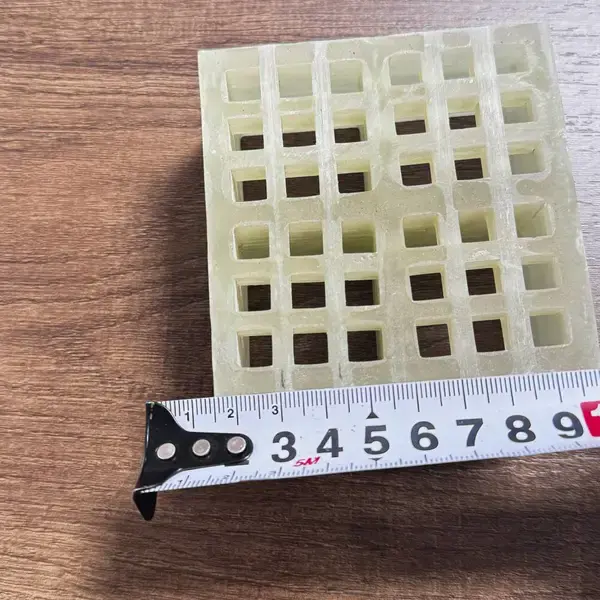
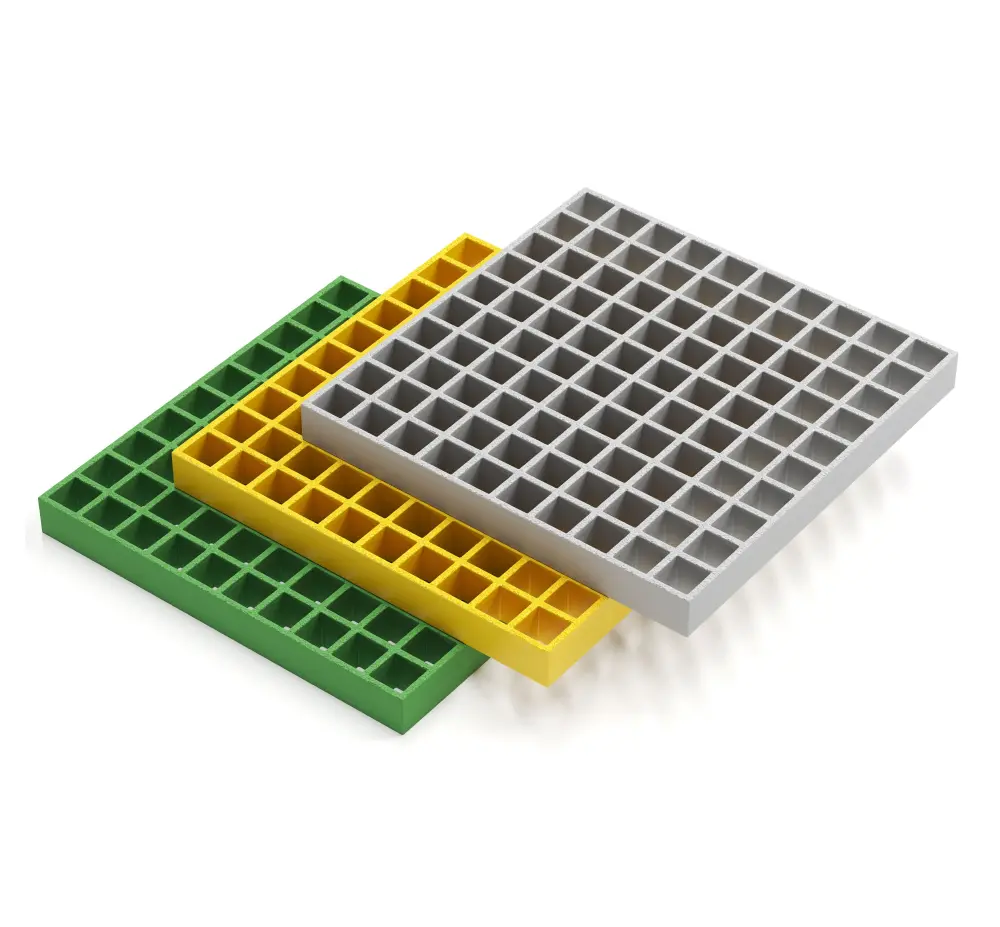
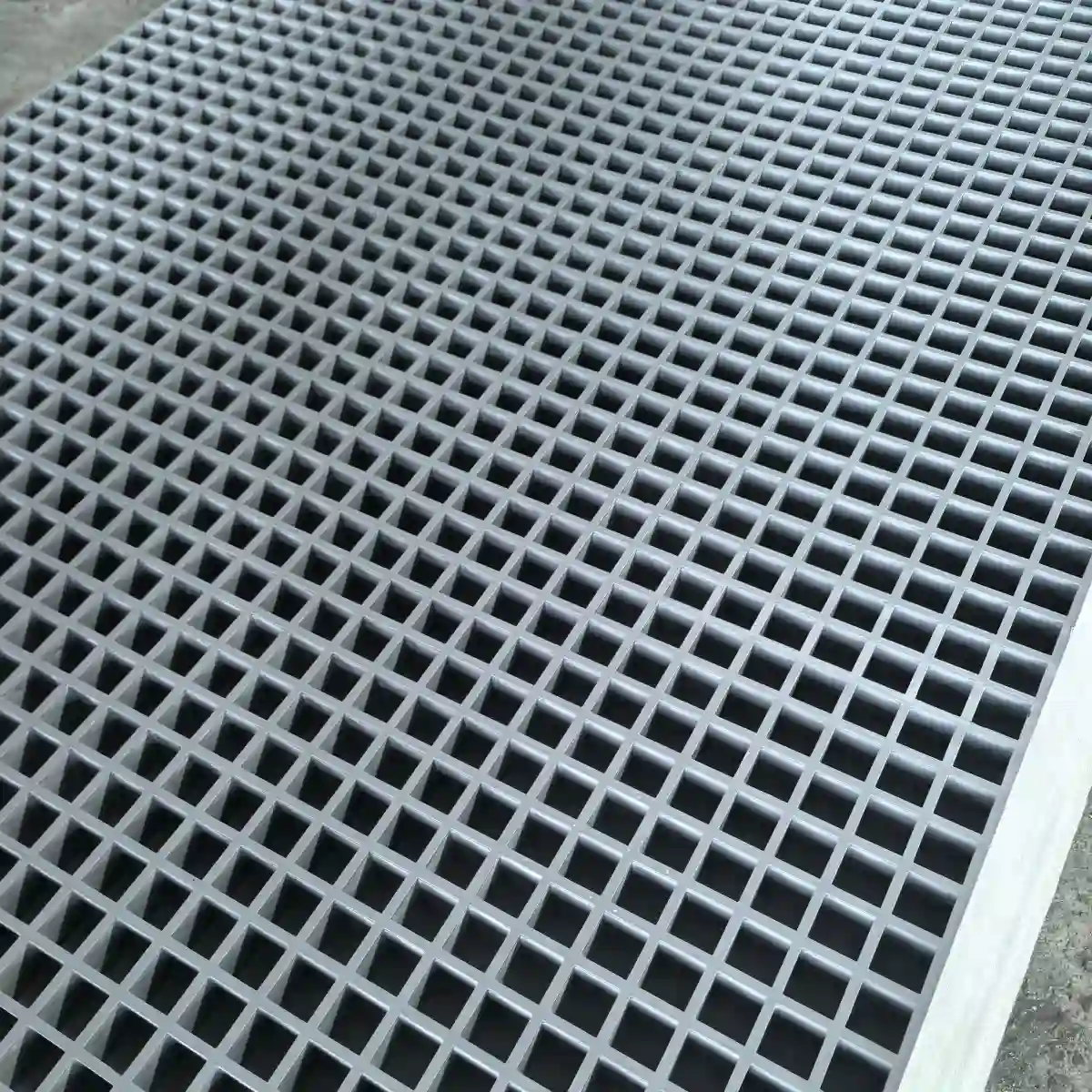
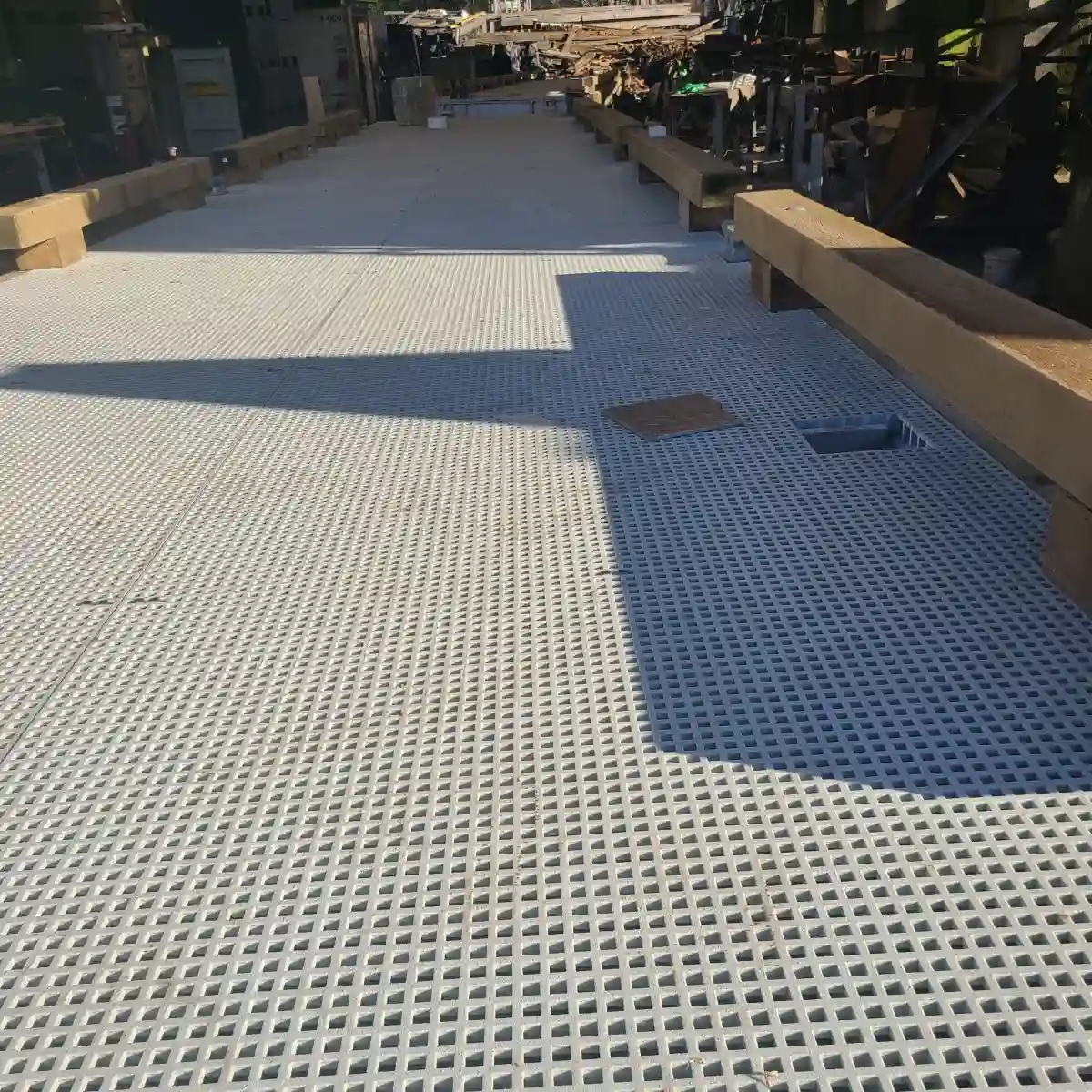
Molded fiberglass grating, also called compression-molded grating, is produced by layering fiberglass mat and chopped strand reinforcements in a mold, then injecting resin under heat and pressure. The result is a one-piece, homogeneous panel with a characteristic square mesh pattern. Molded fiberglass grating has equal strength in both directions (isotropic), making it ideal for applications where loads come from multiple directions. It is typically available in standard panel sizes and thicknesses ranging from 1 inch to 2 inches.
The fundamental difference between pultruded and molded grating begins at the manufacturing stage, which directly influences every other performance characteristic.
Pultruded Grating vs Molded Grating: Key Differences
When evaluating pultruded grating vs molded grating, five key areas separate these two products: manufacturing process, structural strength, cost, corrosion resistance, and application suitability.
Manufacturing Process Differences
The manufacturing method is the root cause of all other differences. Pultruded grating uses continuous fiberglass rovings oriented lengthwise, producing anisotropic strength — high strength in one direction. Molded grating uses randomly oriented chopped fiberglass strands, producing isotropic strength — equal strength in both directions. Pultrusion allows for longer, custom-span panels without seams, while molding limits panel size to the mold dimensions but offers more design flexibility for custom shapes.
Structural Strength and Load Capacity
In terms of load capacity, pultruded grating typically outperforms molded grating in one-directional span applications. The continuous longitudinal fibers give pultruded grating significantly higher stiffness and load-bearing capacity along the bearing bar direction. For example, a standard 1.5-inch deep pultruded panel can often support loads that would require a 2-inch thick molded panel. This makes the pultruded grating vs molded grating load capacity comparison heavily favor pultrusion for long-span installations.
Cost Comparison: Which Is More Expensive?
Addressing the question "Is pultruded grating more expensive than molded grating?" — generally, yes. Pultruded grating carries a higher upfront material cost, typically 20-40% more than molded grating of comparable size. However, because pultruded panels can span longer distances with fewer support members, the total installed cost sometimes favors pultruded grating in certain applications. For smaller panels and light-duty applications, molded grating remains the more budget-friendly option.
Corrosion Resistance and Lifespan
Both types offer excellent corrosion resistance compared to steel or aluminum, but there are nuances. Pultruded vs molded FRP grating for corrosive environments: molded grating has slightly better all-around chemical resistance because its homogeneous structure has no exposed cut ends or cross-rod intersections where chemicals could wick along fibers. However, pultruded fiberglass grating can be manufactured with vinyl ester or other specialty resins for specific chemical exposures. Regarding lifespan, both types last 15-25 years in most industrial environments when properly specified. The question "Which type of grating lasts longer: pultruded or molded?" depends largely on the specific chemical environment and mechanical wear conditions.
Applications and Best Use Cases
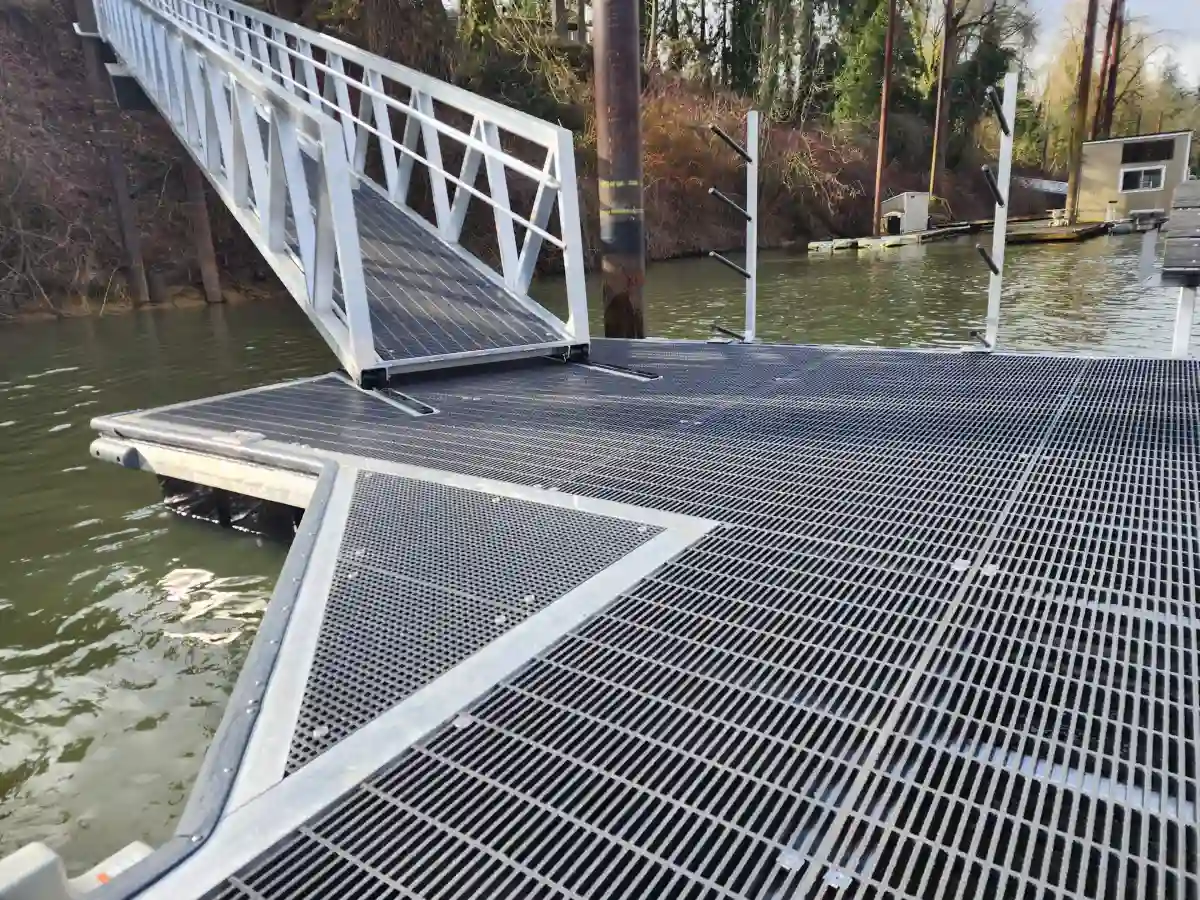
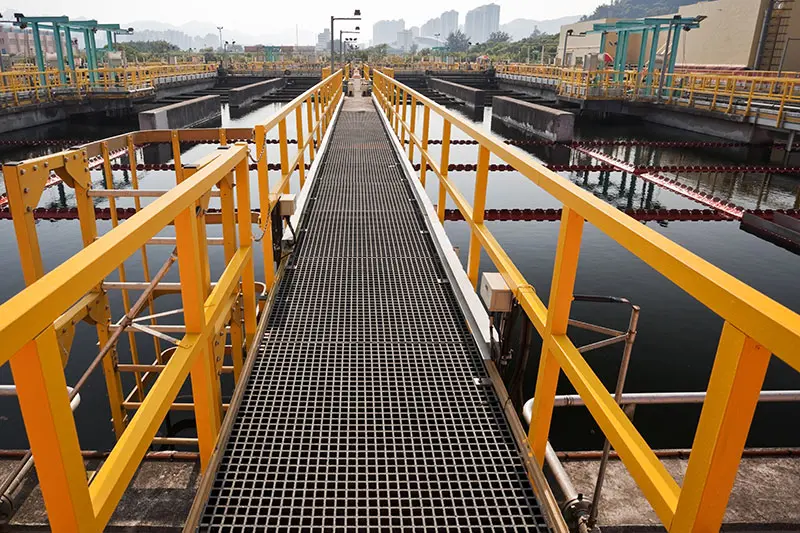
The answer to "Which applications are better for pultruded grating vs molded grating?" depends on project requirements. Pultruded grating excels in long-span walkways, heavy-load platforms, trench covers, and applications requiring high stiffness-to-weight ratio. Molded grating is preferred for marine environments, around chemical storage tanks, in areas with multidirectional loads, and for non-slip flooring where the textured mesh surface provides excellent traction.
Which Is Stronger: Pultruded or Molded Grating?
This is one of the most frequently asked questions, and the answer depends on how you define "stronger."
Does pultruded grating have better load capacity than molded grating? Yes — in the longitudinal direction. Because pultruded grating panels have continuous fiberglass rovings running the length of each bearing bar, they deliver superior flexural strength and stiffness along that axis. A standard 1.5-inch pultruded panel typically has a load capacity 30-50% higher than a molded panel of the same thickness when spanning between supports.
The question "Which is stronger: pultruded grating or molded grating?" must consider loading direction. For applications where loads are applied primarily in one direction (such as walkways with traffic moving along the panel length), pultruded grating is significantly stronger. However, for point loads or multidirectional loading (such as around machinery or in work platforms with equipment placed from various angles), molded grating's isotropic strength distribution offers more uniform performance.
Is pultruded grating better for heavy load applications than molded grating? For most heavy-load scenarios involving long spans and concentrated loads — yes. When you need pultruded grating for walkways supporting heavy foot traffic, equipment carts, or light vehicle access, the higher load capacity of pultruded panels allows for wider support spacing and thinner profiles. Molded grating, while still strong, typically requires more support structure to achieve the same load rating over long spans.
| Property | Pultruded Grating | Molded Grating |
|---|---|---|
| Fiber Orientation | Unidirectional (longitudinal) | Random/multidirectional |
| Load Capacity (1.5 inch depth) | ~250-400 psf (long span) | ~150-250 psf |
| Strength Directionality | Anisotropic (strong in one axis) | Isotropic (equal in both axes) |
| Max Span (1.5 inch panel) | Up to 48 inches | Up to 30 inches |
| Impact Resistance | Good (along axis) | Excellent (multidirectional) |
Pultruded grating vs molded grating — which has higher load capacity? The table above shows that for most structural applications, pultruded grating delivers superior load-bearing performance in the primary span direction, making it the preferred choice for engineered heavy-load installations.
Which Is More Cost-Effective?
Cost is a deciding factor for most projects, and the answer to "Pultruded vs molded grating: which is more expensive?" is clear at the material level — but total project cost tells a different story.
Is pultruded grating more expensive than molded grating? On a per-square-foot basis, pultruded grating typically costs 20-40% more. A standard molded grating panel may range from $15-$25 per square foot, while comparable pultruded panels range from $20-$35 per square foot. However, this is only part of the equation.
Pultruded grating vs molded grating — which is more cost-effective? To determine true cost-effectiveness, consider the total installed cost:
- Support structure: Pultruded grating can span longer distances, requiring fewer support beams and reducing steel or aluminum substructure costs by 15-30%.
- Installation labor: Pultruded grating panels are typically lighter and can be cut and installed faster in long-span applications, reducing labor hours.
- Maintenance: Both types require minimal maintenance, but molded grating's seamless construction may require less frequent inspection in corrosive environments.
- Replacement cost: Molded grating is cheaper to replace if damaged, while pultruded grating's higher initial cost is offset by longer service life in heavy-load applications.
For short-span, light-duty applications with standard loads, molded grating offers better cost-effectiveness. For long-span, heavy-load, or high-traffic industrial walkways, the superior structural efficiency of pultruded grating often delivers a lower total cost of ownership over the life of the installation.
When to Choose Pultruded Grating Over Molded Grating
Knowing when to choose pultruded grating over molded grating comes down to understanding your project's specific demands. Here are the scenarios where each type excels:
Choose Pultruded Grating When:
- Long spans are required: Pultruded grating panels can span up to 48 inches or more without intermediate support, making them ideal for trench covers, catwalks, and bridge decking.
- Heavy load capacity is critical: For industrial platforms supporting equipment, maintenance vehicles, or concentrated loads, pultruded grating's higher strength-to-weight ratio is unmatched.
- Pultruded grating for walkways with directional traffic: Walkways where traffic follows the panel length benefit from pultruded grating's unidirectional strength.
- Custom sizes and lengths: Pultrusion allows for continuous production, meaning panels can be manufactured in nearly any length for seamless installations. Standard pultruded grating sizes include 1-inch, 1.5-inch, and 2-inch depths with custom lengths up to 20 feet or more.
- High stiffness requirements: Applications where deflection must be minimized, such as precision equipment platforms, favor pultruded grating.
Choose Molded Grating When:
- Multidirectional loading is expected: Work platforms where loads come from all directions benefit from molded grating's isotropic strength.
- Marine or highly corrosive environments: The seamless, homogeneous construction of molded fiberglass grating provides excellent resistance to saltwater, acids, and chemical splash.
- Non-slip surfaces are critical: The molded mesh pattern creates an inherently slip-resistant surface, often exceeding the slip resistance of pultruded grating.
- Budget constraints are tight: For short-span applications where molded grating meets load requirements, the lower material cost makes it the economical choice.
- Small or irregular shaped areas: Molded grating can be cut to fit irregular spaces more easily, and standard panel sizes work well for confined areas.
The question "Which applications are better for pultruded grating vs molded grating?" ultimately depends on balancing span length, load requirements, environmental conditions, and budget. Table below summarizes the best-fit applications:
| Application | Recommended Type | Why |
|---|---|---|
| Long-span walkways & catwalks | Pultruded | Superior span capability |
| Heavy equipment platforms | Pultruded | Higher load capacity |
| Chemical tank farms | Molded | Better chemical resistance |
| Marine docks & piers | Molded | Seamless, no wicking |
| Trench covers & drains | Pultruded | Long-span, heavy-duty |
| Oil & gas platforms | Pultruded | High strength, fire-retardant options |
| Food processing areas | Molded | Easy to clean, no crevices |
| Water treatment plants | Either | Both perform well |
Can Pultruded Grating Replace Molded Grating?
A common practical question is "Can pultruded grating replace molded grating in most applications?" and conversely, "Can pultruded grating replace molded grating in existing installations?" The answers are nuanced.
In many cases, pultruded grating can serve as a replacement for molded grating — but not always, and not without careful consideration. Here is what to evaluate:
- Support structure compatibility: Pultruded grating panels have different dimensional standards than molded panels. Existing support frames designed for standard molded panel sizes may not accommodate pultruded panels without modification.
- Load directionality change: If the existing installation was designed for multidirectional loads, switching to pultruded grating requires ensuring that all load paths align with the bearing bar direction.
- Attachment methods: Pultruded grating typically uses different clip and fastening systems compared to molded grating. Existing attachment points may need retrofitting.
- Cut-out and penetration requirements: Molded grating can be cut more easily for irregular penetrations (pipes, columns) since its strength is equal in all directions. Pultruded grating requires more careful cut-out planning to avoid compromising the bearing bars.
For new installations, the choice is clearer. If your application demands high load capacity over long spans, start with pultruded grating. If you need multidirectional strength, corrosion resistance in marine environments, or a lower-cost solution for standard loads, molded grating remains the better choice. Neither type universally replaces the other — they are complementary products designed for different engineering requirements.
The question "Can pultruded grating replace molded grating in most applications?" — the honest answer is no, not universally. Each type has its optimal use case, and selecting the right one requires evaluating span length, load type, environmental exposure, and budget constraints.
Conclusion
Choosing between pultruded grating vs molded grating does not have to be complicated. The decision comes down to understanding your project's specific requirements:
- For long spans, heavy loads, and high stiffness — choose pultruded fiberglass grating. It delivers superior load capacity, allows wider support spacing, and provides the best strength-to-weight ratio for directional load applications. Pultruded grating for walkways and industrial platforms is the industry standard for good reason.
- For corrosive environments, multidirectional loads, and tight budgets — choose molded fiberglass grating. Its homogeneous construction, equal bidirectional strength, and lower upfront cost make it ideal for chemical plants, marine facilities, and applications where non-slip safety is paramount.
Pultruded grating vs molded grating — which has higher load capacity? Pultruded. Which is more cost-effective? Molded for short spans, pultruded for long spans. Which lasts longer? Both offer 15-25 year lifespans with proper specification. Which is better for corrosive environments? Molded generally, but pultruded with specialty resins can match it.
By matching the grating type to your specific structural, environmental, and budget requirements, you will achieve the best balance of performance and cost. Consult with your grating supplier or structural engineer to verify load ratings and span capabilities for your particular installation.