Introduction
When industrial facilities need a flooring solution that combines strength, corrosion resistance, and lightweight construction, molded fiberglass grating is often the material of choice. Unlike traditional steel or aluminum grating, this engineered composite product offers exceptional durability in harsh chemical environments while remaining easy to handle and install. Whether you are designing a new platform, renovating a wastewater treatment plant, or specifying walkways for a food processing facility, understanding what this FRP product offers can help you make an informed purchasing decision.
Also known as compression-molded FRP grating, this product is manufactured by pressing fiberglass reinforcements with thermosetting resin under heat and pressure. The result is a one-piece, homogeneous panel with superior corrosion resistance, high strength-to-weight ratio, and excellent slip resistance. This guide covers everything from manufacturing processes and material specifications to installation methods, load capacities, cost considerations, and where to buy. By the end, you will have a complete understanding of why this type of grating has become a preferred flooring solution across industries worldwide.
What Is Molded Fiberglass Grating?
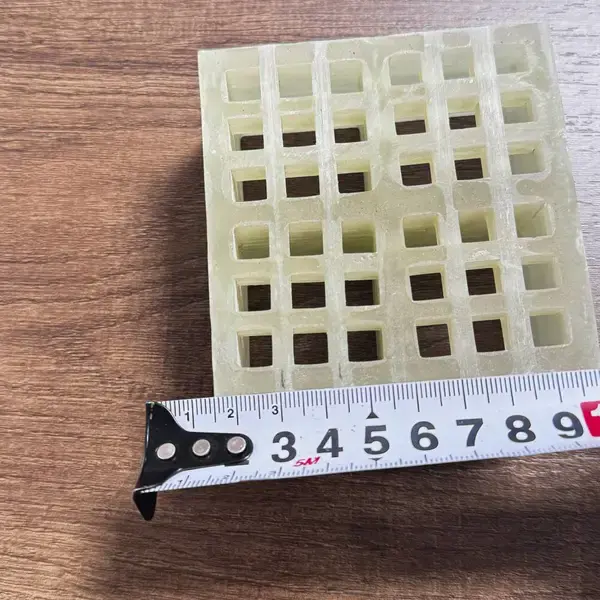
Molded fiberglass grating is a composite material made from continuous fiberglass strands and thermosetting resin, formed into a rigid, single-piece panel using a compression molding technique. Unlike pultruded grating, which is assembled from individual load-bearing bars, the molded version has a true grid structure where the bearing bars and cross bars are integrally formed as one seamless unit. This gives it superior strength in both directions and eliminates the risk of bar separation under heavy loads.
Composition and Materials
The two primary ingredients are fiberglass reinforcement and liquid resin. The most commonly used resin types include:
- Polyester resin — A cost-effective, general-purpose option suitable for most industrial environments. Offers good corrosion resistance and mechanical properties.
- Vinyl ester resin — Provides enhanced chemical resistance, particularly against acids, bleaches, and caustic solutions. Ideal for chemical processing and pulp and paper applications.
- Phenolic resin — Fire-resistant and low-smoke-producing, making it suitable for offshore platforms, oil and gas facilities, and other fire-rated environments.
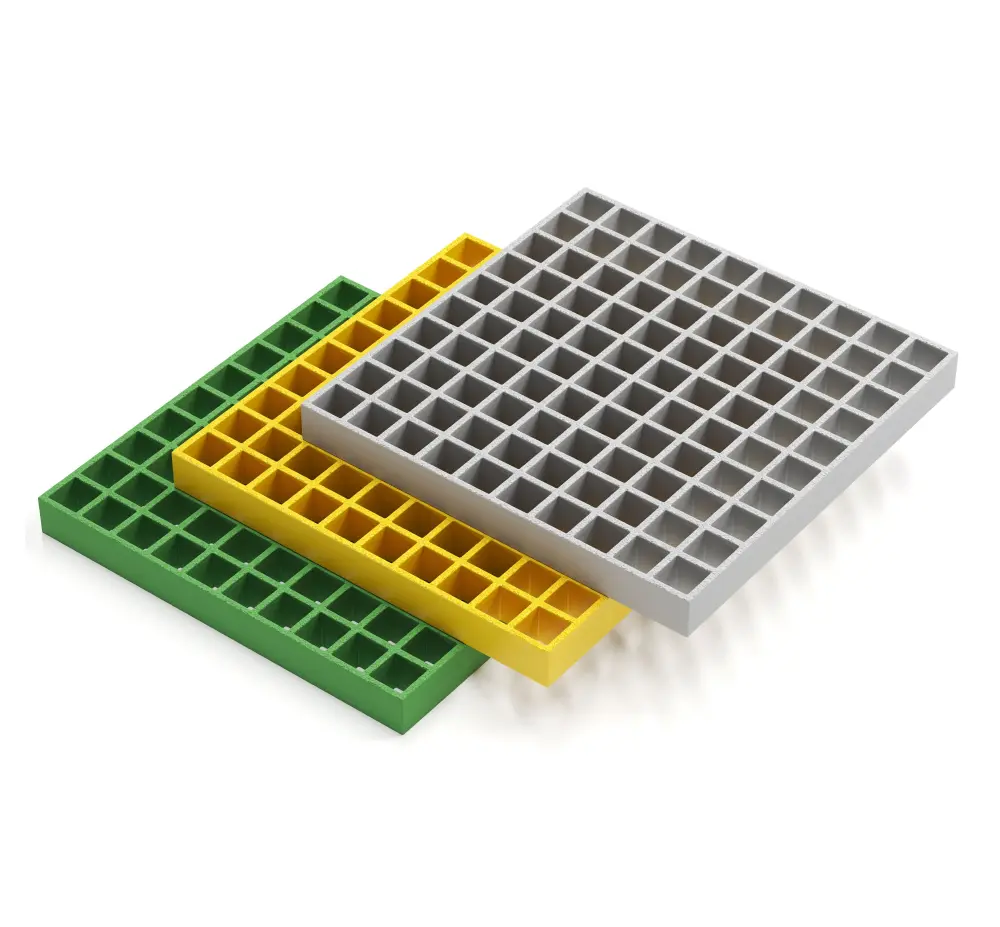
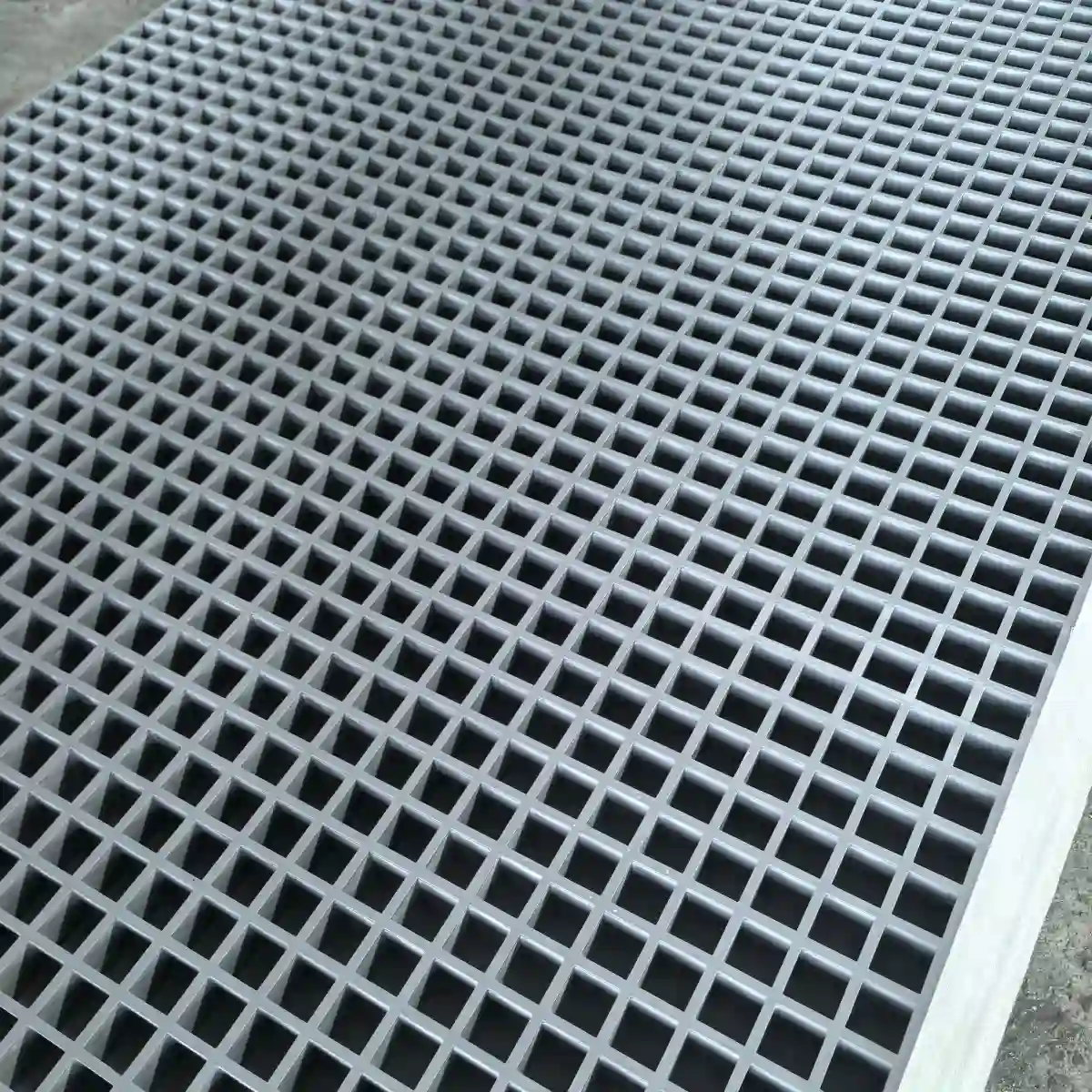
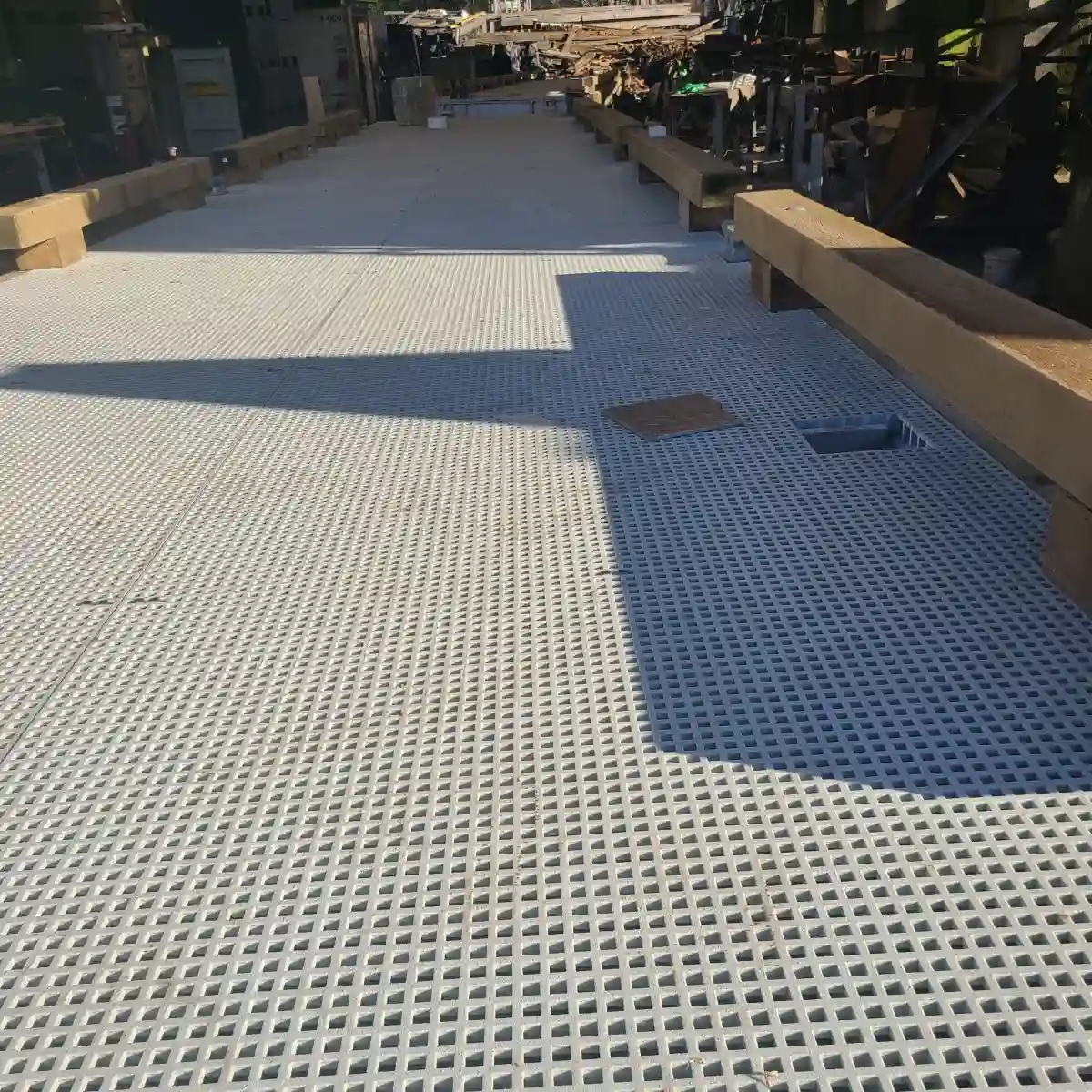
The fiberglass content typically ranges from 30% to 50% by weight, with the remainder being resin, fillers, and pigment. The grating surface is often textured with a concave or convex grit pattern to enhance slip resistance, even in wet or oily conditions. Standard panel colors include yellow, gray, green, and orange, though custom colors are available for safety coding or branding purposes.
How Is Molded Fiberglass Grating Manufactured?
Understanding how this product is made helps explain its superior performance characteristics. The manufacturing process differs fundamentally from pultruded grating production and is responsible for the isotropic (equal strength in all directions) properties of the finished panel.
The Compression Molding Process
Molded FRP grating is produced using a match-die compression molding technique. The process begins with a precisely formulated mixture of liquid thermosetting resin, catalyst, pigment, and filler. This mixture is combined with chopped fiberglass strands to form a moldable compound known as bulk molding compound (BMC) or sheet molding compound (SMC), depending on the specific formulation.
The compound is placed into a heated steel mold that has been machined with the desired grating pattern — typically a square mesh configuration with bearing bars and cross bars intersecting at 90-degree angles. The mold is closed under high pressure (typically 500–1500 psi), and heat is applied (usually 275–325°F / 135–165°C). Under these conditions, the resin flows throughout the mold cavity, fully wetting the fiberglass reinforcement, then cures and hardens into a solid, one-piece panel.
Resin Systems Used in Production
The choice of resin system significantly affects the performance of the finished molded grating panels. Each resin type undergoes a cross-linking chemical reaction during curing that determines the final material properties:
- Polyester resin systems cure quickly and offer good all-around performance at a lower cost.
- Vinyl ester systems provide a denser cross-linked matrix that resists chemical attack and moisture absorption.
- Phenolic systems cure through a condensation reaction that produces minimal smoke and toxic fumes in fire conditions.
After demolding, the panels are trimmed to remove flash (excess material at the mold edges), inspected for dimensional accuracy, and tested for quality assurance. Some manufacturers apply a secondary surface treatment, such as a grit top layer, to further improve slip resistance. The entire process produces a panel that is consistent in thickness, mesh size, and mechanical properties from piece to piece.
Molded Fiberglass Grating vs Pultruded Grating
One of the most common questions engineers and procurement professionals ask is whether the molded version or pultruded grating is the better choice. The answer depends entirely on the specific application requirements. Both products are made from fiberglass and resin, but their manufacturing processes create distinctly different material properties.
Key Differences in Manufacturing
Pultruded grating is made by pulling continuous fiberglass roving and mat through a resin bath and then through a heated die that shapes the material into individual load-bearing bars. These bars are then assembled into grating panels using cross rods that pass through holes drilled in the bars. This creates a grating with high strength in the bearing bar direction but lower strength in the cross direction.
In contrast, the molded version is produced as a single, homogeneous piece in a heated press mold. The fiberglass reinforcement is randomly oriented within the resin matrix, giving the panel approximately equal strength in both longitudinal and transverse directions. This isotropic property is one of its defining characteristics.
When to Choose Molded vs Pultruded
The following comparison table summarizes the key differences to help you decide:
| Property | Molded Grating | Pultruded Grating |
|---|---|---|
| Strength (bearing direction) | Good — isotropic | Excellent — unidirectional |
| Strength (cross direction) | Good — isotropic | Lower — depends on cross rods |
| Corrosion resistance | Excellent — seamless panel | Good — joints between bars |
| Slip resistance | Superior — molded grit surface | Good — add-on grit options |
| Span capability | Moderate (shorter spans) | Excellent (long spans) |
| Cost | Lower for standard sizes | Higher for standard sizes |
Choose molded FRP grating when you need bidirectional strength, superior corrosion resistance, better slip resistance, and lower cost for standard panel sizes. Choose pultruded grating when you need long unsupported spans, very high load capacities, or custom panel dimensions.
Molded Grating Specifications and Standard Sizes
When selecting this product for a project, understanding the standard specifications and available sizes is critical. The molded grating specifications cover panel dimensions, mesh configuration, thickness, and resin type, all of which affect performance and cost.
Standard Panel Dimensions
Molded FRP grating is most commonly available in the following standard sizes:
- Stock panels: 4 ft × 8 ft (1220 mm × 2440 mm) and 4 ft × 12 ft (1220 mm × 3660 mm) are the most common stock sizes.
- Thickness options: 1″ (25 mm), 1.5″ (38 mm), and 2″ (50 mm) are standard. Heavy-duty applications may use 2.5″ (63 mm) or 3″ (75 mm) panels.
- Mesh configurations: 1.5″ × 1.5″ (38 mm × 38 mm) square mesh is the most popular. Other options include 1″ × 1″ (25 mm × 25 mm) for light-duty areas and 2″ × 2″ (50 mm × 50 mm) for heavy industrial use.
The most widely specified configuration is a 1.5″ thick panel with 1.5″ × 1.5″ mesh openings. This combination provides an excellent balance of strength, weight, and open area (approximately 70% open area for drainage and airflow).
Molded grating specifications also include the following mechanical properties:
| Property | 1.5″ Panel | 2″ Panel |
|---|---|---|
| Weight per sq ft | 4.5 lb (2.0 kg) | 6.2 lb (2.8 kg) |
| Open area | ~70% | ~65% |
| Tensile strength | 12,000–18,000 psi | 14,000–20,000 psi |
| Flexural modulus | 1.2 × 10⁶ psi | 1.4 × 10⁶ psi |
| Impact strength (Izod) | 8–12 ft-lb/in | 10–14 ft-lb/in |
Custom sizes can be cut from stock panels at the factory or by distributors. Most manufacturers can produce non-standard thicknesses and mesh patterns on a made-to-order basis, but lead times and minimum order quantities apply. For most projects, sticking with standard sizes reduces both cost and delivery time.
Load Capacity of Molded Fiberglass Grating
Knowing the load capacity is essential for safe and compliant design. Load ratings vary by panel thickness, mesh size, resin type, and support spacing. Manufacturers publish load tables that specify maximum allowable uniform loads (UL) and concentrated loads (CL) for each configuration at various support spans.
Typical load capacities for standard molded grating panels are as follows (based on a safety factor of 1.5:1):
| Panel Thickness | Support Span | Uniform Load (psf) | Concentrated Load (lb) |
|---|---|---|---|
| 1″ (25 mm) | 12″ (305 mm) | 250 psf | 500 lb |
| 1.5″ (38 mm) | 18″ (457 mm) | 350 psf | 800 lb |
| 2″ (50 mm) | 24″ (610 mm) | 500 psf | 1200 lb |
| 2.5″ (63 mm) | 24″ (610 mm) | 650 psf | 1600 lb |
Several factors influence the actual load capacity of a specific installation:
- Resin type: Vinyl ester and phenolic resins generally provide slightly higher strength and stiffness than polyester.
- Temperature: FRP materials lose strength at elevated temperatures. Standard molded grating is typically rated for continuous service up to 180°F (82°C) for polyester and 200°F (93°C) for vinyl ester.
- Support conditions: Grating panels must bear evenly on all four sides or on properly designed support beams to achieve rated capacities. Overhanging or cantilevered sections require derating.
- Deflection limits: Most applications limit deflection to L/100 (span divided by 100) or L/150 for pedestrian comfort. The load tables in manufacturer catalogs specify both stress limits and deflection limits.
Always consult the manufacturer's official load tables for the specific product you are purchasing, as capacities vary between brands and product lines. For critical applications, consider ordering prototype panels for physical load testing.
Advantages of Molded Fiberglass Grating
This FRP flooring solution offers a unique combination of benefits that make it a superior choice for many industrial applications. Here are the key advantages that drive its popularity:
- Exceptional corrosion resistance: The material will not rust, rot, or corrode when exposed to acids, alkalis, salts, moisture, or chemicals. This makes it ideal for chemical processing plants, wastewater treatment facilities, and marine environments where steel grating would fail within months.
- Lightweight construction: At roughly one-quarter the weight of steel grating, it is significantly easier to transport, handle, and install. A standard 4′ × 8′ × 1.5″ panel weighs approximately 144 lb (65 kg), compared to 550 lb (250 kg) for an equivalent steel panel.
- High strength-to-weight ratio: Despite its light weight, it delivers impressive strength. The isotropic structure distributes loads evenly in all directions, providing reliable performance under foot traffic, equipment loads, and impact.
- Superior slip resistance: The molded surface texture, often enhanced with embedded silica grit, provides excellent slip resistance even when wet, oily, or icy. Many products meet or exceed OSHA and ADA slip-resistance requirements without additional coatings.
- Non-conductive and non-magnetic: FRP is electrically non-conductive and non-magnetic, making it a safe choice for electrical substations, transformer yards, telecommunications facilities, and other areas where electrical hazards exist.
- Low maintenance: No painting, coating, or special treatment is required. Occasional washing with water or a mild detergent is sufficient to keep it looking and performing like new for decades.
- UV resistance: Standard formulations include UV inhibitors in the resin, preventing degradation and discoloration from prolonged sunlight exposure.
- Fire-retardant options: Phenolic and certain polyester resin systems can achieve fire-retardant ratings, including ASTM E84 Class I (flame spread index ≤ 25) for use in fire-rated assemblies.
These advantages translate directly into lower total cost of ownership. Although the initial purchase price may be comparable to stainless steel, the savings from reduced installation labor, elimination of maintenance, and extended service life make it the most economical choice for corrosive environments.
Common Applications of Molded Fiberglass Grating
Thanks to its corrosion resistance, lightweight strength, and safety features, molded FRP grating is used across a wide range of industries and applications. Understanding where it excels helps you identify opportunities to replace less durable materials with a longer-lasting solution.
- Chemical processing plants: Grating platforms, walkways, and mezzanines in chemical plants are constantly exposed to corrosive spills, fumes, and washdown chemicals. Vinyl ester molded grating is the standard choice for these environments, outperforming stainless steel at a lower cost.
- Wastewater and water treatment: Treatment facilities use it for trickling filter covers, walkways over clarifiers, screen decks, and platform access. The material withstands constant moisture, hydrogen sulfide gas, and chlorine exposure without degradation.
- Food processing and beverage: USDA-approved panels provide a non-porous, easily sanitized surface for meat packing plants, breweries, dairies, and commercial kitchens. The open mesh design allows water and debris to fall through, maintaining a cleaner work surface.
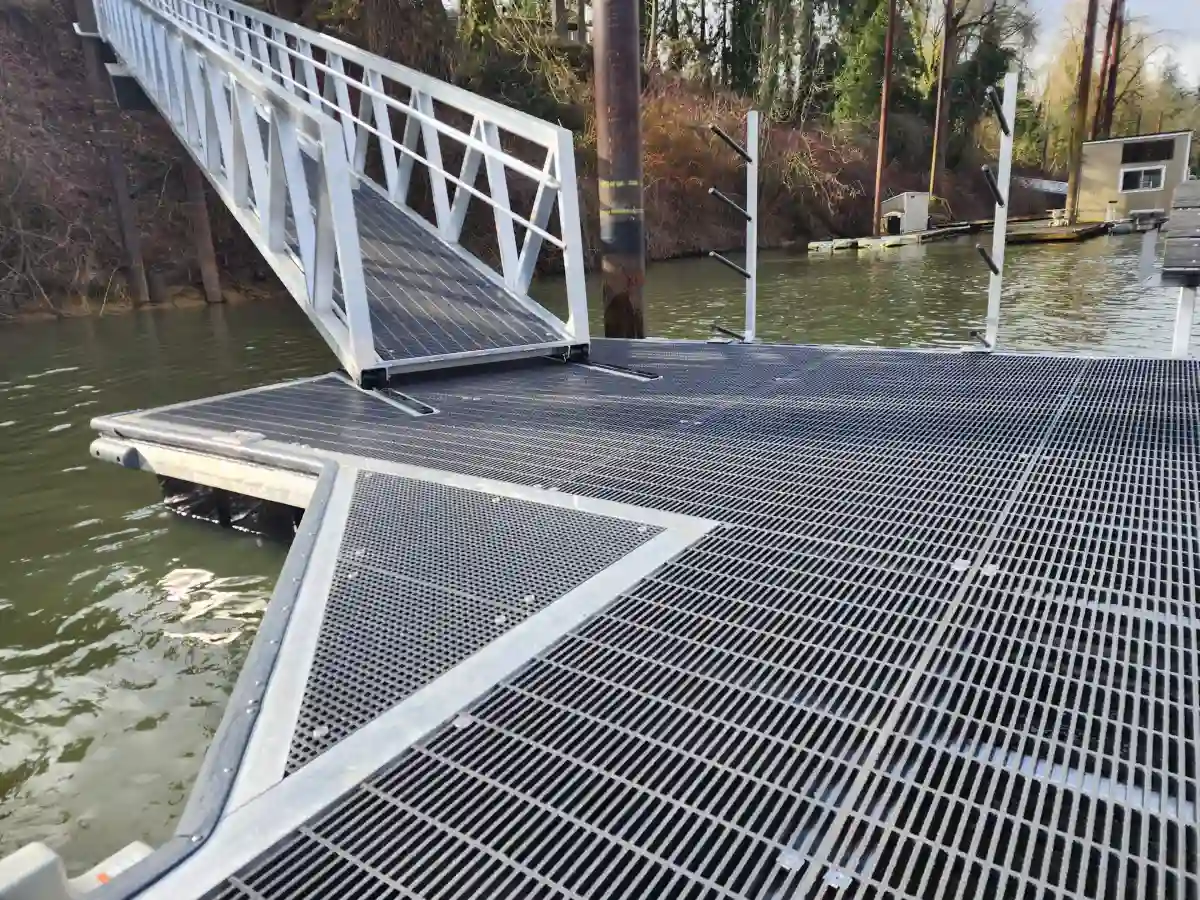
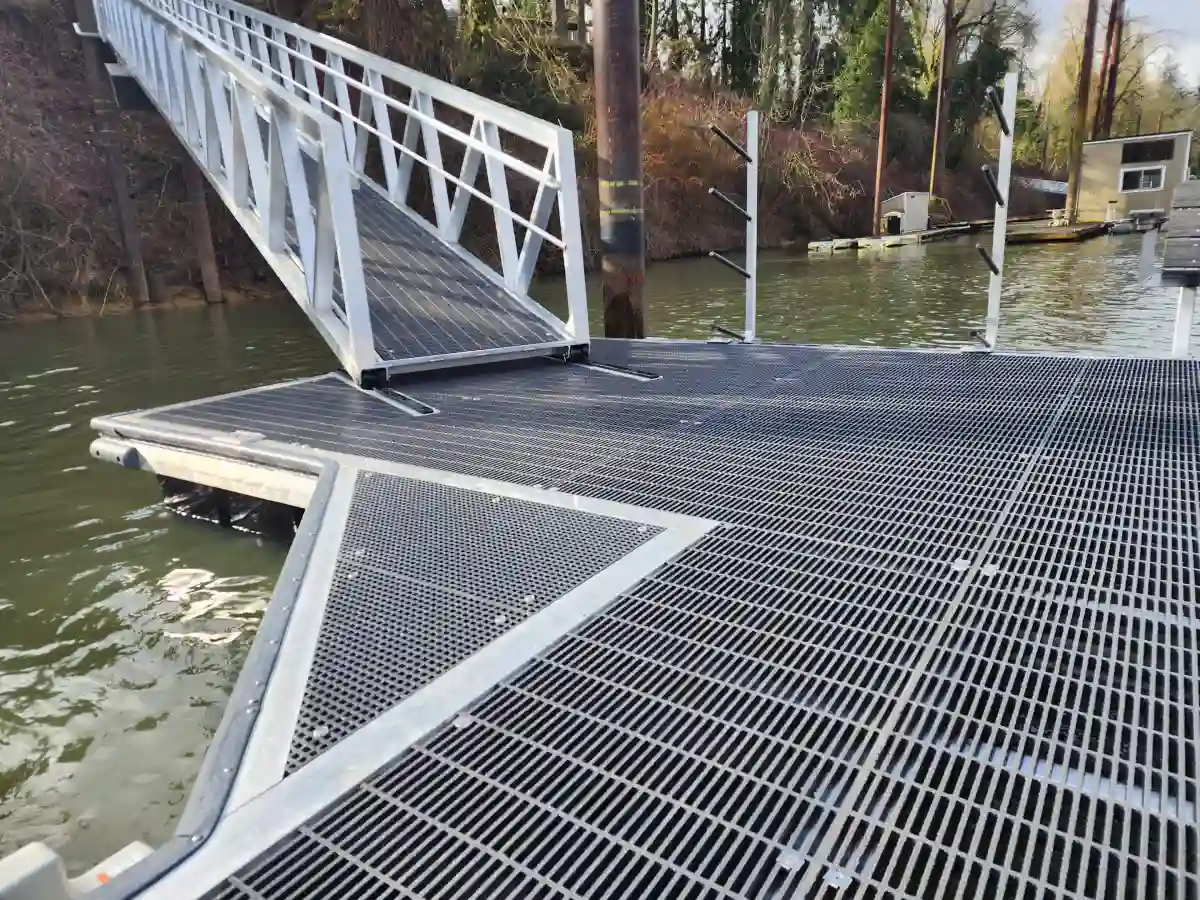
- Marine and offshore: Ship decks, offshore platform walkways, docks, and pier fendering systems benefit from saltwater corrosion resistance and non-magnetic properties.
- Oil and gas: Refineries, drilling platforms, and gas processing facilities use fire-retardant phenolic molded grating in areas where both corrosion resistance and fire safety are critical.
- Electrical utilities: Transformer yards, substations, and battery rooms require non-conductive flooring to protect workers from electrical shock. This product satisfies that requirement while providing durable, long-lasting access.
- Pulp and paper: Bleach plants, digester areas, and chemical storage zones demand materials that resist chlorine dioxide, sodium hydroxide, and other aggressive chemicals used in paper manufacturing.
- Pharmaceutical and biotechnology: Cleanroom-compatible panels are used for platform access, catwalks, and equipment support in facilities requiring strict contamination control.
In each of these environments, the decision to use this type of grating instead of steel, aluminum, or concrete is driven by the material's ability to survive harsh conditions with minimal maintenance. The initial material investment pays back through extended service life, reduced replacement frequency, and lower labor costs for installation and upkeep.
How to Install Molded Fiberglass Grating Panels
Installing molded fiberglass grating panels is straightforward, but following proper procedures ensures safety, longevity, and code compliance. Unlike steel grating, FRP requires attention to fastener selection (use only non-corrosive materials) and support bearing to avoid stress concentrations.
Tools and Materials Needed
- Molded FRP grating panels (cut to size as needed)
- Stainless steel or FRP hold-down clips and fasteners
- Masonry drill bits (if attaching to concrete)
- Carbide-tipped saw blade for cutting FRP
- Personal protective equipment (dust mask, safety glasses, gloves)
- Support framing (steel, aluminum, or FRP beams)
Installation Steps
- Prepare the support structure: Ensure all support beams are level, properly spaced, and capable of bearing the design loads. Support spacing should not exceed the manufacturer's recommended maximum for the panel thickness and load rating.
- Cut panels to size: Use a carbide-tipped circular saw or abrasive cut-off saw. Cutting FRP generates fine dust, so always wear respiratory protection. Measure twice, cut once — the material cannot be easily welded or extended like steel.
- Position the panels: Place grating panels on the support structure with at least 1″ (25 mm) of bearing on each support. Orient the panels so the bearing bars run perpendicular to the support beams for maximum strength.
- Secure with fasteners: Use stainless steel or FRP hold-down clips at every support intersection around the perimeter and at intermediate supports as specified by the design. Avoid over-tightening — FRP can crush if fasteners are over-torqued. Use a torque wrench set to 5–8 ft-lb for most installations.
- Leave expansion gaps: FRP expands and contracts with temperature changes. Leave a 1/4″ (6 mm) gap between adjacent panels and between panels and walls or curbs to accommodate thermal movement.
- Cut openings for penetrations: For pipes, columns, or equipment supports that pass through the grating, cut openings with a jigsaw using a carbide blade. Allow a 1/2″ (12 mm) clearance around the penetration.
Common Mistakes to Avoid
- Using carbon steel fasteners — these will corrode and stain the grating.
- Drilling holes too close to panel edges (keep holes at least 1″ from edges).
- Failing to allow expansion gaps — panels can buckle in hot environments.
- Cutting panels on-site without proper dust control.
Most manufacturers provide detailed installation manuals. Always follow the specific guidance provided by your grating supplier, as fastener types, clip spacing, and bearing requirements can vary between products.
Molded Fiberglass Grating Cost and Where to Buy
Understanding the cost and knowing where to source it are two of the most common practical concerns for buyers. While pricing varies by region, resin type, and order volume, this section provides realistic benchmarks to help with budgeting and procurement.
Typical Pricing Ranges
Prices generally fall within these ranges (USD per square foot, as of 2025):
| Panel Type | 1.5″ Thick | 2″ Thick |
|---|---|---|
| Polyester resin | $18–$28/sq ft | $25–$38/sq ft |
| Vinyl ester resin | $28–$42/sq ft | $38–$55/sq ft |
| Phenolic resin | $35–$50/sq ft | $45–$65/sq ft |
| Grit top surface (add-on) | +$3–$6/sq ft | +$3–$6/sq ft |
These prices are for standard 4′ × 8′ panels. Full truckload orders (typically 15,000+ sq ft) receive volume discounts of 10–20%. Smaller quantities, custom colors, and non-standard sizes carry premiums. Always request a written quotation for firm pricing.
Factors Affecting Cost
- Resin type: Polyester is the most economical; vinyl ester adds 40–60% more; phenolic is the most expensive due to specialized processing.
- Panel thickness: Thicker panels use more material — expect a 30–40% price increase from 1.5″ to 2″ thickness.
- Quantity: Larger orders reduce per-unit costs. Full pallet quantities (20–30 panels per pallet) get better rates than piecemeal orders.
- Cut-to-size services: Having the manufacturer cut panels to your specified dimensions adds 5–15% to the material cost but saves on-site labor time.
Where to Buy
You can purchase from several types of suppliers:
- Manufacturers direct: Companies like Strongwell, Bedford Reinforced Plastics, and Fibergrate manufacture and ship direct to customers. Best for large orders and custom specifications.
- Industrial distributors: Regional industrial supply houses (e.g., Grainger, McMaster-Carr) stock standard panels for smaller orders with fast shipping.
- Specialty FRP distributors: Companies that focus exclusively on fiberglass products often offer competitive pricing, fabrication services, and technical support for complex projects.
- Online industrial marketplaces: Platforms like Alibaba, Made-in-China, and ThomasNet connect buyers with global manufacturers, particularly cost-effective options from Asian producers.
For international buyers, especially those in Asia, the Middle East, and Africa, Chinese manufacturers offer competitive pricing without sacrificing quality. Many Chinese FRP manufacturers hold international certifications including ISO 9001, ASTM compliance, and DNV approval for marine applications. When sourcing globally, request resin certificates, load test reports, and samples before committing to large orders.
Conclusion
Molded fiberglass grating is a proven, versatile, and cost-effective flooring solution for demanding industrial environments. Its unique combination of corrosion resistance, lightweight strength, slip resistance, and low maintenance makes it the preferred choice over steel, aluminum, and concrete in applications ranging from chemical processing and wastewater treatment to food production and marine facilities.
This complete guide has covered everything you need to know: what it is, how it is manufactured through compression molding, the key differences between molded and pultruded grating, standard specifications and sizes, load capacities, the full range of advantages, common applications, proper installation techniques, and a realistic look at pricing and sourcing options. Whether you are an engineer specifying materials for a new build, a facility manager replacing corroded steel grating, or a procurement professional comparing suppliers, the information in this guide provides a solid foundation for your decision.
When sourcing, remember to verify the molded grating specifications from the manufacturer, confirm load ratings match your design requirements, choose the appropriate resin system for your chemical exposure, and work with reputable suppliers who provide quality documentation and technical support.
Ready to purchase for your next project? Contact our team for a custom quotation, load table recommendations, and expert advice on selecting the right molded grating panels for your specific application. We work with leading manufacturers worldwide to deliver quality FRP grating solutions at competitive prices.