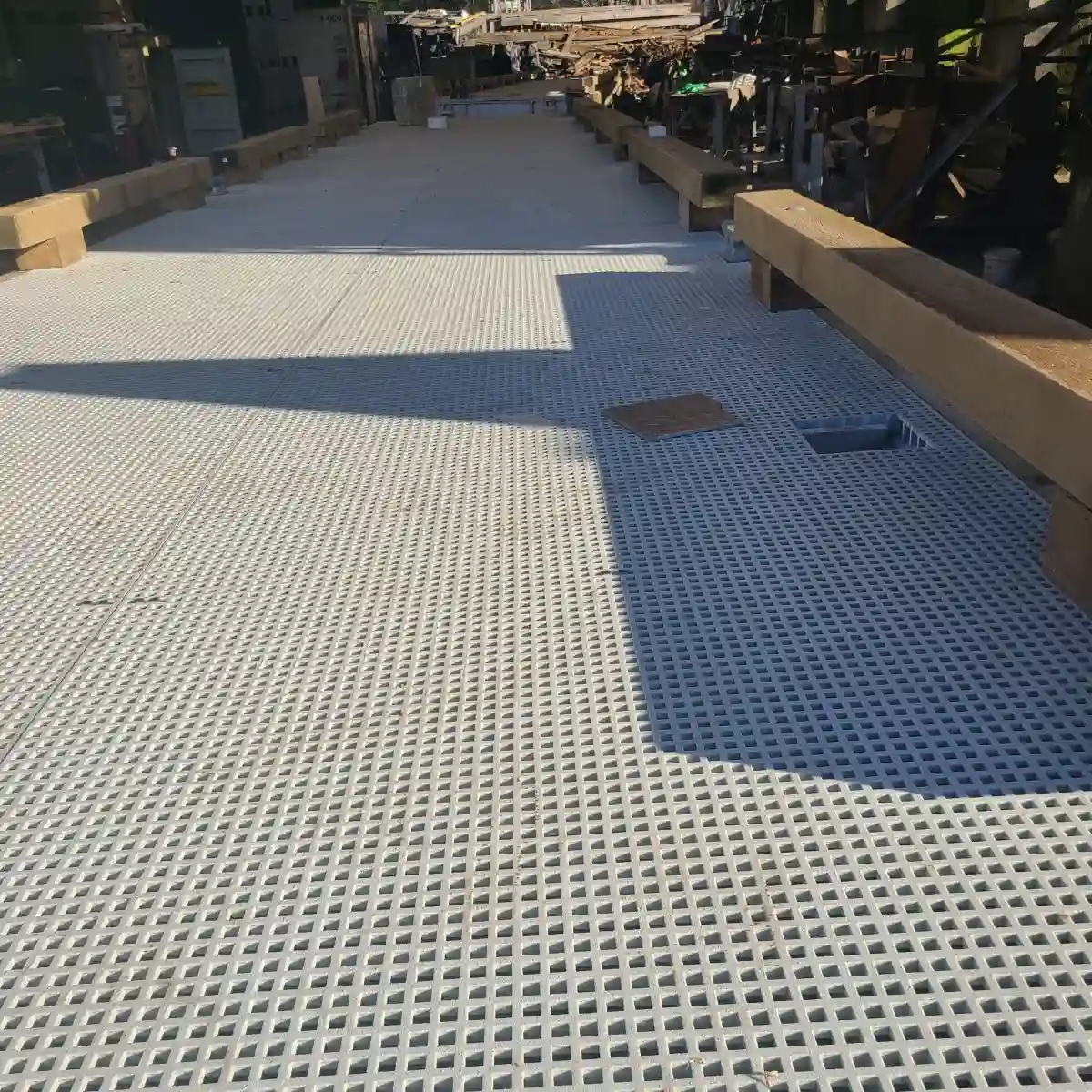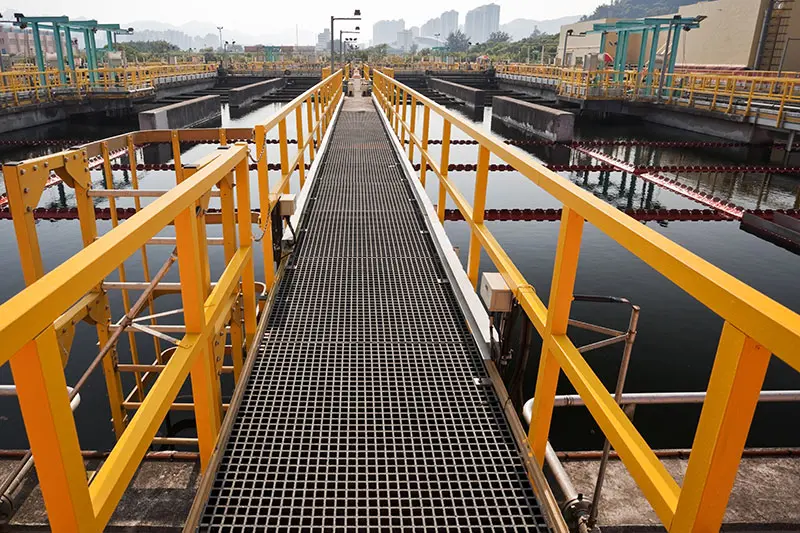
Introduction to FRP Grating Types
FRP (Fiberglass Reinforced Plastic) grating has become a cornerstone material in industrial flooring, walkways, and platform construction across chemical plants, offshore platforms, water treatment facilities, and food processing plants. But not all FRP grating is created equal. Understanding the different FRP grating types is essential for selecting the right product for your specific application, whether you need maximum corrosion resistance, heavy load capacity, or cost-effective lightweight flooring.
This comprehensive guide explores the three main categories of FRP grating — molded grating, pultruded grating, and other specialized types — and helps you understand their unique characteristics, advantages, and ideal use cases. By the end, you will know exactly how to evaluate each FRP grating type against your project requirements.
We will compare strength, corrosion resistance, installation methods, and cost across all major FRP grating types, answering common questions such as: What is the difference between pultruded and molded grating? Which type is best for chemical environments? And how do you choose between different types of FRP grating for heavy duty applications?
What Are the Different Types of FRP Grating?
When engineers and procurement professionals ask "what are the different types of FRP grating?" they are typically referring to the manufacturing process that gives each type its distinct structural properties. There are three primary FRP grating types available on the market today:
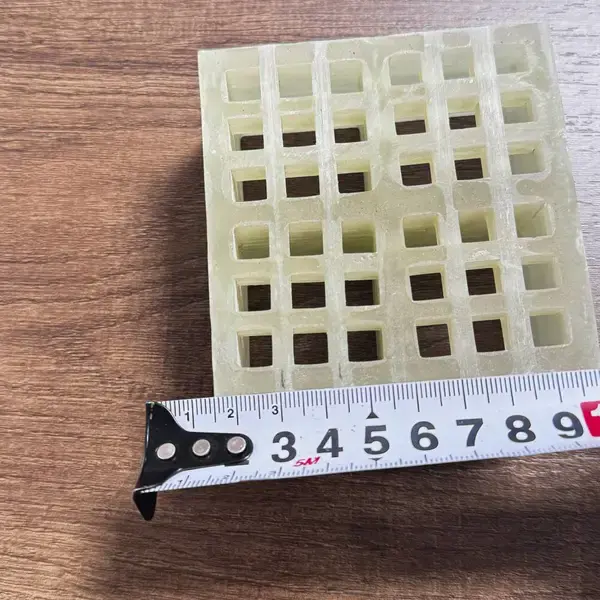
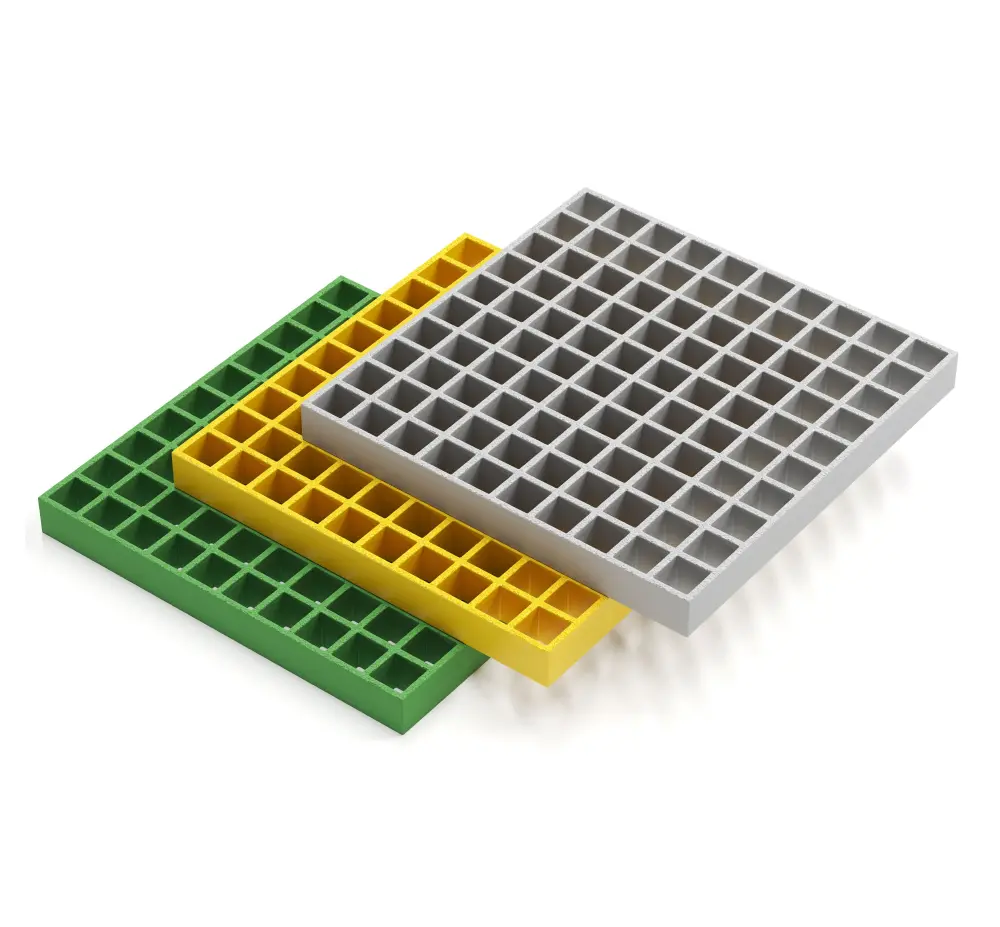
- Molded FRP Grating — Also called compression-molded grating, this type is manufactured by layering fiberglass reinforcements and resin in a mold and applying heat and pressure. The result is a one-piece, integral structure with a uniform grid pattern. Molded grating is the most commonly used type for general industrial flooring.
- Pultruded FRP Grating — Made through a continuous pultrusion process where fiberglass rovings are pulled through a resin bath and then through a heated die, pultruded grating features I-beam or T-bar bearing bars with separately inserted cross bars. This construction gives it higher strength-to-weight ratios and longer spans.
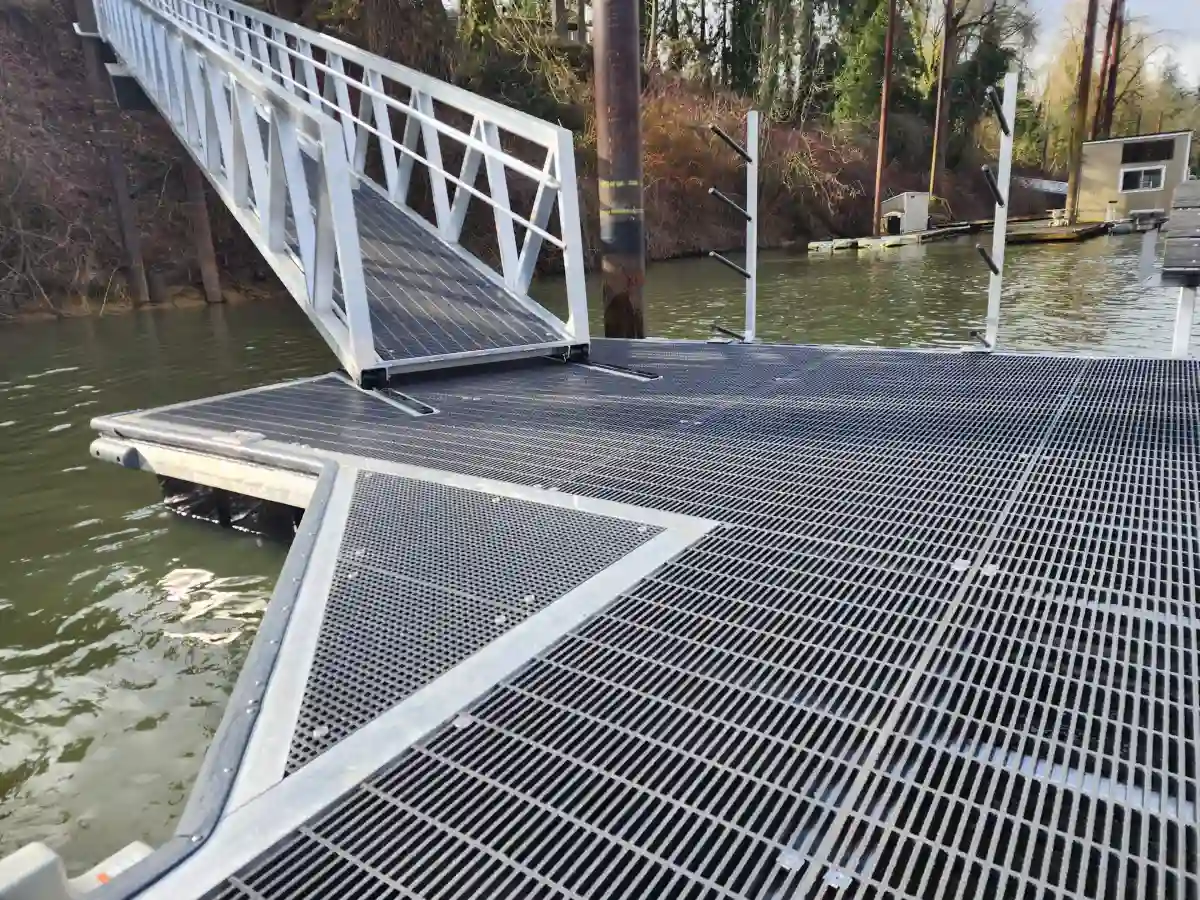
- Other Specialized Types — Including micro-mesh grating, heavy duty molded grating, and custom fabricated grating designed for niche applications such as anti-slip stair treads, trench covers, and marine decking.
Each of these FRP grating types serves different application requirements. The choice between them depends on factors such as load expectations, span lengths, chemical exposure, and budget constraints. Understanding these differences is the first step in making an informed purchasing decision.
As a rule of thumb: molded grating offers the best balance of cost and corrosion resistance for standard industrial flooring, while pultruded grating excels in high-load, long-span applications where structural performance is the primary concern.
What Is Molded FRP Grating?
Molded FRP grating, also referred to as molded fiberglass grating or compression-molded grating, is the most widely used FRP grating type in industrial applications. Its popularity stems from the efficient manufacturing process and excellent corrosion resistance.
How Molded Grating Is Made
The manufacturing process begins with continuous fiberglass rovings and a liquid thermosetting resin — typically polyester, vinyl ester, or epoxy. The fiberglass is saturated with resin and placed into a heated mold. Pressure is applied to compress the materials into a single, homogeneous panel with a consistent square or rectangular grid pattern. The entire panel cures as one piece, creating an integrated structure with no joints or weak points.
Key Characteristics of Molded FRP Grating
- Integral construction — The entire panel is one piece, meaning there are no mechanical joints that can loosen over time.
- Superior corrosion resistance — Because the fiberglass is fully encapsulated in resin, molded grating is highly resistant to a wide range of chemicals, making it ideal for chemical plants and wastewater treatment.
- Cost-effective for standard spans — For typical industrial walkway spans of 24 to 36 inches, molded grating provides excellent performance at a lower cost than pultruded alternatives.
- Lightweight — Typically 75% lighter than steel grating of equivalent size, making it easier to transport and install.
- Non-conductive and non-magnetic — Ideal for electrical substations and MRI facilities.
Common Applications for Molded Grating
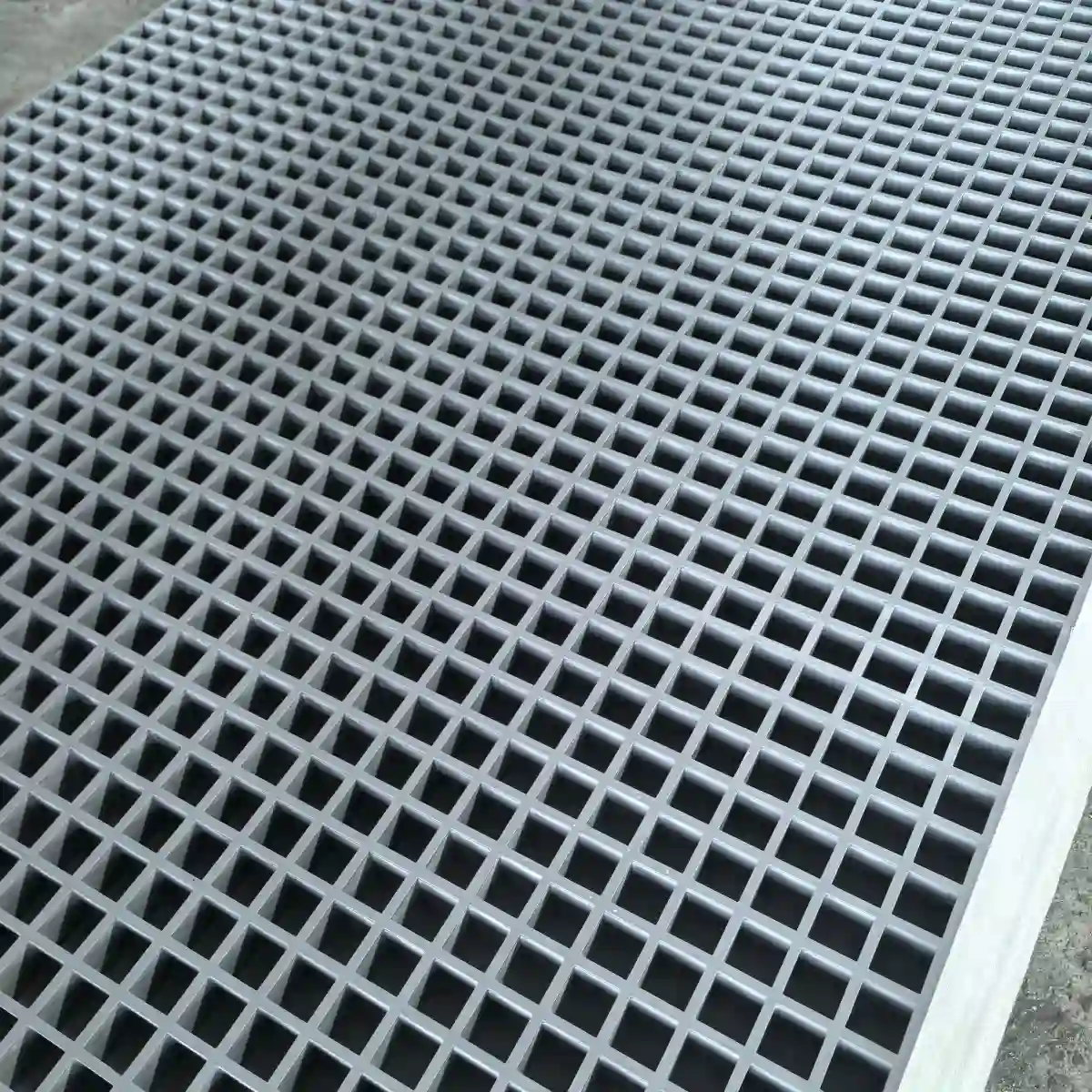
Molded grating is the go-to choice for general industrial flooring, platform walkways, catwalks, drainage covers, and trench grating. It performs exceptionally well in corrosive environments where molded fiberglass grating is exposed to acids, alkalis, and harsh chemicals. It is also widely used in food processing facilities due to its non-porous surface that resists bacterial growth.
Standard panel sizes range from 4′ × 8′ to 4′ × 12′, with mesh openings typically measuring 1.5″ × 1.5″ or 2″ × 2″. The depth (thickness) can range from 1″ to 2″, depending on load requirements.
What Is Pultruded FRP Grating?
Pultruded FRP grating is a high-strength FRP grating type manufactured through the pultrusion process. Unlike molded grating which is formed in a press, pultruded grating is produced by pulling continuous fiberglass rovings and mat through a resin bath and then through a heated steel die that shapes and cures the material into its final profile. This process creates bearing bars with a distinct I-beam or T-beam cross section.
How Pultruded Grating Is Constructed
In pultruded grating, the primary load-bearing bars are pultruded as individual profiles with high fiber orientation along the length of the bar. These bars are then mechanically assembled with cross bars that are either pultruded separately or made from round or square rods. The cross bars are typically joined to the bearing bars using a through-rod system, creating a strong mechanical connection. This assembly method is fundamentally different from the one-piece construction of molded grating.
Key Characteristics of Pultruded FRP Grating
- Higher strength-to-weight ratio — The aligned fiber orientation in pultruded bearing bars provides exceptional longitudinal strength, allowing longer unsupported spans.
- Longer span capability — Pultruded grating can span up to 8 feet or more without intermediate support, compared to 3-4 feet for molded grating.
- Higher load capacity — For heavy duty applications, pultruded grating supports significantly greater loads than molded grating of equivalent depth.
- Customizable bar spacing — Bearing bar spacing can be customized (typically 1.5″, 2″, or 3″ on center) to match specific load requirements.
- Excellent impact resistance — The individual bar construction can better absorb point loads and impact forces.
Common Applications for Pultruded Grating
Pultruded grating is the preferred choice for heavy-duty industrial flooring, mezzanine decks, truck loading platforms, offshore oil rigs, bridge decks, and any application requiring long spans or high load ratings. It is commonly specified in mining operations, power generation facilities, and heavy manufacturing plants where structural integrity under extreme loads is paramount.
The open area of pultruded grating typically ranges from 50% to 70%, allowing light, air, and liquids to pass through while maintaining structural performance. Standard bearing bar depths range from 1″ to 4″, with deeper bars supporting heavier loads and longer spans.
Other Types of FRP Grating
Beyond the two dominant FRP grating types, several specialized options exist for specific applications where standard molded or pultruded products are not ideal:
Micro-Mesh FRP Grating
Micro-mesh grating features a tight mesh pattern with small openings — typically 0.5″ × 0.5″ or 1″ × 1″. This design prevents small tools, screws, and debris from falling through the grating while maintaining the corrosion resistance and lightweight properties of fiberglass. It is commonly used in elevated walkways above sensitive equipment, electronic manufacturing clean rooms, and food processing areas where small objects must be contained.
Heavy Duty Molded Grating
Heavy duty molded grating is manufactured with thicker cross sections and deeper profiles (1.5″ to 2″) to handle higher loads while retaining the one-piece molded construction. It bridges the gap between standard molded grating and full pultruded systems, offering a middle ground for applications that need more strength than standard molded grating provides but do not require the extreme span capabilities of pultruded products.
Custom Fabricated FRP Grating
Custom fabricated grating includes cut-to-size panels, stair treads with grit-top surfaces, trench covers with integrated frames, and curved grating for architectural applications. These are typically fabricated from standard molded or pultruded sheets by cutting, routing, and assembling them to match specific dimensions and designs.
Grated Stair Treads and Platforms
Pre-fabricated FRP stair treads combine a molded or pultruded grating surface with a gritted nosepiece for slip resistance. These are commonly specified in industrial staircases where corrosion resistance and worker safety are equally important.
Each of these specialized FRP grating types addresses a particular niche, but the fundamental choice in most projects remains between molded and pultruded grating. Understanding their differences in detail will help you make the right selection.
Pultruded Grating vs Molded Grating: Key Differences
The debate of pultruded grating vs molded grating is one of the most common decisions engineers face when specifying industrial flooring. While both are made from fiberglass and resin, their structural differences lead to very different performance profiles. Below we break down the key comparison areas including strength, corrosion resistance, and cost.
| Property | Molded FRP Grating | Pultruded FRP Grating |
|---|---|---|
| Manufacturing Process | Compression molded in a heated press — single piece | Pultruded I-beam bars assembled with cross rods |
| Fiber Orientation | Random/multi-directional | Primarily longitudinal (along bearing bars) |
| Maximum Span | 3–4 feet | 6–10 feet |
| Load Capacity | Moderate — suitable for standard industrial walkways | High — suitable for heavy machinery and truck access |
| Corrosion Resistance | Excellent — fully encapsulated fibers | Good — but cut edges may expose fibers |
| Weight | Lightest option | Slightly heavier per square foot |
| Cost Per Square Foot | Lower ($15–$30) | Higher ($25–$50) |
| Installation Flexibility | Can be cut on-site with standard tools | Requires cutting individual bars |
| Typical Applications | Walkways, platforms, trench covers, drainage | Heavy industrial, mezzanines, bridge decks, ramps |
Strength and Load Capacity Comparison
When comparing pultruded grating vs molded grating for load capacity, pultruded grating is the clear winner. The continuous fiber alignment in pultruded bearing bars provides significantly higher flexural strength. A 2″ deep pultruded grating can support loads that would require a 2.5″ or 3″ deep molded grating — and across longer spans without intermediate support. For this reason, pultruded grating is the standard choice for heavy duty applications where load requirements exceed 200 psf (pounds per square foot) or where spans exceed 4 feet.
Corrosion Resistance Comparison
In environments with continuous chemical exposure, molded fiberglass grating generally offers superior corrosion resistance. Because the fiberglass reinforcement is completely encapsulated in resin during the molding process, there are no exposed fiber ends. In pultruded grating, the cut ends of bearing bars expose fiberglass strands to the environment, which can lead to capillary wicking of corrosive liquids into the bar core. For applications in chemical processing plants, pickling lines, and wastewater treatment facilities, molded grating is typically the more corrosion-resistant choice. Vinyl ester resin systems further enhance this property for both types.
Cost Comparison Between FRP Grating Types
The cost comparison between different FRP grating types depends on several factors including resin type, panel size, depth, and load rating. Molded grating is generally 30–50% less expensive than pultruded grating for equivalent panel sizes. For a typical 4′ × 8′ panel with standard resin (polyester), molded grating costs $15–$30 per square foot, while pultruded grating ranges from $25–$50 per square foot. However, in long-span applications, pultruded grating may reduce overall project cost by requiring fewer support beams and less structural steel — offsetting the higher material price.
Installation costs also vary. Molded grating can be cut to size on-site using standard woodworking tools, while pultruded grating requires more careful cutting of individual bearing bars. For large projects, the labor cost difference can be significant.
How to Choose Between Different Types of FRP Grating
Selecting the right type of FRP grating requires balancing several factors. Here is a practical decision framework for choosing between different FRP grating types for your specific project needs.
Which FRP Grating Type Is Best for Heavy Duty Applications?
For heavy duty applications requiring load capacities above 250 psf, spans longer than 4 feet, or resistance to heavy impact, pultruded grating is the recommended choice. The I-beam bearing bar construction provides the structural integrity needed for vehicular access, forklift traffic, crane loads, and heavy equipment platforms. Industries such as mining, oil and gas, heavy manufacturing, and steel production consistently specify pultruded grating for these demanding environments. A typical heavy duty pultruded grating specification would call for 2.5″ or 3″ deep bars with 1.5″ or 2″ spacing.
For moderate heavy duty applications — such as mezzanine floors and permanent platforms with loads of 150–250 psf and spans under 4 feet — heavy duty molded grating (1.5″ to 2″ thick) can provide adequate performance at a lower cost.
Which Type of FRP Grating Is Best for Chemical Environments?
When maximum corrosion resistance is the priority, molded grating is the superior FRP grating type. The integral molded construction fully encapsulates the fiberglass reinforcement, preventing chemical attack on the fibers. For applications in chemical processing plants, battery rooms, acid storage areas, and wastewater treatment facilities, molded grating with a premium resin system (vinyl ester or epoxy) provides decades of service life with minimal maintenance.
The chemical resistance of both FRP grating types can be enhanced by selecting the appropriate resin system:
- Polyester resin — Good general chemical resistance, most economical. Suitable for water treatment, food processing, and mild chemical exposure.
- Vinyl ester resin — Excellent resistance to acids, alkalis, and bleaches. The standard choice for chemical plant environments.
- Epoxy resin — Superior resistance to solvents and caustic solutions. Used in specialized chemical processing applications.
How Does the Cost Compare Between Different FRP Grating Types?
As a general rule, molded grating costs 30–50% less than pultruded grating for comparable panel sizes. However, total installed cost must account for support structure requirements. Pultruded grating often allows wider support spacing, reducing structural steel costs by 15–25% on large projects. For short-span applications (under 4 feet), molded grating is almost always more economical. For long-span applications (over 6 feet), pultruded grating often delivers better overall value despite higher material cost.
Decision Matrix
| When Your Priority Is... | Choose... |
|---|---|
| Lowest material cost for standard walkways | Molded FRP Grating |
| Maximum corrosion resistance | Molded FRP Grating with vinyl ester resin |
| Long unsupported spans (6–10 ft) | Pultruded FRP Grating |
| Heavy load capacity (250+ psf) | Pultruded FRP Grating |
| Impact resistance and point loads | Pultruded FRP Grating |
| Non-conductive flooring for electrical safety | Both types — molded is slightly better |
| Quick on-site modification and fitting | Molded FRP Grating |
Conclusion
Understanding the different FRP grating types — molded, pultruded, and specialized variants — is essential for selecting the right industrial flooring solution. Each type offers distinct advantages:
- Molded FRP grating is the most cost-effective and corrosion-resistant option for standard industrial walkways, platforms, and chemical environments. Its one-piece construction and fully encapsulated fibers make it ideal for corrosive settings.
- Pultruded FRP grating provides superior strength, longer spans, and higher load capacity for heavy duty applications, mining operations, and long-span bridge decks.
- Specialized types such as micro-mesh and heavy duty molded grating fill specific niches where standard products are not suitable.
The pultruded grating vs molded grating decision ultimately comes down to your application requirements. If corrosion resistance and budget are your primary concerns, molded grating is the better choice. If load capacity and span length drive your design, pultruded grating is worth the premium. Many projects use both types — molded grating for standard walkways and chemical areas, and pultruded grating for heavy load zones and long-span crossings.
When evaluating FRP grating types for your next project, always consult the manufacturer load tables and chemical resistance guides. Request samples when possible, and factor in total installed cost — including support structure, installation labor, and expected service life — rather than comparing material prices alone. With the information in this guide, you are well-equipped to make an informed decision that balances performance, safety, and cost.