Introduction
When planning an industrial facility, flooring is one of the most critical investments you will make. The industrial floor grating price varies widely depending on material, load requirements, and customization needs. On average, industrial grating costs between $3 and $25 per square foot, with basic steel grating on the lower end and specialized aluminum or fiberglass options at the higher end.
Understanding what drives industrial floor grating price is essential for budgeting accurately and avoiding unexpected expenses. Whether you are outfitting a factory floor, building walkways, or installing mezzanine platforms, the grating you choose must balance cost with performance, safety, and longevity.
This comprehensive guide breaks down every aspect of industrial floor grating pricing — from per-square-foot costs to installation expenses — so you can make an informed purchasing decision for your project.
Related questions covered in this section: How much does industrial floor grating cost? What is the price range for industrial floor grating? What is the average price of industrial floor grating for factories?
Industrial Floor Grating Price Per Square Foot
Understanding the industrial floor grating price per square foot is the most practical way to estimate project costs. Prices vary significantly by material, as shown in the table below:
| Material Type | Price Per Square Foot | Typical Applications |
|---|---|---|
| Steel (Welded/Press-Locked) | $3 – $8 | Factories, warehouses, platforms |
| Aluminum (Swage-Locked) | $8 – $18 | Food processing, marine, chemical plants |
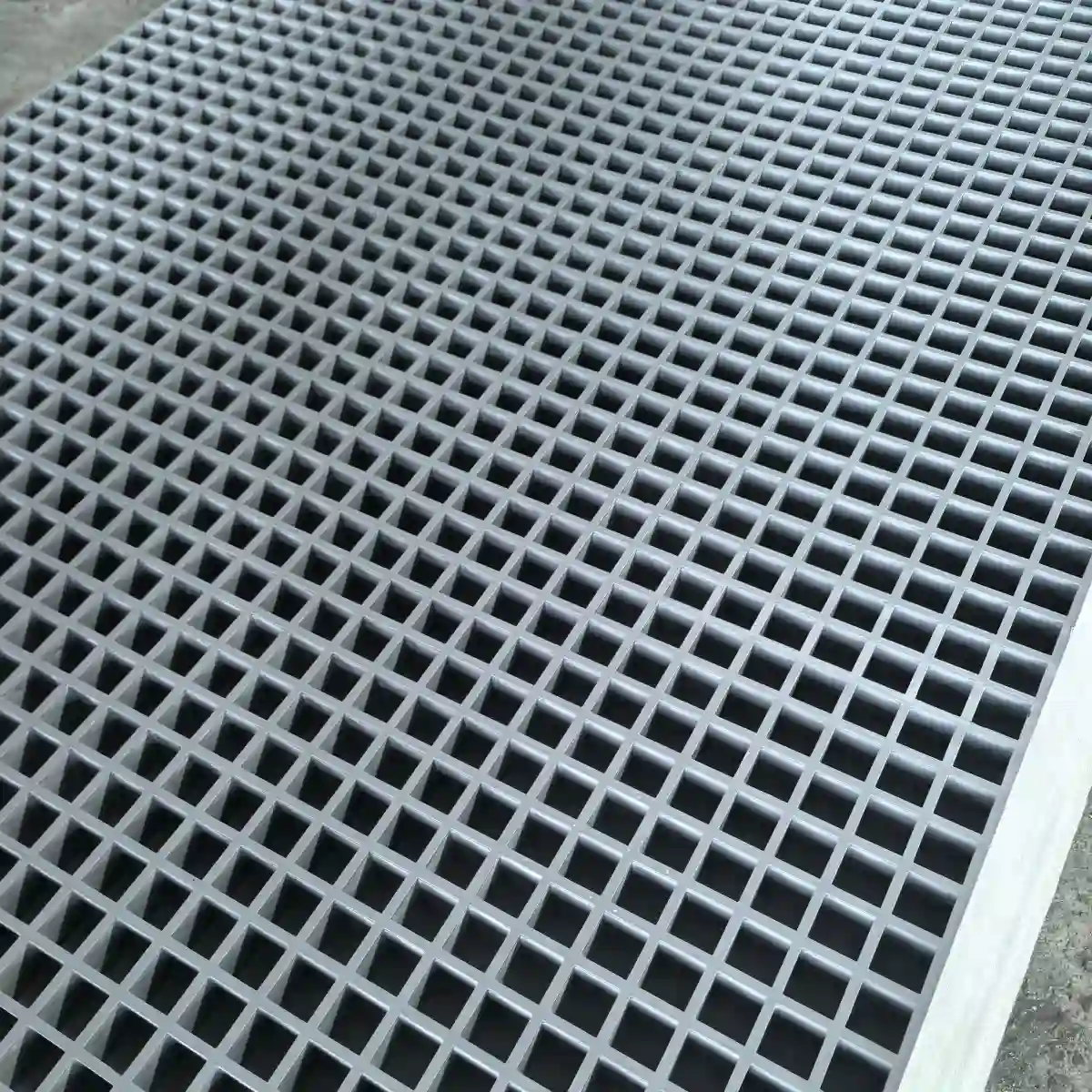
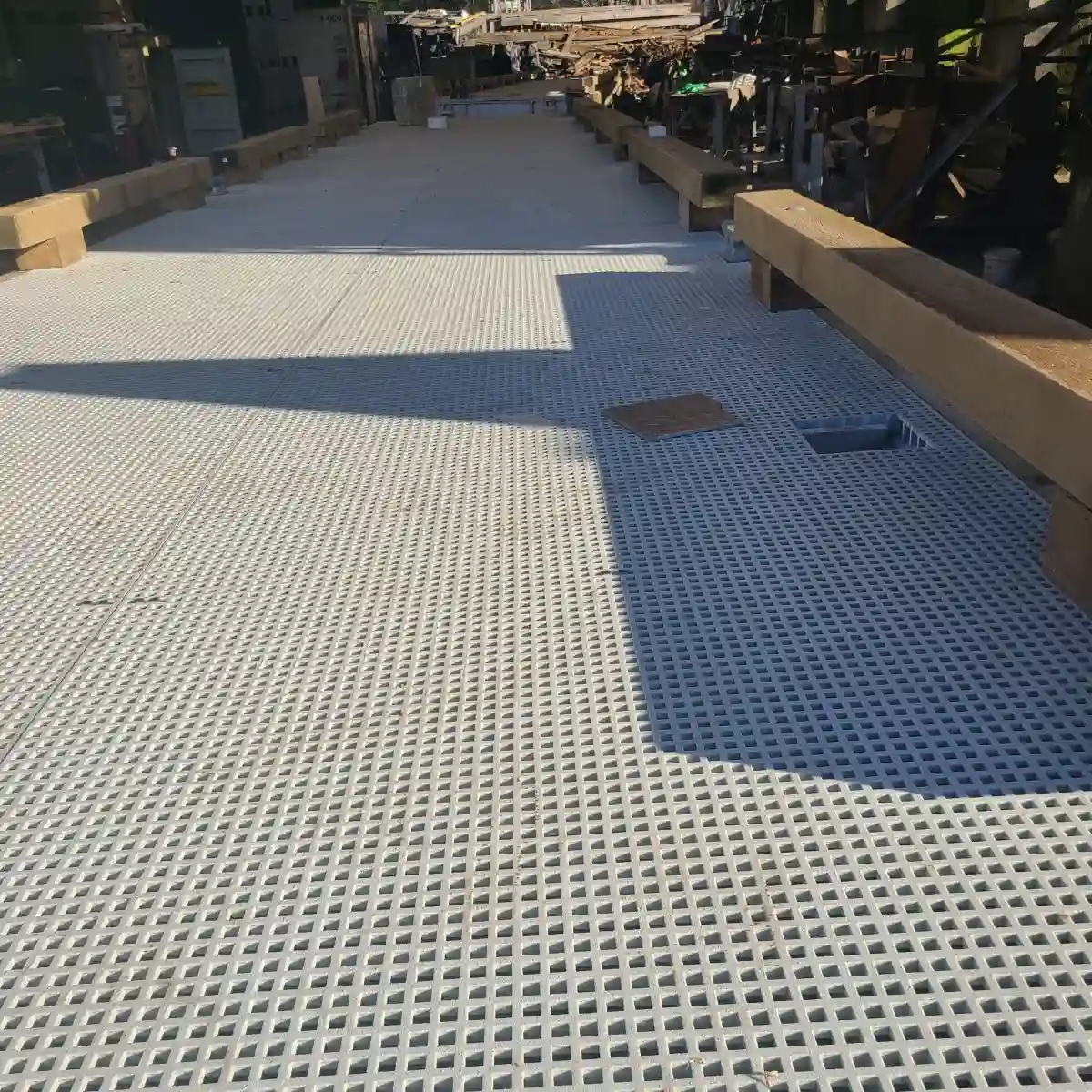
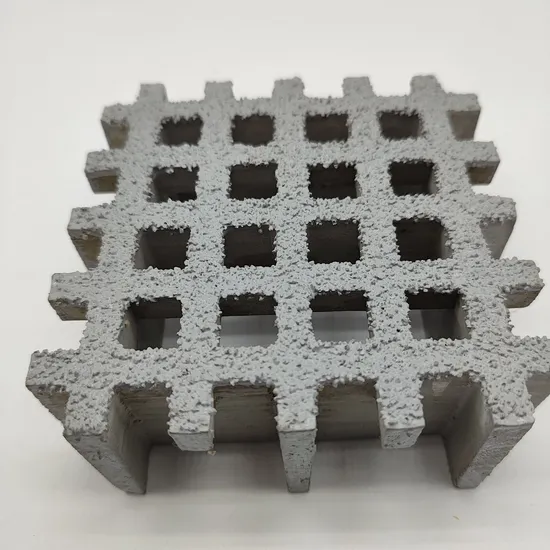
| Fiberglass (FRP) Grating | $6 – $15 | Corrosive environments, electrical safety |
| Heavy Duty Steel | $8 – $15 | Heavy machinery areas, truck loading bays |
| Stainless Steel | $15 – $25 | Pharmaceuticals, high-corrosion zones |
Typical Price Ranges by Material
Steel grating is the most economical choice for general industrial use. Standard welded steel grating starts around $3 per square foot for light-duty applications and goes up to $8 per square foot for heavier load ratings. Aluminum grating costs more upfront (typically $8–$18 per square foot) but offers superior corrosion resistance and lower maintenance costs over its lifetime.
Fiberglass (FRP) grating occupies the mid-range at $6–$15 per square foot and is favored in chemical processing plants where corrosion is a concern. Stainless steel grating is the premium option, often exceeding $20 per square foot, and is used in pharmaceutical and food-grade environments where hygiene is critical.
Heavy Duty vs Standard Pricing
Heavy-duty grating grades command a premium of approximately 30–50% over standard-duty equivalents. A standard steel grating panel at $5 per square foot might cost $8 per square foot in a heavy-duty configuration with thicker bars and closer bearing bar spacing. The heavy duty industrial floor grating category includes panels designed to withstand fork truck traffic, heavy machinery, and impact loads.
Related questions covered: Industrial floor grating price per square foot? How much does industrial floor grating cost per square foot?
Key Factors That Affect Industrial Floor Grating Price
Several variables influence the final industrial floor grating price for any given project. Understanding these factors helps you make cost-effective choices without compromising on quality or safety.
Material Type and Quality
The choice of material is the single largest cost driver. Aluminum industrial floor grating costs more than steel on a per-square-foot basis but provides natural corrosion resistance that eliminates the need for painting or hot-dip galvanizing. Steel grating is cheaper initially but may require protective coatings that add $1–$3 per square foot. In environments with heavy moisture or chemical exposure, paying the premium for aluminum or fiberglass can actually reduce total lifetime costs.
Manufacturing Process and Customization
The fabrication method directly impacts industrial floor grating price. Standard welded steel grating is mass-produced and relatively inexpensive. Custom fabrication — cutouts for pipes, special shapes, bevelled edges, or non-standard panel sizes — adds 15–40% to the base material cost. Precision machining and swage-locked assembly (common for aluminum grating) also carry higher labor costs than welded steel grating.
Quantity and Bulk Order Discounts
Volume pricing is one of the most effective ways to reduce costs. Most manufacturers offer tiered bulk discounts:
- 50–500 sq ft: Full retail price
- 500–2,000 sq ft: 5–10% discount
- 2,000–5,000 sq ft: 10–15% discount
- 5,000+ sq ft: 15–25% discount
Bundling grating with accessories (clips, bands, support channels) from the same supplier can unlock additional savings of 5–10%.
Related questions covered: What factors affect industrial floor grating price? What factors affect industrial floor grating pricing? Why is industrial floor grating so expensive?
How to Calculate Industrial Floor Grating Cost for Your Project
Knowing how to calculate industrial floor grating cost is essential for accurate project budgeting. Follow this step-by-step approach to get a reliable estimate.
Step 1: Measure the Required Area
Calculate the total square footage of the area to be covered. For rectangular spaces, multiply length by width. For irregular areas, break the space into smaller rectangles and sum their areas. Always add 5–10% waste factor to account for cuts, trimming, and fitting around columns or machinery.
Example calculation:
Walkway area: 100 ft × 4 ft = 400 sq ft
Waste factor (10%): 40 sq ft
Total grating needed: 440 sq ft
If you choose steel grating at $5/sq ft, your material cost is: 440 × $5 = $2,200.
Step 2: Add Material Selection
Multiply your total area by the per-square-foot price of your chosen material. For industrial floor grating price estimation, use these formulas:
- Steel grating: Total sq ft × ($4–$8)
- Aluminum grating: Total sq ft × ($8–$18)
- FRP grating: Total sq ft × ($6–$15)
- Heavy duty: Total sq ft × ($8–$15)
Step 3: Adding Accessories and Installation Costs
Grating clips, support channels, and edge trim add $0.50–$2.00 per square foot to the total. Professional installation labor ranges from $3–$8 per square foot, depending on complexity and accessibility.
Complete project cost example:
440 sq ft steel grating: $2,200
Accessories (clips + supports): $400
Installation labor (440 × $5): $2,200
Total project cost: $4,800
Related questions covered: How to calculate industrial floor grating cost? How to calculate industrial floor grating cost for a project?
Industrial Floor Grating vs Steel Grating Price Comparison
One of the most common questions buyers ask is about industrial floor grating vs steel grating price comparison. The reality is that steel grating is one type of industrial floor grating, so the comparison is best framed as steel vs aluminum vs fiberglass grating pricing.
Aluminum vs Steel vs Fiberglass Pricing
Steel Grating is the baseline. Standard welded steel grating costs $3–$8 per square foot, making it the most budget-friendly option. However, steel requires protective coatings (galvanizing, painting) in outdoor or wet environments, adding $1–$3 per square foot to the total cost. Steel is ideal for interior industrial floors, parking garages, and structural platforms where cost is the primary concern.
Aluminum Industrial Floor Grating costs $8–$18 per square foot — roughly 2–3 times more than steel. The higher industrial floor grating price for aluminum is justified by its natural corrosion resistance, lightweight properties (easy installation), and zero maintenance requirements. Over a 15–20 year lifespan, aluminum grating often proves more economical than steel when coating maintenance costs are factored in.
Fiberglass (FRP) Grating ranges from $6–$15 per square foot. FRP is non-conductive, non-sparking, and chemically inert, making it the preferred choice for electrical substations, chemical plants, and water treatment facilities. While its upfront cost is comparable to aluminum, FRP can be the most economical choice in corrosive environments where even aluminum may degrade over time.
When comparing industrial floor grating vs bar grating price, note that bar grating (another term for traditional steel grating) generally follows the same pricing as welded steel grating since they are essentially the same product category.
Related questions covered: Industrial floor grating vs bar grating price comparison? Industrial floor grating price vs steel grating price comparison? Industrial floor grating price vs steel grating cost comparison?
Heavy Duty Industrial Floor Grating Pricing
Heavy duty industrial floor grating is designed to withstand extreme loads — fork trucks, heavy machinery, and continuous foot traffic in demanding industrial environments. This durability comes with a corresponding price premium.
Heavy duty steel grating typically costs $8–$15 per square foot, compared to $3–$8 for standard-duty steel. The price increase is driven by thicker bearing bars (typically 1/4-inch or 3/8-inch vs 1/8-inch for light duty), closer bar spacing (1-3/16-inch centers vs 2-1/4-inch or wider), and stronger cross bars.
For heavy duty applications, the industrial floor grating price also depends on the load rating required:
- Light industrial (25–75 psf): $3–$6/sq ft — pedestrian walkways, mezzanines
- Medium industrial (100–250 psf): $5–$10/sq ft — light vehicle traffic, equipment platforms
- Heavy industrial (300–500+ psf): $8–$15/sq ft — fork truck aisles, loading docks
Many buyers assume standard grating will suffice for their application, only to find that load requirements force them into a higher-cost heavy duty industrial floor grating specification. Always verify your required load capacity with a structural engineer before purchasing to avoid costly upgrades or safety issues.
Related questions covered: Why is industrial floor grating so expensive? (Addresses the heavy-duty cost drivers)
Aluminum Industrial Floor Grating Cost Breakdown
Aluminum industrial floor grating offers an excellent balance of strength, weight, and corrosion resistance. While its upfront cost is higher than steel, understanding the full cost breakdown helps justify the investment.
Material Cost: Aluminum grating prices range from $8 to $18 per square foot, depending on the alloy (6061-T6 is most common), bar thickness, and surface treatment. Standard swage-locked aluminum grating is at the lower end ($8–$12), while heavy-duty aluminum with thicker bars and closer spacing reaches $15–$18 per square foot.
Cost Savings Compared to Steel:
- No galvanizing needed: Saves $1–$3 per square foot over steel
- Lower installation cost: Aluminum is 60% lighter than steel, reducing labor and crane/hoist costs by 20–30%
- Zero maintenance: No painting, coating, or rust repair over 20+ year lifespan
- Longer service life: In corrosive environments, aluminum lasts 2–3 times longer than coated steel
The total cost of ownership for aluminum industrial floor grating often beats steel when calculated over a 10–20 year period. For example, a 1,000 sq ft steel installation costing $5,000 may require $1,500 in coating maintenance every 5 years ($4,500 over 15 years), while a $12,000 aluminum installation requires zero maintenance — making aluminum the cheaper option long-term.
Related questions covered: Industrial floor grating price per square foot (aluminum variant), Why is industrial floor grating so expensive? (addressing aluminum vs steel lifecycle)
Industrial Floor Grating Installation Cost Breakdown
Beyond the grating material itself, industrial floor grating installation cost is a significant portion of any project budget. Understanding these costs helps you avoid surprises when planning your build.
Installation Labor Rates:
| Installation Type | Cost Per Square Foot | Description |
|---|---|---|
| Basic surface mounting | $2 – $4 | Grating laid on existing supports, secured with clips |
| Structural integration | $4 – $6 | Grating welded or bolted to steel framework |
| Complex installation | $6 – $10 | Cutouts, angles, elevated platforms, safety railings |
Accessory Costs: Grating clips, saddle clips, and panel fasteners add $0.50 – $1.50 per square foot to material costs. Edge trim and toe plates add another $1 – $3 per linear foot. Support channels (if not existing) run $5 – $15 per linear foot depending on size and material.
Factors That Increase Installation Cost:
- Height: Elevated installations require scaffolding or lifts, adding 15–30% to labor
- Cutouts: Each pipe or column penetration adds $25–$75 in fabrication labor
- Accessibility: Tight spaces or remote locations increase labor time
- Safety requirements: Fall protection, railings, and toe boards add $3–$8 per linear foot
A realistic total project budget should include 40–60% installation and accessory costs on top of the base industrial floor grating price. For a 500 sq ft steel grating project at $5/sq ft ($2,500 material), expect $1,500–$3,000 in installation costs, bringing the total to $4,000–$5,500.
Related questions covered: Industrial floor grating installation cost?
Where to Buy Affordable Industrial Floor Grating
Finding the best place to buy industrial floor grating at low price requires knowing where to look and how to evaluate suppliers. Here is a breakdown of the most common purchasing channels:
Direct from Manufacturers: Buying directly from grating manufacturers is typically the cheapest option, saving 15–25% compared to distributor prices. Most manufacturers require minimum orders of 500–1,000 sq ft. Leading manufacturers include Nucor Grating, Ohio Gratings, and Fisher & Ludlow for steel; and Alro Metals, P&R Metals, and GS Metals for aluminum and specialty grating.
Online Metal Suppliers: Platforms like Metal Supermarkets, OnlineMetals.com, and Grainger offer grating with no minimum order but at 10–20% higher prices than direct manufacturer purchase. These are best for small projects or replacement panels.
Local Steel Service Centers: Regional distributors often provide competitive pricing on standard steel grating panels and can offer quicker delivery. Call at least 3–4 local suppliers for industrial floor grating price quotes before committing.
Industrial Surplus and Salvage: For budget-constrained projects, surplus grating from decommissioned factories can cost 30–60% less than new. However, verify load ratings and inspect for corrosion damage before purchasing used grating.
To find where to buy affordable industrial floor grating, request quotes from 3–5 vendors minimum. Provide your exact specifications — material, bar size, spacing, panel dimensions, and quantity — to get apples-to-apples comparisons.
Related questions covered: Best place to buy industrial floor grating at low price? Where to buy affordable industrial floor grating?
How to Get the Best Price on Industrial Floor Grating
Getting the best price on industrial floor grating takes strategy. Here are actionable tactics that experienced procurement professionals use to secure lower pricing.
1. Combine Multiple Projects into One Order
If you have multiple grating needs across different facilities or departments, combine them into a single purchase order. The difference between a 200 sq ft order (retail price) and a 2,000 sq ft order (wholesale price) can be 15–25% on the per-square-foot cost.
2. Choose Standard Sizes and Configurations
Custom panel sizes, non-standard bar spacing, and special cutouts all add premium charges. Where possible, design your project around standard 24-inch × 120-inch or 36-inch × 144-inch panels. Stick to standard bearing bar spacing (1-3/16-inch or 1-7/16-inch centers) to avoid special fabrication fees.
3. Consider Alternative Materials
If your application permits, substituting a lower-cost material can significantly reduce the industrial floor grating price. For interior dry areas with light load requirements, standard steel grating at $3–$5/sq ft may work just as well as aluminum at $8–$12/sq ft.
4. Negotiate on Timing
Manufacturers offer better pricing during slow seasons (winter months in colder climates) or when they have excess mill capacity. Ask for a "schedule flexibility" discount — offering a longer lead time (4–6 weeks instead of 1–2) can save 5–10%.
5. Get Multiple Competitive Quotes
Always obtain at least three written quotes with identical specifications. Use the lowest industrial floor grating price quote as leverage with other suppliers. Be transparent — let vendors know they are competing for your business.
6. Build a Long-Term Relationship
Vendors offer better pricing to repeat customers. If you have ongoing grating needs, establish an account with 2–3 suppliers and consolidate your purchasing. Many offer 5–10% discounts for preferred customers or annual volume commitments.
Related questions covered: How to get the best price on industrial floor grating?
Conclusion
Understanding the industrial floor grating price landscape is essential for making a smart investment in your facility. Steel grating remains the most affordable option at $3–$8 per square foot, while aluminum industrial floor grating ($8–$18/sq ft) and FRP grating ($6–$15/sq ft) offer premium benefits that can reduce total lifetime costs in demanding environments.
When budgeting for your project, remember to factor in installation costs (typically 40–60% of material cost), accessories, and long-term maintenance. The lowest upfront industrial floor grating price is not always the most economical choice — especially in corrosive, wet, or heavy-duty applications where premium materials pay for themselves over time.
To get the best value, request multiple quotes with identical specifications, consider bulk ordering, and work with reputable suppliers who can provide load rating certifications and warranty coverage. With the information in this guide, you are well-equipped to navigate the pricing landscape and select the right industrial floor grating for your project at a fair price.
Key takeaways:
- Industrial floor grating price ranges from $3–$25 per square foot depending on material and grade
- Installation adds 40–60% to the base material cost
- Bulk ordering 5,000+ sq ft can save 15–25%
- Aluminum and FRP offer lower lifetime costs in corrosive environments
- Always get 3–5 quotes with identical specifications for accurate comparison