Introduction
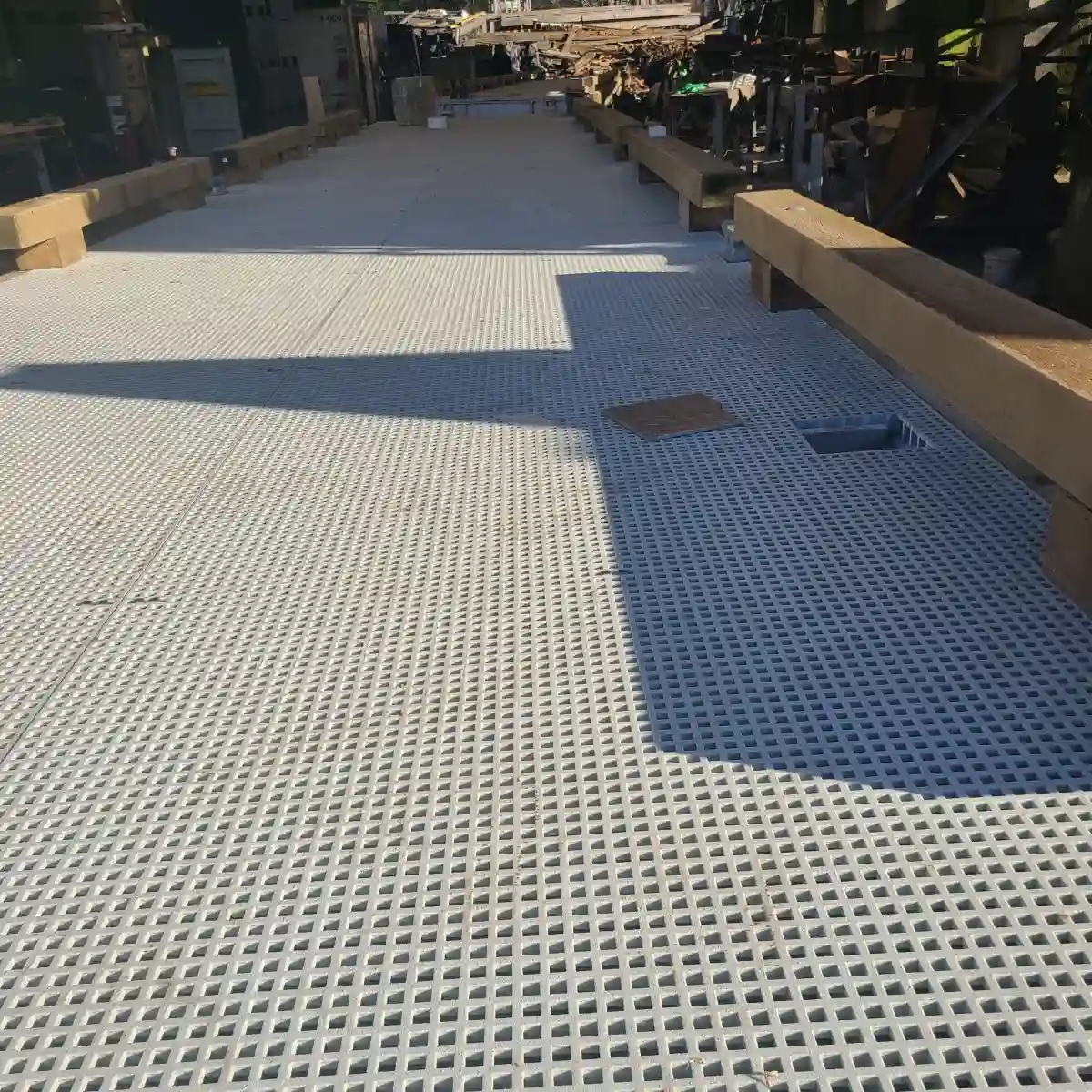
When selecting industrial flooring, one of the most critical specifications to evaluate is the fiberglass grating load capacity. Whether you are designing a platform for a chemical plant, a walkway for a wastewater treatment facility, or a trench cover for heavy pedestrian traffic, understanding how much weight FRP grating can safely support is essential for both safety and longevity.
This comprehensive guide covers everything you need to know about fiberglass grating load ratings — from the factors that influence strength and the industry standards that govern it, to calculation methods and a head-to-head comparison with steel grating. By the end of this article, you will have a clear understanding of how to specify the right grating for your application and how to work with reliable fiberglass grating suppliers to get the best solution.
What Is Fiberglass Grating Load Capacity?
Load capacity in FRP grating refers to the maximum weight or force that a fiberglass reinforced plastic panel can withstand without failing or deflecting beyond acceptable limits. It is typically expressed in pounds per square foot (psf) or kilopascals (kPa), and is used to determine whether a specific grating panel is suitable for a given application. Understanding fiberglass grating load capacity is the first step in proper specification.
Unlike traditional materials such as steel or aluminum, fiberglass grating is orthotropic — meaning its strength properties differ based on the direction of the load. This is because FRP grating derives its strength from continuous glass fibers embedded in a resin matrix. When loads are applied perpendicular to the bearing bars (the primary load-carrying members), the grating exhibits its highest strength. When loads are applied parallel to the bars, the load capacity is significantly lower.
There are two main types of FRP grating, and each has distinct load characteristics:
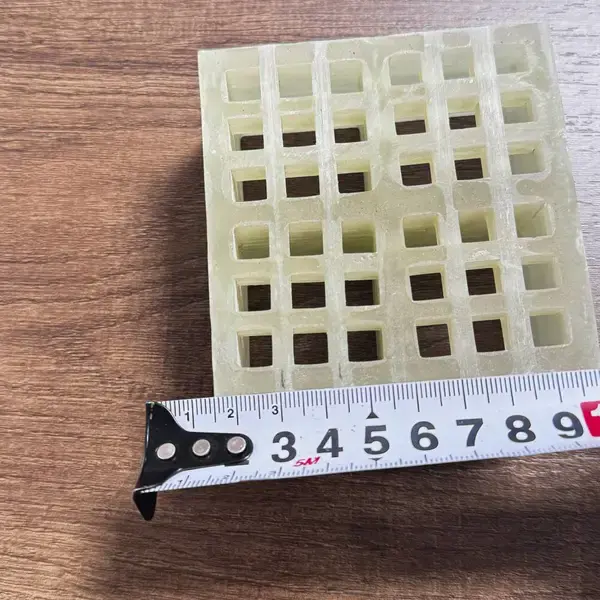
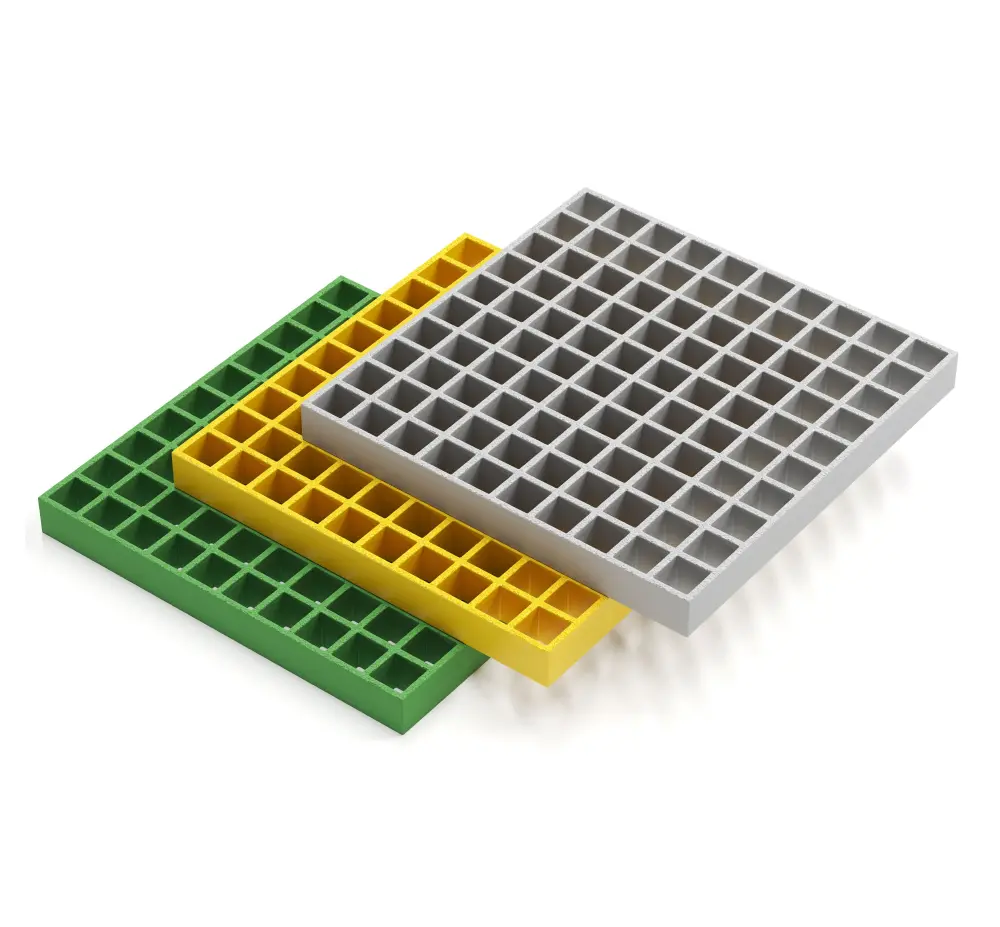
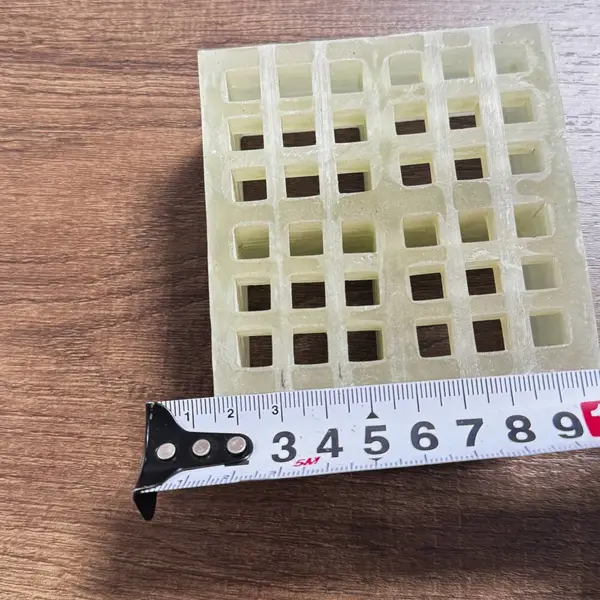
- Molded fiberglass grating — manufactured in a heated compression mold, this type has interwoven glass fibers that provide consistent bidirectional strength. It offers moderate to high load ratings and is ideal for medium-duty industrial flooring.
- Pultruded fiberglass grating — made by pulling continuous glass fibers through a resin bath and heated die, this type features unidirectional reinforcement. It offers the highest strength along the bearing bar direction and is preferred for heavy-duty applications.
The maximum load capacity of molded fiberglass grating typically ranges from 100 psf to over 400 psf depending on the depth and thickness of the panel, while pultruded grating can handle significantly higher loads, sometimes exceeding 1,000 psf in certain configurations.
Factors Affecting Fiberglass Grating Load Capacity
Several variables determine the real-world performance of any given FRP grating panel. Understanding these factors is essential for engineers and facility managers who need to specify the correct product for their environment.
Resin Type and Its Impact on Load Capacity
Does fiberglass grating load capacity vary by resin type? Yes. The resin binds the glass fibers together and transfers loads between them. Common resin systems include:
- Polyester resin — standard grade, offers good mechanical properties and cost-effectiveness; suitable for most industrial applications.
- Vinyl ester resin — provides superior corrosion resistance while maintaining high strength; ideal for chemical processing environments.
- Phenolic resin — offers excellent fire resistance and low smoke generation; strength is comparable to polyester but applications are specialized.
While vinyl ester and phenolic resins may have slightly lower ultimate strength than polyester in some formulations, the variation is generally modest — the reinforcement pattern and bar geometry play a much larger role in the final load rating.
Glass Content and Reinforcement Pattern
Higher glass content typically translates to greater strength. Standard FRP grating contains 50-65% glass by weight. The orientation of fibers — whether they are random continuous strand mat (molded) or aligned unidirectional roving (pultruded) — directly determines the panel's strength profile. Pultruded grating achieves higher load ratings in the bearing bar direction because the fibers are aligned to carry the load.
Molded vs. Pultruded Grating: Load Capacity Differences
- Molded grating: Typical load capacities range from 125 psf to 400 psf. Best suited for pedestrian walkways, platforms, and trench covers where moderate loads are expected.
- Pultruded grating: Capable of 400 psf to 1,000+ psf. Used in heavy industrial settings, vehicular access areas, and loading docks.
Span and Support Configuration
The unsupported span between bearing bars is perhaps the single most important variable affecting load performance. Doubling the span reduces load capacity by a factor of four. Proper support spacing ensures the grating performs to its rated strength. Always consult manufacturer load tables and follow recommended support intervals — typically 12–24 inches on center for standard industrial applications.
Load Capacity Ratings and Industry Standards
Industry standards provide a consistent framework for measuring and reporting load ratings for FRP grating. The most widely referenced standards include:
- ASTM D3841 — Standard specification for glass-fiber-reinforced polyester plastic panels, covering mechanical properties including flexural strength and modulus.
- ANSI/NAAMM FBG-570 — The Fiberglass Grating Engineering Design Manual published by the National Association of Architectural Metal Manufacturers. This is the defining standard for load ratings in North America.
- OSHA 1910.23 — Safety requirements for walking-working surfaces, including minimum load capacity requirements for industrial grating.
- ISO 14122 — International standard for permanent means of access to machinery, including industrial flooring and grating.
Under NAAMM FBG-570, load capacity is reported as a uniform distributed load (UDL) or concentrated load at a specified deflection limit (typically L/100 or L/200, where L is the span length). Most manufacturers provide load tables showing the safe working load at various span distances with a safety factor of 2:1 to 3:1.
Here is a typical load capacity reference table for molded fiberglass grating (1.5-inch depth, standard resin):
| Span (inches) | Safe Uniform Load (psf) | Deflection at L/100 |
|---|---|---|
| 12 | 400 | 0.12" |
| 18 | 250 | 0.18" |
| 24 | 150 | 0.24" |
| 30 | 100 | 0.30" |
Always verify the rated fiberglass grating load capacity with the manufacturer for the specific resin, depth, and configuration you plan to use.
How to Calculate Fiberglass Grating Load Capacity
Learning how to calculate fiberglass grating load capacity for industrial flooring is essential for ensuring safety and compliance. While manufacturers provide load tables, understanding the underlying calculation helps you make informed decisions when conditions deviate from standard configurations.
The load capacity of FRP grating is determined using beam theory formulas adapted for orthotropic composite materials. The key calculation is:
- Maximum bending moment: M = w × L² / 8 (for uniform distributed load)
- Section modulus: S = b × d² / 6 (where b = bearing bar width, d = bar depth)
- Bending stress: σ = M / S
- Allowable stress: σ_allow = Ultimate Flexural Strength / Safety Factor
Where w is the uniform load per linear inch, L is the clear span, b is the bar width, and d is the bar depth. The result must be less than or equal to the allowable stress.
For concentrated loads, the formula changes to M = P × L / 4 (where P is the concentrated load at mid-span). This is particularly relevant when calculating load capacity for applications like forklift traffic or equipment platforms where point loads are expected.
Example calculation: A 1.5-inch deep molded fiberglass grating with 18-inch span and 3/8-inch bar width. Using polyester resin with ultimate flexural strength of 30,000 psi and a 2.5:1 safety factor:
- Allowable stress = 30,000 / 2.5 = 12,000 psi
- Section modulus per inch width = 0.375 × 1.5² / 6 = 0.141 in³
- Moment capacity = 12,000 × 0.141 = 1,692 in-lb per inch width
- Allowable uniform load = 8M / L² = (8 × 1,692) / 18² = 41.8 lb/inch = 250 psf
Most engineers rely on manufacturer load tables for standard configurations. However, understanding these calculations helps when evaluating non-standard spans, unusual load conditions, or verifying manufacturer claims.
Fiberglass Grating vs. Steel Grating: Load Capacity Comparison
A common question engineers ask is how fiberglass grating load capacity compares to steel grating. The answer depends on the specific application and the type of load involved.
Steel grating has been the traditional choice for heavy-duty industrial flooring. It offers high strength in both directions, excellent impact resistance, and well-understood performance characteristics. A standard steel grating panel with 1.5-inch depth can typically handle 600–1,200 psf depending on the span.
Fiberglass grating offers a different value proposition. While the absolute strength of FRP is lower than steel in equivalent depths, it compensates with significant advantages:
| Property | Fiberglass Grating | Steel Grating |
|---|---|---|
| Typical Load Range (1.5" depth) | 100–400 psf (molded) 400–1,000+ psf (pultruded) | 600–1,200+ psf |
| Weight | 3–8 lb/ft² | 12–25 lb/ft² |
| Corrosion Resistance | Excellent | Poor (requires coating) |
| Maintenance | Minimal | Regular repainting required |
| Service Life | 20–30+ years | 5–15 years (corrosive environments) |
| Electrical Conductivity | Non-conductive | Conductive |
| Initial Cost | Moderate | Lower |
| Lifecycle Cost | Lower | Higher (maintenance + replacement) |
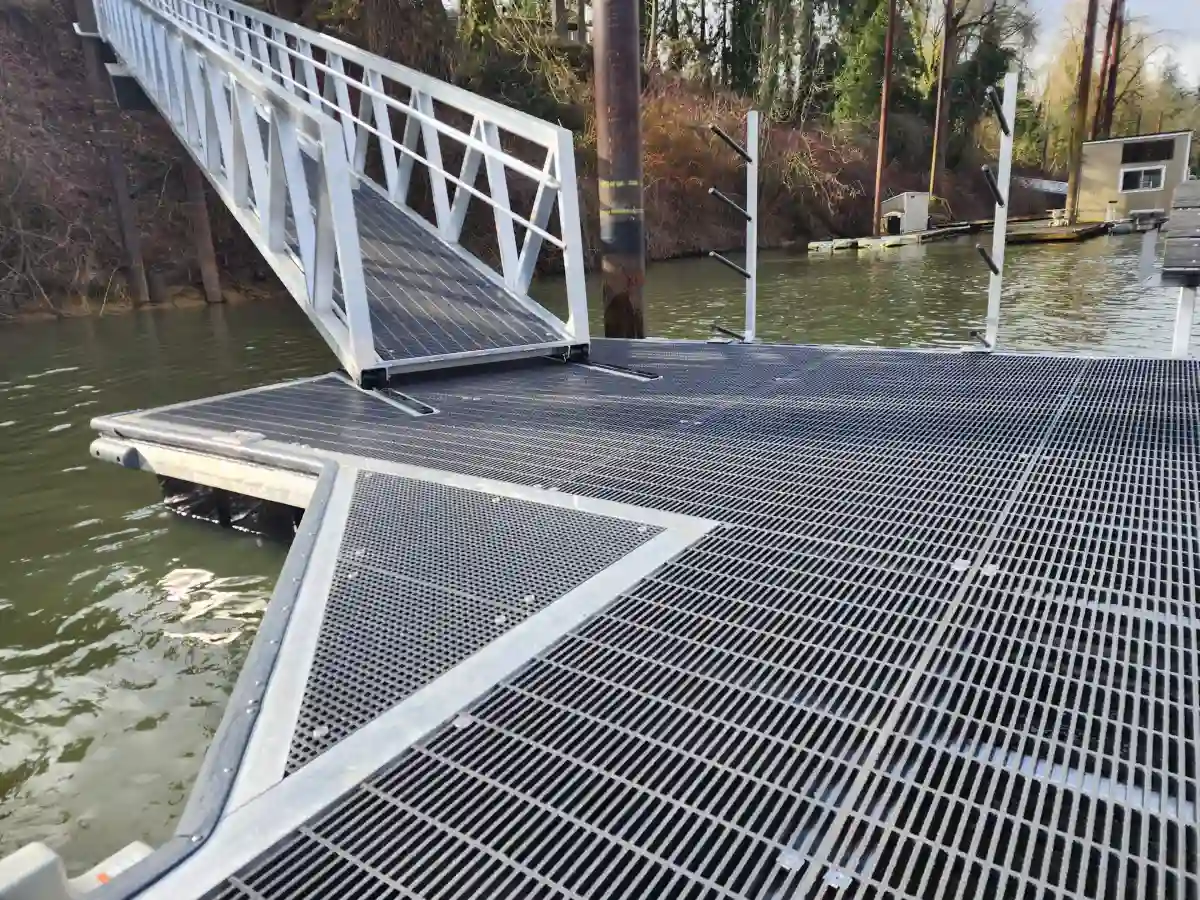
In applications where corrosion is a concern — such as wastewater treatment, chemical processing, marine environments, and food processing — fiberglass often outperforms steel over the lifecycle of the installation, even if the initial load rating is lower. The comparison is not just about peak strength — it is about the right strength for the right environment.
For situations requiring both high load capacity and corrosion resistance, pultruded fiberglass grating with deep bearing bars (2–3 inch depth) can approach steel-equivalent load ratings while offering the corrosion resistance of FRP. This makes it a compelling alternative in many heavy industrial applications.
Installation Best Practices for Maximum Load Performance
Proper fiberglass grating installation is critical to achieving the rated load performance. Even the highest-rated grating panel will underperform if not installed correctly. Follow these best practices to ensure your FRP grating delivers its full rated strength:
- Follow manufacturer support spacing — Always install grating on supports spaced according to the manufacturer's load tables. Wider spacing than recommended can reduce effective load capacity by 50% or more.
- Use proper bearing length — Each panel should bear on supports by at least 1 inch (25 mm). Insufficient bearing can cause edge crushing or panel dislodgment under load.
- Secure with hold-down clips — Use corrosion-resistant hold-down clips or saddle clips at every support intersection. This prevents lateral movement and maintains panel alignment under dynamic loads.
- Cut carefully — When cutting panels to fit, avoid creating stress concentrations. Use a diamond blade saw and seal cut edges with resin to prevent moisture ingress.
- Consider thermal expansion — FRP grating expands and contracts with temperature changes. Leave a small gap (1/8 to 1/4 inch) between panels and around obstructions.
- Inspect after installation — Check for tightness of all fasteners and verify that panels sit flat on all supports. Any rocking or unevenness indicates an installation problem that will affect load distribution.
Poor fiberglass grating installation is the leading cause of premature failure. Investing time in correct installation ensures your grating achieves its rated performance and provides decades of reliable service.
Choosing the Right Fiberglass Grating Supplier
Selecting the right partner is just as important as selecting the right product. Experienced fiberglass grating suppliers provide more than just a product catalog — they offer engineering support, load testing data, and application-specific recommendations.
When evaluating potential fiberglass grating suppliers, consider the following criteria:
- Load testing documentation — Reputable suppliers provide certified load tables for every product configuration. Ask for third-party test reports that verify the claimed load ratings.
- Engineering support — Look for suppliers who employ structural engineers who can help you calculate load capacity for your specific span, support configuration, and load type.
- Resin expertise — A knowledgeable supplier can recommend the right resin system for your environment (polyester, vinyl ester, phenolic) and explain how the choice impacts strength.
- Quality certifications — Look for ISO 9001 certification, NAAMM membership, and compliance with ASTM standards. These indicate consistent manufacturing quality.
- Custom fabrication — If your project requires non-standard panel sizes, cutouts, or configurations, choose a supplier who offers precision fabrication services.
The best fiberglass grating suppliers view themselves as engineering partners, not just vendors. They help you navigate load requirements, installation challenges, and long-term performance considerations to deliver the optimal solution for your application.
Conclusion
Understanding fiberglass grating load capacity is essential for any industrial flooring project. From the type of resin and glass reinforcement to the span between supports and the manufacturing process — every factor plays a role in determining how much weight your grating can safely carry.
Here are the key takeaways:
- Load capacity depends on type (molded vs. pultruded), depth, resin, glass content, span, and support configuration.
- Molded grating offers 100–400 psf for moderate-duty applications. Pultruded grating handles 400–1,000+ psf for heavy industrial use.
- Yes, load capacity varies by resin type, but the difference is typically small — focus more on bar geometry and reinforcement pattern.
- Industry standards like NAAMM FBG-570 and ASTM D3841 provide reliable frameworks for comparing products.
- When comparing to steel, FRP grating offers lower absolute strength but superior corrosion resistance, lighter weight, and lower lifecycle costs.
- Proper fiberglass grating installation is non-negotiable — incorrect mounting is the most common cause of load-related failures.
- Work with reputable fiberglass grating suppliers who provide certified load data and engineering support.
Ready to specify the right FRP grating for your project? Consult with qualified fiberglass grating suppliers who can provide load tables specific to your application and help you calculate the right load rating for your exact configuration. With the right product and proper installation, FRP grating delivers safe, reliable performance for decades.