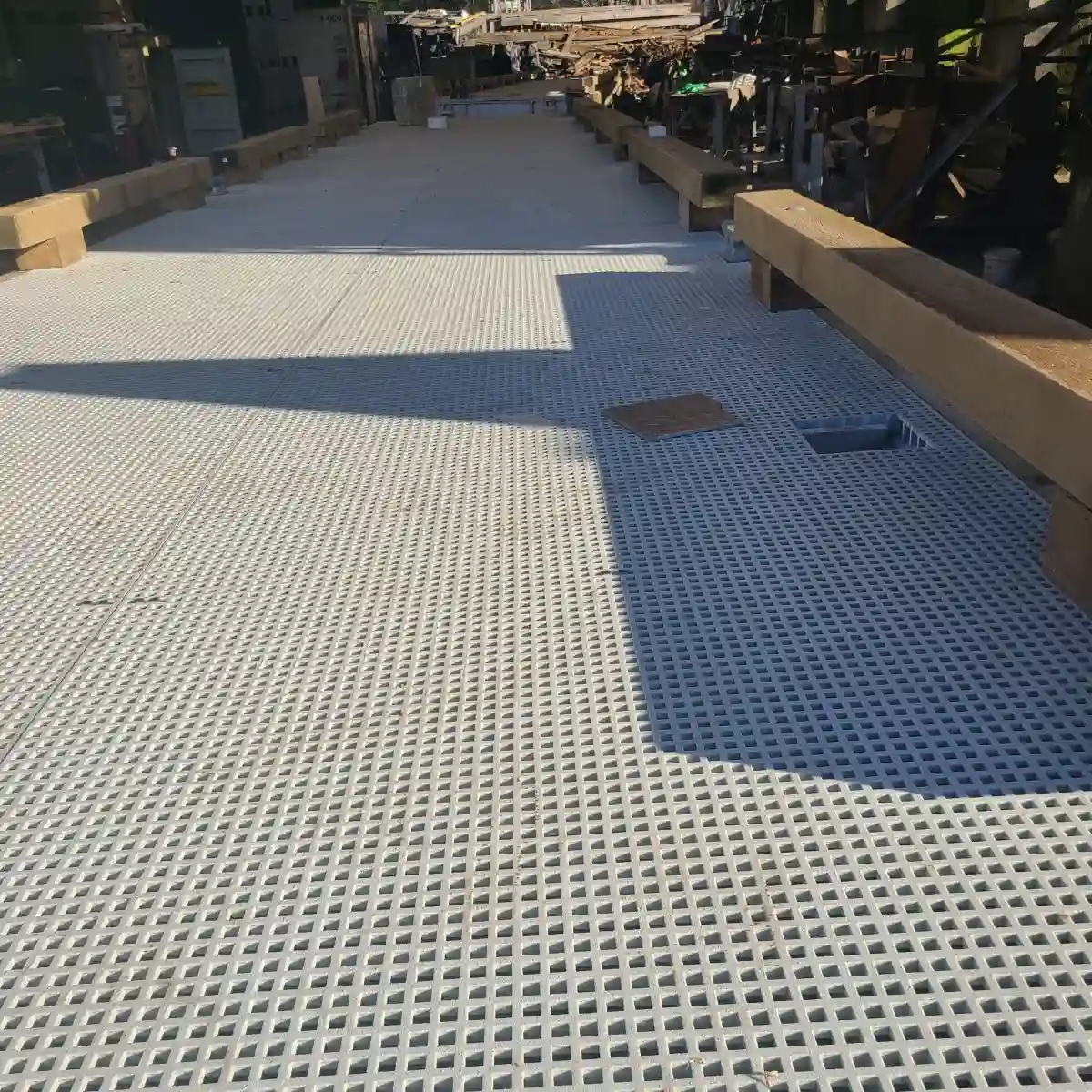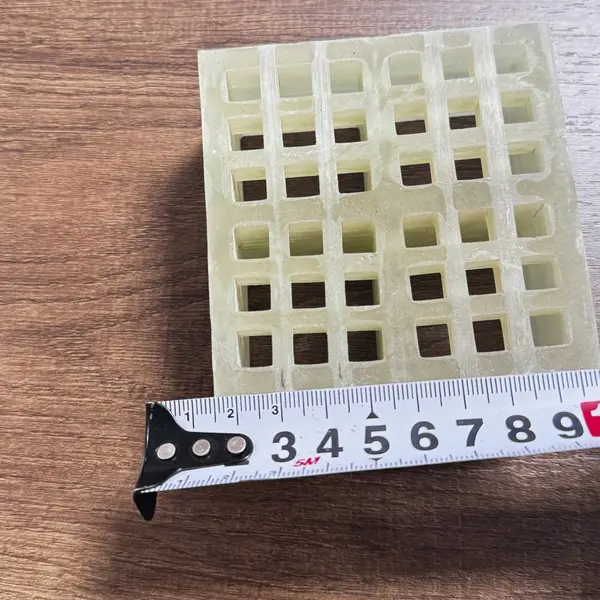
Introduction
When designing industrial flooring, walkways, or platform systems, one of the most critical documents an engineer must understand is the heavy duty FRP grating load table. These tables are the technical foundation for selecting the right grating for any application, providing essential data on load capacity, span ratings, deflection limits, and safety factors. Without properly interpreting these tables, structural failures, overspending, or underperformance become real risks.
FRP (Fiberglass Reinforced Plastic) grating has become a go-to solution across chemical plants, offshore platforms, wastewater treatment facilities, and heavy industrial settings due to its corrosion resistance, high strength-to-weight ratio, and long service life. But choosing the wrong grating type or thickness for your load requirements can compromise safety and durability. That is where load tables come in — they translate mechanical properties into actionable engineering data.
This comprehensive guide covers everything you need to know about heavy duty FRP grating load tables: what they are, how to read them, how they differ from standard grating tables, and how to use them to select the optimal grating for your project. Whether you are a structural engineer, plant manager, or procurement specialist, this guide will give you the confidence to make informed decisions based on real load data.
What Is a Heavy Duty FRP Grating Load Table?
A heavy duty FRP grating load table is a standardized engineering reference chart that lists the maximum allowable loads for specific grating configurations at various support spans. These tables are typically published by manufacturers and present data in a grid format, correlating span (the distance between supports), grating thickness, bar spacing, and resin type with corresponding load ratings.
The load table serves two primary purposes. First, it provides design engineers with the data needed to verify that a chosen grating panel can safely support expected loads — both uniform loads (distributed weight across the entire surface) and concentrated loads (point loads from equipment wheels, forklifts, or foot traffic). Second, it ensures consistency across the industry by following standardized testing protocols such as ANSI/NAAMM or ASTM D3841, allowing specifiers to compare products from different manufacturers on an apples-to-apples basis.
Typical entries in a heavy duty FRP grating load table include:
- Span (inches or mm): The center-to-center distance between support members.
- Grating thickness: Common options range from 1" (25 mm) to 2" (50 mm) for heavy duty grades.
- Load capacity (psf or kPa): Maximum uniform distributed load the grating can support.
- Concentrated load (lbs or kg): Maximum point load at mid-span.
- Deflection (inches or mm): The amount of bending under the rated load, typically limited to L/100 or L/150 of the span.
- Safety factor: Usually 1.5:1 to 3:1 depending on application and resin system.
For heavy duty applications, these tables become especially important because the loads involved — from forklifts, storage racks, and industrial equipment — can reach several hundred pounds per square foot. Understanding the relationship between span, thickness, and load capacity is essential for safe and cost-effective design.
How to Read Heavy Duty FRP Grating Load Tables
Reading a heavy duty FRP grating load table correctly is a skill every design engineer should master. Although the format can vary slightly between manufacturers, most load tables follow a consistent logical structure. Once you understand the columns and rows, the data becomes straightforward to interpret.
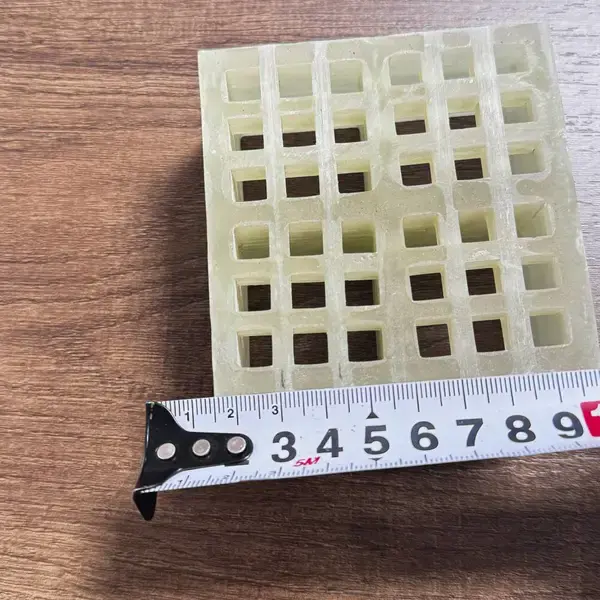
Start by locating the row that matches your grating configuration — typically defined by thickness and bar spacing. For heavy duty panels, common configurations include 1-1/2" (38 mm) and 2" (50 mm) thickness with 1-3/8" or 1-3/16" center-to-center bar spacing. Then scan horizontally across the row to find the span (support spacing) that matches your design. The intersection of that row and column gives you the maximum allowable load for that combination, along with the corresponding deflection value.
Most manufacturers color-code or separate their load tables by resin type — polyester, vinyl ester, or phenolic — because the resin system significantly affects mechanical properties. For example, vinyl ester heavy duty FRP grating typically offers higher load capacity than standard polyester grating of the same thickness due to its superior strength and stiffness.
Key interpretation tips:
- Always check the safety factor stated at the top of the table. A 2:1 safety factor means the ultimate failure load is twice the published allowable load.
- Deflection values are usually listed as a ratio of the span (e.g., L/100). A 24" span with L/100 deflection yields a maximum deflection of 0.24".
- Some tables list loads in pounds per square foot (psf) for uniform loads and pounds (lbs) for concentrated loads — do not confuse the two.
- When comparing tables from different manufacturers, verify that the testing standards match. Tables tested per ASTM D3841 may differ slightly from those using NAAMM protocols.
- The span in a heavy duty FRP grating load table is typically measured center-to-center of the supporting structure, not the clear span.
Understanding Load Types: Uniform Load vs. Concentrated Load
Every heavy duty FRP grating load table distinguishes between two fundamental load types: uniform distributed load (UDL) and concentrated load. Understanding the difference is critical because your application may subject the grating to one or both types simultaneously.
Uniform Load (UDL): This refers to a load that is evenly distributed across the entire surface of the grating panel. Examples include a layer of stored materials, snow accumulation, water pooling, or the weight of a concrete topping. UDL is expressed in pounds per square foot (psf) or kilopascals (kPa). In a load table, the UDL rating tells you the maximum evenly distributed weight the grating can support at a given span. For heavy duty applications such as equipment platforms or mezzanine flooring, UDL ratings commonly range from 100 psf to over 500 psf depending on thickness and span.
Concentrated Load: A concentrated load — also called a point load — is applied at a single point on the grating surface. Common examples include forklift wheels, machinery feet, storage rack legs, or a person standing on one spot. Concentrated loads are expressed in pounds (lbs) or kilograms (kg). Because all the force is applied at one location, concentrated loads create higher localized stress than the same total weight distributed evenly. Most heavy duty FRP grating load tables include concentrated load ratings at mid-span, which is the worst-case position for bending stress.
Combined Loading: In real-world industrial environments, grating often experiences combined loading — both uniform and concentrated loads acting simultaneously. For example, a forklift (concentrated wheel load) driving across a platform covered with stored goods (uniform load). When this occurs, engineers must verify that neither the uniform load alone nor the concentrated load alone exceeds the published ratings. If both are present, the sum of their utilization ratios (actual load ÷ rated load) should not exceed 1.0.
Span, Deflection, and Safety Factors
Three interconnected parameters govern every entry in a heavy duty FRP grating load table: span, deflection, and safety factor. Understanding their relationship is the key to proper grating selection.
Span: The span is the center-to-center distance between the parallel support members (beams or joists) that carry the grating panel. In load tables, span is typically listed in inches or millimeters across the top row of the grid. As the span increases, the load capacity decreases — and this relationship is nonlinear. Doubling the span can reduce the load capacity by approximately 75% due to the cubic relationship between span length and bending moment. Common spans for heavy duty FRP grating range from 12" to 48" (300 mm to 1200 mm), with most industrial applications falling between 18" and 36".
Deflection: Deflection refers to how much the grating bends under load. While FRP grating is designed to flex elastically (returning to its original shape when the load is removed), excessive deflection can be unsafe and uncomfortable for foot traffic. Load tables typically limit deflection to a fraction of the span — commonly L/100 (span divided by 100) or L/150. For a 24" span with L/100 deflection, the maximum allowable bend is 0.24". Stiffer applications such as crane walkways or emergency egress routes may require L/200 or stricter. When selecting from a heavy duty FRP grating load table, always check the deflection limit column — stiffer deflection limits will reduce the published load capacity for the same span.
Safety Factor: The safety factor (SF) is the ratio between the ultimate (failure) load and the allowable (published) load. For heavy duty FRP grating, the safety factor is typically stated at the top of the load table and commonly ranges from 1.5:1 to 3:1. Applications involving human occupancy or critical infrastructure usually require a minimum safety factor of 2:1. The safety factor accounts for manufacturing tolerances, load eccentricity, dynamic effects, and long-term creep. When comparing products, always normalize the load data to the same safety factor — a grating rated at 300 psf with SF 1.5 is not equivalent to one rated at 300 psf with SF 2.0.
Heavy Duty vs. Standard FRP Grating Load Tables
One of the most common questions engineers ask is: what is the difference between a standard load table and a heavy duty FRP grating load table? While the format may look similar, the underlying specifications differ significantly in several key areas.
Thickness and Bar Dimensions: Standard FRP grating typically uses thicknesses of 1" (25 mm) with bearing bar depths suited for light pedestrian traffic, mezzanines, and architectural applications. Heavy duty grating, by contrast, starts at 1-1/2" (38 mm) and commonly goes up to 2" (50 mm) or even 3" (75 mm) for extreme loads. The bearing bars in heavy duty panels are also wider — typically 1-3/8" rather than the 1-1/4" or 1" bars found in standard panels.
Load Capacity Range: Standard FRP grating load tables typically list capacities from 50 psf to 200 psf for uniform loads at moderate spans. A heavy duty FRP grating load table, by comparison, will show capacities from 200 psf to over 800 psf for equivalent spans. For concentrated loads, heavy duty grades can withstand point loads of 2,000 lbs or more at mid-span, while standard grades might cap at 800–1,000 lbs.
Resin Systems: While standard grating commonly uses general-purpose polyester resin, heavy duty grating is often available in premium resin systems — isophthalic polyester, vinyl ester, or phenolic — which provide enhanced mechanical strength, higher temperature resistance, and superior chemical compatibility. These resin choices directly affect the values published in the load table.
Applications: Standard grating load tables are suitable for catwalks, footbridges, and light platform flooring. Heavy duty tables apply to heavy industrial flooring, truck access ramps, offshore platform decks, chemical process areas, and any environment where equipment loads or high-traffic conditions demand maximum structural performance.
Cost Considerations: Heavy duty grating costs more per square foot due to the increased material volume, premium resins, and larger bearing bars. However, using a heavy duty FRP grating load table to optimize your selection — matching span, thickness, and material to the actual load requirements — can reduce overall project cost by avoiding over-engineering or the need for additional support beams.
Load Capacity by Thickness and Resin Type
The load capacity values you see in a heavy duty FRP grating load table are directly influenced by two primary variables: the thickness of the grating panel and the resin system used in manufacturing. Understanding how these factors affect performance helps you select the most cost-effective configuration for your specific load requirements.
Load Capacity by Thickness:
| Thickness | Typical Span Range | Uniform Load Capacity (psf) | Concentrated Load (lbs) |
|---|---|---|---|
| 1" (25 mm) | 12" – 18" | 100 – 200 | 500 – 800 |
| 1-1/2" (38 mm) | 18" – 30" | 200 – 400 | 800 – 1,500 |
| 2" (50 mm) | 24" – 36" | 300 – 600 | 1,500 – 2,500 |
| 2-1/2" (63 mm) | 30" – 42" | 400 – 800 | 2,000 – 3,500 |
| 3" (75 mm) | 36" – 48" | 500 – 1,000+ | 3,000 – 5,000 |
Note: Values are representative ranges. Always consult the specific manufacturer's heavy duty FRP grating load table for precise ratings.
Load Capacity by Resin Type:
While thickness primarily governs the moment of inertia and bending stiffness, the resin system determines the material's ultimate strength, modulus of elasticity, and long-term creep behavior. Here is how common resin types affect load table values:
- Polyester (Orthophthalic): The baseline resin. Offers moderate strength and corrosion resistance. Suitable for indoor or mild environments. Lowest load capacity among the three major types for a given thickness.
- Isophthalic Polyester: ~15-25% higher mechanical strength than orthophthalic. Better chemical resistance. Common for heavy duty industrial applications where moderate chemical exposure is expected.
- Vinyl Ester: ~30-40% higher strength and stiffness than standard polyester. Excellent corrosion resistance against acids, alkalis, and solvents. Vinyl ester heavy duty FRP grating load tables show the highest load ratings at any given thickness and span.
- Phenolic: Specialized for fire-resistant applications. Lower smoke generation and flame spread. Load capacity is comparable to polyester but with superior fire performance.
When consulting a load table, always verify which resin system the data applies to. Some manufacturers publish separate tables for each resin, while others provide a single table with adjustment factors for different resin choices.
How to Choose the Right Heavy Duty FRP Grating Based on Load Tables
Selecting the right grating for your project requires more than just picking the thickest panel available. The most efficient approach uses a heavy duty FRP grating load table to match the grating configuration precisely to your design loads, support spacing, and environmental conditions. This section outlines the key factors you need to evaluate before turning to the load table.
Define Your Load Requirements: Start by calculating the maximum loads your grating will experience. Consider dead loads (the weight of the grating itself plus any attachments), live loads (people, equipment, stored materials), and environmental loads (wind, snow, seismic). For heavy duty applications, live loads typically dominate — forklift traffic can impose wheel loads of 3,000–6,000 lbs per axle, and storage racks can concentrate several thousand pounds on individual bearing bars.
Determine Your Support Span: The span is determined by your structural steel layout. In new construction, you have flexibility to optimize the span for the grating. In retrofit projects, the existing beam spacing is fixed. Remember the nonlinear relationship between span and capacity — increasing the span from 24" to 36" can cut load capacity by more than half. If your loads are high, consider reducing the span by adding intermediate supports.
Identify Environmental Factors: The operating environment affects both the required safety factor and the appropriate resin system. For corrosive chemical environments, vinyl ester resin may be mandatory regardless of load requirements. For fire-rated applications such as offshore platforms, phenolic resin with documented fire-smoke-toxicity (FST) ratings may be required by code.
Check Deflection Criteria: Different applications have different deflection limits. Pedestrian walkways can tolerate L/100, while crane rails or precision equipment platforms may require L/200 or stricter. Your heavy duty FRP grating load table will list deflection at the rated load — make sure this meets your project specifications, not just the ultimate load capacity.
Step-by-Step Selection Process for Industrial Applications
Once you have defined your project requirements (loads, span, environment, deflection criteria), follow this step-by-step process to select the right grating using a heavy duty FRP grating load table:
- Determine the governing load case. Calculate the total uniform load (psf) and the maximum concentrated load (lbs) separately. Factor in all applicable load combinations per ASCE 7 or your local building code.
- Establish the support span. Measure the center-to-center distance between structural supports. If you have flexibility, target a span in the 18"–30" range for economical heavy duty grating selection.
- Select a candidate thickness. Start with 1-1/2" as a baseline for heavy duty applications. If the load table shows insufficient capacity at your span, move up to 2" or 2-1/2".
- Look up the uniform load capacity. On the load table, find the intersection of your thickness/candidate configuration and your span. The published value must exceed your calculated uniform load by at least the required safety factor.
- Verify concentrated load capacity. Check the concentrated load column for the same configuration and span. Ensure the published point load exceeds the heaviest single wheel or leg load in your application.
- Check deflection. Confirm that the deflection at the rated load meets your project requirements. If not, consider a stiffer configuration (greater thickness, tighter bar spacing) or reduce the span.
- Apply resin and environmental adjustments. If your environment requires vinyl ester or phenolic resin, use the appropriate load table. Do not mix tables across resin types.
- Document your selection. Record the specific load table reference, grating configuration, span, load capacities, and safety factor for your engineering documentation.
By following this process systematically, you reduce the risk of under-specification while avoiding the cost premium of over-engineered solutions.
Practical Examples: Calculating Load from Load Tables
Applying theoretical knowledge to real-world scenarios solidifies your understanding of heavy duty FRP grating load tables. Below are two worked examples demonstrating how to select grating for common industrial applications.
Example 1: Forklift Aisle Platform
Scenario: A manufacturing plant needs heavy duty FRP grating for a forklift aisle on a mezzanine. The forklift has a maximum axle load of 8,000 lbs with pneumatic tires. Each wheel load is approximately 2,000 lbs (concentrated load). The mezzanine beams are spaced at 24" (610 mm) center-to-center. The design requires a safety factor of 2:1 and deflection not exceeding L/150.
Solution using the load table:
- Target thickness: 1-1/2" (38 mm) as starting point for heavy duty.
- Check the load table: At 24" span, a 1-1/2" thick vinyl ester grating with 1-3/8" bar spacing shows a concentrated load rating of 2,200 lbs at mid-span with SF 2:1.
- Since 2,200 lbs > 2,000 lbs wheel load, the concentrated load check passes.
- Check uniform load: The same configuration supports 375 psf uniform load — more than adequate for the forklift plus any stored materials.
- Deflection check: At the rated load, deflection is L/150 — meeting the requirement.
- Verdict: 1-1/2" vinyl ester heavy duty FRP grating at 24" span is suitable.
Example 2: Chemical Storage Platform
Scenario: A chemical processing facility needs a storage platform for 55-gallon drums. Each drum weighs approximately 500 lbs. The drums are stored on pallets, creating a uniform load of approximately 300 psf over the platform. Beam spacing is 30" (762 mm). The environment involves exposure to hydrochloric acid fumes, requiring vinyl ester resin. Deflection limit is L/100.
Solution using the load table:
- Target thickness: 2" (50 mm) to handle the extended span of 30".
- Check the vinyl ester load table: At 30" span, a 2" heavy duty grating with 1-3/8" bar spacing supports 425 psf uniform load with SF 2:1.
- Since 425 psf > 300 psf required, the design passes.
- Check concentrated load: The grating supports 1,800 lbs concentrated — each drum's footprint distributes weight across multiple bearing bars, so point loading is not a concern.
- Deflection at rated load is L/100 — acceptable for storage platform use.
- Verdict: 2" vinyl ester heavy duty FRP grating at 30" span is appropriate.
These examples illustrate how to systematically apply load table data to real design scenarios. Always verify your selection against the manufacturer's published heavy duty FRP grating load table, as actual values vary by product line and production method.
Conclusion
Understanding heavy duty FRP grating load tables is an essential skill for any engineer or specifier working with industrial flooring, platforms, and walkways. These tables provide the technical foundation for safe and cost-effective grating selection, translating complex mechanical properties into clear, actionable design data.
Throughout this guide, we have covered the key aspects you need to know:
- What a heavy duty FRP grating load table is and why it matters for industrial applications.
- How to read and interpret load tables, including uniform loads, concentrated loads, span, deflection, and safety factors.
- The critical differences between heavy duty and standard FRP grating load tables — including thickness ranges, load capacities, and resin systems.
- How thickness and resin type directly influence the values in load tables.
- A step-by-step selection process to match grating configuration to your project requirements.
- Real-world examples demonstrating how to apply load table data in practice.
When sourcing heavy duty FRP grating for your next project, always request the manufacturer's current load table for your specific product configuration. Reputable manufacturers publish load tables that comply with ANSI/NAAMM or ASTM standards and clearly state the testing protocols, safety factors, and resin systems used. If a manufacturer cannot provide a certified load table for their product, consider that a red flag.
By mastering the information in this guide, you are equipped to make informed decisions that balance safety, performance, and cost — ensuring your heavy duty FRP grating installation performs reliably for decades.