Introduction
Fiberglass grating panels are a versatile and durable flooring solution widely used across industrial, commercial, and infrastructure projects. Made from fiberglass-reinforced plastic (FRP), they offer exceptional strength-to-weight ratios, corrosion resistance, and long service life in demanding environments. Whether you need safe walkways for a chemical plant, trench covers for a wastewater facility, or lightweight platforms for an offshore rig, these panels deliver where steel or aluminum fall short.
This guide covers everything you need to know — from sizes and load capacities to pricing, installation, and applications. It also answers common questions including how they compare to aluminum and what causes cracking.
What Are Fiberglass Grating Panels?
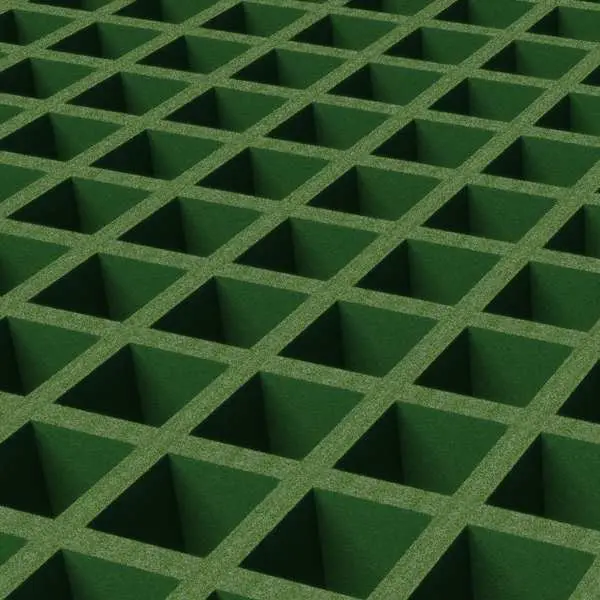
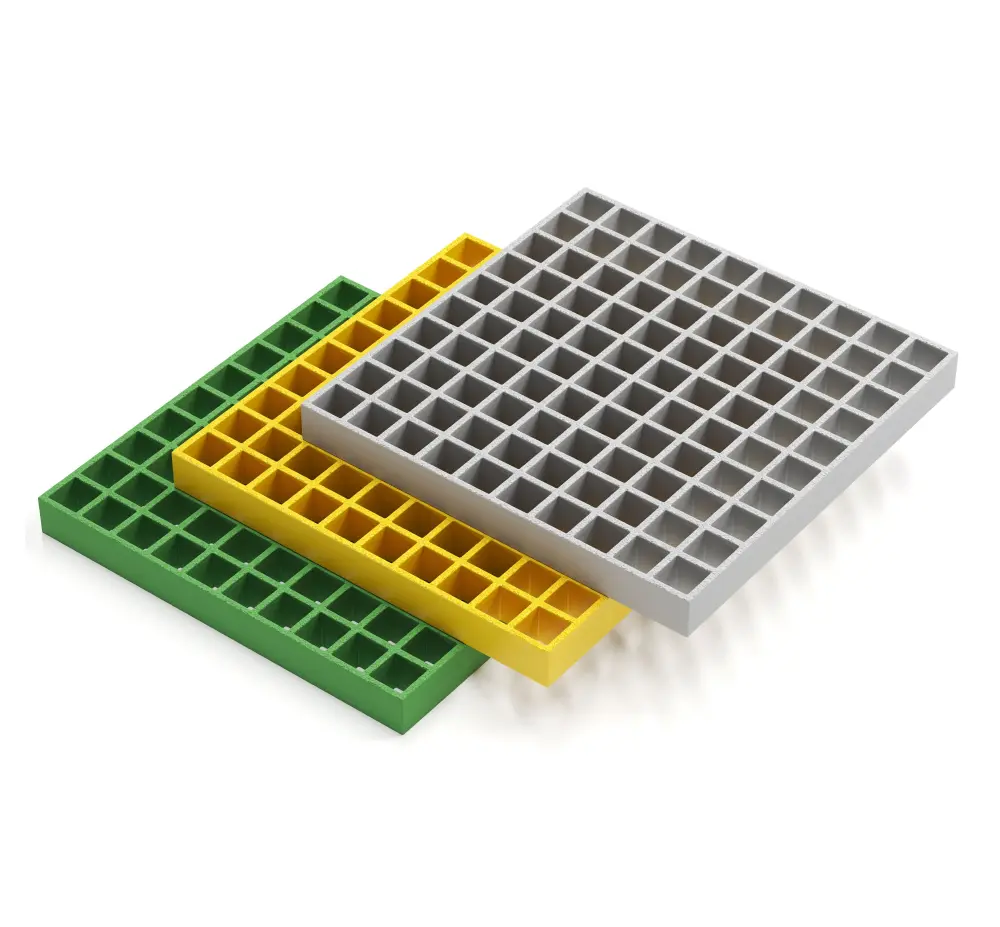
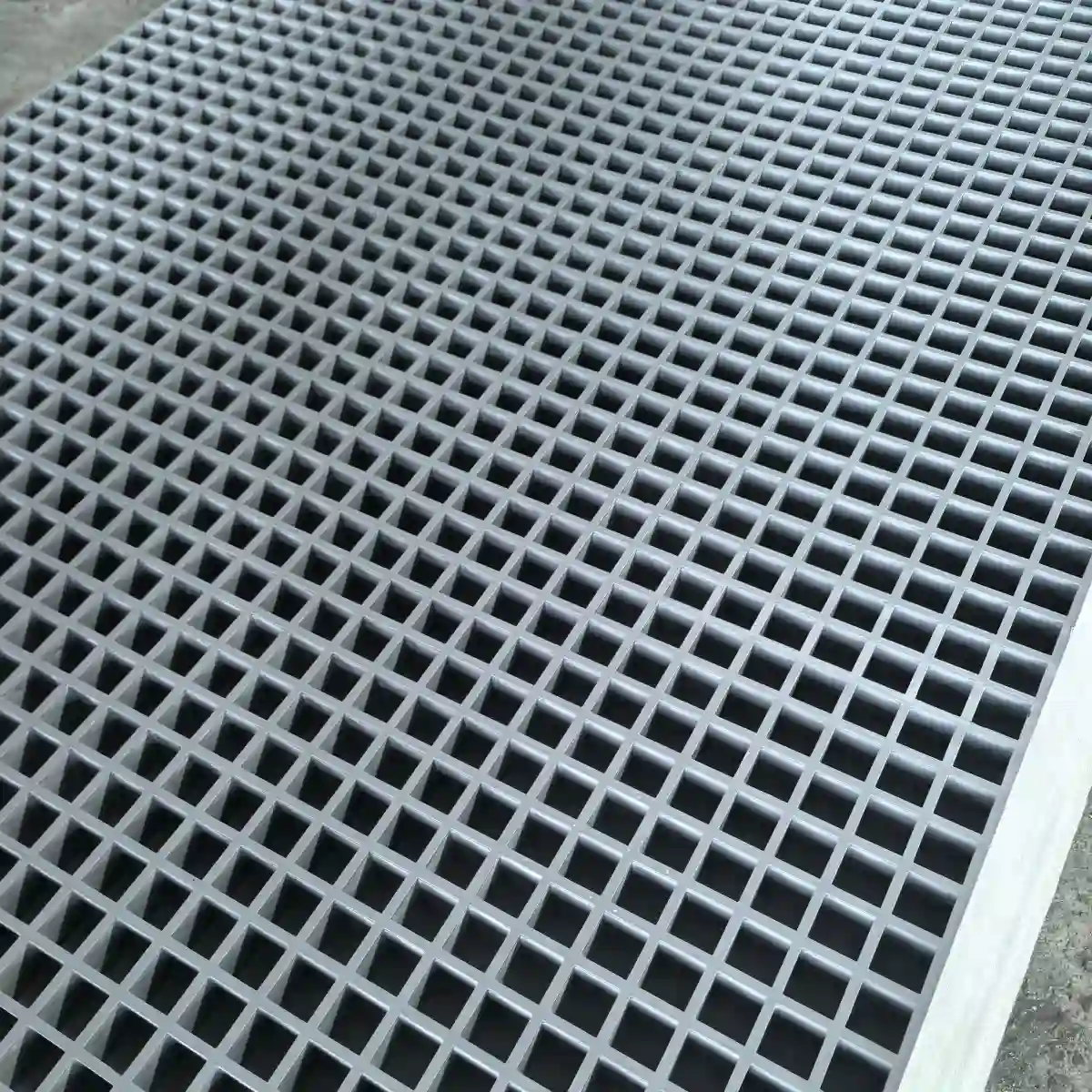
These panels are structural grid panels made by combining fiberglass reinforcements with a thermosetting resin matrix — typically polyester, vinyl ester, or phenolic resin. The result is a lightweight yet strong panel that resists corrosion, chemicals, moisture, and UV degradation. Unlike steel, FRP panels do not rust, and unlike aluminum, they do not conduct electricity.
There are two main types:
- Molded grating: Made in a heated press. Uniform grid pattern, excellent impact resistance. Used for general industrial flooring, catwalks, and trench covers.
- Pultruded grating: Made by pulling fiberglass through a resin bath and die. Directional strength along the panel length, bar-and-cross-rod design. Used for heavy-load platforms, mezzanines, and bridge decking.
Both types share key advantages: about 75% lighter than steel, no painting required, 20+ year service life, non-conductive and non-magnetic.
Standard Sizes and Dimensions
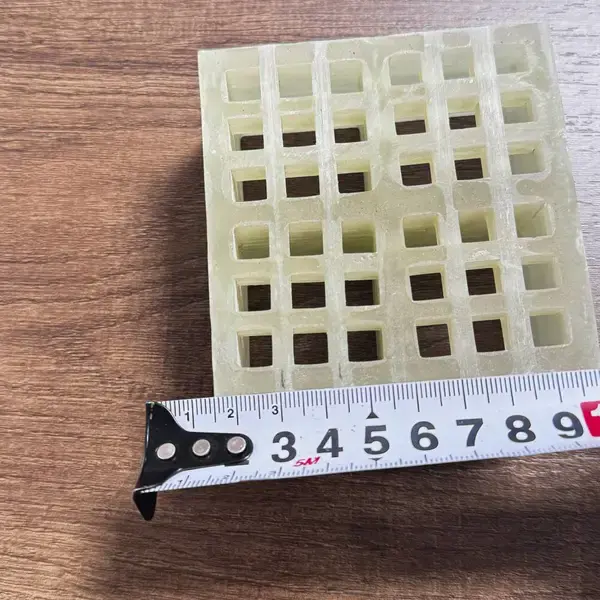
These products are available in a wide range of standard sizes and custom dimensions. Whether you need 4 ft × 8 ft sheets or longer lengths, knowing the available fiberglass grating panels sizes helps you match the product to your application while the fiberglass grating panels weight affects shipping and structural support requirements. Common fiberglass grating panels sizes range from small 1 ft × 4 ft panels up to full 4 ft × 24 ft sheets.
Standard Panel Dimensions
| Type | Common Sizes | Thickness |
|---|---|---|
| Molded grating | 4 ft × 8 ft, 4 ft × 12 ft | 1.0″, 1.5″, 2.0″ |
| Pultruded grating | 4 ft × 8 ft up to 4 ft × 24 ft | 1.0″, 1.5″, 2.0″ |
| Heavy-duty pultruded | 2–4 ft × 8–12 ft | 2.0″, 2.5″, 3.0″ |
Mesh Opening Options
Standard mesh sizes include 1.5″ × 1.5″ (65% open area), 1.0″ × 1.0″ (55%), and 2.0″ × 2.0″ (75%).
Weight
The fiberglass grating panels weight varies by type and thickness — a 1.5″ molded panel weighs 3.5–4.5 lb/ft² and pultruded runs 3.0–4.0 lb/ft². Steel grating of similar strength weighs 10–15 lb/ft², making FRP a lighter option.
Fiberglass Grating Panels Price and Cost Factors
The fiberglass grating panels price depends on material type, thickness, resin system, and quantity. On average, the fiberglass grating panels price ranges between $15 and $45 per square foot.
| Type | Price per ft² |
|---|---|
| Molded grating (polyester) | $15 – $25 |
| Pultruded grating (polyester) | $20 – $35 |
| Molded (vinyl ester) | $25 – $40 |
| Heavy-duty pultruded | $30 – $45 |
Key cost factors include resin type (vinyl ester costs 30–60% more than polyester), thickness (2.0″ costs 40–50% more than 1.0″), mesh size, order quantity (bulk saves 15–25%), and custom fabrication. While upfront costs exceed steel, total ownership is often lower due to zero maintenance and a 20–30 year lifespan.
Applications of Fiberglass Grating Panels
These panels are used across many industries thanks to their strength, corrosion resistance, and light weight.
Industrial Walkways and Catwalks
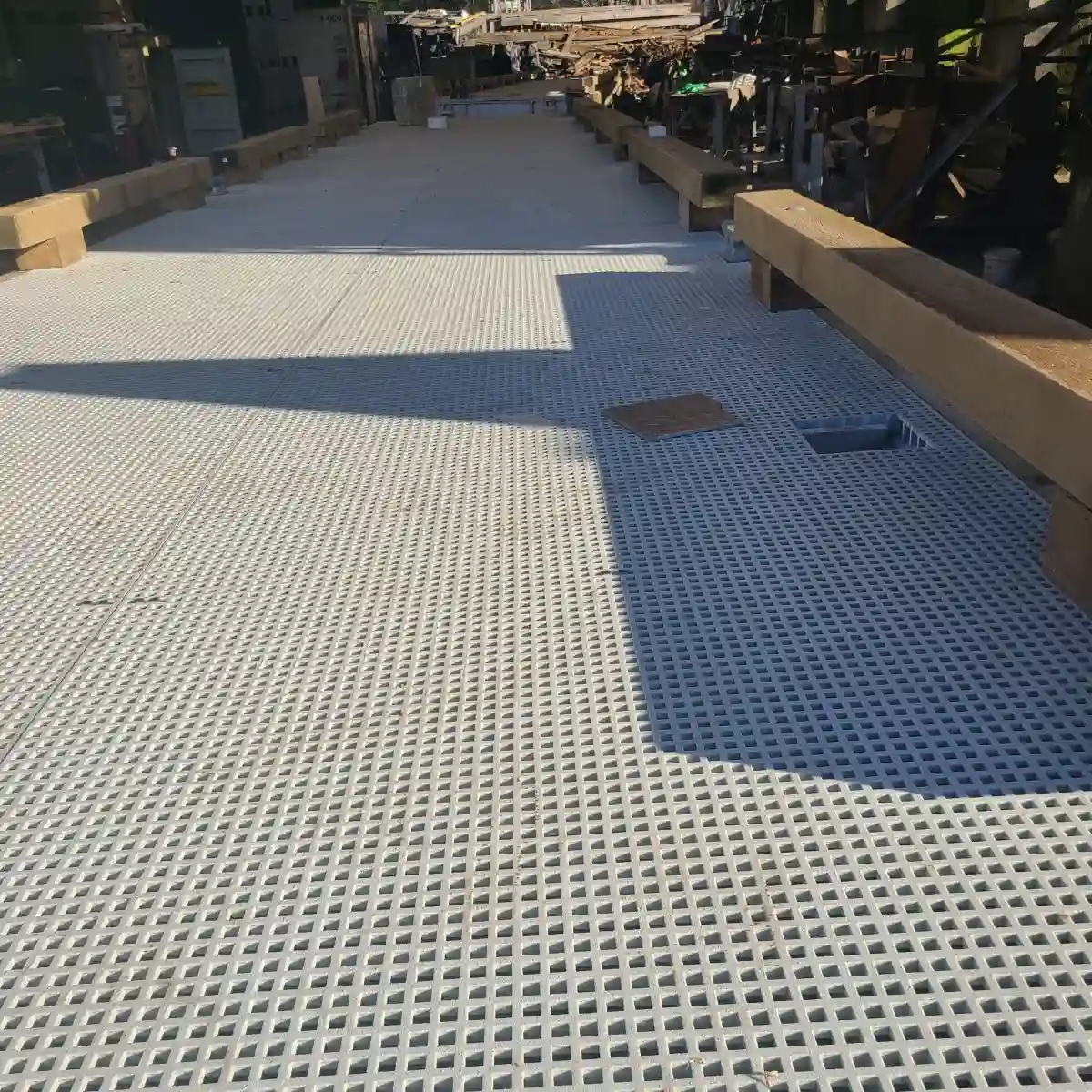
In factories and refineries, FRP panels provide safe, slip-resistant walkways that withstand chemicals and heavy traffic. Their non-conductive nature makes them ideal for electrical areas.
Trench Covers
Fiberglass grating panels for trench covers are lightweight, corrosion-resistant, and allow water to pass through while supporting pedestrian and vehicle loads. Typical thickness is 1.5″–2.0″ with standard mesh. These fiberglass grating panels for trench covers are particularly popular in wastewater and drainage applications.
Platforms
Fiberglass grating panels for platforms use pultruded construction for high strength-to-weight ratio, enabling longer spans. Standard specification is 2.0″ thickness with 1.5″ × 1.5″ or 2.0″ × 2.0″ mesh. These fiberglass grating panels for platforms are common in mezzanines and observation decks.
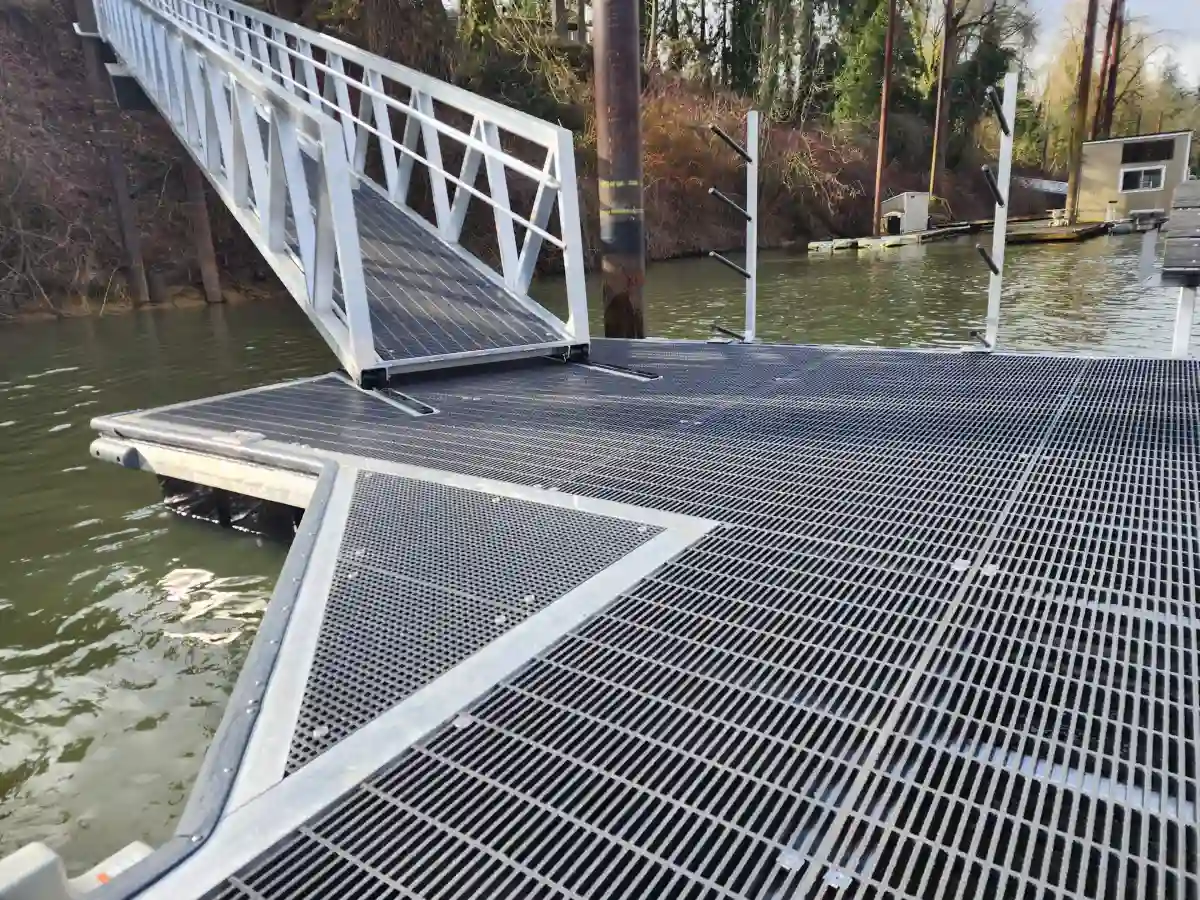
Marine, Food Processing, and Water Treatment
FRP panels resist saltwater corrosion on ships and oil rigs, withstand chemical sanitizers in food plants, and endure constant moisture and chlorine in water treatment facilities.
Load Capacity and Thickness Guide
Load capacity depends on panel type, thickness, resin, span distance, and support conditions.
Standard Load Ratings
| Type | Thickness | Span | Uniform Load | Concentrated Load |
|---|---|---|---|---|
| Molded | 1.0″ | 12″ | 500–800 psf | 600 lb |
| Molded | 1.5″ | 18″ | 400–600 psf | 1,000 lb |
| Molded | 2.0″ | 24″ | 300–500 psf | 1,500 lb |
| Pultruded | 1.5″ | 24″ | 400–700 psf | 1,200 lb |
| Pultruded | 2.0″ | 30″ | 350–600 psf | 2,000 lb |
How to Choose the Right Thickness
- Light traffic: 1.0″–1.5″ panels, spans up to 24″.
- Moderate industrial: 1.5″–2.0″ panels, spans 24″–30″.
- Heavy-duty: 2.0″–3.0″ pultruded panels. Always verify manufacturer load tables.
- Chemical environments: Choose thicker panels with vinyl ester or phenolic resin for better chemical barrier.
- Deflection: For critical applications, design to L/200 instead of L/100.
Fiberglass Grating Panels vs Aluminum Grating Panels
A common question is whether FRP or aluminum grating panels are better. Here is a comparison:
| Factor | Fiberglass Grating Panels | Aluminum |
|---|---|---|
| Corrosion resistance | Excellent — resists acids and alkalis | Good in air; poor in acids/alkalis |
| Electrical conductivity | Non-conductive | Conductive |
| Maintenance | Zero — no coating needed | Moderate — may need anodizing |
| Cost | $15–$45 per ft² | $18–$40 per ft² |
| Lifespan | 20–30 years | 15–25 years |
Choose fiberglass grating panels when: You need chemical resistance, electrical safety, or low maintenance. They are ideal for chemical plants, water treatment, and marine environments.
Choose aluminum when: You need non-sparking properties in dry environments or an all-metallic appearance.
For most industrial applications, FRP offers better long-term value.
How to Install Fiberglass Grating Panels
Installing these panels is straightforward and requires no welding. Here is a step-by-step guide.
Tools Needed
- FRP panels, measuring tape, circular saw with carbide blade
- Drill with carbide bits, stainless steel fasteners
- Dust mask, safety glasses, gloves
How to Cut Fiberglass Grating Panels to Size
Use a circular saw with a carbide-tipped blade. Cut with the finished side up. Always wear a respirator to avoid fiberglass dust. For cutouts, drill starter holes and use a jigsaw. Deburr all cut edges.
Installation Steps
- Measure supports and plan layout. Leave 1/8"–1/4" gaps between panels for expansion.
- Cut panels to size as needed.
- Drill holes 1/16" larger than fasteners, spaced 6"–12" along supports.
- Secure with stainless steel clips, bolts, and washers. For concrete, use expansion anchors.
- Inspect all fasteners and test the surface for stability.
Common Issues: Why Fiberglass Grating Panels Crack
While these panels are durable, improper use can lead to cracking or premature failure.
Why Do Panels Crack?
- Overloading: Installing panels too thin for the load or span. Always use load tables and select a panel rated for at least 1.5x your expected maximum load.
- Insufficient support: Supports too far apart for the panel thickness. Reduce spacing or increase thickness.
- Impact damage: Dropping heavy tools onto the panels. Use molded grating (more impact-resistant) in high-risk areas.
- Thermal stress: No expansion gaps. Leave 1/8"–1/4" between panels.
- Chemical attack: Wrong resin system for the environment. Verify polyester, vinyl ester, or phenolic compatibility.
- Improper cutting: Rough cuts create stress points. Always deburr edges.
Prevention Tips
- Follow manufacturer load and span recommendations.
- When in doubt, choose a thicker panel.
- Leave expansion gaps at all edges.
- Inspect annually for surface cracks.
Conclusion
Fiberglass grating panels are a proven, cost-effective solution for industrial flooring, walkways, platforms, and trench covers. Their corrosion resistance, light weight, and low maintenance make them superior to steel and aluminum in demanding environments.
Key takeaways: choose molded or pultruded based on impact vs. strength needs; match thickness and span to load requirements; account for total cost of ownership; and install with proper cutting, support, and expansion gaps. For detailed specifications, consult a qualified manufacturer.