Introduction
When industrial facilities face harsh chemical environments, extreme temperatures, or corrosive fumes, standard flooring materials often fail prematurely. Engineers and plant managers need a reliable solution that combines structural strength with exceptional chemical resistance. Vinyl ester resin FRP grating has emerged as the go-to choice for these demanding applications, offering a unique balance of durability, corrosion resistance, and cost-effectiveness.
This comprehensive guide explores everything you need to know about this advanced material — from its composition and manufacturing to its chemical resistance properties, industrial applications, and how it compares to polyester-based alternatives. Whether you are designing a new chemical processing facility or upgrading existing walkways, understanding the capabilities of vinyl ester FRP grating will help you make an informed purchasing decision.
Throughout this article, we answer the most common questions engineers ask: What makes vinyl ester resin different from standard polyester? Where should you use corrosion-resistant vinyl ester FRP grating? And most importantly, is the higher upfront cost justified by long-term performance? Read on to find the answers.
What Is Vinyl Ester Resin FRP Grating?
Vinyl ester resin FRP grating is a type of fiberglass reinforced plastic (FRP) grating manufactured using vinyl ester resin as the polymer matrix. Unlike standard polyester-based FRP grating, vinyl ester formulations are specifically engineered to provide superior resistance to acids, alkalis, solvents, and other aggressive chemicals commonly found in industrial environments.
The term FRP refers to a composite material made by combining a polymer resin matrix with reinforcing fibers — typically glass fibers. The resin binds the fibers together, protects them from environmental damage, and transfers loads between reinforcement layers. In the case of vinyl ester resin, the polymer backbone contains chemical structures that resist attack from corrosive substances, making the final grating product exceptionally durable in harsh conditions.
Composition and Manufacturing Process
FRP grating using vinyl ester resin is produced through two primary manufacturing processes: molded grating and pultruded grating. Each method yields distinct structural characteristics suited to different applications.
Molded Vinyl Ester FRP Grating
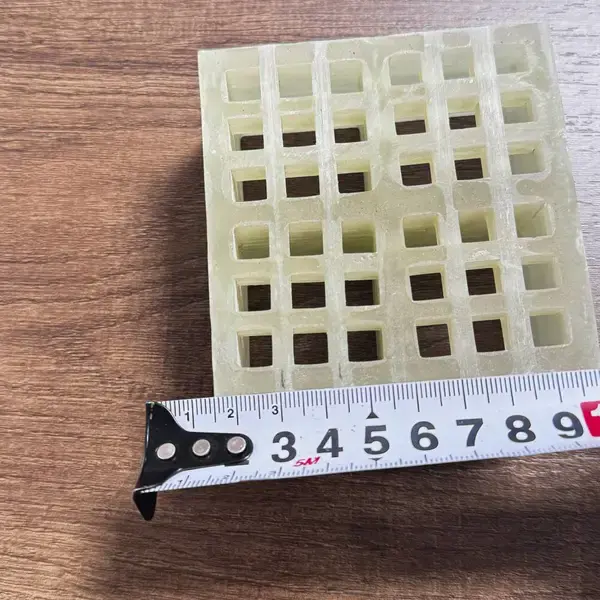
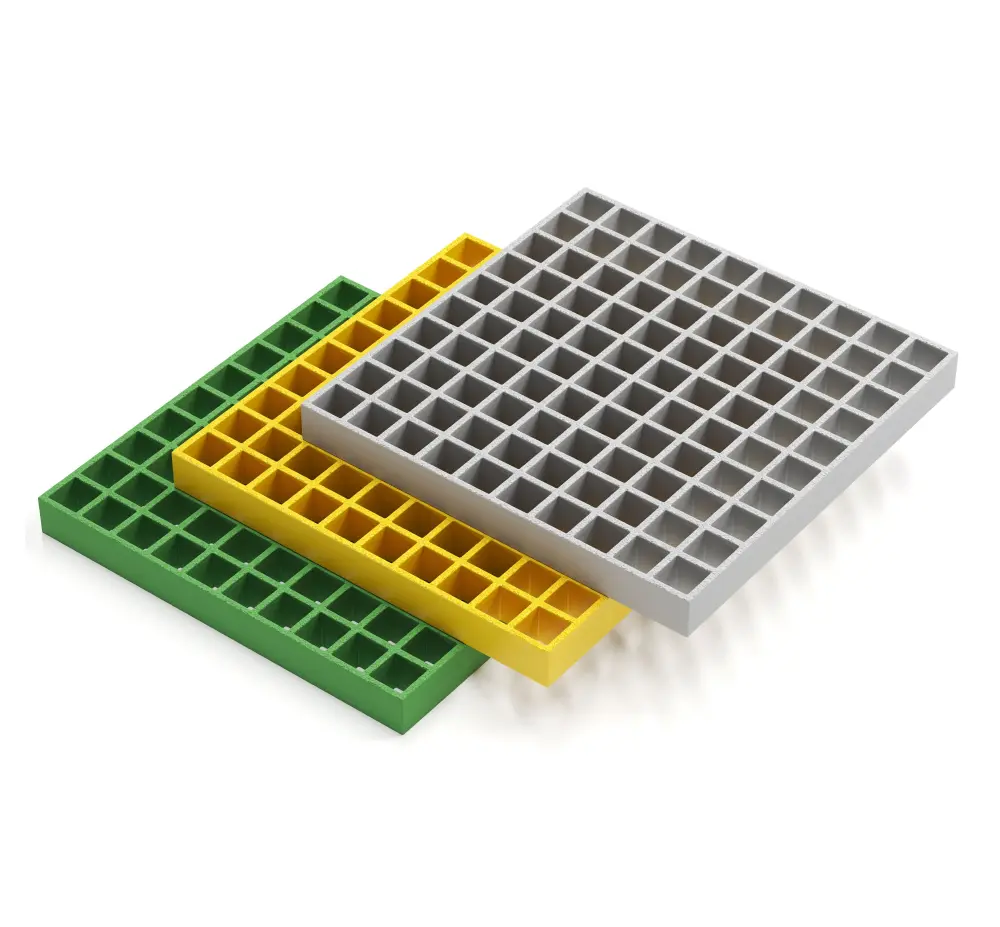
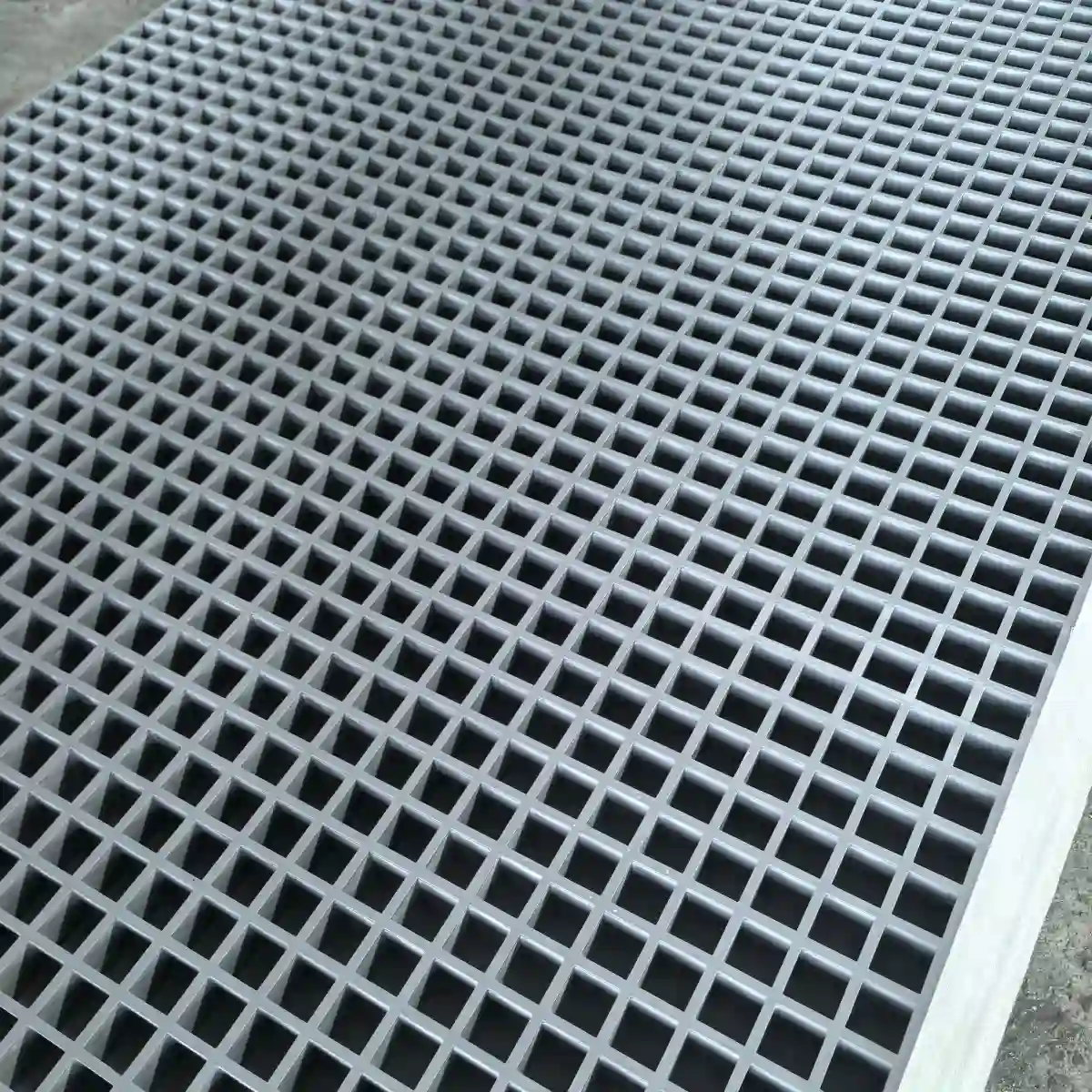
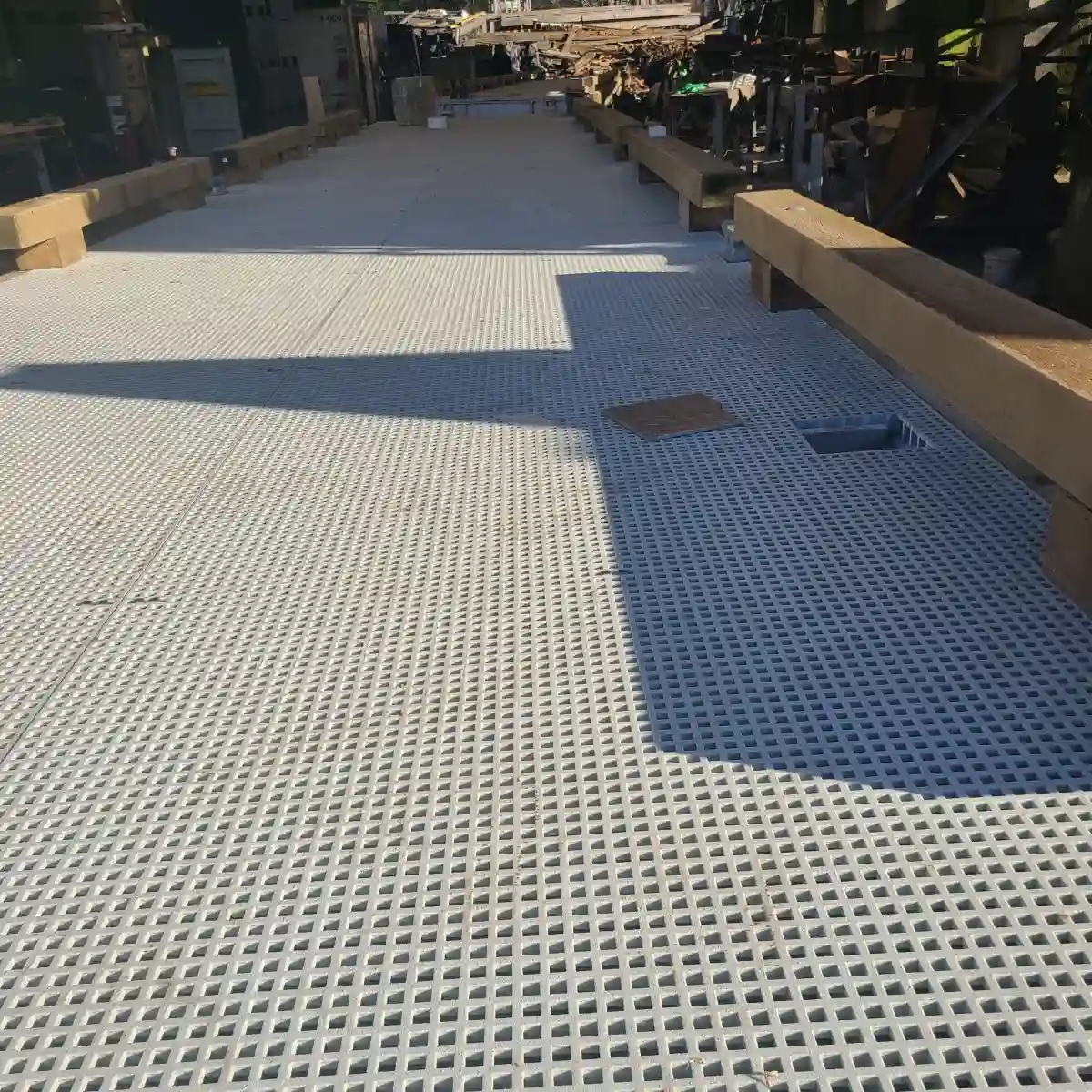
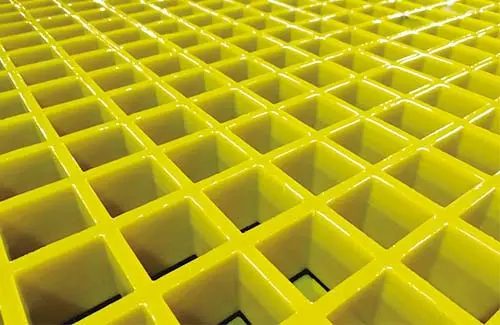
Molded grating is created by placing alternating layers of continuous glass fiber strand mat and vinyl ester resin in a mold under heat and pressure. The result is a one-piece, monolithic panel with exceptional strength-to-weight ratio and impact resistance. Molded grating panels typically feature a square mesh pattern and are available in various thicknesses from 1 inch (25 mm) to 2 inches (50 mm).
Pultruded Vinyl Ester FRP Grating
Pultruded grating is manufactured by pulling continuous glass fiber rovings through a vinyl ester resin bath and then through a heated die that shapes and cures the material. This process creates grating with unidirectional strength properties, ideal for long-span applications where high load capacity in one direction is required. Pultruded grating sections are typically assembled into custom panel sizes using cross bars.
The resin used in both processes typically contains styrene monomer for viscosity control and curing, along with specialized additives that enhance UV stability, fire retardancy, and chemical resistance. The exact formulation is often tailored to meet specific performance requirements such as ASTM E84 flame spread ratings or specific chemical exposure profiles.
Why Is Vinyl Ester Resin Used in FRP Grating?
Vinyl ester resin is the preferred matrix material for FRP grating in corrosive environments for several compelling reasons. Unlike polyester or epoxy resins, vinyl ester combines the best attributes of both — the easy processing of polyester with the mechanical performance and chemical resistance approaching that of epoxy.
The key advantage lies in the molecular structure of vinyl ester resin. Its polymer backbone contains fewer ester groups than polyester, which means fewer sites vulnerable to chemical attack by hydrolysis or saponification. This results in a material that can withstand prolonged exposure to strong acids, bases, and organic solvents without degrading.
Additionally, vinyl ester resin exhibits excellent adhesion to glass fibers, creating a strong fiber-matrix interface that resists delamination even under mechanical stress. This bond strength is critical for maintaining the structural integrity of the grating in applications where both chemical exposure and physical loading occur simultaneously.
For engineers specifying materials for aggressive environments, the choice often comes down to vinyl ester versus polyester. Vinyl ester typically costs 30–50% more than polyester resin, but provides significantly longer service life in chemical environments, reducing total cost of ownership over the life of the installation.
Superior Chemical Resistance Properties
The hallmark of vinyl ester resin in FRP grating is its outstanding chemical resistance. This material is specifically formulated to resist attack from a wide range of corrosive substances, making it the preferred choice for chemical processing, pharmaceutical, and wastewater treatment facilities.
- Acid resistance: The grating withstands exposure to sulfuric acid, hydrochloric acid, nitric acid, and phosphoric acid at various concentrations and temperatures. It maintains structural integrity even in concentrated acid environments where carbon steel would corrode rapidly.
- Alkali resistance: Unlike polyester resin, which degrades quickly in alkaline environments, vinyl ester resin offers excellent resistance to sodium hydroxide, potassium hydroxide, and other strong bases commonly used in industrial cleaning and processing.
- Solvent resistance: The material resists degradation from organic solvents including acetone, toluene, methyl ethyl ketone, and chlorinated hydrocarbons — substances that would quickly damage standard polyester-based grating.
- Oxidizing agents: The material performs well in environments containing chlorine, bleach, hydrogen peroxide, and other oxidizing chemicals, making it suitable for water treatment and pulp and paper applications.
This broad-spectrum chemical resistance is the primary reason engineers specify corrosion resistant vinyl ester frp grating for environments where multiple chemical exposures are possible. A single spill of a reactive chemical can destroy standard flooring, but vinyl ester grating provides a robust barrier that continues to perform.
Thermal and Mechanical Performance
Beyond chemical resistance, this material delivers impressive thermal and mechanical properties that make it suitable for demanding industrial environments.
| Property | Vinyl Ester FRP Grating | Test Method |
|---|---|---|
| Tensile Strength | 30,000 – 45,000 psi (207 – 310 MPa) | ASTM D638 |
| Flexural Strength | 45,000 – 60,000 psi (310 – 414 MPa) | ASTM D790 |
| Heat Deflection Temperature | 200 – 250°F (93 – 121°C) | ASTM D648 |
| Continuous Service Temperature | up to 180°F (82°C) | — |
| Flame Spread Rating | Class 1 (ASTM E84) | ASTM E84 |
| Density | 110 – 120 lb/ft³ (1.76 – 1.92 g/cm³) | ASTM D792 |
The material’s high heat deflection temperature means the grating maintains its load-bearing capacity at elevated temperatures better than polyester alternatives. This is particularly important in applications near hot process equipment, steam lines, or in regions with high ambient temperatures.
Vinyl ester FRP grating also offers excellent electrical insulation properties, with high dielectric strength and low conductivity. This makes it a safe choice for electrical utility platforms, transformer stations, and other applications where electrical hazards are a concern.
The material is inherently resistant to UV degradation when formulated with appropriate UV stabilizers, ensuring long-term performance in outdoor installations. Many manufacturers offer vinyl ester FRP grating with a UV-resistant surface veil that protects the underlying structure from prolonged sun exposure.
Chemical Resistance Properties of Vinyl Ester Resin FRP Grating
Understanding the specific chemical resistance profile of vinyl ester resin is essential for proper material selection. The performance of this material against various chemicals depends on temperature, concentration, and exposure duration. Below is a detailed look at how corrosion resistant vinyl ester frp grating performs across different chemical categories.
Strong Acids: The grating demonstrates excellent resistance to sulfuric acid up to 70% concentration at ambient temperatures, hydrochloric acid at all concentrations, and phosphoric acid. In comparison, polyester-based FRP grating shows measurable degradation above 50°C in acid environments, while vinyl ester maintains its integrity up to 93°C continuous service.
Strong Bases and Alkalis: This is where vinyl ester truly outperforms polyester. Standard polyester resin is susceptible to attack by sodium hydroxide and other alkalis, leading to surface degradation and structural weakening. Vinyl ester resin, with its reduced ester group content, resists saponification and remains stable in alkaline environments up to pH 12 or higher.
Organic Solvents: The material resists a broad range of organic solvents including aliphatic and aromatic hydrocarbons, alcohols, ketones, and esters. This makes it suitable for secondary containment areas, solvent storage facilities, and pharmaceutical production floors where solvent spills are common.
Oxidizing Agents: The material performs well in chlorine dioxide, sodium hypochlorite, hydrogen peroxide, and other oxidizing environments commonly found in water treatment and pulp & paper applications. The vinyl ester matrix resists oxidative attack that would cause embrittlement in other resin systems.
To obtain precise chemical resistance data for specific chemicals at your operating temperatures, always consult the manufacturer’s chemical resistance guide. Most reputable FRP grating suppliers publish detailed compatibility charts that indicate acceptable service conditions for each resin formulation.
Industrial Applications of Vinyl Ester Resin FRP Grating
This advanced grating material serves critical roles across numerous industrial sectors where corrosive environments, safety requirements, and long-term durability are paramount. Its unique combination of chemical resistance, structural strength, and non-conductive properties makes it the material of choice for applications that would quickly destroy metal or standard polymer flooring.
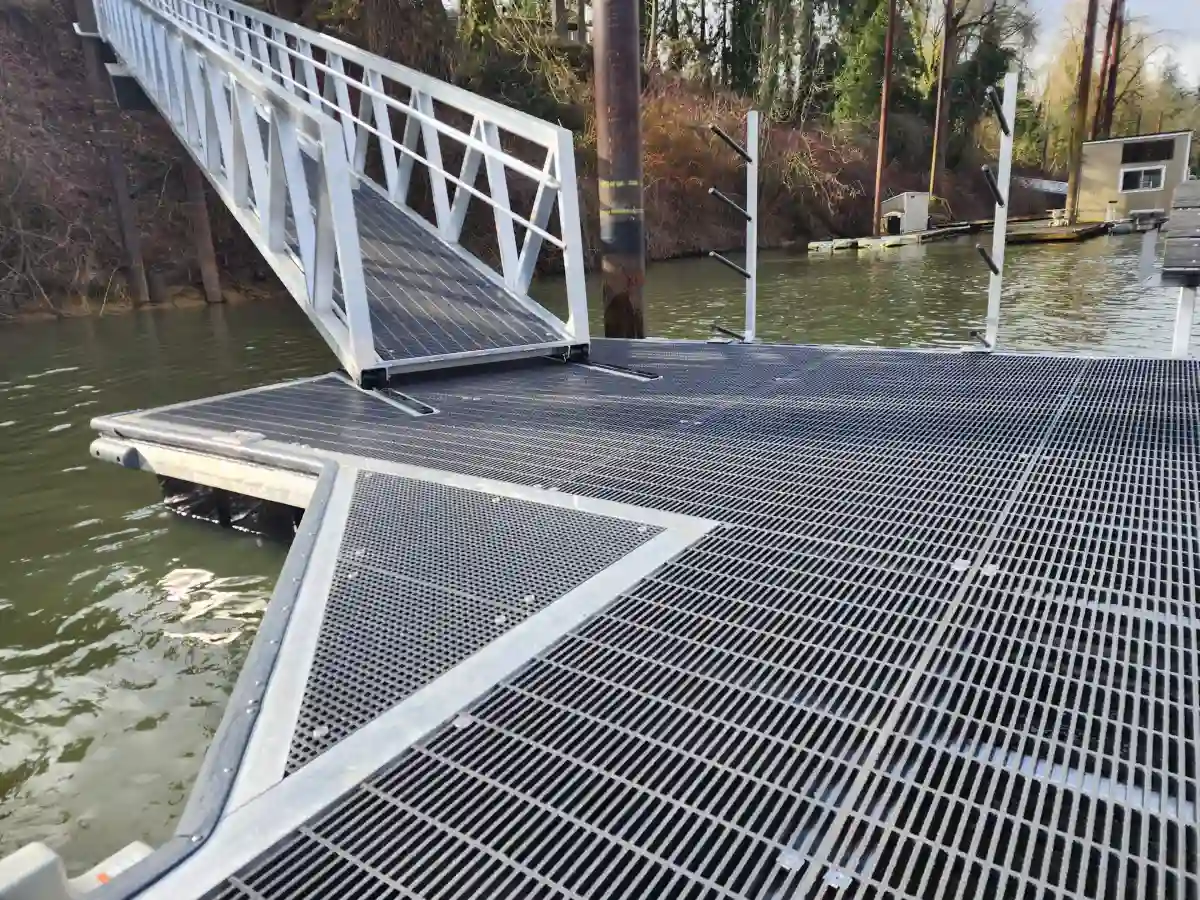
The key industries that rely on vinyl ester FRP grating include chemical processing, petrochemical refining, pharmaceutical manufacturing, food and beverage processing, water and wastewater treatment, pulp and paper production, mining and mineral processing, and power generation. Within these industries, the material is used for walkways, platforms, trench covers, stair treads, safety barriers, and structural flooring systems.
Vinyl Ester FRP Grating for Chemical Plants
Chemical plants represent the single largest market for this type of grating, and for good reason. These facilities expose flooring materials to a constant barrage of corrosive chemicals, including acids, bases, solvents, and reactive intermediates. Steel grating corrodes rapidly in these environments, while concrete floors develop cracks and spalling that trap hazardous substances.
Vinyl ester frp grating for chemical plants solves these problems by providing a non-corrosive, non-porous, and easily cleanable walking surface that maintains its structural integrity for decades. Common applications include:
- Acid loading and unloading areas: Floors around acid storage tanks and transfer stations where concentrated acid spills are a routine occurrence.
- Chemical reactor platforms: Access platforms surrounding chemical reactors where both chemical splash and elevated temperatures are present.
- Pipeline walkways: Elevated walkways for inspecting and maintaining overhead chemical pipelines.
- Secondary containment flooring: Grating systems installed above containment basins to provide safe access while allowing spilled chemicals to drain through.
- Cooling tower platforms: Areas exposed to chemically treated water and humid environments that accelerate corrosion of metal grating.
In these facilities, the selection of vinyl ester over polyester resin is often driven by the presence of strong alkalis, elevated temperatures, or aggressive solvents — conditions that exceed the performance limits of standard polyester grating. This is another example of why vinyl ester frp grating for chemical plants is the preferred specification for corrosive industrial environments.
Other Key Application Environments
Beyond chemical plants, this grating finds extensive use in several other industrial environments:
Pharmaceutical and Biotechnology: These facilities require flooring that resists aggressive cleaning agents, disinfectants, and sanitizers. The material withstands repeated exposure to bleach, hydrogen peroxide, peracetic acid, and quaternary ammonium compounds without degrading, while providing a smooth, non-porous surface that meets GMP hygiene standards.
Water and Wastewater Treatment: Treatment plants use chlorine, ozone, ferric chloride, and other corrosive chemicals for water purification. Vinyl ester FRP grating is ideal for filter galleries, chemical feed areas, sludge handling platforms, and clarifier walkways where both chemical resistance and moisture tolerance are required.
Pulp and Paper Industry: Pulp and paper mills use highly aggressive bleaching chemicals including chlorine dioxide, sodium hydroxide, and hydrogen peroxide. Vinyl ester grating withstands these harsh environments better than any metal or polyester alternative, with service life often exceeding 20 years.
Food and Beverage Processing: The food industry requires flooring that resists organic acids, caustic cleaning solutions, and hot water sanitization. This grating provides a durable, slip-resistant surface that meets FDA and USDA requirements for food contact areas.
Mining and Mineral Processing: Mining operations expose flooring to acidic leach solutions, abrasive slurries, and heavy impact loading. The material combines chemical resistance with the mechanical strength needed for these demanding conditions.
Vinyl Ester vs Polyester Resin FRP Grating: A Detailed Comparison
One of the most common decisions engineers face is choosing between vinyl ester and polyester resin systems for FRP grating. Both are thermoset polymer resins reinforced with glass fibers, but they differ significantly in performance, durability, and cost. This section provides a detailed vinyl ester vs polyester frp grating comparison to help you make the right choice for your specific application.
The fundamental difference lies in the molecular structure. Polyester resin is the most economical option and offers adequate performance for general industrial environments with mild chemical exposure. Vinyl ester resin, on the other hand, bridges the gap between polyester and epoxy — it processes like polyester but delivers chemical and thermal performance approaching that of high-cost epoxy systems.
When evaluating materials for a vinyl ester vs polyester frp grating decision, consider these factors: the types and concentrations of chemicals present, operating temperature range, mechanical load requirements, expected service life, and budget constraints. The table below summarizes the key differences.
Performance and Chemical Resistance Comparison
| Property | Vinyl Ester FRP Grating | Polyester FRP Grating |
|---|---|---|
| Chemical Resistance (Acids) | Excellent — resists strong acids up to 93°C | Good — limited to moderate temperatures (below 65°C) |
| Chemical Resistance (Alkalis) | Excellent — resists NaOH and strong bases | Poor — saponification occurs, rapid degradation |
| Chemical Resistance (Solvents) | Good to Excellent | Fair — limited resistance to organic solvents |
| Maximum Continuous Service Temp | 180°F (82°C) | 150°F (65°C) |
| Tensile Strength | 30,000 – 45,000 psi | 25,000 – 35,000 psi |
| Flexural Strength | 45,000 – 60,000 psi | 35,000 – 50,000 psi |
| Impact Resistance | Excellent | Good |
| UV Resistance (with stabilizers) | Excellent | Good |
| Flame Spread (ASTM E84) | Class 1 | Class 1 (with additives) |
| Relative Cost Factor | 1.3x – 1.5x polyester | 1.0x (baseline) |
| Typical Service Life (Chem. Env.) | 15 – 25+ years | 5 – 10 years |
From the comparison, it is clear that vinyl ester resin offers superior performance across nearly every metric. The most significant advantage is in alkali resistance — environments containing sodium hydroxide, potassium hydroxide, or other strong bases will quickly degrade polyester grating, while vinyl ester grating continues to perform reliably.
The decision ultimately comes down to the specific chemical environment. For dry, indoor applications with only mild chemical exposure, polyester grating may be sufficient and more economical. For wet processes, aggressive chemicals, elevated temperatures, or outdoor installations, the premium for vinyl ester is justified by the extended service life.
Cost Comparison: Is Vinyl Ester Resin FRP Grating Worth the Higher Cost?
The question of cost is always top of mind for procurement managers and project engineers. FRP grating made with vinyl ester resin typically costs 30–50% more than equivalent polyester grating. However, the total cost of ownership tells a different story.
Initial Cost: A typical panel (1.5 inch thick, molded, standard mesh) costs approximately $35–$65 per square foot, depending on dimensions, resin formulation, and fire rating requirements. Polyester-grade grating of equivalent size and thickness typically ranges from $25–$45 per square foot.
Installation Costs: Both materials install similarly using fiberglass clips, stainless steel hardware, or bearing bar supports. Installation labor costs are essentially identical, so the cost difference is purely in material procurement.
Maintenance and Replacement: This is where the value proposition of vinyl ester becomes clear. In aggressive chemical environments, polyester grating may require replacement after 5–10 years due to chemical degradation. Vinyl ester grating in the same environment can last 15–25 years or more. Over a 20-year facility lifespan:
- Polyester FRP grating: Material cost (1x) + replacement (1–2x) + labor for replacement = 2–3x initial investment
- Vinyl ester FRP grating: Material cost (1.3–1.5x) + no replacement needed = 1.3–1.5x initial investment
Is it worth the higher cost? For environments with aggressive chemicals, elevated temperatures, or safety-critical applications, the answer is a definitive yes. The higher upfront cost is recovered through reduced maintenance, fewer replacements, and minimized production downtime. For mild environments with no chemical exposure risk, polyester remains a cost-effective choice.
We recommend conducting a life-cycle cost analysis for your specific application. Factor in the cost of potential replacement downtime, lost production, and safety risks. For most chemical processing applications, the long-term savings of vinyl ester FRP grating far outweigh the initial premium.
How to Select the Right Vinyl Ester Resin FRP Grating
Choosing the correct grating for your project requires evaluating several key factors. Follow this step-by-step selection guide to ensure optimal performance and value.
1. Assess Your Chemical Environment
Identify all chemicals that will contact the grating, including their concentrations and temperatures. Review the manufacturer’s chemical resistance guide for vinyl ester resin formulations. Pay special attention to strong alkalis, oxidizing agents, and solvents — these are the chemicals where vinyl ester provides the greatest advantage over polyester.
2. Determine Load Requirements
Calculate the maximum expected load, including personnel, equipment, and dynamic loads. FRP grating is available in various thicknesses and resin-to-glass ratios to meet different load classifications. Standard molded grating (1.5 inch) typically supports 100–300 psf safe load, while thicker (2 inch) panels handle up to 500 psf or more.
3. Select the Manufacturing Type
Choose between molded and pultruded grating based on your application:
- Molded grating: Best for general industrial walkways, platforms, and trench covers. Provides equal strength in all directions and excellent impact resistance.
- Pultruded grating: Ideal for long-span applications where high load capacity is needed in one direction. Suitable for bridge decking, mezzanine floors, and heavy-duty platforms.
4. Consider Fire and Safety Ratings
Verify that the selected resin formulation meets your facility’s fire code requirements. Standard formulations achieve Class 1 flame spread (ASTM E84). For applications requiring low smoke generation, specify a fire-retardant vinyl ester resin with appropriate smoke development indices.
5. Evaluate Surface Finish
Grating is available with various surface treatments including grit-embedded surfaces for enhanced slip resistance, UV-resistant surface veils for outdoor use, and smooth finishes for cleanroom environments.
6. Plan for Installation
Consider bearing bar spacing, support structure requirements, and attachment methods. FRP grating can be cut to size on-site using standard carbide-tipped tools, and installed using FRP clips, stainless steel hardware, or bearing bar clamps.
By systematically evaluating these factors, you can confidently select the optimal product for your specific industrial application, balancing performance requirements with budget constraints.
Conclusion
Vinyl ester resin FRP grating represents the gold standard for industrial flooring in corrosive environments. Its unique combination of broad-spectrum chemical resistance, mechanical strength, thermal stability, and long service life makes it an indispensable material for chemical plants, pharmaceutical facilities, water treatment plants, and countless other industrial applications.
Throughout this guide, we have covered the key aspects that engineers and facility managers need to understand: what this advanced material is, why its chemical resistance properties outperform polyester alternatives, where it should be used in industrial settings, and how to evaluate the cost-value equation.
The decision ultimately comes down to your specific operating conditions. For environments with aggressive chemicals, elevated temperatures, or stringent safety requirements, vinyl ester provides superior long-term value despite its higher initial cost. The extended service life — often 15 to 25 years or more in harsh environments — translates to lower total cost of ownership and reduced facility downtime.
When selecting your grating system, partner with a reputable manufacturer who can provide complete chemical compatibility data and application guidance. By evaluating your chemical environment, load requirements, fire ratings, and installation conditions, you can ensure the optimal selection for your facility.
If you are planning a new industrial facility or upgrading existing platforms, we recommend conducting a thorough life-cycle cost analysis and consulting with FRP grating specialists to determine the best solution for your specific application.