Introduction
When it comes to industrial walkway solutions, safety, durability, and cost-effectiveness are the top priorities for facility managers and engineers. An FRP grating walkway delivers on all three fronts, offering a lightweight yet incredibly strong alternative to traditional metal walkways. Made from fiberglass-reinforced plastic, these walkway systems are designed to withstand harsh environments while providing superior slip resistance and long-term reliability.
Whether you are designing access platforms for a chemical plant, installing pedestrian walkways on a bridge, or upgrading offshore oil platform grating, understanding the benefits, installation methods, and available options for fiberglass walkway grating is essential. This comprehensive guide covers everything you need to know — from what an FRP walkway is and how it compares to aluminum, to load capacities, installation steps, and cost factors.
By the end of this article, you will have a clear understanding of why composite walkway grating has become the preferred choice for demanding industrial, commercial, and infrastructure applications worldwide.
What Is an FRP Grating Walkway?
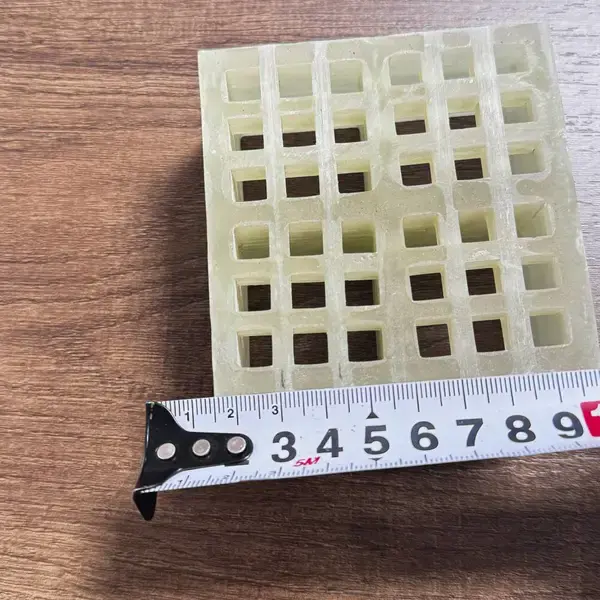
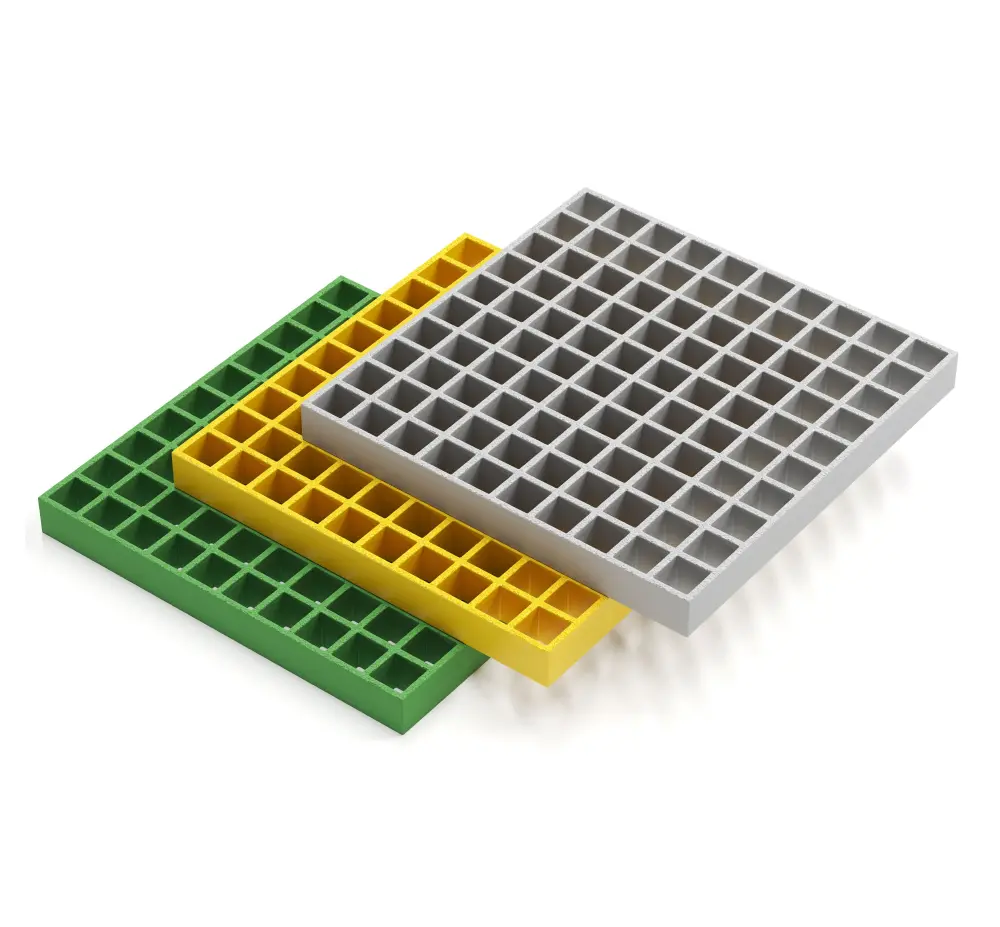
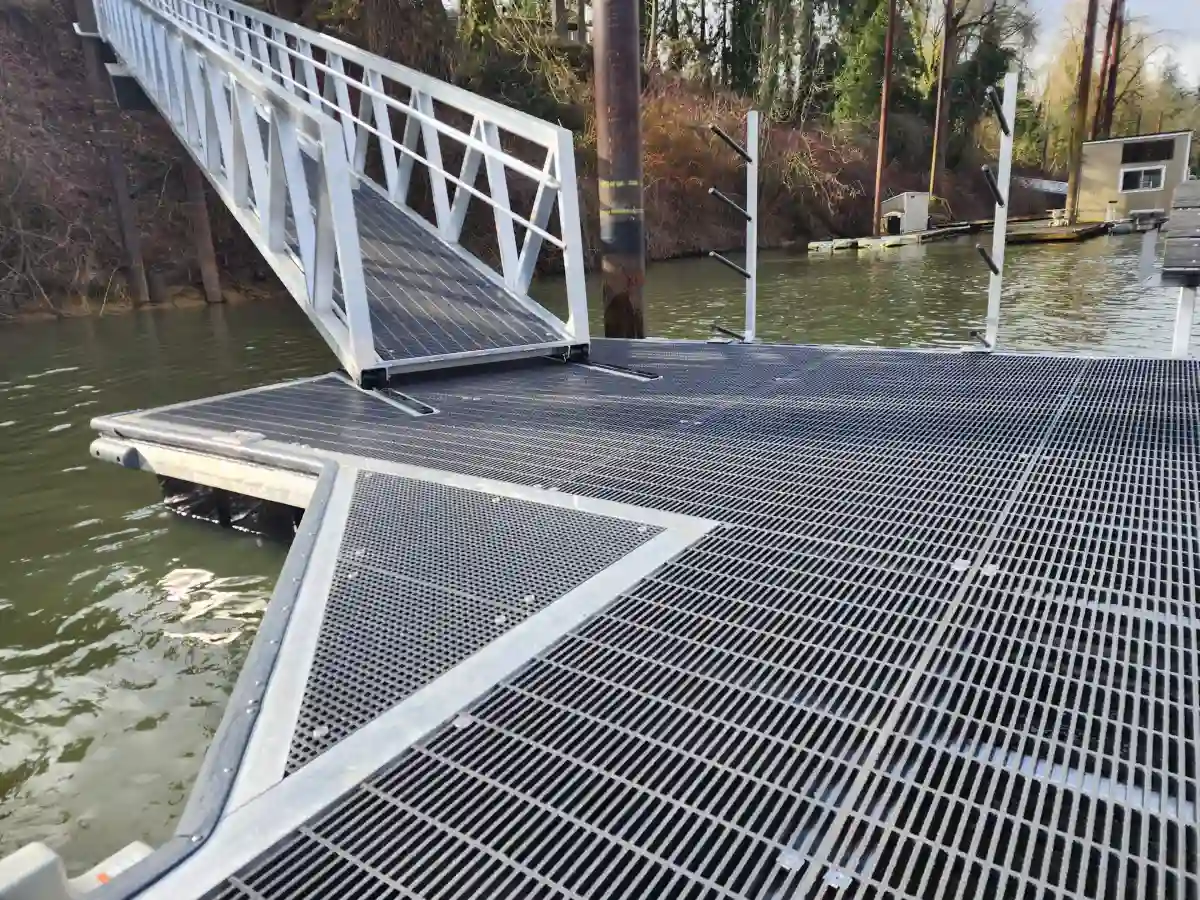
A fiberglass reinforced plastic walkway is a prefabricated flooring system made from composite materials. It consists of a grid-like panel constructed from fiberglass strands embedded in a resin matrix, typically polyester, vinyl ester, or phenolic. The result is a strong, corrosion-resistant walking surface that is significantly lighter than steel yet capable of handling substantial loads.
Composition and Manufacturing Process
Fiberglass walkway grating is manufactured using a pultrusion or compression molding process. In pultrusion, continuous fiberglass rovings are pulled through a resin bath and then through a heated die, forming a rigid profile. These profiles are assembled into a grid pattern and bonded together to create the finished grating panel. The resin system used determines the chemical resistance, fire rating, and UV stability:
- Polyester resin — General-purpose, cost-effective for most indoor and outdoor applications
- Vinyl ester resin — Enhanced corrosion resistance for chemical plants and marine environments
- Phenolic resin — Fire-resistant, low-smoke, ideal for offshore platforms and oil & gas facilities
Common Applications for Fiberglass Walkway Grating
The versatility of this composite walkway material makes it suitable for a wide range of environments. Common applications include:
- Industrial walkways and platforms — Factories, processing plants, and manufacturing facilities benefit from industrial FRP grating walkway systems that resist chemical spills and heavy foot traffic
- Offshore oil platforms — The marine-grade corrosion resistance of an FRP grating walkway for oil platform installations makes it the standard choice for offshore rigs and ships
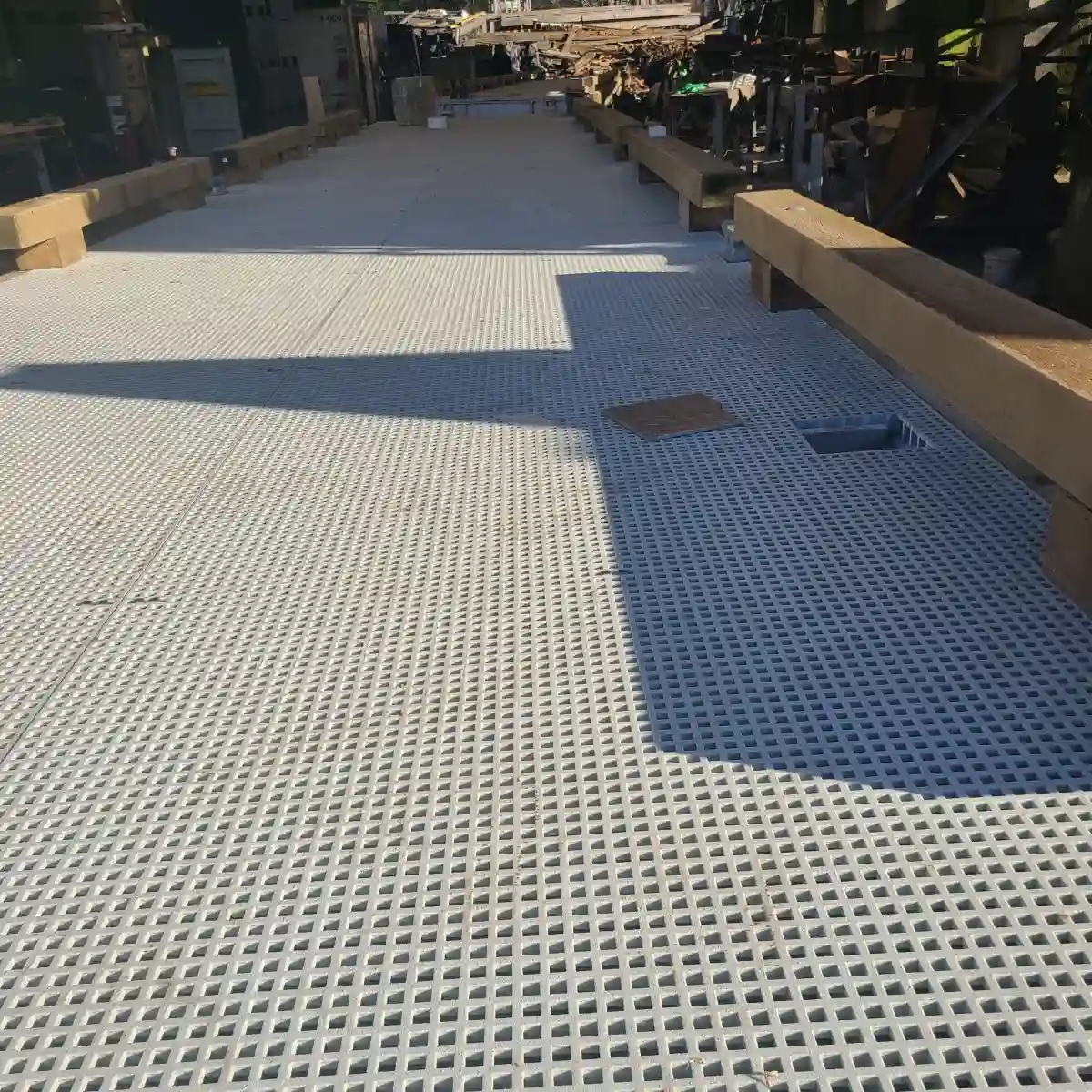
- Bridge pedestrian walkways — An FRP grating walkway for bridge applications provides a lightweight, non-corroding surface that reduces structural dead load
- Water treatment plants — Wet environments with exposure to chlorine and chemicals demand composite walkways that will not rust or degrade
- Commercial rooftops and mezzanines — Weight-sensitive areas benefit from the light weight of fiberglass grating products
Key Benefits of FRP Grating Walkways
FRP walkway products offer a unique combination of properties that make them superior to traditional metal walkways in many environments. Below are the key benefits that drive their adoption across industries.
Slip Resistance and Safety Features
Yes, fiberglass grating walkway surfaces are inherently slip resistant. During manufacturing, a grit coating of silica or aluminum oxide is embedded into the top surface of the grating. This creates a textured finish that provides excellent traction even in wet, oily, or icy conditions. An anti slip FRP grating walkway surface typically achieves a coefficient of friction above 0.6, meeting OSHA and international safety standards. For environments requiring maximum traction, an anti slip FRP grating walkway with coarser grit particles is available. Many facilities choose this type of composite walkway specifically to reduce workplace injuries in high-traffic areas exposed to water, chemicals, or grease.
Corrosion Resistance and Outdoor Durability
One of the most frequently asked questions is: how long does an FRP walkway last outdoors? The answer depends on the resin system and UV protection used. A standard polyester-based fiberglass walkway can last 15–20 years outdoors with minimal maintenance, while premium vinyl ester or phenolic systems can exceed 25–30 years in harsh environments. Unlike steel, FRP does not rust, and unlike aluminum, it does not suffer from galvanic corrosion when in contact with dissimilar metals. This exceptional corrosion resistance makes it the material of choice for chemical plants, marine facilities, and wastewater treatment plants. UV inhibitors added to the resin prevent surface degradation from prolonged sun exposure, ensuring the walkway maintains its structural integrity and appearance over decades.
Lightweight Yet High-Strength Design
An FRP walkway grating panel weighs approximately one-quarter the weight of steel and two-thirds the weight of aluminum, while still offering comparable strength-to-weight ratios. A typical 1-inch thick FRP grating panel weighs around 3–4 pounds per square foot, versus 10–12 pounds for steel. This dramatic weight reduction translates to:
- Lower transportation and installation costs
- Reduced structural support requirements
- Easier manual handling on job sites
- Ability to install over existing structures without reinforcement
Despite its light weight, fiberglass walkway products can support pedestrian traffic, light vehicles, and equipment loads depending on the selected grating profile and span configuration.
Load Capacity and Specifications
Understanding the load capacity of fiberglass walkway grating is critical for safe and compliant design. The load-bearing capability depends on the grating thickness, panel configuration, resin type, and support spacing.
Load Rating Classes
FRP walkway panels are classified into standard load ratings based on their deflection under load. Typical load designations include:
| Load Class | Uniform Load (psf) | Concentrated Load (lbs) | Typical Application |
|---|---|---|---|
| Light Duty | 75–100 | 250 | Pedestrian walkways, catwalks |
| Medium Duty | 150–200 | 500 | Industrial platforms, mezzanines |
| Heavy Duty | 300–400 | 1,000 | Vehicle access, equipment platforms |
| Extra Heavy Duty | 500+ | 1,500 | Offshore platforms, heavy industrial |
The load capacity of FRP grating walkway systems is determined by engineering deflection limits, typically L/100 or L/200 (span divided by 100 or 200), depending on the application code requirements. Always consult the manufacturer's load tables for the specific grating profile and resin system selected for your project.
Standard Weight and Span Tables
Typical specifications for common fiberglass walkway configurations include:
- 1-inch (25 mm) thickness — Supports spans up to 18–24 inches for medium duty; weight: ~3.2 lbs/ft²
- 1.5-inch (38 mm) thickness — Supports spans up to 30–36 inches for heavy duty; weight: ~4.5 lbs/ft²
- 2-inch (50 mm) thickness — Supports spans up to 48 inches for extra heavy duty; weight: ~5.8 lbs/ft²
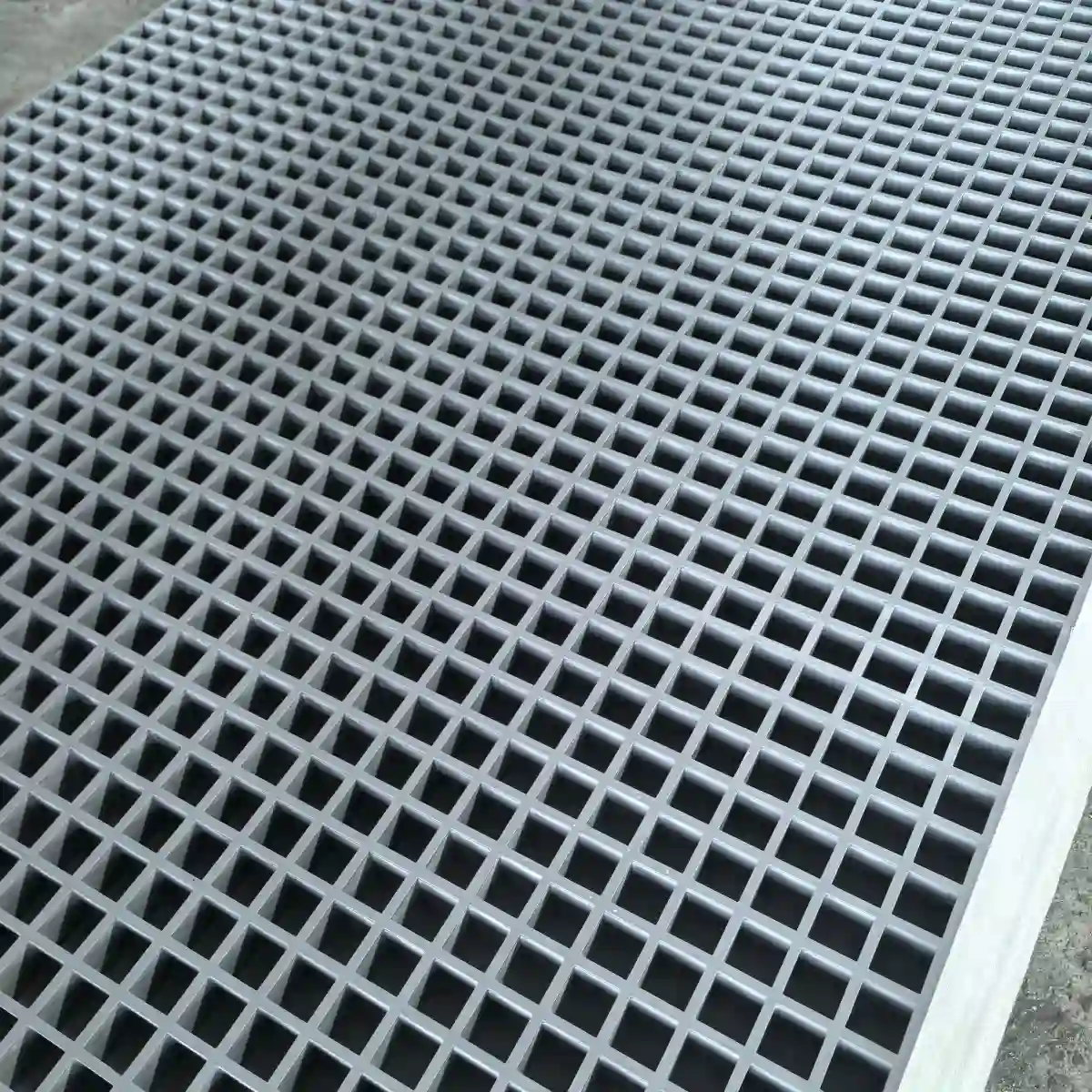
The open grid design of composite walkway grating allows light, air, and water to pass through, reducing wind uplift in outdoor installations and preventing standing water on the walking surface.
FRP Grating Walkway vs Aluminum Walkway
A common question in material selection is: which is better, FRP or aluminum walkway? The answer depends on the specific requirements of your application, including environmental conditions, load needs, budget, and maintenance expectations.
| Factor | FRP Walkway | Aluminum Walkway |
|---|---|---|
| Corrosion Resistance | Excellent against acids, alkalis, salts, and chemicals | Good but susceptible to galvanic corrosion with steel fasteners |
| Weight | 3–6 lbs/ft² (lightest option for most profiles) | 4–8 lbs/ft² (slightly heavier than FRP for equivalent strength) |
| Slip Resistance | Excellent with integral grit surface (cof > 0.6) | Smooth surface requires additional slip-resistant treatments |
| Strength-to-Weight Ratio | Very high; comparable to steel per unit weight | Good, but lower stiffness than FRP in equivalent cross-sections |
| Lifespan (Outdoor) | 15–30+ years with UV stabilization | 15–25 years, but prone to pitting in marine environments |
| Initial Cost | Moderate to high (resin-dependent) | Moderate (generally lower than FRP with premium resins) |
| Maintenance | Nearly zero; no painting or coating needed | Low; occasional cleaning, but may need corrosion treatment near metals |
| Electrical Conductivity | Non-conductive (safe near electrical equipment) | Conductive (not suitable for electrical environments) |
In summary, fiberglass walkway grating is the better choice when corrosion resistance, slip safety, electrical insulation, and long-term durability are critical. Aluminum walkways may be more cost-effective up front in dry, low-corrosion environments where weight is a moderate concern but initial budget is limited. For harsh chemical, marine, or outdoor applications, the comparison clearly favors FRP due to its superior chemical resistance and significantly longer maintenance-free service life.
FRP Grating Walkway Installation Guide
Proper installation is key to maximizing the performance and safety of your fiberglass walkway. Understanding best practices for FRP grating walkway installation ensures your walkway system performs as designed for decades. A professional FRP grating walkway installation typically follows manufacturer guidelines to guarantee load ratings and safety compliance.
Pre-Installation Preparation
Before beginning the installation process, confirm the following:
- Support structure readiness — Ensure that steel or concrete supports are level, clean, and properly aligned with the grating bearing bars
- Panel inspection — Check all FRP panels for damage, warping, or defects before installation
- Tools and fasteners — Use only corrosion-resistant fasteners such as stainless steel clips, bolts, or FRP hold-down clips. Never use galvanized or carbon steel fasteners with FRP in corrosive environments
- Cutting and drilling — Cut FRP grating using a carbide-tipped saw blade. Drill holes using carbide-tipped bits. Always wear appropriate respiratory protection, as FRP dust can be irritating
Step-by-Step Installation Process
- Position the panels — Lay the composite walkway panels onto the support structure with the grit-top surface facing up. Ensure the bearing bars run perpendicular to the supports for maximum load capacity
- Align and level — Adjust panels so edges meet evenly and the surface is level. Gaps between panels should not exceed ¼ inch
- Secure the panels — Attach the grating to the support structure using hold-down clips, saddle clips, or counter-sunk bolts at each support point. A minimum of two fasteners per bearing bar at each support is recommended for heavy-duty installations
- Cut-to-fit around obstructions — For columns, pipes, or irregular shapes, measure and cut the grating panels to fit. Seal cut edges with a compatible resin coating to prevent moisture ingress
- Inspect and test — Walk the entire installed walkway to check for movement, rocking panels, or loose fasteners. Tighten as necessary
For complex installations, especially on offshore platforms or bridges, it is recommended to work with a contractor experienced in composite walkway installation to ensure compliance with applicable building codes and safety standards.
FRP Walkway Grating Cost Considerations
The cost of an FRP walkway varies widely depending on material specifications, dimensions, resin type, and quantity. Understanding the pricing factors helps you budget accurately for your project.
Cost Breakdown by Factors
The most significant cost drivers for FRP walkway grating include:
- Resin type — Polyester-based grating is the most affordable, typically ranging from – per square foot. Vinyl ester and phenolic resins add 30–60% to the material cost due to their enhanced chemical resistance and fire ratings
- Grating thickness and profile — Standard 1-inch panels are the most economical. Thicker 1.5-inch and 2-inch profiles cost more due to higher material content and increased load capacity
- Anti-slip surface — Grit-top surface adds approximately – per square foot compared to smooth surface grating but is essential for slip resistance in wet environments
- Panel size and customization — Standard stock sizes (4′ × 8′ or 4′ × 12′) are more affordable than custom-cut panels. Cut-to-size panels incur additional fabrication charges
- Quantity and volume discounts — Larger orders (500+ square feet) typically receive 10–20% volume discounts. Full truckload orders offer the best per-unit pricing
Estimated Price Ranges
| Configuration | Resin | Price Range (per sq ft) |
|---|---|---|
| 1″ Standard, Smooth | Polyester | – |
| 1″ Standard, Grit Top | Polyester | – |
| 1.5″ Heavy Duty, Grit Top | Vinyl Ester | – |
| 2″ Extra Heavy Duty, Grit Top | Phenolic | – |
In addition to material costs, budget for fasteners, support structure preparation, and professional installation labor, which typically adds – per square foot for standard installations and more for complex offshore or bridge projects. While the initial investment in an FRP walkway system may be higher than some alternatives, the elimination of painting, coating, and rust repairs over the walkway's 20–30-year lifespan delivers significant total cost of ownership savings.
Conclusion
An FRP walkway system is a versatile, durable, and cost-effective solution for industrial, commercial, and infrastructure applications. From its exceptional corrosion resistance and slip safety to its lightweight design and long service life, composite walkway grating outperforms traditional materials like steel and aluminum in demanding environments.
Key takeaways from this guide:
- FRP walkway systems are manufactured from fiberglass-reinforced plastic using pultrusion or molding processes, offering excellent strength-to-weight ratios
- They are inherently slip resistant with grit-top surfaces, meeting OSHA and international safety standards
- Outdoor service life ranges from 15 to 30+ years depending on resin selection, with zero maintenance required when properly specified
- Load capacities range from light pedestrian duty (75 psf) to extra-heavy industrial duty (500+ psf)
- When comparing FRP vs aluminum walkway options, fiberglass wins in corrosion resistance, slip safety, and long-term value
- Installation follows straightforward practices using corrosion-resistant fasteners and standard cutting tools
- While upfront costs range from – per square foot depending on specifications, the total cost of ownership is typically lower than metal alternatives over the walkway lifespan
Whether you need an industrial FRP grating walkway for a processing plant, an FRP grating walkway for oil platform access, or an FRP grating walkway for bridge pedestrian paths, this material offers a proven, reliable solution. Consult with a qualified FRP manufacturer or supplier to select the right resin system, profile, and load rating for your specific project requirements.