Introduction
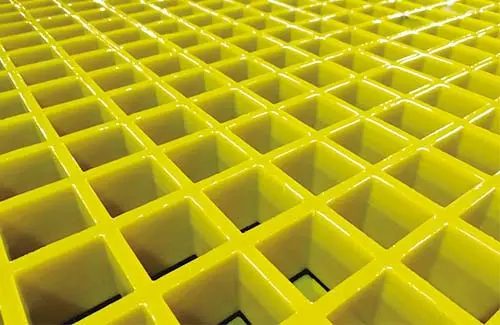
FRP (Fiber Reinforced Polymer) grating is a critical component in industrial flooring, walkways, and platforms, prized for its corrosion resistance, lightweight strength, and long service life. However, selecting the right product requires a clear understanding of FRP grating material specifications. These specifications define the performance boundaries, material composition, dimensional tolerances, and safety ratings that determine whether a particular grating panel is suitable for your application.
Whether you are an engineer specifying materials for a chemical plant, a procurement manager evaluating supplier quotes, or a facility operator planning a new installation, understanding these material specifications is essential to making an informed purchasing decision. This complete reference guide explains every major specification parameter — from resin types and glass content to load ratings, fire classifications, and ASTM standards — so you can confidently read specification sheets, compare products, and choose the right grating for your project.
Throughout this guide, we will answer the most common questions about FRP grating specifications, including what materials are used, how resin content affects performance, what fire ratings are available, and how to verify supplier claims against industry standards.
What Are FRP Grating Material Specifications?
FRP grating material specifications are the technical parameters that define how a fiberglass reinforced plastic grating panel is constructed and how it will perform under service conditions. These specifications cover the raw materials used (resin type, glass reinforcement, additives), the manufacturing process (molded vs pultruded), the physical dimensions (panel size, thickness, mesh pattern), and the mechanical properties (load capacity, deflection, span limits).
Standard specifications for FRP grating typically include:
- Resin type — polyester, vinyl ester, phenolic, or specialty resins
- Resin content — the percentage of resin by weight in the finished panel
- Glass reinforcement — type of glass fiber (E-glass, ECR-glass) and form (woven roving, continuous strand mat, chopped strand)
- Panel dimensions — standard width, length, and thickness options
- Mesh configuration — square or rectangular openings, bearing bar spacing
- Load rating — uniform load capacity and concentrated load capacity at specified spans
- Fire rating — flame spread index, smoke density, and self-extinguishing properties
- Corrosion resistance — chemical compatibility charts and exposure limits
These specifications are typically documented in a FRP grating specification sheet provided by the manufacturer. Understanding each parameter allows you to compare products from different suppliers and select a grating that meets your specific project requirements.
Key Materials in FRP Grating Manufacturing
FRP grating is manufactured using a combination of resin and fiberglass reinforcement, along with various additives that enhance specific properties. The three primary material categories are:
Resin Systems
The resin is the matrix that binds the glass fibers together and provides chemical resistance, fire performance, and UV stability. The most common resin types used in FRP grating are:
- Polyester resin — the most economical option, suitable for general industrial environments with mild chemical exposure
- Vinyl ester resin — offers superior corrosion resistance and is the preferred choice for chemical plants, pulp and paper mills, and wastewater treatment facilities
- Phenolic resin — provides excellent fire resistance with low smoke generation, commonly used in offshore oil platforms and mining applications
- Epoxy resin — delivers high mechanical strength and exceptional chemical resistance for demanding applications
Glass Fiber Reinforcement
The glass fibers provide the structural strength and stiffness of the grating. The most common types include:
- E-glass — electrical grade glass, the standard reinforcement for most FRP grating applications
- ECR-glass — corrosion-resistant glass for highly acidic environments
- Continuous strand mat — provides multidirectional strength in molded grating
- Woven roving — adds unidirectional strength in pultruded grating
Additives and Fillers
Manufacturers add various compounds to the resin formulation to achieve specific performance characteristics:
- UV inhibitors — protect against sunlight degradation for outdoor installations
- Fire retardants — improve fire performance ratings
- Pigments — provide color coding for different resin types or safety applications
- Fillers — improve surface hardness and wear resistance
The exact combination of these materials directly affects the final performance specifications and determines the panel's suitability for different operating environments.
Resin Systems: Polyester vs Vinyl Ester
One of the most important distinctions in FRP grating specs is the difference between polyester and vinyl ester resin systems. This choice directly impacts chemical resistance, mechanical properties, temperature range, and cost.
| Property | Polyester Resin | Vinyl Ester Resin |
|---|---|---|
| Chemical Resistance | Good against mild acids, alkalis, and solvents | Excellent against strong acids, bases, and organic chemicals |
| Maximum Service Temperature | 100–150°F (38–65°C) | 180–220°F (82–104°C) |
| Corrosion Resistance | Suitable for general industrial environments | Ideal for chemical processing, pulp & paper, and wastewater |
| Cost | Lower — most economical option | Higher — typically 20–40% more than polyester |
| Flame Spread Rating (ASTM E84) | Class II – Class III (depending on additives) | Class I – Class II with fire retardant additives |
| Typical Applications | Platforms, walkways, trench covers in non-corrosive environments | Chemical plant flooring, battery rooms, pickling lines, scrubber platforms |
When comparing polyester vs vinyl ester in FRP grating specs, the key consideration is the chemical environment. If your facility handles strong acids, caustic solutions, or organic solvents, vinyl ester is the recommended choice despite its higher upfront cost. The longer service life and reduced maintenance requirements of vinyl ester grating in corrosive environments often result in lower total cost of ownership over the product's lifespan.
For applications with mild chemical exposure such as general manufacturing plants, food processing facilities, or commercial buildings, polyester resin provides adequate performance at a significantly lower price point.
Glass Reinforcement Types in FRP Grating
The type and form of glass reinforcement used in FRP grating manufacturing significantly influence the mechanical properties and cost of the final product. Understanding these variations helps you interpret FRP grating specification data accurately.
E-glass is the most widely used reinforcement in FRP grating. It provides excellent tensile strength, stiffness, and electrical insulation properties at an economical price. Over 90% of standard FRP grating products use E-glass reinforcement.
ECR-glass (Electrical Corrosion Resistant) is a specialty fiberglass that offers superior resistance to acidic environments. When a grating specification calls for ECR-glass, it indicates the application involves prolonged exposure to strong acids where standard E-glass would degrade over time.
The form of glass reinforcement also varies between molded and pultruded grating:
- Molded FRP grating uses continuous strand mat and chopped strand mat, creating a homogeneous panel with equal strength in both directions. The random fiber orientation provides balanced load distribution.
- Pultruded FRP grating uses woven roving and continuous strand mat oriented primarily in the bearing bar direction. This creates a panel with higher strength in one direction but less cross-directional strength.
Glass content by weight typically ranges from 30% to 65% in the finished panel. Higher glass content generally means higher strength and stiffness, but the resin-to-glass ratio must be carefully balanced to maintain corrosion resistance and fire performance.
Understanding Resin Content in FRP Grating Material Specifications
Resin content is one of the most frequently specified parameters in FRP grating specification sheets, yet it is often misunderstood. Resin content refers to the percentage of resin by weight in the finished FRP grating panel. This ratio directly affects the grating's corrosion resistance, fire performance, and mechanical strength.
What is the typical resin content in FRP grating specifications? For standard molded FRP grating, resin content typically ranges from 60% to 75% by weight. Pultruded grating generally has a slightly lower resin content, around 50% to 65%, because the pultrusion process allows for higher glass loading.
What does the resin content mean in FRP grating specifications? Higher resin content generally means:
- Better corrosion resistance — more resin creates a thicker barrier around the glass fibers, protecting them from chemical attack
- Improved fire performance — resin formulation (with fire retardant additives) contributes to flame spread and smoke generation ratings
- Lower mechanical strength — less glass fiber means lower load-bearing capacity at the same thickness
Conversely, lower resin content (higher glass content) provides:
- Higher strength and stiffness — more glass fibers carry greater loads
- Reduced chemical resistance — glass fibers are more exposed to corrosive media
- Lower cost — resin is typically more expensive than glass fiber
When evaluating a specification sheet, look for the resin content percentage and verify it aligns with your application requirements. For chemical resistant applications, a minimum resin content of 65% is generally recommended. For structural applications where load capacity is the primary concern, a resin content of 55–60% may be acceptable.
Standard FRP Grating Dimensions and Tolerances
Standard FRP grating dimensions are a critical part of any FRP grating specification sheet. These dimensions determine how the grating fits into your support structure, the load it can carry, and the overall cost of the installation.
Standard FRP grating dimensions vary between molded and pultruded products:
Molded FRP Grating Dimensions
- Panel sizes: 4 ft x 12 ft (1.22 m x 3.66 m) is the most common standard size
- Thickness options: 1", 1.5", and 2" (25 mm, 38 mm, and 50 mm) are standard; 3" (75 mm) available for heavy-duty applications
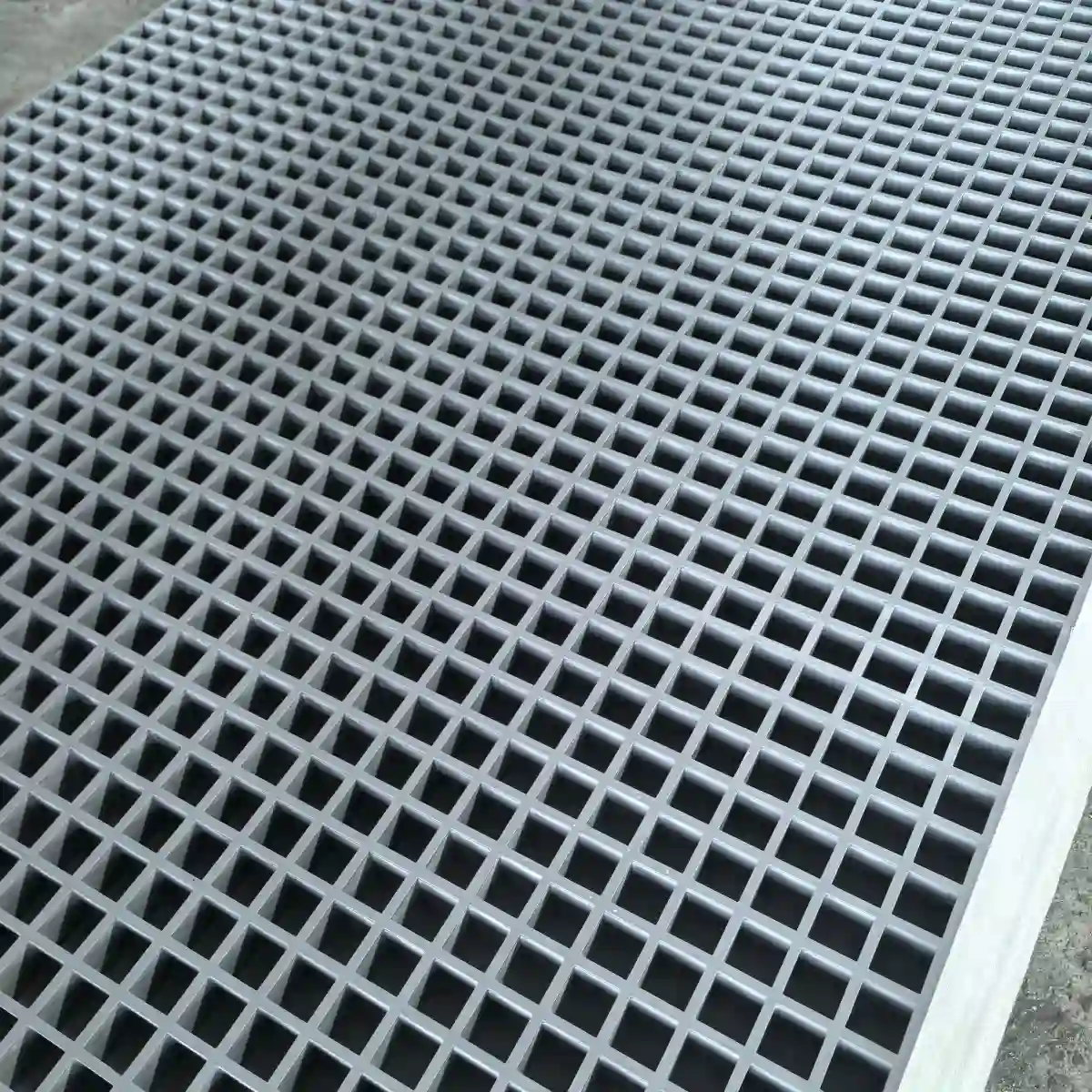
- Mesh openings: 1.5" x 1.5" (38 mm x 38 mm) square pattern is standard; 2" x 2" (50 mm x 50 mm) and 1" x 1" (25 mm x 25 mm) are common alternatives
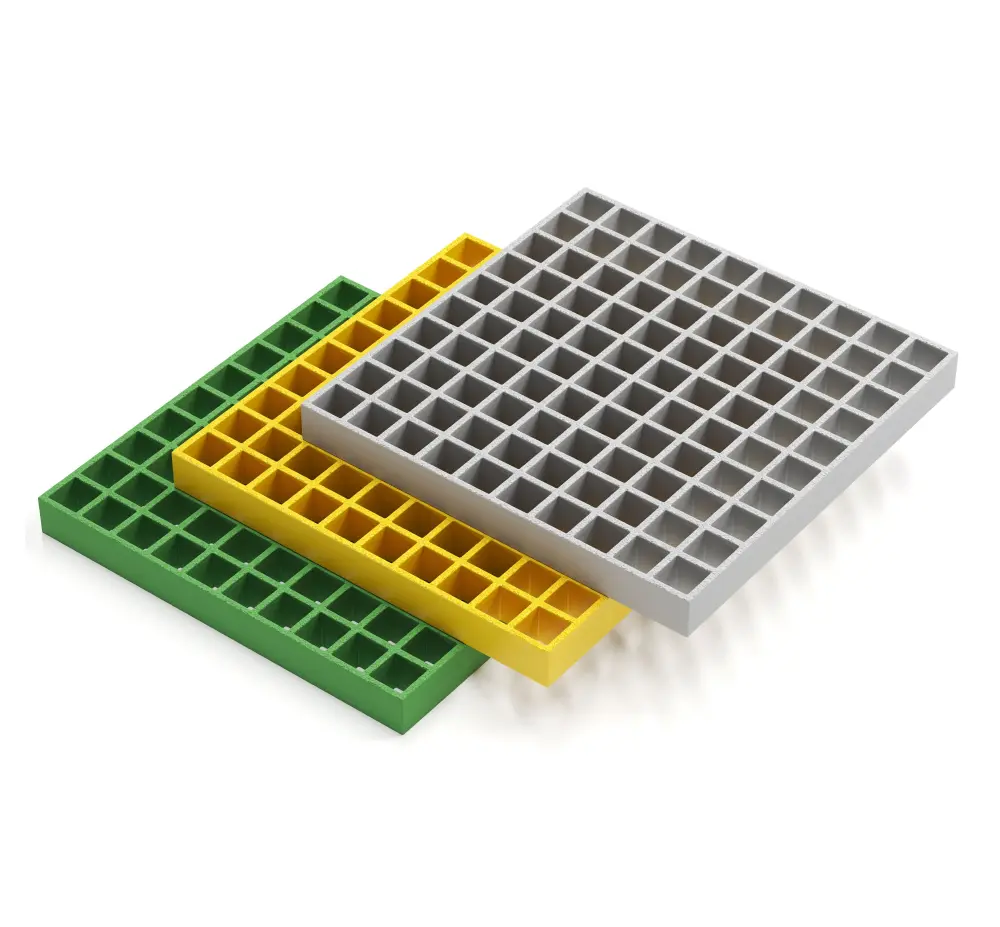
- Color: gray (standard), yellow, green, red, and orange for safety coding
Pultruded FRP Grating Dimensions
- Panel sizes: custom widths from 12" to 72" (305 mm to 1,829 mm), lengths up to 40 ft (12.2 m)
- Bearing bar depths: 1", 1.5", 2", 2.5", and 3" (25 mm to 75 mm)
- Bearing bar spacing: 1.375" (35 mm) or 1.875" (48 mm) on center
- Cross bar spacing: typically 6" or 12" (152 mm or 305 mm) on center
The dimension tolerances for standard FRP grating typically follow ASTM D3841 guidelines, with panel length and width tolerances of +0/-0.125 inches (+0/-3.2 mm) and thickness tolerances of ±0.025 inches (±0.64 mm). Always verify the specific tolerances on the manufacturer's specification sheet.
FRP Grating Load Rating and Span Specifications
Load rating and span specifications are among the most important parameters for structural engineers and safety inspectors. These parameters define how much weight the grating can safely support at a given distance between supports.
FRP grating load rating specifications are typically expressed in two ways:
- Uniform Load (UL) — the total distributed load the grating can support across its entire surface, measured in pounds per square foot (psf) or kilopascals (kPa)
- Concentrated Load (CL) — the maximum point load the grating can withstand at its weakest point, measured in pounds (lbs) or kilograms (kg)
FRP grating span specification refers to the maximum distance between support members that a given grating panel can span while maintaining a safe deflection limit (typically L/100 or L/150, where L is the span length).
Typical load ratings for standard FRP grating include:
| Panel Thickness | Max Span (L/100 Defl.) | Uniform Load Capacity | Concentrated Load Capacity |
|---|---|---|---|
| 1" (25 mm) | 24" (610 mm) | 125 psf (6 kPa) | 500 lbs (227 kg) |
| 1.5" (38 mm) | 36" (914 mm) | 150 psf (7.2 kPa) | 750 lbs (340 kg) |
| 2" (50 mm) | 48" (1,219 mm) | 200 psf (9.6 kPa) | 1,200 lbs (544 kg) |
Always check the specific load ratings for the product you are considering, as actual values vary based on resin type, glass content, and manufacturing process. The span specification should always be matched to your support structure layout to avoid excessive deflection or structural failure.
Fire Rating Specifications for FRP Grating
Fire safety is a critical consideration when selecting FRP grating for industrial applications. Grating specification sheets include several fire rating classifications that define how the material behaves in fire conditions.
What fire rating specifications are available for FRP grating? The most common fire rating standards applied to FRP grating include:
ASTM E84 (UL 723) — Flame Spread and Smoke Density
This is the most widely referenced fire test for building materials:
- Class I (Class A): Flame spread index 0–25, smoke developed index 0–450. Required for exit routes and areas where rapid fire spread must be prevented.
- Class II (Class B): Flame spread index 26–75, smoke developed index 0–450. Suitable for general industrial areas.
- Class III (Class C): Flame spread index 76–200, smoke developed index 0–450. Acceptable for less critical areas.
ASTM D635 — Rate of Burning
This standard measures the horizontal burning rate of plastic materials. Many FRP grating products are self-extinguishing under this test and qualify as Non-Combustible or Self-Extinguishing.
IMO FTP Code Part 2 — Marine Fire Rating
For offshore and marine applications, IMO (International Maritime Organization) fire rating certification may be required. This includes testing for surface flammability, smoke generation, and heat release.
When reviewing fire-rated specifications, always check both the flame spread index and the smoke developed index. A low flame spread rating is ineffective if the material generates dense toxic smoke that impairs visibility during evacuation.
Chemical Resistant FRP Grating Material Specifications
Chemical resistance is one of the primary reasons engineers choose FRP grating over steel or aluminum alternatives. Grating specifications for chemical resistant applications include detailed chemical compatibility data that must be carefully evaluated.
When reviewing chemical resistant FRP grating specifications, pay attention to these critical parameters:
- Resin type — vinyl ester is the standard for chemical resistance; polyester is suitable only for mild chemical environments
- Chemical concentration — specifications should state the maximum concentration of each chemical the grating can withstand
- Service temperature — chemical attack accelerates at higher temperatures; specifications must include temperature-corrected chemical resistance data
- Resin content — higher resin content (65–75%) provides better chemical barrier protection
- Glass type — ECR-glass is recommended for acidic environments where standard E-glass would corrode
Chemical Resistance Charts
Most FRP grating manufacturers provide chemical resistance charts that rate the compatibility of each resin system with hundreds of chemicals. These charts typically use a rating system:
- A — Excellent: No significant attack, suitable for continuous service at temperatures up to specified limit
- B — Good: Minor attack, suitable for intermittent use or low concentrations
- C — Conditional: Limited service, test before use
- D — Not Recommended: Severe attack expected
For chemical resistant applications, always request the manufacturer's chemical resistance data sheet and verify that the chosen resin system is rated A or B for all chemicals present in your facility.
ASTM Standards for FRP Grating Material Specifications
Several ASTM (American Society for Testing and Materials) standards govern FRP grating specifications. Understanding these standards helps you verify that the grating you purchase meets industry-recognized quality and performance benchmarks.
What are the ASTM standards for FRP grating material specifications? The key standards you need to know include:
| ASTM Standard | Title | What It Specifies |
|---|---|---|
| ASTM D3841 | Standard Specification for Glass-Fiber-Reinforced Polyester Plastic Panels | General material requirements, dimensional tolerances, and physical properties for FRP panels including grating |
| ASTM D635 | Standard Test Method for Rate of Burning and/or Extent and Time of Burning of Plastics | Horizontal burning test for classifying flammability |
| ASTM E84 | Standard Test Method for Surface Burning Characteristics of Building Materials | Flame spread and smoke developed indices (Steiner Tunnel test) |
| ASTM D790 | Standard Test Methods for Flexural Properties of Unreinforced and Reinforced Plastics | Flexural strength and modulus of elasticity for load rating calculations |
| ASTM D256 | Standard Test Methods for Determining the Izod Pendulum Impact Resistance of Plastics | Impact resistance of FRP materials |
| ASTM D570 | Standard Test Method for Water Absorption of Plastics | Water absorption rate, important for outdoor and wet applications |
When reviewing specifications, always check which ASTM testing methods were used to generate the reported values. Products tested under different standards may not be directly comparable. Reliable manufacturers will clearly state the ASTM standards referenced in their documentation.
How to Read FRP Grating Material Specification Sheets
Learning how to read FRP grating specification sheets is an essential skill for engineers, purchasing agents, and facility managers. A typical specification sheet contains multiple sections that each tell you something important about the product.
How to read FRP grating specification sheets:
1. Product Identification Section
This section identifies the product name, part number, manufacturing process (molded or pultruded), and resin system. It tells you the basic type of grating you are evaluating.
2. Physical Property Table
This table lists the panel dimensions, thickness, weight, mesh configuration, and color. Verify that the standard FRP grating dimensions match your project requirements and support spacing.
3. Mechanical Property Table
Here you will find the flexural strength, flexural modulus, impact strength, and load deflection data. The load rating specifications are typically presented in a table showing uniform load capacity at various spans. Cross-reference these values with your expected loads and support layout.
4. Thermal and Fire Ratings
This section includes the flame spread index, smoke developed index, and thermal conductivity. Check that the fire rating meets your building code requirements.
5. Chemical Resistance Data
A chemical compatibility chart rates the grating's resistance to various chemicals at different concentrations and temperatures. This is critical for chemical plant applications.
6. Certification and Standards
Look for ASTM standard references, third-party test reports, and quality certifications (ISO 9001, etc.). The applicable ASTM standards should be clearly cited.
When reading a specification sheet, always check the date of the document to ensure you are referencing the most current version. Manufacturers occasionally update formulations or testing methods.
How to Verify FRP Grating Material Specifications
Verifying grating specifications is a critical step in quality assurance. To ensure the product you receive matches the specified performance requirements, follow this verification process:
1. Request Certification Documents
Ask your supplier for mill test reports (MTRs) or certificate of conformance that document the actual material properties of the production batch. These should include resin content, glass content, and mechanical test results.
2. Perform Physical Inspection
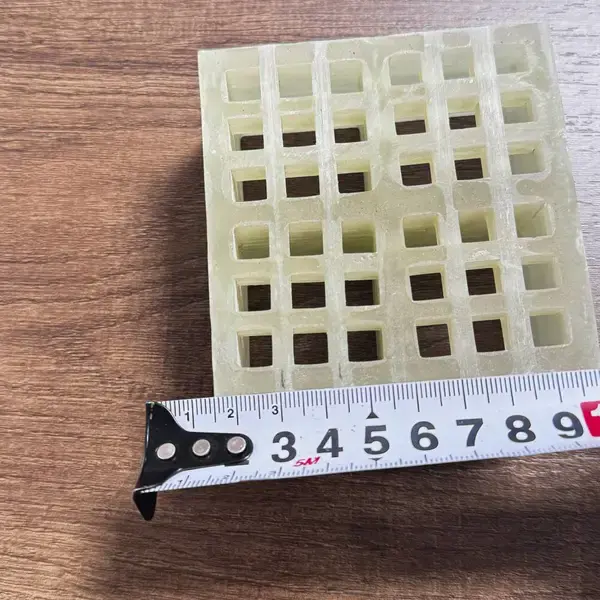
- Measure panel dimensions with a tape measure to verify they meet the specified dimensions
- Check thickness at multiple points using a caliper
- Inspect the surface finish for defects, cracks, or exposed fibers
- Verify the color matches the specified resin type (manufacturers use color coding)
3. Review Test Reports
Third-party test reports from ISO 17025 accredited laboratories provide independent verification of material properties. Ask for test results covering:
- Flexural strength and modulus (ASTM D790)
- Flame spread index (ASTM E84)
- Chemical resistance testing for your specific process chemicals
4. Check Traceability
Each grating panel should have a production date code or lot number that allows tracing back to the manufacturing records. This is especially important for safety-critical applications where load ratings must be confirmed.
5. Engage an Independent Inspector
For critical projects, consider hiring an independent third-party inspector to witness testing and verify that the specified requirements are met before the product ships.
How to Choose the Right FRP Grating Material Specification
Choosing the right specification for your project requires a systematic evaluation of your operating conditions, performance requirements, and budget constraints. Here is a step-by-step approach to making the right selection:
Step 1: Assess the Chemical Environment
List all chemicals present in your facility, including concentrations and operating temperatures. Use this data to select the appropriate resin system. For aggressive chemical environments, vinyl ester is typically required. For milder conditions, polyester may be sufficient.
Step 2: Determine Structural Requirements
- Calculate the maximum uniform and concentrated loads the grating must support
- Measure the support spacing to determine the required span specification
- Select a panel thickness that provides adequate strength at the required span
- Verify the load ratings meet or exceed your requirements with an appropriate safety factor (typically 1.5x to 3x)
Step 3: Check Fire Safety Requirements
Review your local building codes and insurance requirements for fire ratings. If the grating is installed in an exit route or public access area, Class I (ASTM E84) fire rating may be mandatory.
Step 4: Evaluate Environmental Factors
For outdoor installations, verify that the specifications include UV inhibitors. For wet areas, check slip resistance ratings. For high-temperature environments, confirm the maximum service temperature rating.
Step 5: Compare Supplier Specification Sheets
Request documentation from multiple suppliers and compare the key parameters side by side. Look for complete data with clear ASTM standard references. What material specifications should I check when buying FRP grating? Focus on resin type, resin content, load ratings, fire class, and dimensional tolerances as the primary decision criteria.
FRP grating material specifications should be selected to deliver optimal performance, safety, and value for your specific application. By following this systematic approach, you can make a confident and informed purchasing decision.
Conclusion
Understanding FRP grating specifications is essential for selecting the right product for any industrial flooring application. From resin systems and glass reinforcement to load ratings, fire classifications, and ASTM standards, each specification parameter plays a critical role in determining the performance and longevity of the installed grating.
By mastering how to read specification sheets, you can confidently evaluate supplier proposals, compare product options, and make informed purchasing decisions. Always verify that the FRP grating material specifications provided by the manufacturer are supported by third-party test reports and clearly reference applicable ASTM standards.
The key takeaways from this guide are:
- Resin selection is the most important specification — vinyl ester for chemical resistance, polyester for general use
- Resin content of 60–75% balances corrosion resistance and mechanical strength
- Standard FRP grating dimensions include 4 ft x 12 ft panels in 1", 1.5", and 2" thicknesses
- Load ratings and span specifications must be matched to your support structure and operating loads
- Fire ratings (ASTM E84 Class I, II, or III) must meet local building code requirements
- Chemical resistance charts should be reviewed for every chemical present in your facility
- Independent verification of specifications through third-party testing ensures product quality and safety
Use this guide as your reference whenever you need to evaluate FRP grating specifications. Bookmark it, share it with your engineering team, and refer to it when reviewing supplier quotations to ensure you consistently select the best grating for your application.