Introduction
When planning an industrial flooring project, one of the first questions procurement managers ask is about the budget. Getting a reliable FRP grating cost estimate is essential for accurate project planning and avoiding unexpected expenses. Fiberglass Reinforced Plastic (FRP) grating offers excellent corrosion resistance, high strength-to-weight ratio, and long service life, but its pricing structure can vary significantly based on multiple factors.
This comprehensive guide walks through everything you need to know about FRP grating pricing. You will learn what drives costs, how FRP compares to traditional materials, what installation adds to your budget, and how to get accurate quotes from suppliers. Whether you are estimating a small platform replacement or a large industrial plant installation, this article will help you build a reliable budget for your project.
What Is FRP Grating Cost Estimate
A proper FRP grating cost estimate accounts for the total expenses involved in purchasing and installing fiberglass reinforced plastic grating for a specific application. Unlike simple material price lookups, a thorough projection considers the type of grating, the resin system, dimensions, load requirements, accessories, and installation labor.
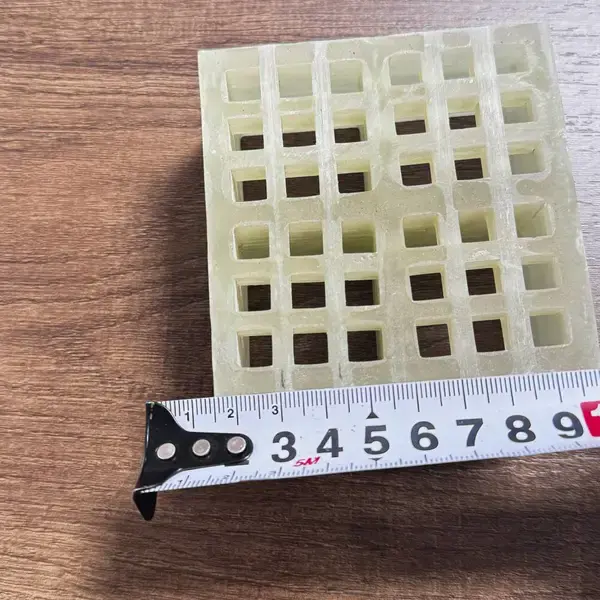
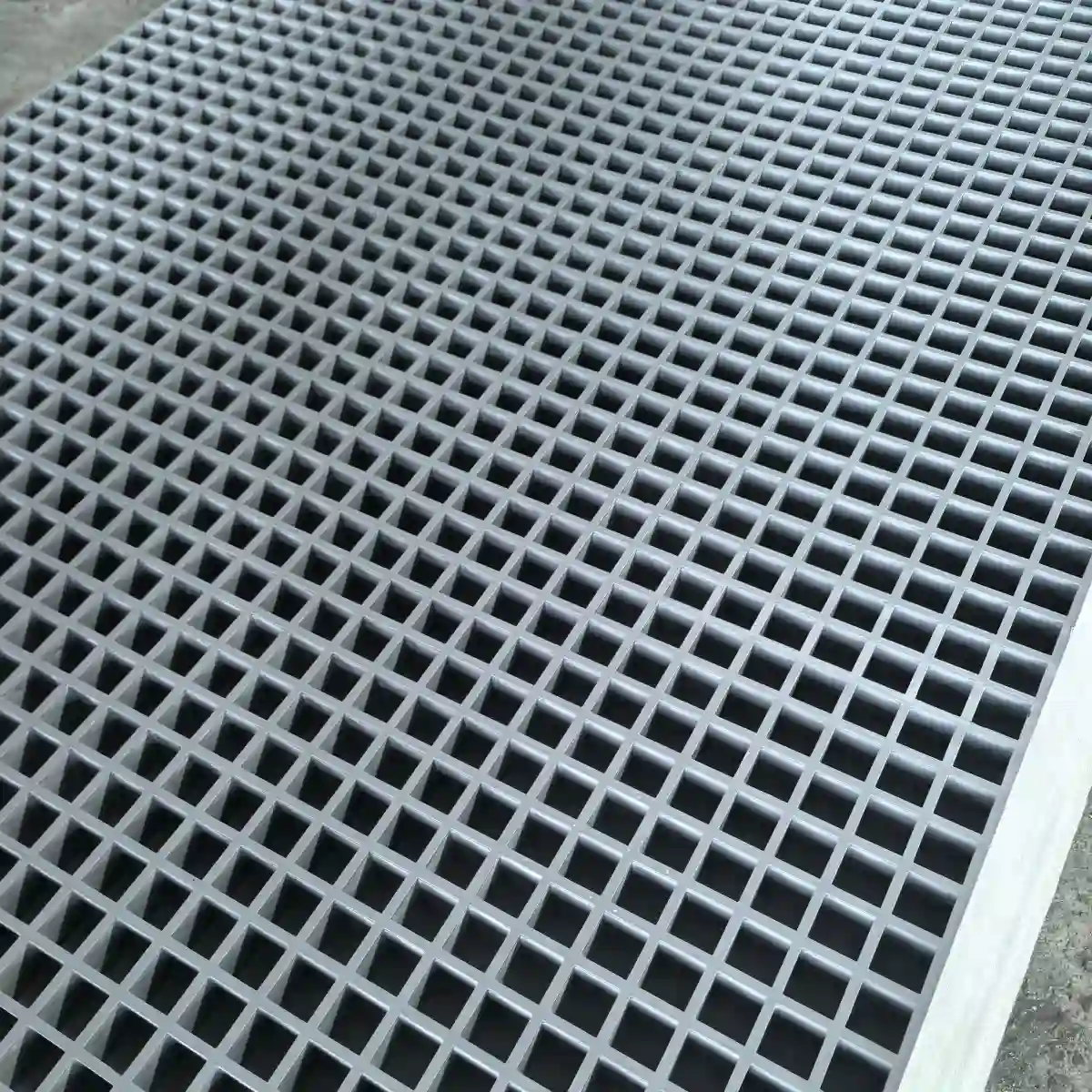
FRP grating is manufactured through a pultrusion or molding process where fiberglass strands are embedded in a resin matrix to form a strong, lightweight panel. The cost of these panels depends on the raw materials used, the complexity of the manufacturing process, and the specifications required by the buyer. An accurate budget projection helps project managers compare options, negotiate with suppliers, and allocate funds appropriately across all project phases.
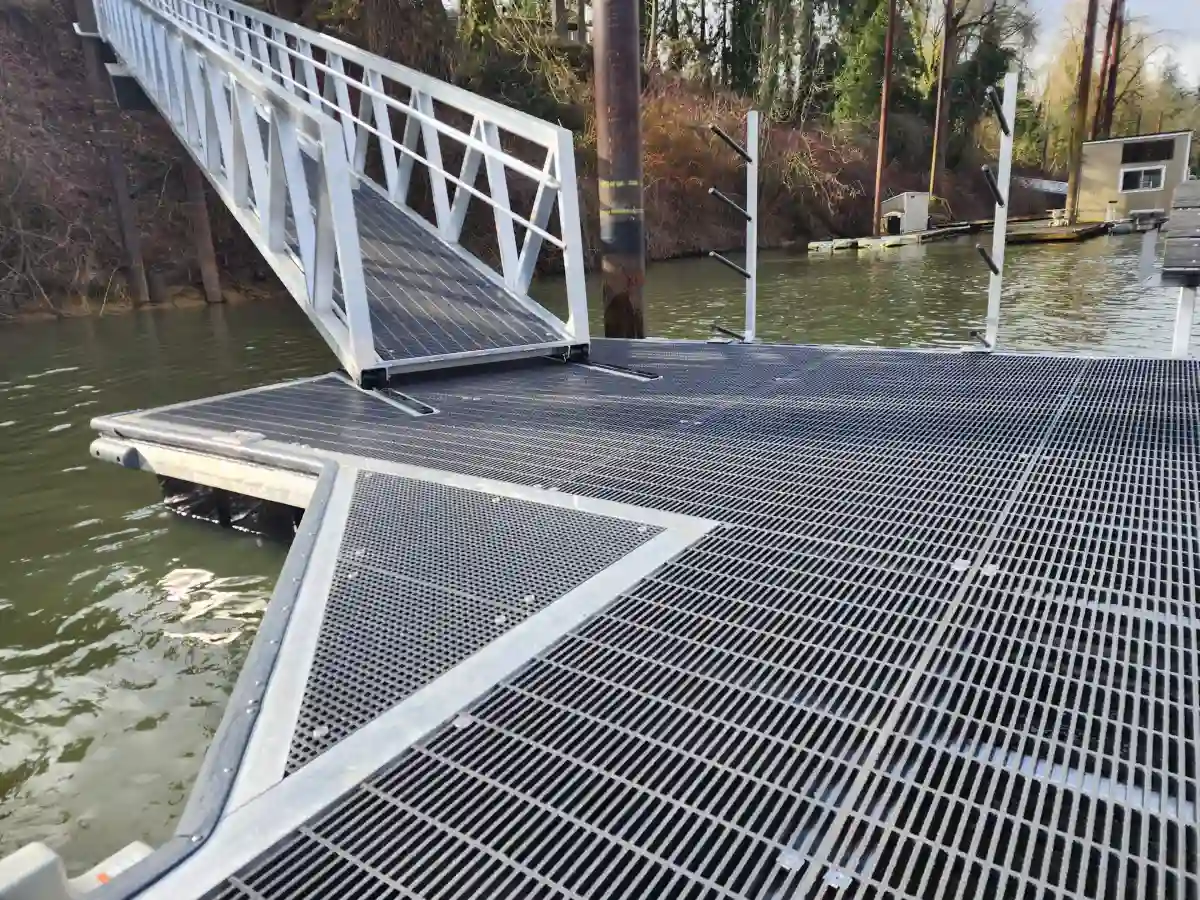
Unlike steel or aluminum grating, FRP grating does not rust or corrode, which reduces lifecycle costs significantly. However, the upfront purchase price is typically higher than steel. A thorough projection considers both the initial investment and the long-term savings from reduced maintenance and replacement.
Factors Affecting FRP Grating Cost Estimate
Several key variables influence the final price of FRP grating. Understanding these cost drivers will help you budget more accurately and identify opportunities to optimize your project spend without compromising quality or safety.
The most significant pricing factors include the type of resin used, the panel thickness and weight, the overall quantity ordered, and any custom specifications such as color, fire resistance, or UV stabilizers. Each of these variables can shift the per-square-foot price substantially, which is why obtaining multiple quotes with identical specifications is critical for a fair comparison.
Material and Resin Type
The resin system used in FRP grating manufacturing is one of the biggest determinants of FRP grating panel price. Polyester resin is the most economical option and works well for general-purpose applications where moderate corrosion resistance is sufficient. Vinyl ester resin costs more but provides superior chemical resistance, making it ideal for chemical processing plants and wastewater treatment facilities. Phenolic resin sits at the high end of the pricing spectrum due to its excellent fire-retardant properties and low smoke generation.
According to industry data, switching from polyester to vinyl ester can increase the FRP grating panel price by 20-40%, while phenolic resin can add 50% or more compared to polyester. The choice of resin must balance your specific environmental requirements against your budget constraints.
Panel Thickness and Weight
FRP grating is available in various thicknesses, typically ranging from 1 inch (25 mm) to 2 inches (50 mm) for molded grating and up to 3 inches (75 mm) for pultruded profiles. Heavier-duty grating designed to handle higher load ratings uses more fiberglass and resin, which directly raises the material cost.
Panel weight is closely tied to thickness and resin content. A standard 1-inch molded grating weighs approximately 3.5 lbs per square foot, while a 2-inch heavy-duty panel can weigh 6-8 lbs per square foot. The additional raw material required for thicker panels translates to a higher FRP grating panel price. When developing your project budget, always verify the required load capacity with a structural engineer to avoid over-specifying and overspending.
Quantity and Custom Specifications
Order volume significantly impacts unit pricing for FRP grating. Manufacturers typically offer tiered pricing structures where larger quantities receive better per-square-foot rates. A small project requiring 100-500 square feet will pay a higher unit price than a large industrial order exceeding 5,000 square feet. Bulk purchasing can reduce the per-unit cost by 10-25% in many cases.
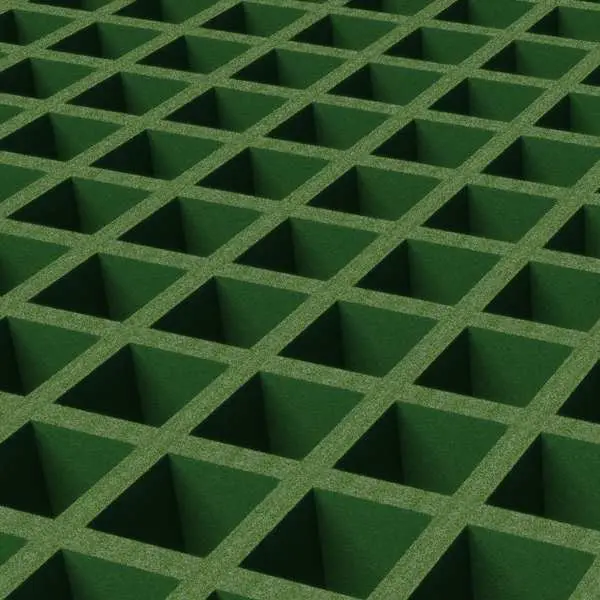
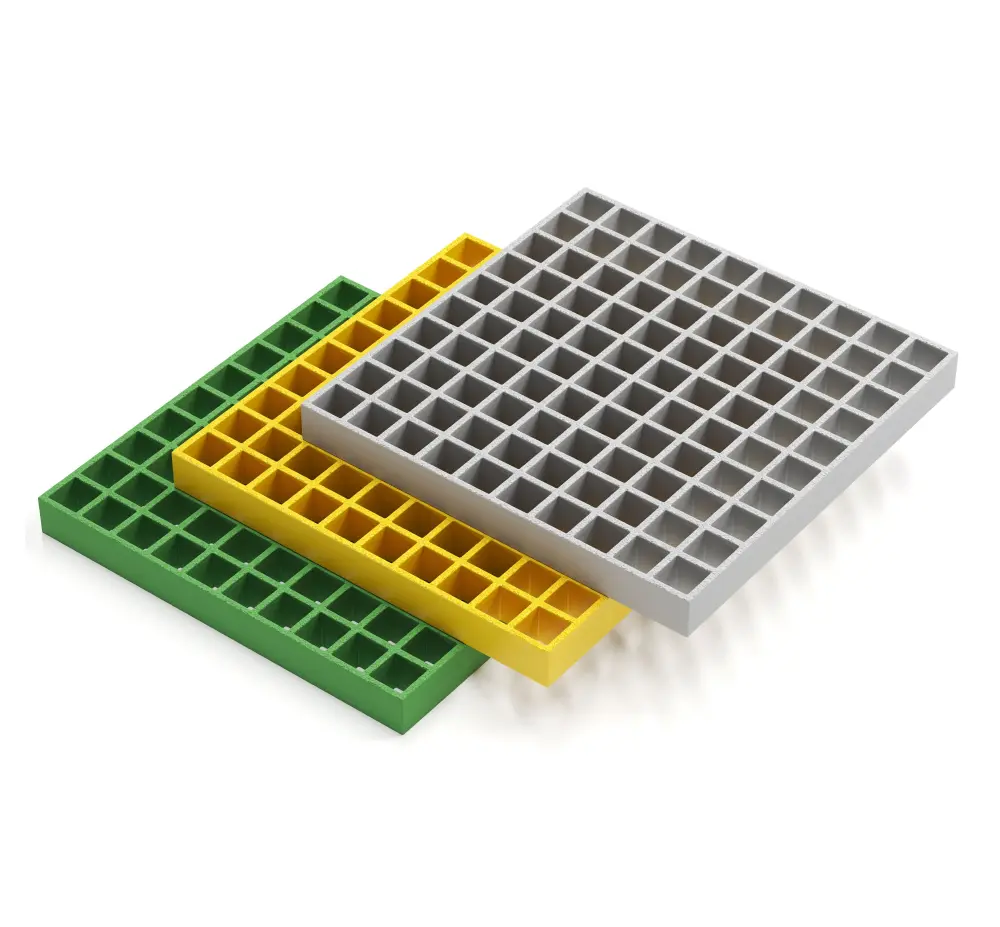
Custom specifications also affect pricing. Standard molded grating in a mesh pattern with a smooth surface is the most economical option. Custom-cut panels, non-standard sizes, colored grating, added UV protection, conductive grating for electrical environments, and fire-retardant grades all add premiums. When requesting pricing from suppliers, clearly distinguish between must-have specifications and nice-to-have features to control costs effectively.
Average FRP Grating Cost Per Square Foot
One of the most common questions procurement teams ask is how much FRP grating costs on average. While prices fluctuate based on the factors discussed above, typical industry ranges provide a useful baseline for your project budget.
| Grating Type | Thickness | Resin | Price Range (per sq ft) |
|---|---|---|---|
| Molded FRP Grating | 1 inch | Polyester | $15 - $25 |
| Molded FRP Grating | 1.5 inch | Polyester | $20 - $35 |
| Molded FRP Grating | 1 inch | Vinyl Ester | $25 - $40 |
| Molded FRP Grating | 2 inch | Vinyl Ester | $35 - $55 |
| Pultruded FRP Grating | 1 inch | Polyester | $20 - $30 |
| Pultruded FRP Grating | 1.5 inch | Vinyl Ester | $30 - $50 |
| Pultruded FRP Grating | 2 inch | Phenolic | $50 - $80 |
These prices reflect standard panel sizes and do not include cutting, fabrication, or delivery charges. For a ballpark figure, most industrial projects fall between $20 and $50 per square foot for the material alone. Always request current pricing from multiple suppliers, as raw material costs for resin and fiberglass can shift quarterly based on petroleum and glass markets.
FRP Grating Cost Estimate vs Steel Grating
When evaluating FRP versus steel grating, the comparison must go beyond the initial purchase price. Steel grating is generally cheaper upfront, typically ranging from $8 to $20 per square foot for standard carbon steel. However, the total cost of ownership tells a very different story.
Initial Material Cost Comparison:
- Carbon steel grating: $8 - $20 per sq ft
- Galvanized steel grating: $15 - $30 per sq ft
- FRP grating (polyester): $15 - $35 per sq ft
- FRP grating (vinyl ester): $25 - $55 per sq ft
Long-Term Cost Factors:
- Steel grating requires regular painting or galvanizing to prevent rust, adding $3 - $8 per sq ft every 2-3 years in maintenance
- FRP grating is corrosion-resistant and requires virtually no maintenance in most environments
- Steel grating is heavier, requiring stronger support structures and more expensive installation equipment
- FRP grating is 75% lighter than steel, reducing structural load and simplifying installation
- Steel grating typically lasts 5-15 years in corrosive environments before needing replacement
- FRP grating can last 20+ years with minimal degradation in the same conditions
Over a 20-year lifecycle, FRP grating often proves more economical despite its higher initial cost. When your analysis factors in maintenance, replacement, and downtime costs, FRP typically emerges as the cost-effective choice for corrosive environments.
Installation Cost in Your FRP Grating Estimate
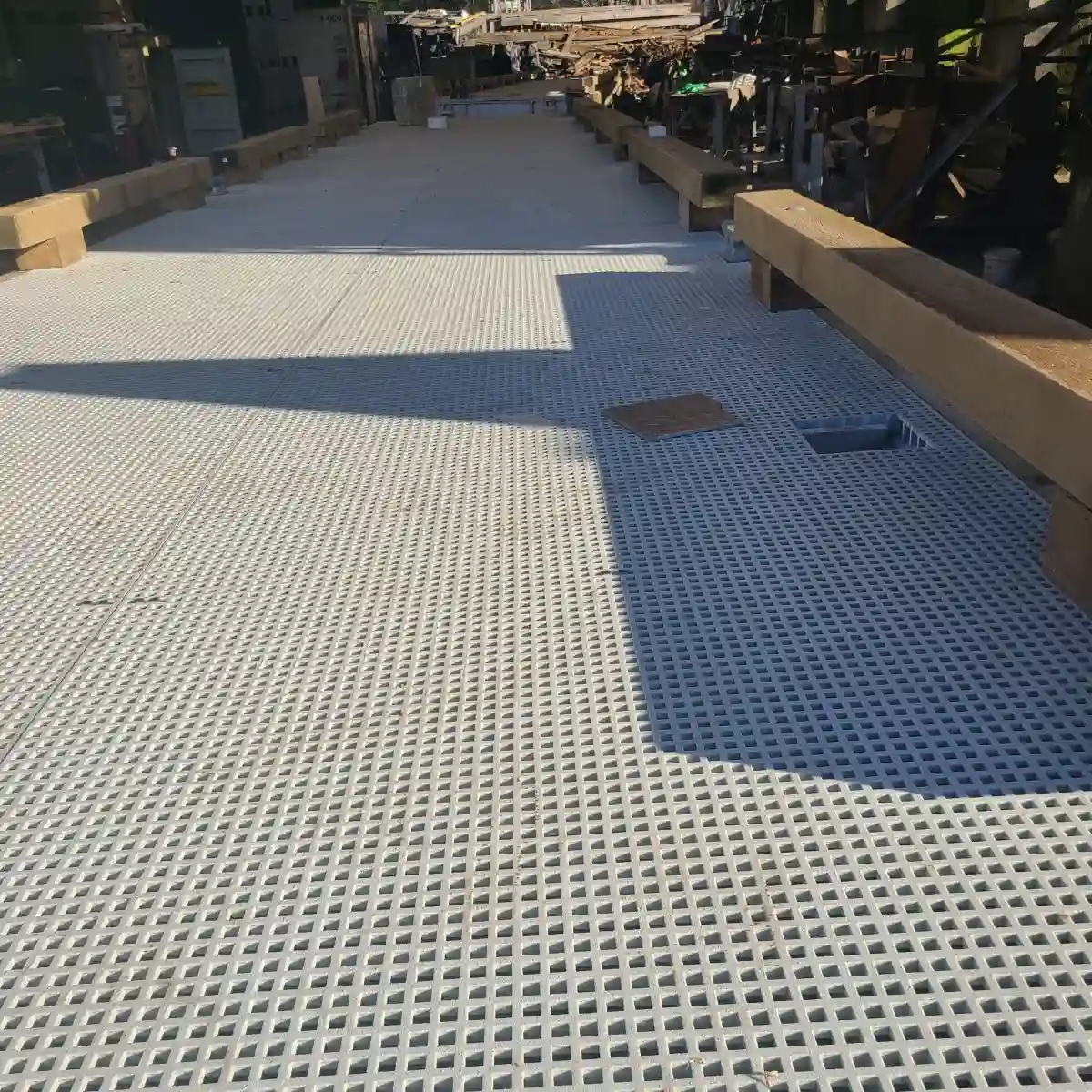
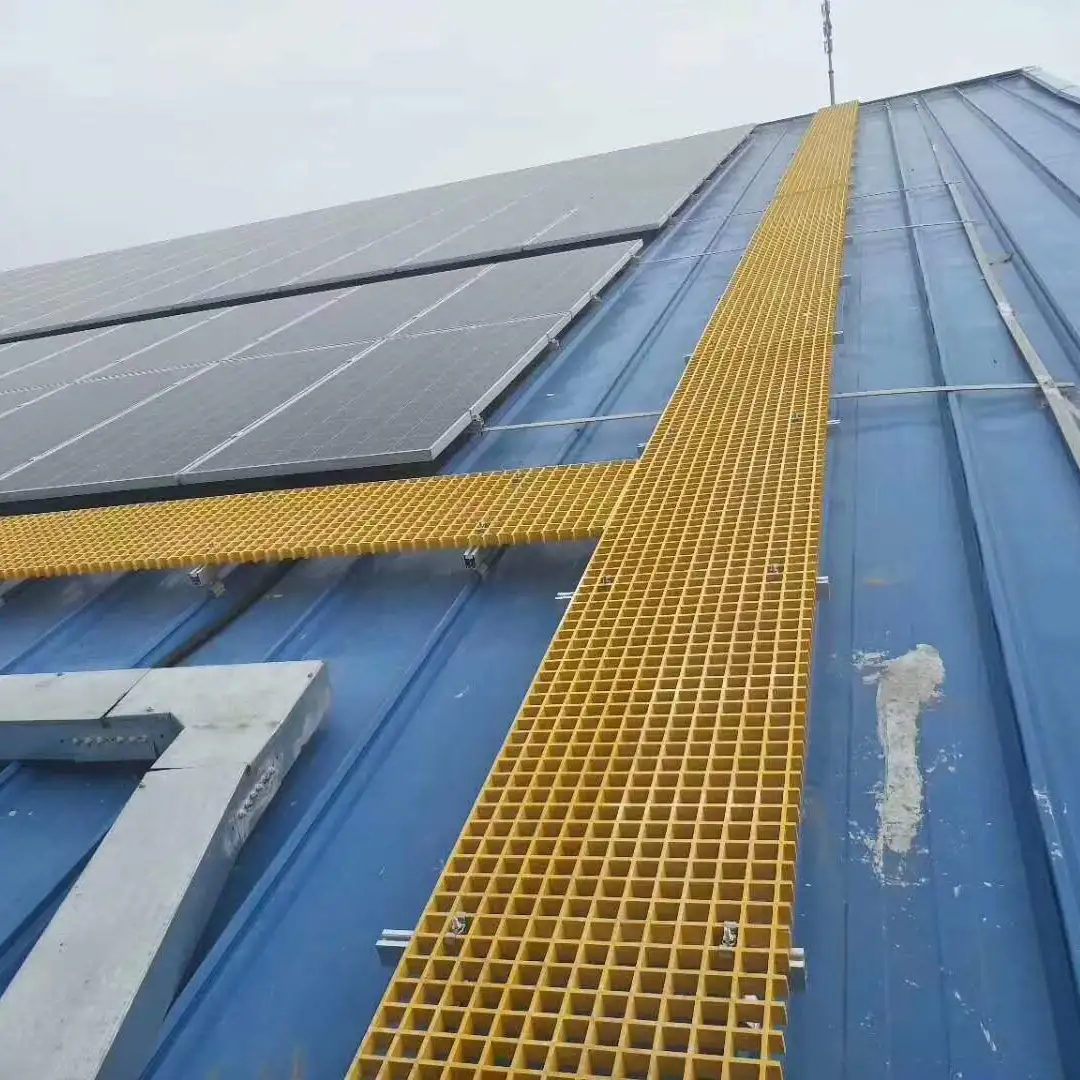
Installation labor is a significant component of any complete FRP grating project budget. Unlike steel grating, which often requires welding and heavy lifting equipment, FRP grating can be cut with standard power tools and installed with basic hardware. This characteristic reduces both labor time and equipment costs.
Typical installation costs for FRP grating range from $5 to $15 per square foot, depending on the complexity of the project, accessibility of the installation area, and local labor rates. Key factors that influence installation cost include:
- Cutting and Fabrication: FRP grating can be cut on-site using carbide-tipped blades. Pre-cut panels from the supplier reduce on-site labor but may increase material cost.
- Fastening Systems: FRP grating is typically secured with stainless steel clips, tie-downs, or counter-sunk screws. The fastening method affects both material and labor costs.
- Safety Requirements: Working at height or in confined spaces requires additional safety equipment and may slow installation.
- Support Structure: If the existing support structure needs modification to accommodate FRP grating, add 10-20% to the installation budget.
Ask your supplier or installer whether their quote includes installation or if it is quoted separately. Some suppliers offer turnkey pricing that bundles materials, fabrication, delivery, and installation into a single per-square-foot figure.
How to Calculate Total FRP Grating Project Cost
A complete project budget involves more than just the cost of grating panels. To calculate the total project cost, you must account for materials, accessories, support structure, installation labor, and contingency. Below is a practical framework for building a comprehensive budget.
Total Project Cost Breakdown:
- FRP grating panels: 55-65% of total cost
- Installation labor: 15-25% of total cost
- Accessories and fasteners: 5-10% of total cost
- Support structure modifications: 5-10% of total cost
- Delivery and logistics: 3-5% of total cost
- Contingency (10-15%): recommended buffer for unforeseen expenses
A comprehensive budget should also include any engineering or design fees, permit costs, and safety equipment rentals. For large projects, it is wise to add a 10-15% contingency to cover material price fluctuations and site-specific challenges that may arise during installation.
Estimating Material Quantities for Large Projects
Accurate quantity takeoff is the foundation of any reliable budget for large-scale FRP grating projects. Begin by creating a detailed measurement plan that accounts for every area requiring grating coverage. Industrial projects often involve complex layouts with multiple platform levels, walkways, and equipment access areas.
Best Practices for Quantity Estimation:
- Use CAD or BIM software to generate accurate square footage measurements from design drawings
- Add 5-10% waste allowance for off-cuts and fitting adjustments
- Document all cut-out areas for pipes, columns, and equipment penetrations
- Specify panel orientation and span direction to optimize material utilization
- Consider ordering standard panel sizes when possible, as custom sizes increase cost and lead time
For projects exceeding 10,000 square feet, request bulk pricing from multiple manufacturers. Large-volume orders typically receive the best per-unit rates, and freight costs per square foot decrease with full truckload shipments. Include these volume discounts in your project budget to present an accurate picture to stakeholders.
Accessories and Support Structure Costs
FRP grating installations require various accessories that add to the total project cost. These items are sometimes overlooked in initial budgets but are essential for a complete and code-compliant installation. Common accessories and their approximate costs include:
| Accessory | Purpose | Cost Range |
|---|---|---|
| Stainless steel clips | Panel fastening to support structure | $1 - $3 each |
| Molded tie-downs | Securing panels in high-vibration areas | $2 - $5 each |
| FRP kickplate | Toe protection at open edges | $8 - $15 per linear ft |
| FRP stair treads | Safe access between levels | $30 - $60 each |
| FRP handrail system | Fall protection at elevated platforms | $25 - $50 per linear ft |
| Expansion joint covers | Accommodate thermal movement | $10 - $20 per joint |
| FRP channel and beam | Support structure for grating | $15 - $40 per linear ft |
When building your complete project budget, request a full accessory list from your supplier during the quoting phase. Many suppliers offer bundled pricing that includes all necessary hardware, which can reduce overall costs compared to sourcing accessories separately.
How to Get Accurate FRP Grating Cost Estimates from Suppliers
Obtaining reliable quotes from FRP grating suppliers is critical for accurate project budgeting. The quality of the quote you receive depends heavily on the information you provide. Suppliers need clear, detailed specifications to price your project correctly.
Information to Prepare Before Requesting Quotes:
- Complete set of drawings showing all grating areas with dimensions
- Load rating requirements (pedestrian, light industrial, heavy industrial, or vehicle)
- Environmental conditions (chemical exposure, UV exposure, temperature range)
- Resin type preference or let the supplier recommend based on your environment
- Panel thickness and bearing bar spacing requirements
- Surface finish (sanded, grit-covered, or smooth top)
- Color requirements (if aesthetics are important)
- Quantity and delivery timeline
- Any certifications or testing documentation required
Tips for Getting Accurate Quotes:
- Send the same specification package to at least three qualified suppliers for comparable quotes
- Ask suppliers to itemize their quotes — separate material, accessories, fabrication, delivery, and installation
- Verify that the quote matches your required lead time; expedited production typically adds 10-20%
- Request references and sample certifications to validate product quality
- Ask about warranty terms; reputable manufacturers offer 5-10 year warranties on FRP grating
- Consider total landed cost including freight, duties, and taxes when comparing international versus domestic suppliers
Professional suppliers will take the time to understand your project and provide a detailed quote that accounts for all variables. Be wary of pricing that seems substantially lower than competitors — they may indicate lower-quality materials, incomplete specifications, or hidden fees that surface later in the project.
Conclusion
Building an accurate FRP grating budget requires a systematic approach that considers material type, resin selection, panel specifications, installation labor, accessories, and supplier pricing. While the upfront cost of FRP grating may be higher than steel, the long-term savings from corrosion resistance, minimal maintenance, and extended service life make it a cost-effective choice for demanding industrial environments.
To summarize the key takeaways for your next project:
- Expect FRP grating material costs between $15 and $80 per square foot depending on specifications
- Resin choice is the single biggest cost driver — match the resin to your environment rather than over-specifying
- Installation typically adds $5-15 per square foot but is simpler and faster than steel grating installation
- Always include accessories, support structure, delivery, and a 10-15% contingency in your total budget
- Request detailed itemized quotes from multiple suppliers using identical specifications
- Evaluate lifecycle costs, not just initial purchase price, when comparing FRP to steel or aluminum
By following the framework outlined in this guide, you can develop a reliable FRP grating cost estimate that helps your project stay on budget while delivering the performance and durability that FRP grating is known for. Take the time to gather accurate specifications, consult with experienced suppliers, and plan for all cost components — your project budget will thank you.