Introduction
Fiberglass reinforced plastic grating, commonly known as FRP grating, is one of the most versatile and widely used industrial flooring solutions in the world. Engineered from a combination of fiberglass reinforcements and thermosetting resin systems, this composite material delivers exceptional strength, corrosion resistance, and durability across demanding environments. From chemical processing plants and offshore platforms to public walkways and water treatment facilities, fiberglass reinforced plastic grating has become the go-to alternative to traditional steel and aluminum grating for engineers and facility managers seeking long-term value and safety.
This comprehensive guide covers everything you need to know about fiberglass reinforced plastic grating — its composition, mechanical properties, standard specifications, load capacity ratings, installation methods, and cost considerations. Whether you are selecting grating for a new industrial project, replacing corroded steel walkways, or simply researching material options, this article will help you make an informed decision.
What Is Fiberglass Reinforced Plastic Grating?
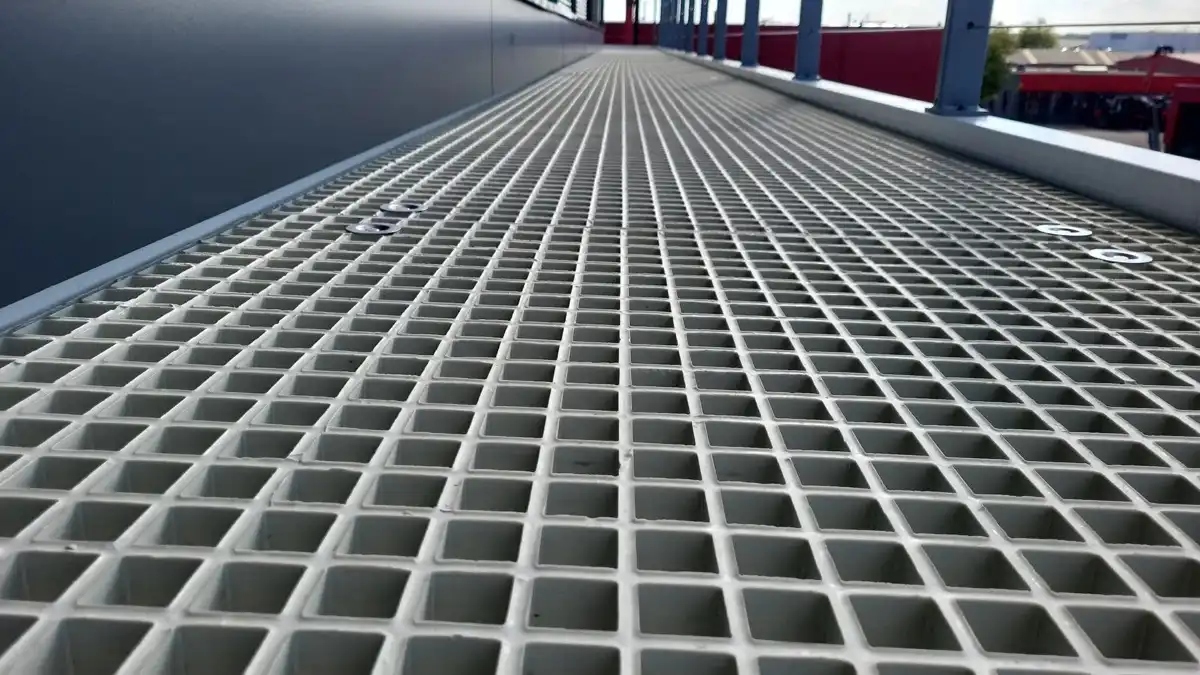
Fiberglass reinforced plastic grating is a molded or pultruded composite material made from fiberglass strands embedded in a polymer resin matrix. The fiberglass provides tensile strength and stiffness, while the resin system binds the fibers together and protects them from environmental degradation. The result is a lightweight, high-strength grating panel that resists corrosion, chemicals, and moisture far better than traditional metal alternatives.
The manufacturing of FRP grating typically follows two primary processes: molded grating and pultruded grating. Molded grating is produced by layering fiberglass reinforcement mats with resin in a heated mold under pressure, creating a single-piece panel with a consistent I-beam shaped cross-section. This method is ideal for producing large quantities of grating in standard sizes with excellent corrosion resistance. Pultruded grating, on the other hand, is made by pulling continuous fiberglass strands and mats through a resin bath and then through a heated die. This process creates grating with higher strength-to-weight ratios and allows for longer spans and deeper profiles, making it suitable for heavy-load applications.
The resin system plays a critical role in determining the final properties of the grating. Common resin types include polyester (general purpose), vinyl ester (enhanced chemical resistance), and phenolic (fire-retardant and low-smoke). By selecting the appropriate resin formulation, manufacturers can tailor fiberglass reinforced plastic grating panels to meet specific environmental and performance requirements.
Key Properties of Fiberglass Reinforced Plastic Grating
Understanding the material properties of fiberglass reinforced plastic grating is essential for selecting the right product for your application. FRP grating offers a unique combination of characteristics that distinguish it from metal grating options.
| Property | Value Range | Benefit |
|---|---|---|
| Tensile Strength | 30,000 - 60,000 psi | High load-bearing capacity |
| Flexural Strength | 35,000 - 65,000 psi | Resists bending under load |
| Density | 110 - 130 lb/ft³ | Lightweight — 75% lighter than steel |
| Thermal Conductivity | 0.2 - 0.4 W/m·K | Low — safe to touch in extreme temperatures |
| Electrical Conductivity | Non-conductive | Safe in electrical environments |
| Chemical Resistance | Excellent (varies by resin) | Withstands acids, alkalis, solvents |
| UV Resistance | Good (with UV inhibitor additives) | Suitable for outdoor use |
| Service Temperature Range | -40°F to 180°F (polyester) / up to 350°F (phenolic) | Versatile across climates |
One of the standout characteristics of FRP grating is its corrosion resistance. Unlike steel, which rusts when exposed to moisture and chemicals, fiberglass reinforced plastic grating remains unaffected by most corrosive agents. This makes it particularly valuable in wastewater treatment plants, chemical processing facilities, marine environments, and food processing areas where frequent washdowns with harsh cleaning agents are standard procedure.
The material is also inherently non-magnetic and non-conductive, providing an extra layer of safety in electrical substations, telecommunications facilities, and other environments where electrical hazards exist. Additionally, FRP grating has a high strength-to-weight ratio — it is approximately one-quarter the weight of steel while offering comparable structural performance in many applications.
Fiberglass Reinforced Plastic Grating Specifications
When specifying fiberglass reinforced plastic grating specifications, engineers need to consider bearing bar spacing, panel thickness, resin type, and surface finish. Standard specifications vary by manufacturer, but most FRP grating products conform to industry standards such as NEMA FG-1, ANSI/NAAMM, and ASTM D3841. The key fiberglass reinforced plastic grating specifications that affect performance include the resin formulation (polyester, vinyl ester, or phenolic), the bearing bar configuration, and the overall panel dimensions — all of which must be matched to the specific environmental and structural demands of the project.
Standard Sizes and Panel Dimensions
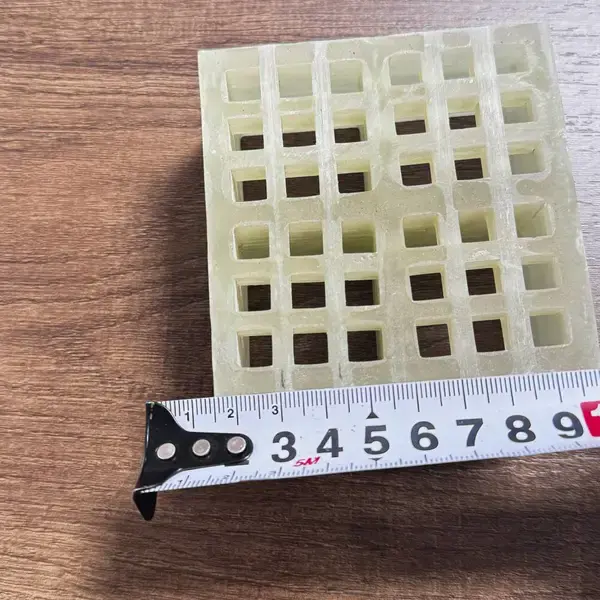
Fiberglass reinforced plastic grating is available in a wide range of standard panel sizes to accommodate different project requirements. Typical panel dimensions include 4 ft x 8 ft, 4 ft x 12 ft, and 3 ft x 10 ft, though custom sizes can be manufactured on request. The fiberglass reinforced plastic grating sizes most commonly stocked by suppliers include 1-inch, 1.5-inch, and 2-inch thicknesses, with panel sizes up to 4 ft x 12 ft. Understanding the standard fiberglass reinforced plastic grating sizes available helps project planners optimize material usage and minimize waste during installation.
- Panel thickness: 1 inch, 1.5 inches, 2 inches (standard duty); 1 inch and 1.5 inches (heavy duty molded)
- Bearing bar spacing: 1.5-inch center-to-center (standard), 2.5-inch (economy), 3-inch (heavy-duty walkway)
- Cross-bar spacing: Typically 6 inches or 4 inches on center
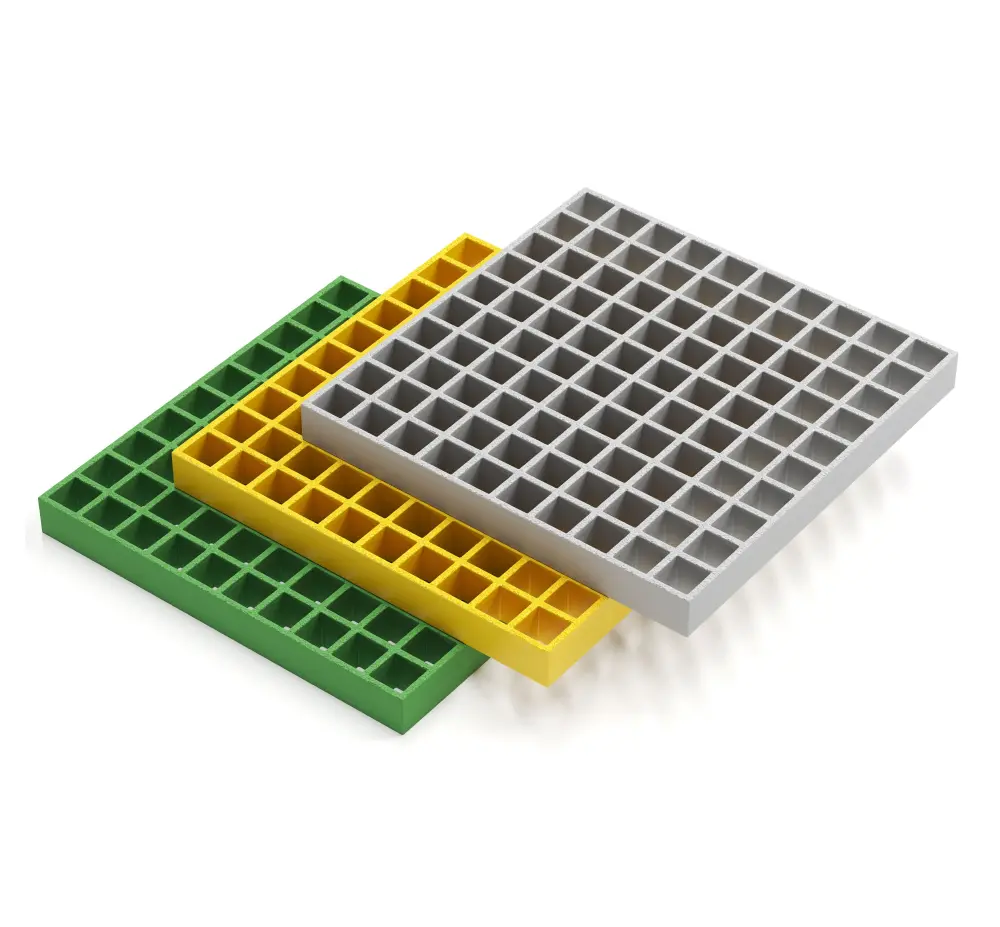
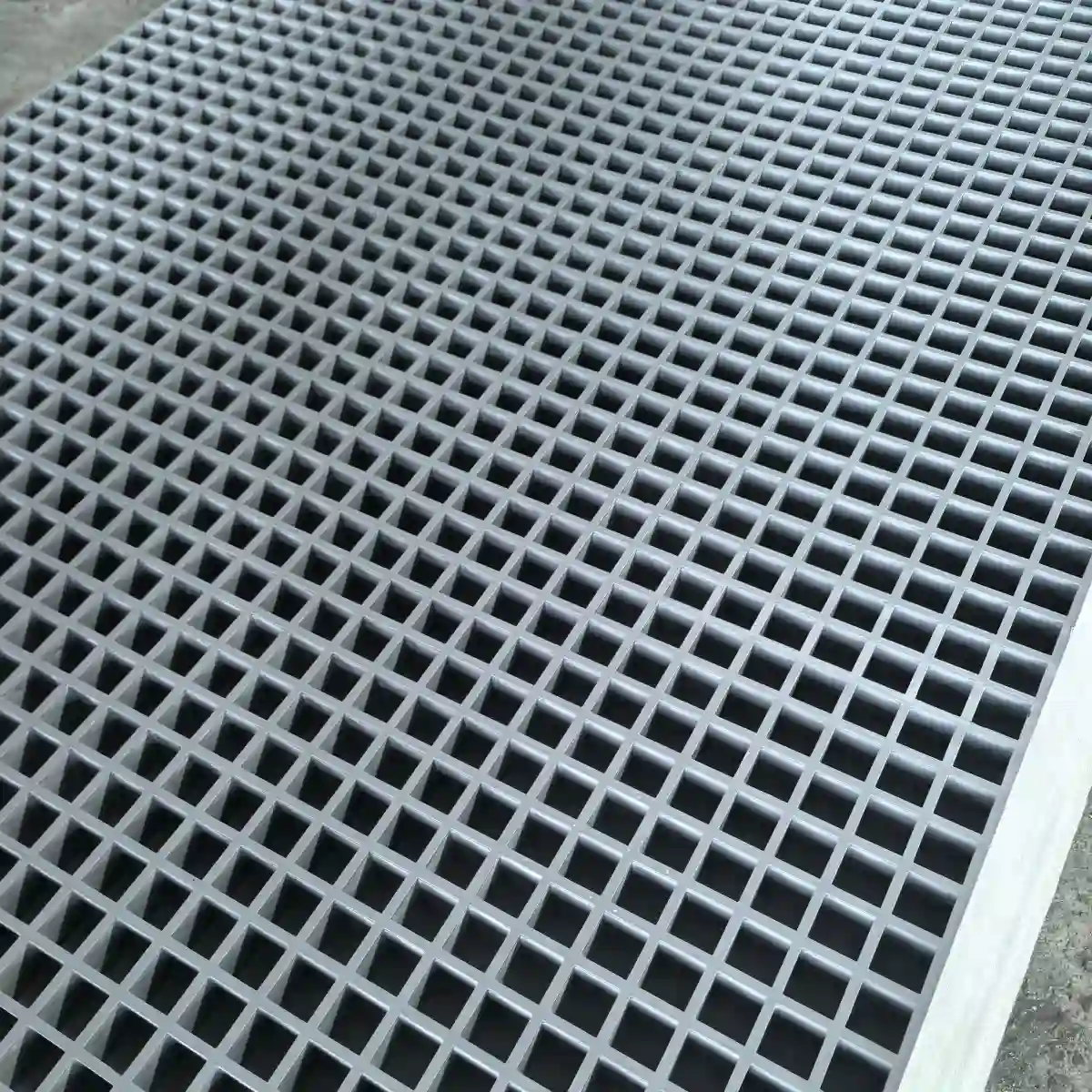
- Grid configuration: Square mesh (most common), rectangular mesh, and micro mesh for small-object retention
Fiberglass reinforced plastic grating panels can also be manufactured with different surface finishes. The most common options include concave (gritted) surface for slip resistance, a flat surface for easy cleaning, and a hatched surface pattern for enhanced traction in wet conditions.
Weight and Load Capacity Ratings
The fiberglass reinforced plastic grating weight capacity depends on the panel thickness, bearing bar spacing, and resin formulation. A typical 1.5-inch thick molded FRP grating panel weighs approximately 5-6 lb/ft² and can support concentrated loads of 3,000-4,000 lb per square foot before failure. When evaluating fiberglass reinforced plastic grating weight capacity for your application, always consult the manufacturer's load tables, which provide safe working loads based on the specific panel configuration and support spacing.
For engineering reference, load capacity is typically expressed as uniform load (psf) or concentrated load (lbs). A standard 1.5-inch thick molded FRP grating with 1.5-inch bearing bar spacing typically has a uniform load capacity of 400-800 psf and a concentrated load capacity of 3,000-4,500 lbs, making it suitable for pedestrian walkways, light vehicle access, and platform flooring.
Advantages Over Steel Grating
When comparing FRP grating to traditional steel grating, several distinct advantages of fiberglass reinforced plastic grating over steel become evident. Understanding these differences helps engineers and facility managers make the right material selection for their specific environment and budget.
Corrosion Resistance: Steel grating is prone to rust and corrosion when exposed to moisture, chemicals, and saltwater. Even galvanized steel will eventually corrode in aggressive environments. Fiberglass reinforced plastic grating, by contrast, is inherently corrosion-resistant and can withstand exposure to acids, alkalis, solvents, and seawater without degrading. This translates to a significantly longer service life — often 3-5 times longer than steel in corrosive environments — and reduced replacement costs.
Weight Advantage: FRP grating weighs approximately 75% less than steel grating with comparable load-bearing capacity. The light weight of fiberglass reinforced plastic grating panels simplifies handling during installation, reduces the need for heavy lifting equipment, and lowers transportation costs. It also places less dead load on supporting structures, which can lead to savings in foundation and structural steel design.
Safety Benefits: Unlike steel, FRP grating is non-conductive and non-magnetic, making it safer for use in electrical environments. It also has a lower thermal conductivity, meaning it does not become scalding hot under direct sunlight or freezing cold in winter — a significant safety and comfort advantage for workers who walk on grating surfaces for extended periods. Many FRP grating products feature built-in slip-resistant surfaces that provide superior traction compared to smooth steel grating.
Lifecycle Cost: Although the initial purchase price of fiberglass reinforced plastic grating is typically comparable to or slightly higher than painted steel grating, the total lifecycle cost is substantially lower. Steel grating requires periodic painting, galvanizing repairs, and eventual replacement — all of which add up over time. FRP grating requires minimal maintenance and no painting, making it the more economical choice over the long term.
Installation Ease: The lightweight nature of FRP grating makes it easier to cut, drill, and install on-site. Standard woodworking tools can be used for cutting and fitting, which simplifies field modifications and reduces installation time.
Common Applications for Walkways and Industrial Use
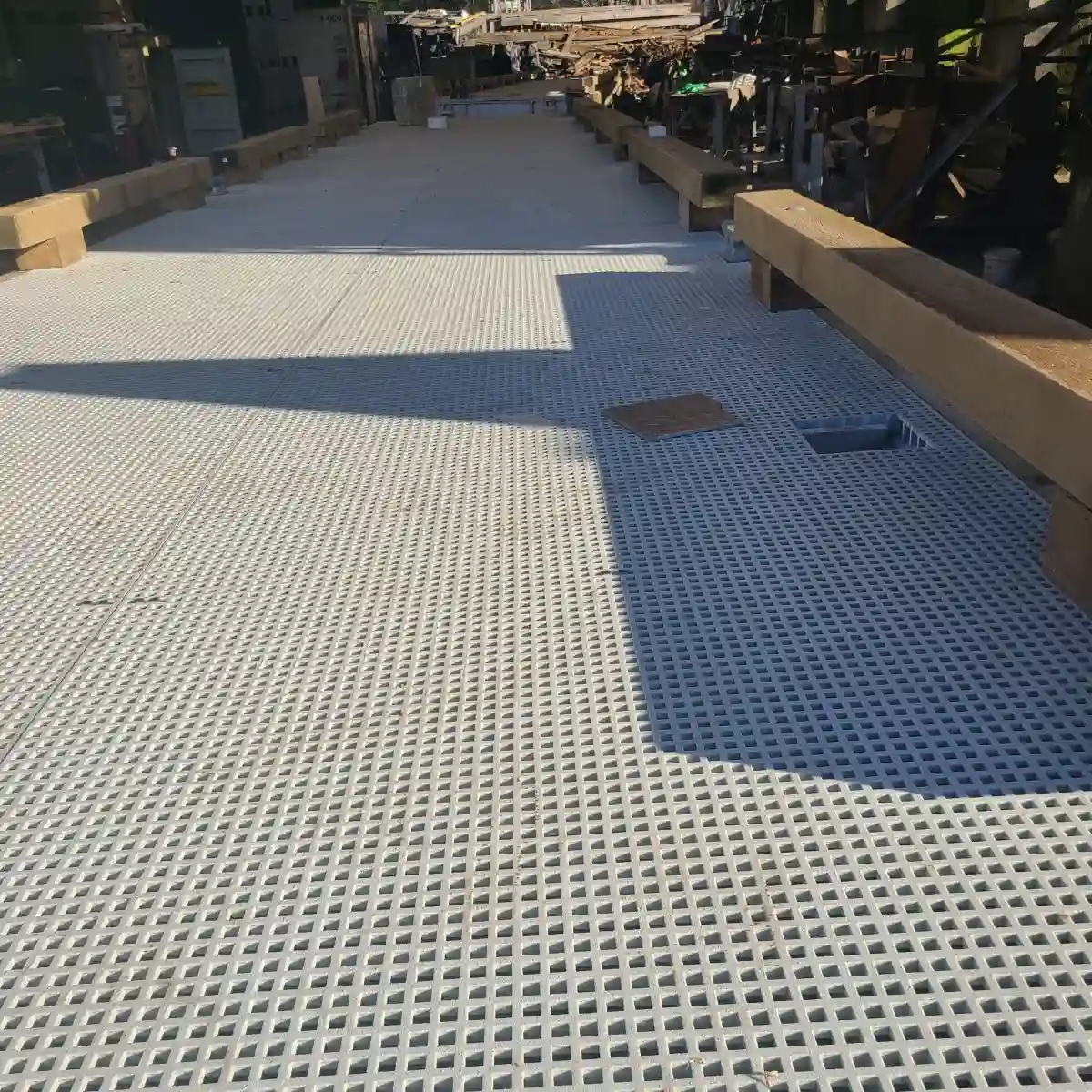
Fiberglass reinforced plastic grating for walkways is one of the most common and well-established applications of this versatile material. The combination of slip resistance, light weight, and corrosion resistance makes it ideal for a wide range of industrial and commercial settings.
Industrial Walkways and Platforms: FRP grating is extensively used for walkways, mezzanine flooring, and access platforms in chemical plants, refineries, pulp and paper mills, and power generation facilities. In these environments, exposure to corrosive chemicals, moisture, and extreme temperatures quickly degrades metal grating, making fiberglass reinforced plastic grating the preferred solution for long-term durability and worker safety.
Water and Wastewater Treatment: Treatment plants are among the largest consumers of FRP grating worldwide. Grating panels are used for catwalks around treatment tanks, filter platform flooring, stair treads, and trench covers. The constant exposure to moisture, chlorine, and other treatment chemicals would rapidly corrode steel grating, but FRP grating remains virtually unaffected for decades.
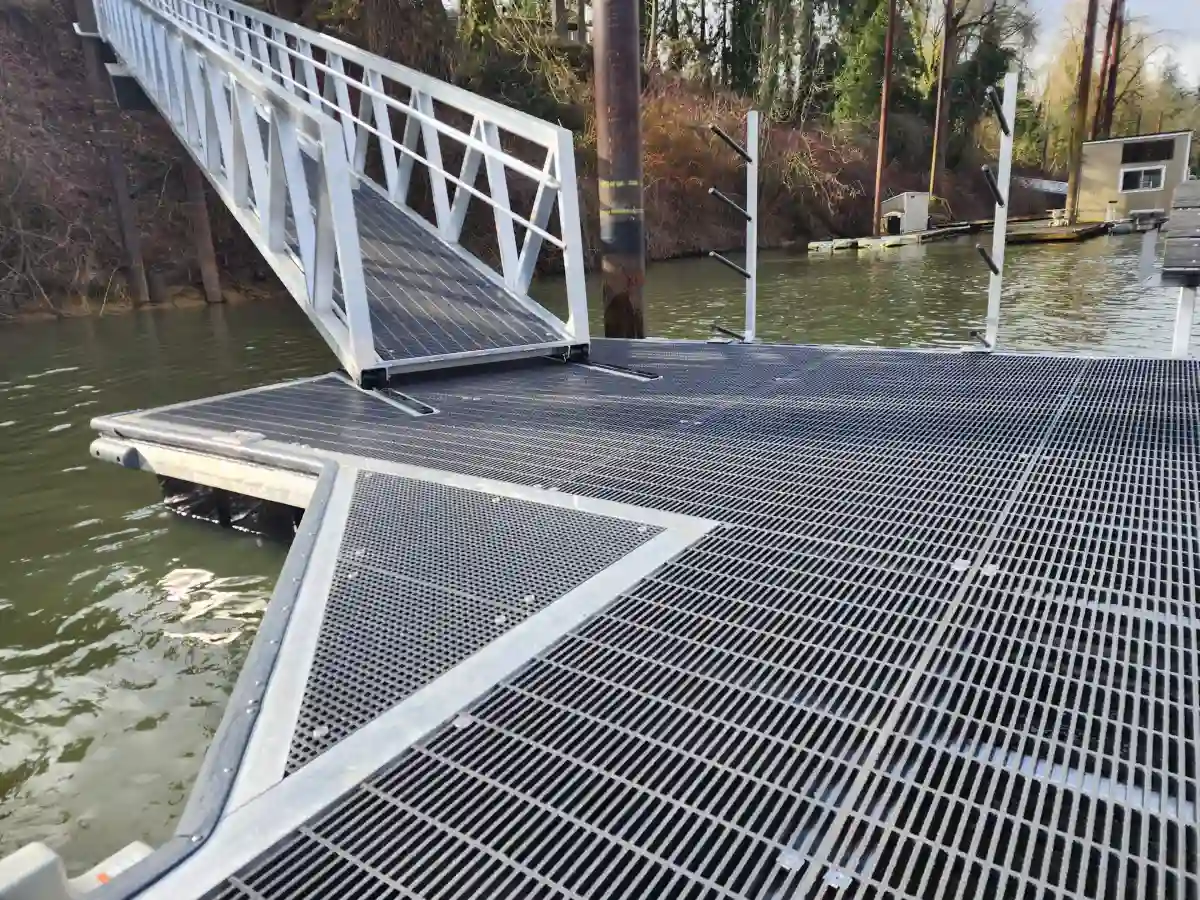
Marine and Offshore: In shipbuilding, offshore oil platforms, docks, and piers, the saltwater environment poses a constant corrosion challenge. Fiberglass reinforced plastic grating provides a non-corrosive, non-skid walking surface that maintains its structural integrity even after years of salt spray exposure.
Food Processing and Pharmaceuticals: These industries require frequent washdowns with hot water, steam, and sanitizing chemicals. FRP grating is non-porous, easy to clean, and resistant to the caustic cleaning agents used in sanitary environments. Additionally, its non-conductive nature adds safety in wet processing areas.
Electrical and Telecommunications: Because FRP grating is electrically non-conductive and non-magnetic, it is widely used in electrical substations, battery rooms, cable trenches, and telecom facilities where the risk of electrical shock or interference with sensitive equipment must be eliminated.
Public Infrastructure: Municipalities use fiberglass reinforced plastic grating for pedestrian bridges, boardwalks, park trail crossings, and drainage covers. The materials UV resistance and low maintenance requirements make it ideal for outdoor public spaces where long-term durability is essential and maintenance access is limited.
Is Fiberglass Reinforced Plastic Grating Fire Resistant?
A common question about GRP products is: is fiberglass reinforced plastic grating fire resistant? The answer depends on the resin system used in manufacturing. Standard polyester-based FRP grating will burn when exposed to an open flame, but specialized fire-retardant formulations are widely available and commonly used in applications where fire safety is a concern.
Phenolic resin is the most fire-resistant option for fiberglass reinforced plastic grating. Phenolic FRP grating has an extremely low flame spread index and produces minimal smoke when exposed to fire. It meets stringent fire safety standards including ASTM E84 Class 1 (flame spread index less than 25) and can withstand temperatures up to 350°F (177°C) without significant degradation. This makes phenolic FRP grating the preferred choice for offshore oil platforms, chemical processing facilities, and public buildings where fire codes demand high-performance materials.
Fire-retardant polyester and vinyl ester resins incorporate chemical additives that inhibit combustion. These grades typically achieve an ASTM E84 Class 1 or Class 2 rating with flame spread indices below 50. While not as fire-resistant as phenolic grades, fire-retardant polyester FRP grating is suitable for most industrial applications where basic fire code compliance is required.
It is important to note that fiberglass reinforced plastic grating, regardless of resin type, does not melt and drip like thermoplastics. Instead, it chars and forms a protective carbon layer that slows further combustion. This charring behavior provides additional time for evacuation and fire response in an emergency. When specifying FRP grating for fire-sensitive environments, always verify the flame spread index and smoke developed index ratings from the manufacturer and ensure the product meets local building code requirements.
How to Install Fiberglass Reinforced Plastic Grating
Knowing how to install fiberglass reinforced plastic grating properly is essential for ensuring safety, load performance, and long service life. FRP grating is significantly lighter than steel grating, making it easier to handle and install, but proper techniques must be followed to achieve optimal results.
Preparation and Handling: Before installation, inspect all panels for damage during shipping. Wear appropriate personal protective equipment including gloves and safety glasses when handling FRP grating. Store panels flat and off the ground to prevent warping before installation.
Support Structure Requirements: Fiberglass reinforced plastic grating must be installed on a properly designed support structure. The bearing bars should run perpendicular to the supports, and the support spacing must not exceed the maximum allowable span specified by the manufacturer for the given load rating. Typical support spacing for 1.5-inch thick molded grating ranges from 18 to 24 inches depending on the load requirements. All support members must be in the same plane to ensure even load distribution across the grating surface.
Fastening Methods: The most common fastening method for FRP grating is clip-based attachment. FRP hold-down clips and saddle clips are used to secure panels to the support structure without drilling through the grating. These clips allow for thermal expansion and contraction while holding panels firmly in place. For applications requiring a more permanent installation, stainless steel bolts and washers can be used, though holes should be drilled rather than punched to avoid damaging the fiberglass structure. A general rule is to use two clips per intersection of bearing bar and support member, with clip spacing of 12-18 inches along supports.
Field Modifications: One of the advantages of FRP grating is that it can be cut and drilled on-site using standard power tools. This allows for easy fitting around pipes, columns, and other obstructions. Always seal cut edges with a compatible resin or edge sealant to prevent moisture ingress and fiber blooming.
Expansion Gaps: Leave a minimum 1/8-inch to 1/4-inch gap between adjacent panels and between the grating and any surrounding structure. This gap accommodates thermal expansion and prevents buckling or distortion in temperature extremes.
How to Cut Fiberglass Reinforced Plastic Grating to Size
Field modifications are often necessary during installation, and knowing how to cut fiberglass reinforced plastic grating to size is an important skill for contractors and maintenance teams. Fortunately, FRP grating is much easier to cut than steel grating and can be worked with common woodworking tools.
Recommended Cutting Tools: The best results are achieved with carbide-tipped blades because fiberglass is highly abrasive and will quickly dull standard steel blades. For straight cuts across bearing bars, a circular saw with a carbide-tipped blade works well. For intricate cuts or notching around obstructions, a jigsaw with a carbide grit blade is effective. Abrasive cut-off saws can also be used but produce more dust and may generate heat that could affect the resin near the cut edge.
Cutting Procedure:
- Measure and mark the cut line clearly on the grating surface using a marker or chalk line
- Clamp the panel securely to a stable work surface to prevent vibration during cutting
- Wear a dust mask or respirator — fiberglass dust can irritate the respiratory system
- Cut along the marked line with steady, even pressure; avoid forcing the blade through the material
- For molded grating, cut along the center line between bearing bars whenever possible to maintain structural integrity
Drilling Holes: When drilling holes for bolt attachments, use carbide-tipped drill bits and drill at moderate speed to avoid heat buildup. Holes should be drilled 1/16-inch larger than the bolt diameter to allow for thermal expansion. Avoid punching or stamping holes, as this can cause delamination around the hole edge.
Edge Sealing: After cutting or drilling, always seal the exposed edges with a compatible resin or manufacturer-recommended edge sealant. This prevents moisture from wicking into the fiberglass strands (capillary action) and reduces the risk of fiber blooming, delamination, or premature degradation. Most manufacturers supply matching gel coat or resin for edge sealing.
By following these procedures, you can cut fiberglass reinforced plastic grating panels to precise dimensions on-site without compromising their structural integrity or corrosion resistance.
Cost Considerations
One of the most frequently asked questions from project planners is how much does fiberglass reinforced plastic grating cost? The price of FRP grating varies based on several factors including resin type, panel thickness, mesh configuration, surface finish, and order quantity.
Price Ranges: As a general guideline, standard polyester resin molded FRP grating typically ranges from $15 to $35 per square foot for 1.5-inch thick panels. Fire-retardant and vinyl ester grades command a premium, typically costing 10-25% more than standard polyester. Phenolic resin grating, with its superior fire resistance, is the most expensive option and can cost 50-100% more than standard polyester grating. Pultruded grating, which offers higher strength and longer spans, typically costs 20-40% more than equivalent molded grating.
Factors Affecting Cost:
- Resin type: Polyester (most economical), vinyl ester (mid-range), phenolic (premium)
- Panel thickness: Thicker panels require more material and cost more — 2-inch thick grating costs approximately 30-40% more than 1-inch panels
- Bearing bar spacing: 1.5-inch spacing uses more material than 2.5-inch spacing, increasing cost by 15-25%
- Surface finish: Gritted or concave surfaces add 5-10% to the base panel cost
- Order volume: Full pallet quantities or bulk orders typically receive 10-20% volume discounts
- Custom fabrication: Cut-to-size panels, custom shapes, and factory-cut holes add fabrication charges
Total Installed Cost Comparison: While the upfront cost of fiberglass reinforced plastic grating panels may be comparable to or slightly higher than galvanized steel, the total installed cost is often competitive because of FRP's lighter weight (lower shipping and handling costs) and easier installation (lower labor costs). When factoring in lifecycle savings from zero maintenance and extended service life — typically 20-30+ years in corrosive environments compared to 5-10 years for steel — FRP grating consistently delivers the lowest total cost of ownership.
For an accurate estimate, request quotes from multiple FRP grating manufacturers with your specific project specifications including dimensions, resin type, load requirements, and quantity.
Conclusion
Fiberglass reinforced plastic grating has earned its reputation as a high-performance, cost-effective flooring and walkway solution across virtually every industrial sector. Its unique combination of corrosion resistance, lightweight construction, high load capacity, and safety characteristics makes it an excellent choice for environments where traditional metal grating falls short.
When selecting fiberglass reinforced plastic grating for your project, consider the specific requirements of your application: the chemical environment, load demands, fire safety code requirements, and installation constraints. By matching the correct resin system, panel thickness, and mesh configuration to your needs, you can achieve a grating system that delivers reliable performance for decades with minimal maintenance.
Whether you need fiberglass reinforced plastic grating for walkways, platforms, trench covers, or stair treads, the material's proven track record in harsh environments — from chemical plants and offshore platforms to water treatment facilities and public infrastructure — demonstrates its value as a long-term investment in safety and durability. Consult with experienced FRP grating manufacturers and suppliers to obtain detailed load tables, specification sheets, and installation guidance tailored to your specific project.
Key Takeaways:
- FRP grating weighs 75% less than steel with comparable strength
- Corrosion-resistant — lasts 3-5 times longer than steel in harsh environments
- Available in multiple resin systems for different fire and chemical resistance needs
- Non-conductive, non-magnetic, and slip-resistant for enhanced safety
- Easy to cut and install on-site with standard tools
- Lower lifecycle cost than steel despite comparable initial pricing