Introduction
When designing or upgrading industrial work platforms, mezzanines, and elevated walkways, the choice of flooring material directly impacts safety, durability, and long-term operating costs. Fiberglass grating for platforms has emerged as a leading solution across chemical plants, offshore facilities, food processing lines, and water treatment centers — offering a unique combination of corrosion resistance, high strength-to-weight ratio, and low maintenance that steel and aluminum simply cannot match.
This comprehensive guide covers everything you need to know about FRP platform grating: load capacity ratings, standard panel sizes, installation methods, and a detailed cost comparison with traditional steel grating. Whether you are selecting grating for a new platform build or replacing corroded steel on an existing structure, the information below will help you make an informed purchasing decision.
Throughout this article, we answer the most common engineering and procurement questions: How much weight can FRP grating hold? What are the standard panel dimensions? Is installation more complex than steel? How does the total cost compare? By the end, you will understand why composite grating has become the preferred material for industrial platform applications and how to choose the right product for your specific requirements.
What Is Fiberglass Grating for Platforms?
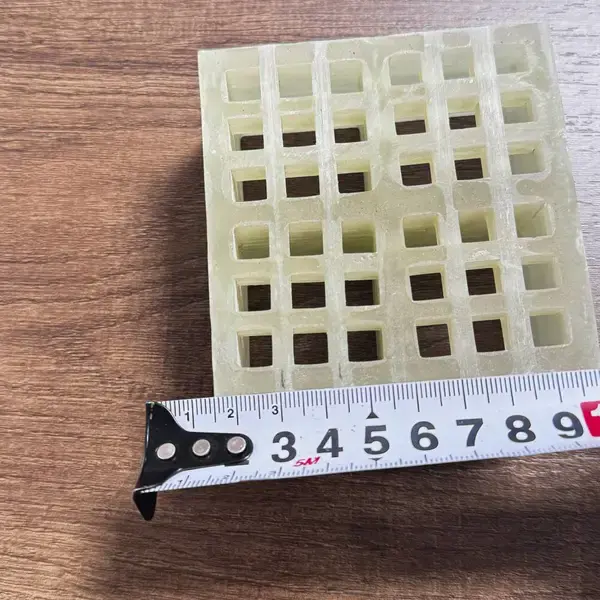
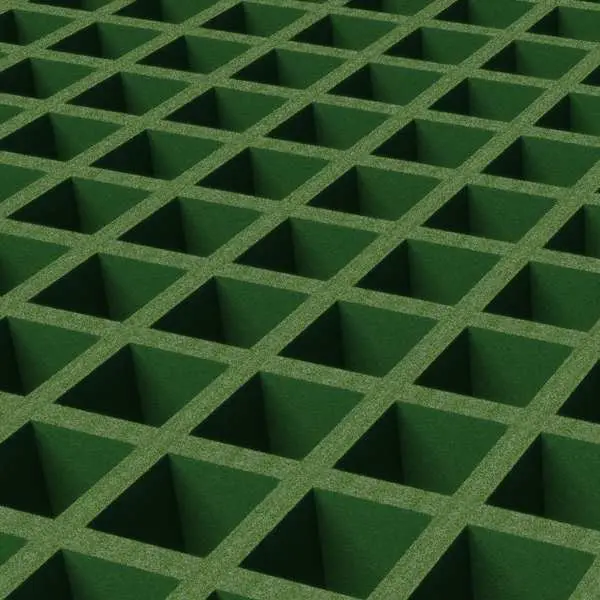
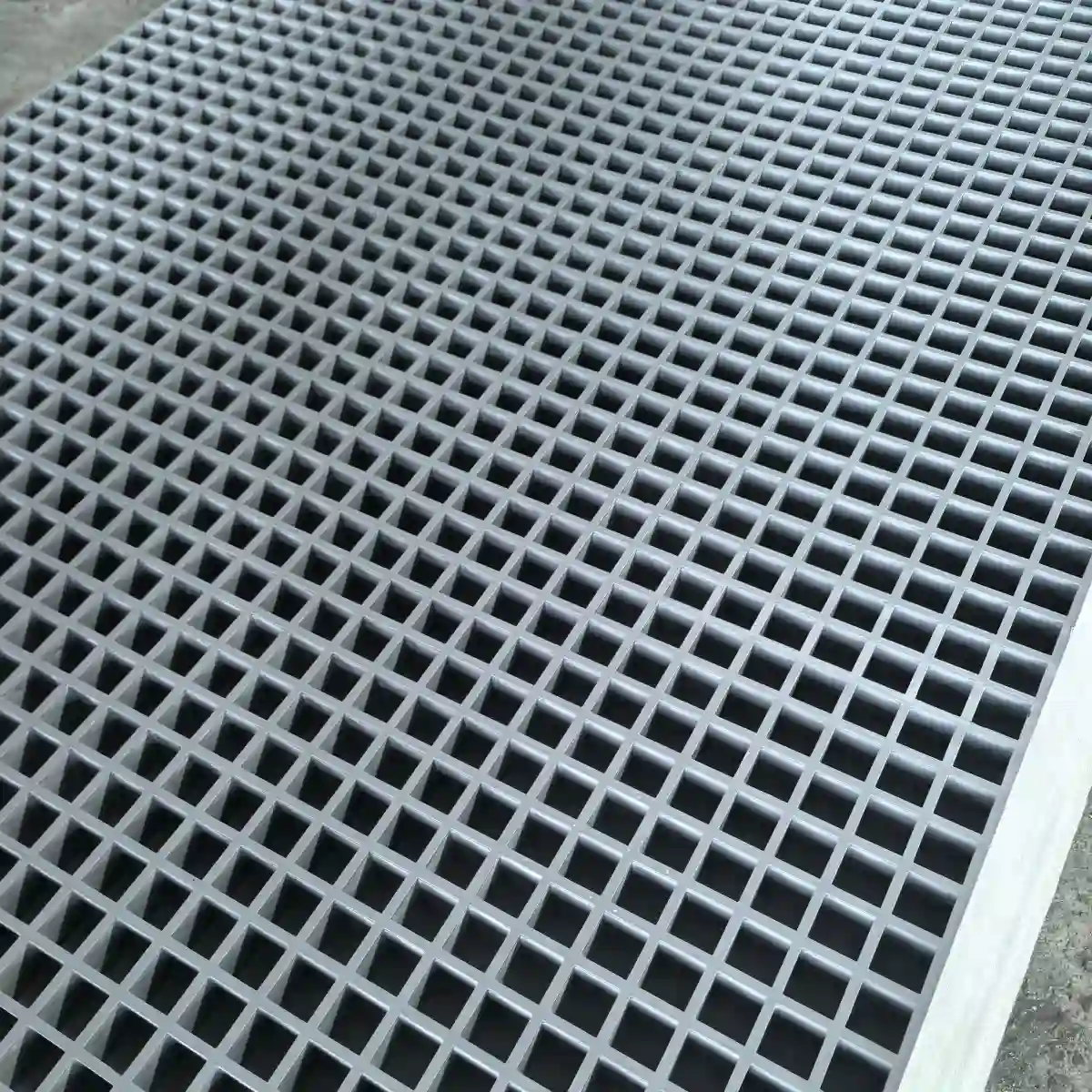
FRP (fiberglass reinforced plastic) platform grating refers to a composite grid structure manufactured from fiberglass strands and thermosetting resin. The material is formed into open-grid panels that provide a strong, slip-resistant walking surface while allowing light, air, and liquids to pass through. Two primary manufacturing methods exist: molded grating, where continuous fiberglass strands are interwoven in a square pattern and bonded with resin in a heated mold, and pultruded grating, where load-bearing bars made of pultruded fiberglass are mechanically assembled with cross rods passing through them.
Common Applications of Fiberglass Grating for Platforms
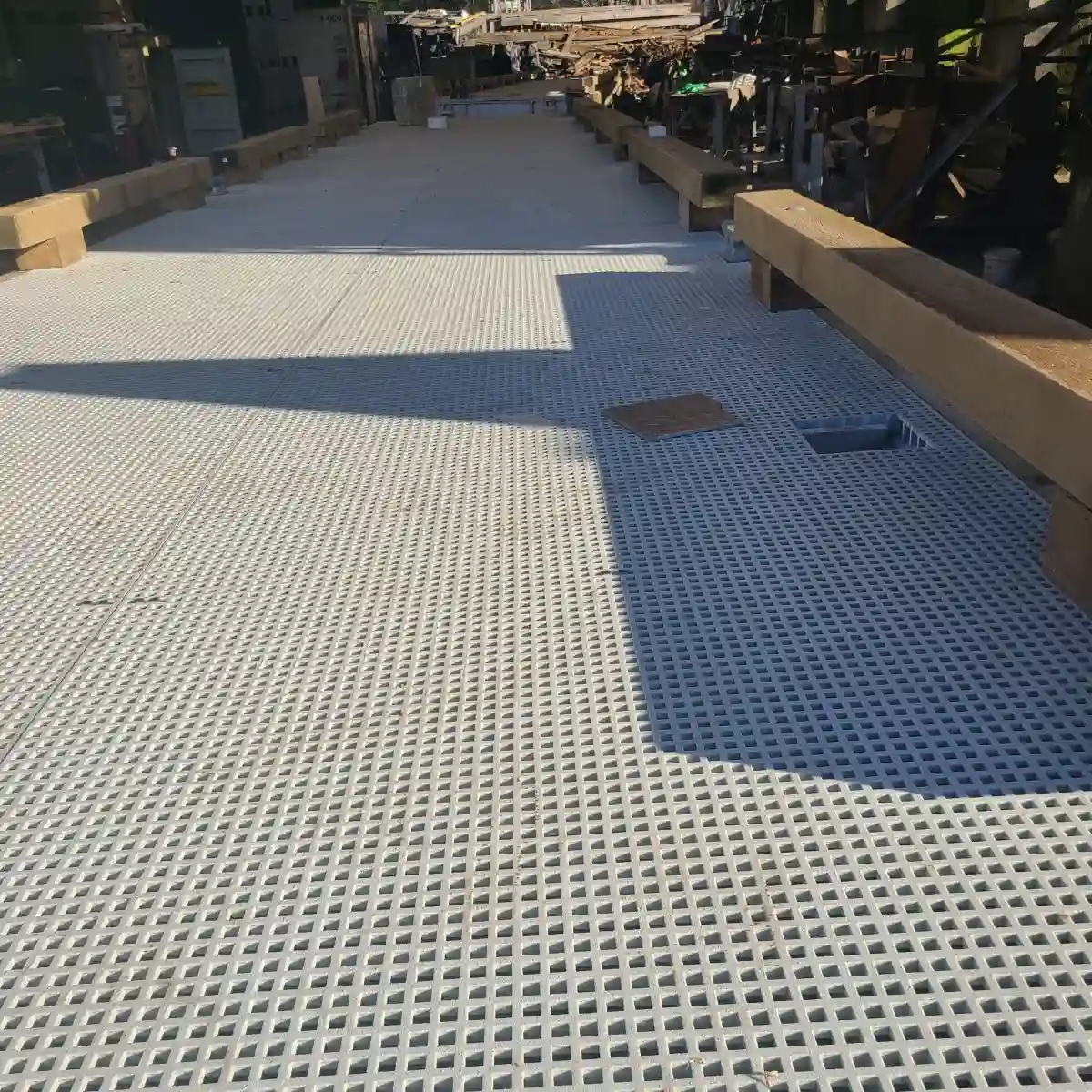
Fiberglass composite grating panels are used across a wide range of industries where corrosion resistance and safety are paramount. Typical platform applications include:
- Chemical processing plants — platforms above tanks, reactors, and piping where chemical spills are frequent
- Offshore oil and gas platforms — exposed to saltwater spray, where steel corrodes rapidly
- Water and wastewater treatment — platforms over clarifiers, aeration basins, and chemical feed areas
- Food and beverage facilities — wash-down platforms requiring frequent sanitation with harsh cleaning agents
- Power generation plants — cooling tower platforms, battery storage areas, and scrubber units
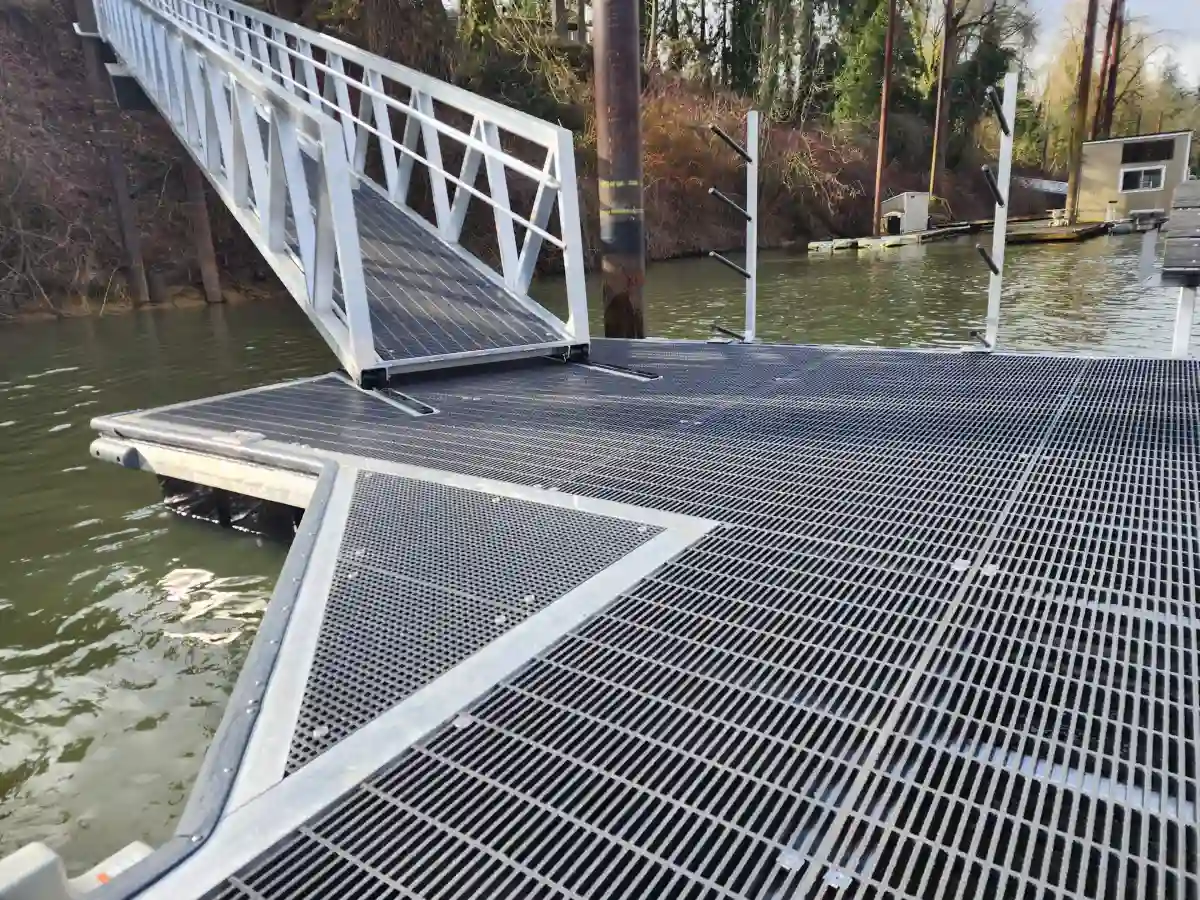
- Marine and dockside platforms — piers, loading docks, and vessel access platforms
- Pharmaceutical manufacturing — cleanroom platforms where non-shedding, non-corrosive surfaces are mandatory
Why Choose FRP Grating for Industrial Platforms
There are several compelling reasons engineers and facility managers choose composite grating over traditional materials:
- Corrosion resistance — FRP does not rust, rot, or degrade when exposed to moisture, chemicals, or saltwater, giving it a service life of 20+ years even in harsh environments
- Lightweight — fiberglass grating weighs approximately 60-70% less than steel, reducing structural support requirements and making installation faster and safer
- Low maintenance — no painting, coating, or periodic corrosion treatment is needed, saving significant labor and material costs over the life of the platform
- Slip resistance — the open-grid surface provides excellent traction even when wet, and optional gritted surfaces further enhance safety
- Non-conductive and non-sparking — ideal for electrical rooms, battery platforms, and explosive environments where metal grating poses a hazard
- UV resistance — resin formulations with UV inhibitors allow the grating to withstand prolonged sunlight exposure without significant degradation
Load Capacity of Fiberglass Grating for Platforms
One of the most frequently asked questions about FRP platform grating is how much weight it can safely support. The answer depends on several variables: the type of grating (molded vs. pultruded), the thickness of the bearing bars, the mesh configuration, the span between supports, and the specific resin formulation used in manufacturing.
How Much Weight Can Fiberglass Grating Hold?
Standard fiberglass composite grating can handle uniform loads ranging from 100 psf (pounds per square foot) for light-duty pedestrian platforms up to 400+ psf for heavy-duty industrial applications. The key factor determining load capacity is the support span — the distance between structural supports beneath the grating. Below is a representative load table for molded fiberglass grating:
| Grating Thickness | Span (in) | Safe Load (psf) | Deflection at Load |
|---|---|---|---|
| 1" (25 mm) | 18" | 250 psf | 0.10" |
| 1" (25 mm) | 24" | 150 psf | 0.15" |
| 1.5" (38 mm) | 24" | 350 psf | 0.12" |
| 1.5" (38 mm) | 30" | 200 psf | 0.18" |
| 2" (50 mm) | 30" | 400+ psf | 0.15" |
For pultruded grating, load capacities are generally higher due to the unidirectional fiber orientation in the bearing bars. A typical 1.5" pultruded grating can support 300-500 psf at a 24-inch span, making it suitable for heavy equipment platforms and vehicular access areas. Always consult the manufacturer's load tables for your specific product and span configuration.
Fiberglass Grating Weight Ratings and Specifications
Understanding fiberglass grating weight is important for both structural design and installation planning. Composite grating is significantly lighter than steel, which reduces the dead load on support beams and foundations. Typical weight values include:
- 1" molded grating (1.5" x 1.5" grid): approximately 3.5-4.5 lbs/ft2
- 1.5" molded grating (1.5" x 1.5" grid): approximately 5.0-6.5 lbs/ft2
- 1.5" pultruded grating (1.5" x 6" grid): approximately 4.0-5.5 lbs/ft2
- 2" pultruded grating (2" x 6" grid): approximately 6.0-8.0 lbs/ft2
By comparison, a 1/4" steel floor plate weighs approximately 10 lbs/ft2, and steel grating typically ranges from 8-15 lbs/ft2 depending on bar size and spacing. The lighter weight of composite grating translates to easier handling during installation and reduced structural steel requirements for the supporting framework.
The load capacity your platform needs depends on its intended use. OSHA requires that industrial platforms support at least 4 times the intended working load. Pedestrian walkways typically require 75-100 psf capacity, while maintenance platforms with equipment storage may need 150-300 psf. Platforms supporting heavy machinery or vehicle traffic may require 400+ psf capacity with deflection limits under 1/4 inch.
Standard Sizes of Fiberglass Grating Panels for Platforms
When planning a platform build, knowing the available panel sizes helps you design efficient layouts with minimal cutting and waste. Both molded and pultruded grating are manufactured in standard panel dimensions that suit most industrial platform applications.
Common Panel Dimensions and Configurations
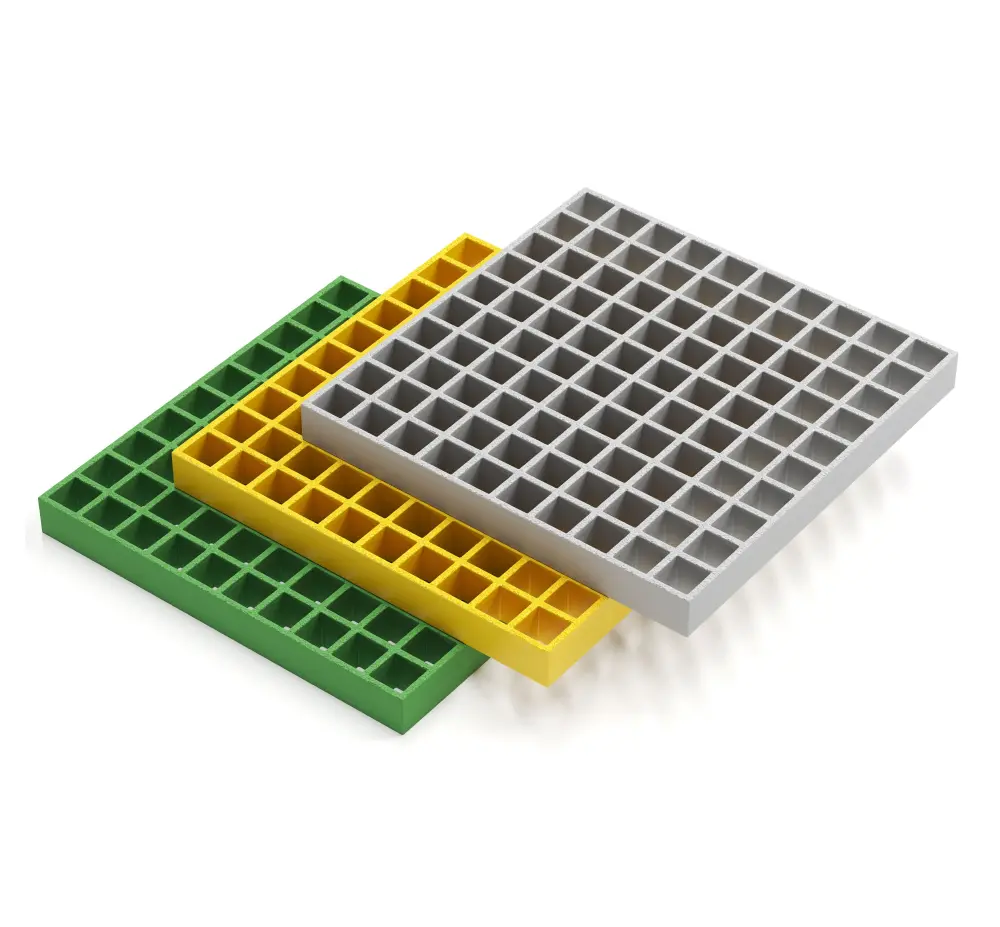
Standard fiberglass composite grating panels are available in the following sizes:
| Grating Type | Standard Panel Size | Grid Pattern | Open Area |
|---|---|---|---|
| Molded | 4' x 8' (1.22m x 2.44m) | 1.5" x 1.5" square | 52% |
| Molded | 4' x 12' (1.22m x 3.66m) | 1.5" x 1.5" square | 52% |
| Molded | 3' x 10' (0.91m x 3.05m) | 2" x 2" square | 62% |
| Pultruded | 3' x 20' (0.91m x 6.10m) | 1.5" x 6" rectangular | 57% |
| Pultruded | 3' x 24' (0.91m x 7.32m) | 2" x 6" rectangular | 65% |
Both types are available in thicknesses of 1", 1.5", and 2" (25 mm, 38 mm, and 50 mm). Custom panel sizes can be manufactured to order, though lead times and costs will be higher than standard panel sizes.
Best Panel Sizes for Platform Construction
The best fiberglass grating panels for platforms depend on your platform dimensions and support structure layout. Here are practical recommendations:
- Small platforms (under 50 ft2) — 4' x 8' molded grating panels offer the best balance of manageability and coverage. A single panel can cover a 4' x 8' mezzanine or maintenance platform with minimal cutting.
- Large industrial platforms (50-500 ft2) — 4' x 12' or 3' x 10' panels reduce the number of seams and speed up installation. Pultruded grating in 3' x 20' lengths is ideal for long, narrow catwalk platforms.
- Heavy-duty equipment platforms — Pultruded grating with a 2" x 6" grid pattern in 2" thickness provides maximum strength for equipment support platforms. The rectangular grid aligns bearing bars in the direction of traffic.
- Outdoor platform decks — 1.5" thick molded grating with a 1.5" x 1.5" pattern offers good load capacity with maximum open area for drainage and debris passage.
When ordering fiberglass grating panels for platforms, always specify the exact support span layout to your supplier so they can recommend the optimal thickness and grid configuration for your load requirements.
Fiberglass Grating for Platforms vs Steel Grating
One of the most common decisions platform designers face is whether to specify FRP vs steel grating. Both materials can handle industrial loads, but they differ dramatically in lifecycle cost, maintenance requirements, and environmental suitability.
Cost Comparison: Fiberglass vs Steel Platforms
The upfront cost of fiberglass composite grating is typically 1.5 to 3 times higher than equivalent steel grating. However, the total cost of ownership tells a different story. Here is a breakdown of the cost factors:
| Cost Factor | Fiberglass Grating | Steel Grating |
|---|---|---|
| Material cost (per ft2) | $15 - $35 | $8 - $18 |
| Installation labor | Lower (40% lighter, easier to cut) | Higher (requires welding or heavy hardware) |
| Support structure cost | Lower (less dead load) | Higher (must support heavier grating) |
| Annual maintenance | $0 - minimal inspection | $2-5/ft2 for painting/coating |
| Service life | 20-25 years | 5-15 years (in corrosive environments) |
| Replacement cost | None (long life) | Full replacement every 5-15 years |
| 10-year TCO* | $18 - $40/ft2 | $25 - $60/ft2 |
*Total Cost of Ownership including installation, maintenance, and one replacement cycle for steel in corrosive environments.
In corrosive environments such as chemical plants, wastewater facilities, and offshore platforms, FRP grating delivers a lower total cost of ownership despite the higher initial purchase price. The breakeven point typically occurs between year 3 and year 5, after which composite grating continues to save money every year that steel would need maintenance or replacement.
Performance Comparison: FRP vs Steel
Beyond cost, the performance characteristics of these two materials differ in several important ways:
- Weight — FRP weighs 60-70% less than steel, reducing structural support needs and making installation safer and faster
- Corrosion resistance — FRP is inherently corrosion-proof; steel requires continuous coating protection that degrades over time
- Strength-to-weight ratio — FRP has a higher strength-to-weight ratio than steel, meaning less material is needed for equivalent load capacity
- Fire performance — Steel is non-combustible; FRP can be formulated with fire-retardant resins to meet ASTM E84 Class 1 flame spread ratings
- Electrical conductivity — FRP is non-conductive, making it safer near electrical equipment; steel conducts electricity and requires grounding
- Thermal conductivity — FRP does not conduct heat or cold, providing a more comfortable walking surface in extreme temperatures
- Slip resistance — Both materials can provide good slip resistance, but FRP with gritted surface offers superior wet traction
For indoor platforms in dry, controlled environments where corrosion is not a concern, steel grating remains a cost-effective choice. But for any platform exposed to moisture, chemicals, salt spray, or requiring minimal maintenance, fiberglass grating for platforms is the superior long-term investment.
How to Install Fiberglass Grating for Platforms
Installing composite grating is straightforward and typically faster than steel grating installation because the material is lightweight and easily cut with standard woodworking tools. Proper installation ensures the grating performs at its rated load capacity and provides a safe working surface for years to come.
Installation Tools and Hardware
Before beginning installation of FRP platform grating, gather the following tools and components:
- Cutting tools — Carbide-tipped circular saw blades or abrasive cut-off wheels; fiberglass dust requires proper respiratory protection
- Drilling tools — Standard HSS or carbide drill bits for pilot holes
- Fastening hardware — Stainless steel or FRP clips, saddle clips, or hold-down brackets; never use carbon steel hardware as it will corrode and stain the FRP
- Bearing bars — Support structure (steel or FRP beams) spaced according to load requirements
- Safety equipment — Dust mask/respirator, safety glasses, cut-resistant gloves, hard hat
- Measuring and layout — Tape measure, chalk line, square, marker
Step-by-Step Installation Guide
Follow these steps to properly install FRP grating on platforms:
- Verify support structure — Confirm that support beams are level, properly spaced, and capable of carrying the combined dead load of the grating plus the intended live load. Maximum span should not exceed manufacturer recommendations for the chosen grating thickness and type.
- Layout the panels — Arrange grating panels on the support structure before fastening to optimize panel placement and minimize cuts. Plan for panel joints to fall on support beam centerlines.
- Cut panels to size — Measure and mark cut lines using a straight edge. Cut with a carbide-tipped saw blade, cutting from the top surface to minimize edge chipping. Cut panels should overhang supports by no more than 2 inches.
- Drill mounting holes — Drill holes at each support intersection, typically 1-2 inches from the panel edge. Use a drill guide to keep holes perpendicular. Space fasteners every 12-18 inches along supports.
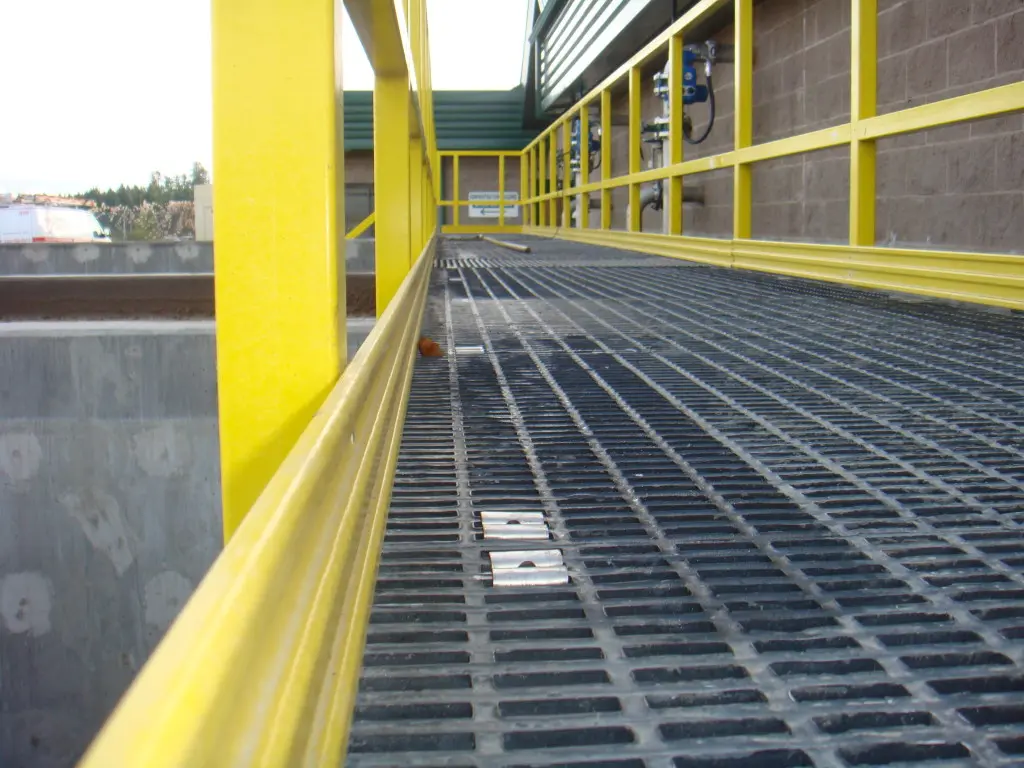
- Secure with clips or hold-downs — Attach panels using stainless steel saddle clips, FRP compression clips, or counter-sunk bolt-down systems. Tighten fasteners to manufacturer torque specifications — over-tightening can crush FRP material.
- Install edge trim if required — For exposed platform edges, install FRP edge trim or handrails per OSHA requirements (42-inch guardrail for platforms over 4 feet high).
- Inspect all connections — Verify that every panel is securely fastened and that there are no sharp edges, loose clips, or tripping hazards at panel joints.
A two-person crew can typically install 300-500 ft2 of composite platform grating per day, compared to 150-250 ft2 for steel grating. The lightweight material reduces lifting strain and eliminates the need for welding or specialized metalworking equipment.
How to Choose the Right Fiberglass Grating for Your Platform
Selecting the right FRP product for your project requires evaluating your specific application conditions, load requirements, and environmental factors. This section provides practical guidance to match the right product to your project.
Choosing Fiberglass Grating for Outdoor Platforms
Outdoor platforms present unique challenges that affect the selection of composite grating:
- UV exposure — For platforms in direct sunlight, specify grating with UV-inhibited resin (typically isophthalic polyester or vinyl ester with UV stabilizers). This prevents surface degradation, fiber bloom, and color fading over time.
- Freeze-thaw cycles — In cold climates, the open-grid design of FRP grating allows water to drain through, preventing ice buildup. Vinyl ester resin offers better freeze-thaw resistance than polyester.
- Wind uplift — Outdoor platforms in high-wind areas require additional hold-down fasteners. Use heavy-duty clips or through-bolt systems rather than adhesive mounts.
- Drainage — The 52-65% open area of fiberglass grating provides excellent water drainage, reducing slip hazards and preventing standing water that could accelerate degradation.
- Marine environments — For offshore platforms or coastal installations, vinyl ester resin with a gel coat provides maximum resistance to saltwater and UV attack.
Slip Resistance of Fiberglass Grating
Yes, FRP grating is slip resistant — and in many conditions it outperforms steel grating. The natural open-grid surface provides mechanical interlock with footwear, while optional enhancements include:
- Gritted top surface — Silica sand or aluminum oxide grit is embedded into the top surface during manufacturing, providing slip resistance comparable to rough concrete (COF > 0.6 when wet)
- Concave surface pattern — Molded grating has a slightly concave meniscus on each bar top, creating a natural textured surface
- Deep grit option — For environments with oil, grease, or food processing residues, deep-embedded grit provides slip resistance even with contaminant buildup
- OSHA compliance — Fiberglass grating with grit surface meets or exceeds OSHA slip resistance requirements for industrial platforms (ASTM F1679 standard)
The combination of open area drainage and a gritted walking surface makes composite platform grating one of the safest platform materials available, particularly in wet or chemically contaminated environments.
What Is the Best Fiberglass Grating for Platforms?
The "best" FRP option depends on your specific application. Use this decision guide to narrow your choice:
- Best for pedestrian walkways and light platforms — 1" thick molded grating, 1.5" x 1.5" grid pattern, isophthalic polyester resin. Cost-effective, widely available, and sufficient for 100-150 psf loads at 18-24 inch spans.
- Best for heavy-duty industrial platforms — 1.5" or 2" thick pultruded grating, 1.5" x 6" or 2" x 6" grid pattern, vinyl ester resin. Handles 300-500+ psf loads for equipment access and maintenance platforms.
- Best for chemical plant platforms — 1.5" molded or pultruded grating with vinyl ester resin and a corrosion-resistant veil. Provides maximum chemical resistance against acids, caustics, and solvents.
- Best for outdoor platforms — 1.5" molded grating with UV-stabilized isophthalic polyester resin, grit top surface, and stainless steel hardware. Balances UV resistance, slip safety, and corrosion resistance.
- Best for electrical/utility platforms — Standard molded or pultruded FRP grating (any resin). The non-conductive nature of fiberglass provides inherent electrical safety near transformers, switchgear, and battery banks.
Where to Buy Fiberglass Grating for Platforms
Once you have determined the specifications for your project, the next step is sourcing from a reliable supplier. Here are the most common purchasing channels and what to consider with each:
- Direct from manufacturers — Buying directly from FRP grating manufacturers typically offers the best pricing for large orders (500+ ft2). Major manufacturers include Bedford Reinforced Plastics, Strongwell, Fibergrate, and McNichols. Direct orders allow full customization of resin type, color, grit, and panel dimensions.
- Industrial supply distributors — Companies like Grainger, McMaster-Carr, and MSC Industrial Supply stock standard sizes with short lead times. This is the best option for small projects (under 100 ft2) or when you need material immediately.
- Specialty FRP fabricators — Local or regional FRP fabricators can supply, cut, and sometimes install the material. They often provide value-added services such as custom cut-to-size panels, edge banding, and hardware kits.
- Online marketplaces — Platforms like Alibaba and Made-in-China connect buyers with international manufacturers. Pricing may be 30-50% lower than US-made products, but shipping costs, lead times, and quality verification must be carefully evaluated.
When requesting a quote for FRP platform grating, provide the following information to get accurate pricing:
- Total square footage required
- Required load capacity (psf) and maximum support span
- Grating type (molded or pultruded) and thickness
- Panel dimensions (standard or custom cut)
- Resin type (polyester, vinyl ester, or phenolic for fire-rated applications)
- Surface finish (standard or grit top)
- Color preference (standard colors include gray, yellow, green, and orange)
- Hardware requirements (clips, hold-downs, edge trim)
- Delivery location and timeline
Most suppliers can provide a quote within 24-48 hours and ship standard products within 1-2 weeks. Custom orders typically require 3-6 weeks lead time.
Conclusion
FRP composite grating offers a compelling combination of high load capacity, corrosion resistance, lightweight handling, and long service life that makes it the preferred choice for industrial platform applications in demanding environments. While the upfront material cost is higher than steel grating, the total cost of ownership over 10-20 years is significantly lower when maintenance, replacement, and downtime costs are factored in.
To summarize the key takeaways:
- Load capacity — Standard fiberglass grating handles 100-500+ psf depending on thickness, span, and grating type. Always verify load tables for your specific product and support spacing.
- Sizes — Panels are available in 4' x 8' up to 3' x 24' in thicknesses of 1", 1.5", and 2". Pultruded grating offers longer panel lengths for large platforms.
- Installation — FRP grating installs 40-60% faster than steel due to lighter weight and easy cutting. A two-person crew can install 300-500 ft2 per day.
- Cost — Expect to pay $15-35/ft2 for material, but recoup the investment through zero maintenance costs and 20+ year service life in corrosive environments.
- Safety — Grit-surfaced FRP grating provides excellent slip resistance (COF > 0.6), meets OSHA requirements, and is non-conductive for electrical safety.
Whether you are designing a new chemical plant platform, replacing corroded steel walkways, or building an offshore maintenance deck, fiberglass grating for platforms delivers the performance, safety, and longevity that modern industrial operations demand. Contact a qualified supplier with your project specifications to get accurate pricing and lead times for your specific application.