Introduction
When planning an industrial flooring project, understanding fiberglass grating panels sizes is one of the most critical first steps. Choosing the wrong dimensions can lead to installation delays, structural issues, and unnecessary material waste. Whether you are designing a chemical plant walkway, a water treatment platform, or a marine dock, knowing the standard sizes, thickness options, and custom availability of fiberglass grating panels will save you time and money.
This complete reference guide covers everything you need to know about fiberglass grating panels sizes — from standard widths and lengths to maximum panel dimensions, thickness specifications, weight charts, and practical measurement tips. By the end of this article, you will be able to confidently select the right panel size for your specific application.
We will also cover how fiberglass reinforced plastic grating sizes compare across different manufacturing methods, what custom options are available, and how fiberglass grating panels weight varies by size and resin type.
Standard Fiberglass Grating Panels Sizes & Common Dimensions
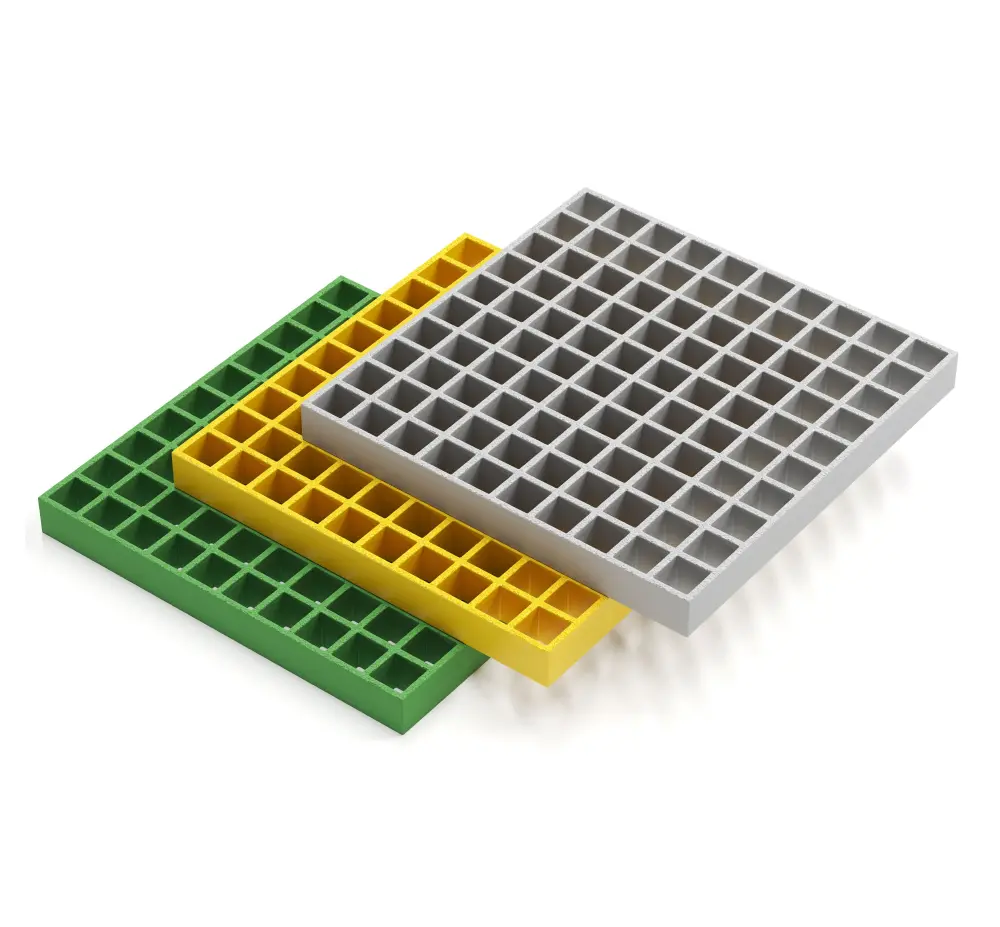
Fiberglass grating panels are manufactured in a range of standardized dimensions that accommodate most industrial and commercial applications. Understanding these common fiberglass grating panels sizes helps you plan your project efficiently and avoid custom fabrication costs where possible.
Standard Panel Widths and Lengths
The most common fiberglass grating panel sizes for molded grating are:
| Dimension | Standard Sizes (inches) | Standard Sizes (mm) |
|---|---|---|
| Width | 24", 36", 48", 60" | 610 mm, 914 mm, 1219 mm, 1524 mm |
| Length | 96", 120", 144" | 2438 mm, 3048 mm, 3658 mm |
| Common Panel Size | 48" × 144" | 1219 mm × 3658 mm |
| Common Panel Size | 36" × 96" | 914 mm × 2438 mm |
| Common Panel Size | 60" × 120" | 1524 mm × 3048 mm |
The 48" × 144" (4 ft × 12 ft) panel is the most widely produced fiberglass grating panel size in the industry. It offers an excellent balance of weight, handling convenience, and coverage area. For pultruded fiberglass grating panels, standard widths typically range from 24" to 60", while lengths can extend up to 240" (20 ft) depending on the manufacturer.
Standard Thickness of Fiberglass Grating Panels
Thickness directly affects the load-bearing capacity of the panel. The standard thickness of fiberglass grating panels varies by type:
| Grating Type | Standard Thickness Options | Typical Application |
|---|---|---|
| Molded Grating | 1", 1.5", 2" | Light to medium industrial walkways |
| Molded Grating | 2.5", 3" | Heavy-duty platforms and vehicle access |
| Pultruded Grating | 1", 1.5", 2", 2.5", 3" | High-strength structural applications |
| Micro-Mesh Grating | 1", 1.5" | Cart-wheel-friendly and pedestrian areas |
The standard thickness of fiberglass grating panels for most general-purpose applications is 1.5" (38 mm). For heavy industrial use where forklifts or heavy equipment will be present, 2" or 2.5" thickness is recommended.
Mesh Size and Opening Patterns
In addition to overall panel dimensions, the mesh configuration is an important part of fiberglass grating panels dimensions. The most common mesh patterns include:
- Square Mesh (1" × 1"): Standard for general walkway applications — good balance of strength and light transmission
- Square Mesh (1.5" × 1.5"): Economical option with larger openings, suitable for pedestrian-only areas
- Rectangular Mesh (Varies): Pultruded grating often uses rectangular openings which provide directional strength
- Micro-Mesh (0.5" × 0.5"): Designed for areas where small tools or cart wheels must not fall through
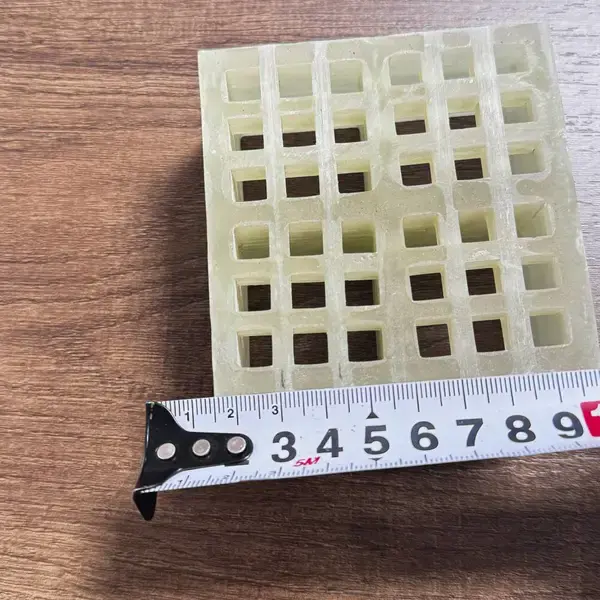
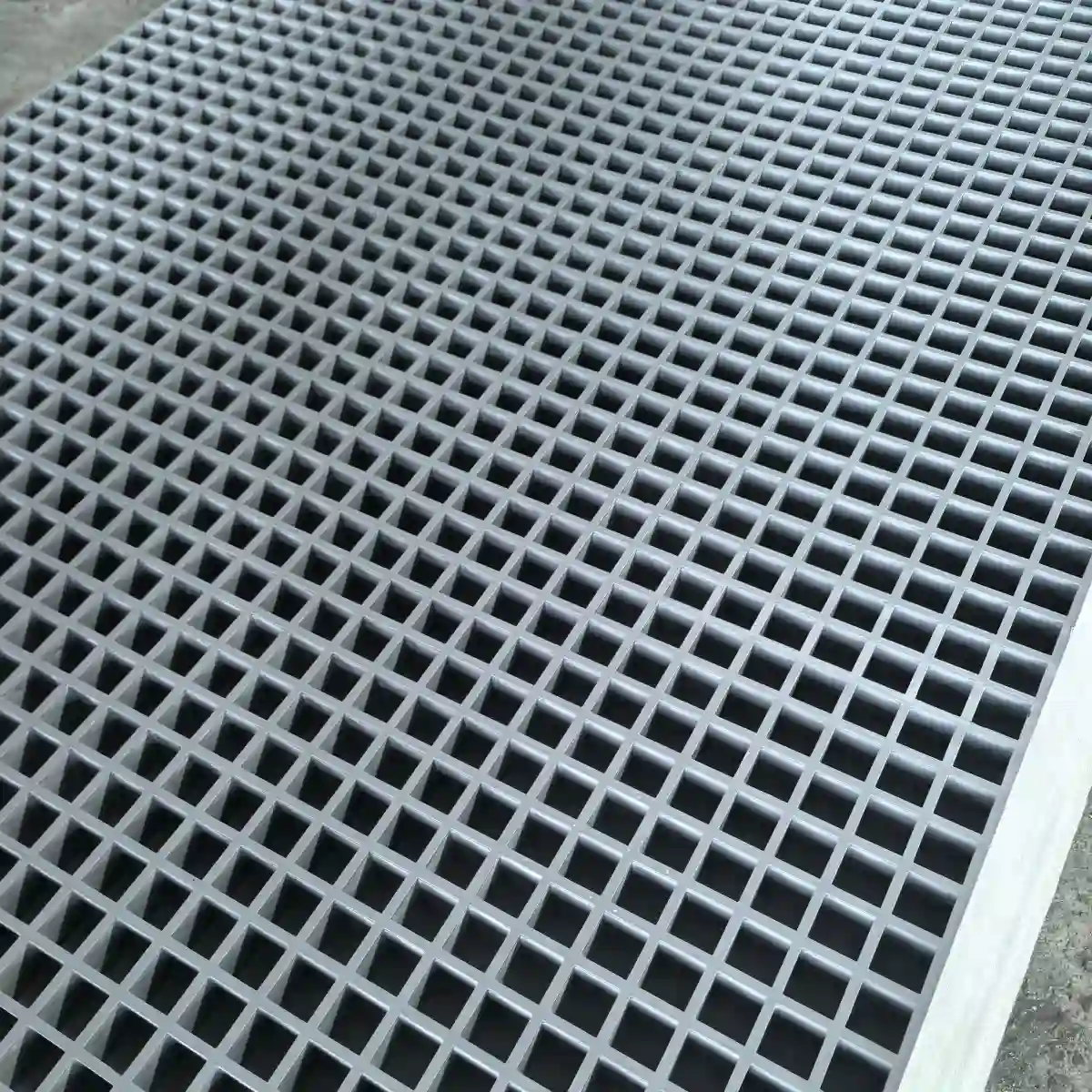
Molded grating typically has a uniform square mesh pattern throughout the panel, while pultruded fiberglass grating panels feature I-beam or T-bar bearing bars with cross rods for lateral support.
Maximum Fiberglass Grating Panel Size Available
One of the most frequently asked questions about fiberglass grating panels sizes is: what is the largest panel size available? The answer depends on the manufacturing process.
Maximum fiberglass grating panel size for molded grating: Most manufacturers produce molded grating panels up to 60" × 144" (1524 mm × 3658 mm). Some specialty molds can produce panels up to 72" × 168" (1829 mm × 4267 mm), but these are less common and typically require minimum order quantities.
Maximum fiberglass grating panel size for pultruded grating: Pultruded fiberglass grating panels can be manufactured in significantly longer lengths compared to molded. Standard pultruded grating panels can reach up to 240" (20 ft / 6096 mm) in length, with widths typically ranging from 24" to 60". The continuous pultrusion process allows for virtually unlimited length, though practical shipping and handling constraints usually cap single-piece lengths at 20-24 feet.
| Grating Type | Max Width | Max Length | Max Panel Area |
|---|---|---|---|
| Molded Grating | 60" (1524 mm) | 144" (3658 mm) | 60 sq ft (5.6 m²) |
| Pultruded Grating | 60" (1524 mm) | 240" (6096 mm) | 100 sq ft (9.3 m²) |
| Custom Molded | 72" (1829 mm) | 168" (4267 mm) | 84 sq ft (7.8 m²) |
When selecting the fiberglass grating panel size, remember that larger panels reduce the number of support beams and fasteners needed, but they are heavier and more difficult to handle during installation. Always verify the maximum panel size with your manufacturer, as tooling and production capabilities vary between suppliers.
Custom Fiberglass Grating Panels Sizes
While standard fiberglass grating panels sizes cover most applications, many projects require custom dimensions. The good news is that both molded and pultruded fiberglass grating panels can be produced in custom sizes to match your exact specifications.
Available Custom Sizes for Fiberglass Grating Panels
Custom size options for fiberglass reinforced plastic grating sizes include:
- Custom Widths: Most manufacturers can produce molded grating in any width from 12" up to 72", though widths beyond 60" may have longer lead times
- Custom Lengths: Pultruded grating can be cut to any length during fabrication. Molded grating typically requires custom molds for non-standard lengths
- Custom Thickness: While standard thicknesses are 1", 1.5", and 2", some manufacturers offer 1.25" or 2.25" as specialty thicknesses
- Custom Cut-Outs: Panels can be fabricated with pre-cut openings for pipes, columns, and equipment penetrations
- Tapered or Non-Rectangular Panels: For curved walkways or irregular support structures, custom-shaped panels can be manufactured
The cost for custom fiberglass grating panels sizes typically includes a one-time mold or setup fee for non-standard dimensions, plus a per-unit fabrication charge. For molded grating, custom sizes require a dedicated mold that can cost between $1,000 and $5,000 depending on complexity. For pultruded grating, custom widths may require a new pultrusion die, while custom lengths are simply cut to order at minimal additional cost.
When requesting custom fiberglass grating panels sizes, provide your manufacturer with:
- Exact width, length, and thickness requirements
- Load capacity needs
- Resin type (polyester, vinyl ester, or phenolic)
- Mesh or bearing bar spacing preferences
- Any cut-out or notch locations
Custom panels typically add 1-3 weeks to standard lead times, so plan your project timeline accordingly.
Can Fiberglass Grating Panels Be Cut to Custom Sizes?
Yes — fiberglass grating panels can be cut to custom sizes, and this is one of the major advantages of FRP grating over materials like steel or aluminum. Can fiberglass grating panels be cut to custom sizes? Absolutely. The material is easily cut using standard woodworking and metalworking tools, making on-site modifications straightforward.
Cutting Methods for Fiberglass Grating Panels
When you need to adjust fiberglass grating panels sizes on-site or during fabrication, the following tools work well:
- Circular Saw: A carbide-tipped blade (10-14 teeth per inch) provides clean, smooth cuts through molded and pultruded grating
- Cut-Off Saw or Chop Saw: Ideal for cutting panels to length quickly and accurately
- Jig Saw: Useful for cutting curves or irregular shapes around pipe penetrations and column supports
- Abrasive Wheel: Can be used on a angle grinder for smaller cuts or adjustments
Important Considerations When Cutting
Before cutting fiberglass grating panels to size, keep these factors in mind:
- Wear Personal Protective Equipment: FRP dust and fibers can irritate skin and lungs — always wear a respirator, safety glasses, and gloves
- Support the Panel: Ensure the panel is fully supported on both sides of the cut line to prevent chipping or cracking
- Seal Cut Edges: Exposed fiberglass edges should be sealed with resin or a compatible coating to maintain corrosion resistance
- Respect Load Ratings: Cutting a panel changes its structural properties — verify that the modified fiberglass grating panels sizes still meet load requirements
- Cut Between Bearing Bars: For pultruded grating, always cut between the bearing bars, not through them, to maintain structural integrity
Most manufacturers also offer pre-cutting as a fabrication service. Providing your exact fiberglass grating panel dimensions at the time of order eliminates the need for on-site cutting and ensures professionally finished edges.
How to Measure Fiberglass Grating Panel Dimensions for Your Project
Accurate measurement is essential when ordering fiberglass grating panels sizes for your project. Follow this step-by-step guide to measure fiberglass grating panel dimensions correctly.
Step 1: Measure the Support Structure
Before determining your required fiberglass grating panel size, measure the dimensions of the support frame or bearing bar spacing:
- Span (Support-to-Support): Measure the clear distance between support beams. The panel must span this distance with adequate load capacity
- Overall Area: Measure the total length and width of the area to be covered. Add 1-2 inches of overhang on each side for proper seating on supports
- Penetration Locations: Mark the positions of any pipes, columns, or equipment that will pass through the grating
Step 2: Determine Panel Orientation
For pultruded fiberglass grating panels, the bearing bars (the long reinforcing members) should run perpendicular to the support beams. For molded grating, the strength is more uniform in all directions, but panel orientation still affects installation efficiency. Note the direction of traffic and primary load paths when planning your layout.
Step 3: Account for Clearance and Tolerances
When measuring fiberglass grating panel dimensions, always account for:
- Thermal Expansion: FRP expands and contracts with temperature — allow 1/8" gap per 10 ft of panel length for thermal movement
- Installation Tolerance: Leave a 1/4" to 1/2" gap between adjacent panels for ease of installation
- Manufacturing Tolerance: Standard fiberglass grating panels sizes have a dimensional tolerance of ±1/8" in width and ±1/4" in length
Step 4: Create a Panel Layout Diagram
Draw a scaled diagram showing how panels will fit together in your space. This helps you determine the most efficient combination of standard fiberglass grating panels sizes and identifies areas where custom sizes are needed. Most suppliers can help optimize your layout to minimize cutting and waste.
Pro Tip: Order one or two extra panels (or add 5-10% to your order quantity) to account for measurement errors, cutting waste, and future replacements.
How to Choose the Right Fiberglass Grating Panel Size
Selecting the correct fiberglass grating panel size involves balancing several factors. Here is a practical framework for choosing the right size for your project.
Key Selection Factors
| Factor | Consideration | Recommended Panel Size |
|---|---|---|
| Load Requirement | Light pedestrian only (≤ 100 psf) | 1" thick, 36" × 96" panels |
| Load Requirement | Medium industrial (100-250 psf) | 1.5" thick, 48" × 120" panels |
| Load Requirement | Heavy vehicle (250-500+ psf) | 2" or 2.5" thick, 48" × 96" panels |
| Span Distance | Up to 24" between supports | 1" thick panel sufficient |
| Span Distance | 24"-48" between supports | 1.5" minimum thickness |
| Span Distance | Over 48" between supports | 2" or thicker panel required |
| Corrosion Environment | Mild chemical exposure | Standard polyester resin, any standard size |
| Corrosion Environment | Harsh chemical exposure | Vinyl ester resin, 1.5" minimum thickness |
| Installation Access | Manual handling only | Keep panels under 60 lbs — 36" × 96" × 1" is ~45 lbs |
| Installation Access | Mechanical lifting available | Larger panels (48" × 144") for fewer seams |
How to Choose the Right Fiberglass Grating Panel Size
To choose the right fiberglass grating panel size for your project, follow this decision process:
- Determine your span: Measure the distance between support beams — this is the most critical dimension
- Identify your load requirements: Calculate the expected live load (people, equipment, vehicles) and dead load (panel weight itself)
- Check span-load tables: Each fiberglass reinforced plastic grating size has published load-span ratings — cross-reference your span and load requirements with these charts
- Select thickness first: Based on load and span, determine the minimum required thickness
- Choose width and length: Optimize panel sizes to match your support grid and minimize waste
- Verify with manufacturer: Confirm your selection with the grating supplier to ensure proper safety factors are maintained
Common Application-Specific Recommendations
- Water treatment plants: 1.5" thick, 48" × 120" molded grating — offers good corrosion resistance with manageable weight
- Chemical processing: 2" thick, 48" × 144" pultruded grating with vinyl ester resin for maximum chemical resistance
- Offshore platforms: 2" thick, 36" × 120" pultruded panels — narrower panels are easier to handle in confined offshore spaces
- Food processing facilities: 1.5" thick micro-mesh grating, 48" × 96" — tight mesh prevents small objects from falling through
- Cooling towers: 1.5" thick, 60" × 144" — wide panels reduce installation time on large structures
Fiberglass Grating Panels Weight by Size
Understanding fiberglass grating panels weight by size is important for structural design calculations, shipping cost estimation, and installation planning. The weight of fiberglass grating panels varies based on panel size, thickness, resin type, and mesh configuration.
Weight Chart for Standard Fiberglass Grating Panel Sizes
| Panel Size (inches) | Thickness | Mesh Pattern | Approx. Weight (lbs) | Approx. Weight (kg) |
|---|---|---|---|---|
| 36" × 96" | 1" | 1" × 1" Standard | 38-42 | 17-19 |
| 36" × 96" | 1.5" | 1" × 1" Standard | 50-55 | 23-25 |
| 48" × 96" | 1" | 1" × 1" Standard | 50-55 | 23-25 |
| 48" × 96" | 1.5" | 1" × 1" Standard | 68-75 | 31-34 |
| 48" × 96" | 2" | 1" × 1" Standard | 88-96 | 40-44 |
| 48" × 120" | 1.5" | 1" × 1" Standard | 85-94 | 39-43 |
| 48" × 144" | 1.5" | 1" × 1" Standard | 102-113 | 46-51 |
| 48" × 144" | 2" | 1" × 1" Standard | 132-145 | 60-66 |
| 60" × 120" | 1.5" | 1" × 1" Standard | 106-117 | 48-53 |
| 60" × 144" | 2" | 1" × 1" Standard | 165-182 | 75-83 |
Note: The fiberglass grating panels weight values above are approximate. Actual weight depends on resin formulation, glass content percentage, and manufacturing tolerances. Always verify with the manufacturer for precise specifications.
Factors Affecting Fiberglass Grating Panels Weight
- Resin Type: Vinyl ester resin panels are slightly heavier than polyester resin panels due to higher density
- Glass Content: Higher glass-to-resin ratios increase strength and weight — molded grating typically has 35-50% glass content
- Surface Veil: A corrosion-resistant surface veil adds minimal weight but provides significant chemical protection
- Mesh Configuration: Micro-mesh panels have more material per square foot than standard open mesh, increasing weight by 15-25%
- Pultruded vs. Molded: Pultruded fiberglass grating panels typically weigh slightly less than molded panels of the same thickness due to their optimized I-beam bearing bar design
Weight Per Square Foot Reference
For quick estimation, use these approximate weight-per-square-foot values when planning fiberglass grating panels sizes:
- 1" thick standard mesh: ~3.5-4.0 psf (17-20 kg/m²)
- 1.5" thick standard mesh: ~4.5-5.5 psf (22-27 kg/m²)
- 2" thick standard mesh: ~5.5-6.5 psf (27-32 kg/m²)
- 2.5" thick standard mesh: ~6.5-7.5 psf (32-37 kg/m²)
Conclusion
Choosing the right fiberglass grating panels sizes for your project does not have to be complicated. Start by understanding the standard dimensions — 48" × 144" is the industry workhorse, with 1.5" being the most common thickness for general industrial use. Measure your support structure carefully, account for thermal expansion and installation tolerances, and verify load-span ratings before finalizing your order.
Remember these key takeaways:
- Standard fiberglass grating panel sizes range from 24" to 60" in width and 96" to 144" in length for molded, with pultruded options extending to 240"
- The standard thickness of fiberglass grating panels is 1.5" for most applications, with 1", 2", 2.5", and 3" available for specific load requirements
- Maximum panel sizes reach 60" × 144" for molded and 60" × 240" for pultruded grating
- Custom fiberglass grating panels sizes are widely available, including non-standard widths, lengths, thicknesses, and cut-outs
- Panels can be cut to size on-site using standard tools, though pre-cutting by the manufacturer is recommended for best results
- Fiberglass grating panels weight ranges from approximately 3.5 to 7.5 psf depending on thickness and configuration
When in doubt, consult with your grating manufacturer or supplier. They can provide load-span tables, recommend the most efficient fiberglass grating panels sizes for your specific application, and help you navigate custom size options. Investing time in proper size selection upfront ensures a safe, cost-effective installation that performs reliably for decades.
For more detailed technical specifications, refer to our guide on FRP grating specification sheets or explore load capacity tables to match panel dimensions with structural requirements.